




Hydraulic systems have long been the backbone of heavy industry, providing the sheer force density and robust reliability necessary for everything from massive metal-forming presses to intricate automated production lines. Yet, as the global industrial landscape shifts toward carbon neutrality and rigorous ESG (Environmental, Social, and Governance) standards, these stalwarts of power transmission face a new mandate: they must become as efficient as they are powerful.
The evolution of hydraulics is no longer just about meeting output requirements; it is about precision, intelligence, and a fundamental rethinking of how energy is consumed, stored, and reclaimed. By integrating advanced digital controls, variable-speed architectures, and AI-driven diagnostics, modern hydraulic systems are shedding their reputation as "energy-hungry" workhorses and transforming into lean, intelligent components of the modern smart factory.
Main Facts: The Energy Paradox of Fluid Power
At its core, a hydraulic system is an energy conversion machine. It transforms mechanical energy into fluid power—typically through a pump—and then converts it back into mechanical work via actuators. Each transition point presents an opportunity for energy loss, often manifesting as heat or pressure drops.
Traditionally, hydraulic systems were designed with significant "safety margins." Engineers would oversize components to ensure the system remained stable and responsive under the most extreme, worst-case load conditions. While this approach guaranteed reliability and safety, it often resulted in systems running at partial load with constant pump speeds, leading to significant energy waste as excess fluid was bypassed over relief valves.
The current industry shift is moving away from this "over-design" philosophy toward demand-oriented control. Modern systems prioritize "right-sizing" and dynamic adjustment, ensuring that energy consumption is directly proportional to the immediate mechanical requirement of the application.
Chronology: The Evolution of Hydraulic Efficiency
The trajectory of hydraulic innovation can be categorized into four distinct eras:
- The Era of Constant Flow (Pre-1990s): Systems were defined by fixed-displacement pumps running at constant speeds. Energy waste was high because the system pushed full flow regardless of the load, with excess energy dissipated as heat.
- The Emergence of Load-Sensing (1990s–2000s): The introduction of load-sensing valves and pressure-compensated pumps allowed systems to match flow and pressure more closely to the work demand. This reduced, but did not eliminate, systemic waste.
- The VSD Revolution (2010s): The widespread adoption of Variable Speed Drives (VSDs) allowed the electric motor driving the pump to slow down or speed up based on demand. This was a paradigm shift, as it addressed the root cause of energy waste at the prime mover level.
- The Digital-Electrohydraulic Age (Present): We are currently in the age of "smart hydraulics." By integrating high-speed sensors, IoT connectivity, and AI, hydraulic systems now function as autonomous, self-optimizing nodes within a larger industrial network.
Supporting Data and Technological Drivers
To understand how efficiency is being achieved, one must look at the technical pillars supporting modern hydraulic architectures.
Variable Speed Drives (VSDs)
VSDs have become the gold standard for energy optimization. By aligning the electric motor’s RPM with the hydraulic demand of the machine cycle, VSDs eliminate the need for constant-speed operation. In many applications, this allows for energy savings of 30% to 50%, particularly in cycles where the machine spends a significant amount of time in "dwell" or idle states.
Electrohydraulic Servopumps
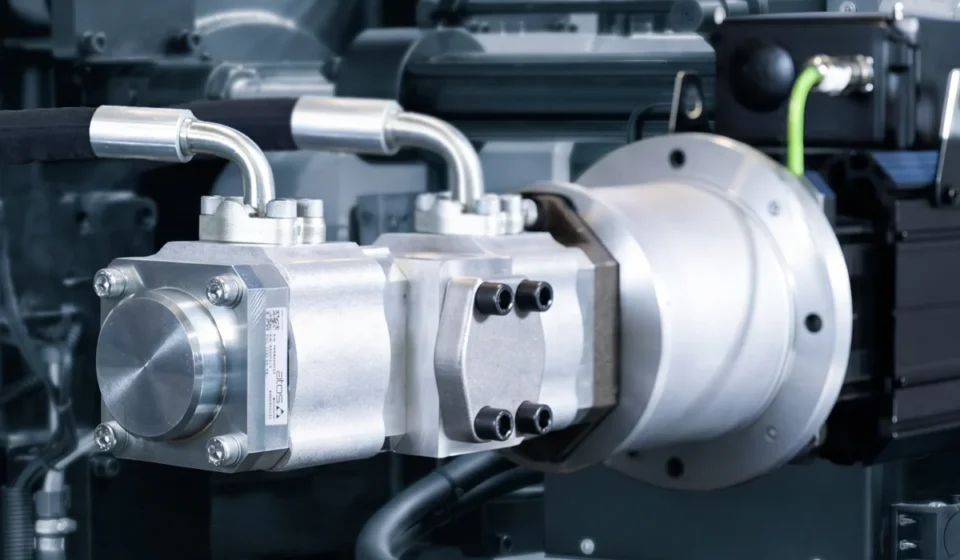
Leaders in the field, such as The Atos Group, are pushing the envelope with sophisticated servopumps. These systems replace traditional, clunky control valves with electronic synchronization. By using digital feedback loops, the pump output is modulated with millisecond precision. This reduces throttling losses and minimizes the heat generation that typically necessitates large, energy-consuming cooling systems.
Energy Recovery and Regenerative Circuits
Modern design now views hydraulic energy as a resource to be harvested. During deceleration phases—such as the lowering of a heavy press or the braking of an industrial carriage—potential energy is often lost. Modern regenerative circuits capture this energy and store it in high-pressure accumulators or return it to the system, effectively recycling the work that would otherwise be wasted.
Official Perspectives: The Industry’s Strategic Shift
Industry leaders emphasize that efficiency is no longer a "feature" but a business imperative. "The integration of electronic control with hydraulic hardware is the most significant leap in the last two decades," says an engineering lead at Atos. "By treating the hydraulic system as a cyber-physical entity, we move from reactive maintenance to predictive optimization. We aren’t just saving electricity; we are extending the lifecycle of every seal, pump, and valve in the circuit."
Furthermore, regulatory frameworks, particularly in the European Union and parts of North America, are increasingly mandating stricter energy-efficiency metrics for industrial machinery. Compliance is driving companies to move away from legacy systems toward modular, electrohydraulic architectures that can be audited for energy performance.
Implications for Manufacturing and Industrial Design
The transition to high-efficiency hydraulics carries profound implications for the manufacturing sector:
1. Reduced Total Cost of Ownership (TCO)
While advanced electrohydraulic systems may carry a higher initial capital expenditure (CAPEX), the return on investment (ROI) is realized through lower energy bills, reduced cooling requirements, and longer maintenance intervals. The reduction in heat generation, in particular, prevents the degradation of hydraulic fluids and seals, which are common points of failure in older systems.
2. The Rise of "Smart Maintenance"
The digitalization of hydraulics enables advanced condition monitoring. By analyzing pressure spikes, vibration patterns, and fluid temperatures, AI-driven software can predict component failure before it occurs. This "predictive maintenance" approach prevents costly downtime, which is often a hidden, massive energy drain for manufacturing plants.
3. Integration with Industry 4.0
Hydraulics are no longer "siloed" systems. They are now fully integrated into the Factory Operating System. Because modern hydraulic power units can communicate their status and energy usage via protocols like OPC UA or EtherCAT, they provide plant managers with real-time dashboards of energy consumption, allowing for facility-wide load balancing.
Challenges and The Path Forward
Despite these advancements, challenges remain. The primary hurdle is the knowledge gap. Modern electrohydraulic systems require a workforce that understands both fluid dynamics and electronic control. There is an increasing need for training programs that bridge the gap between traditional mechanical maintenance and the digital skills required to manage AI-optimized hydraulic units.
Furthermore, retrofitting older, massive hydraulic infrastructure presents a logistical challenge. Companies must balance the cost of replacing legacy systems against the benefits of efficiency gains. The industry consensus is that a "phased transition"—replacing key power units with smart, variable-speed alternatives—is the most effective way to modernize without disrupting production.
The Role of AI and Machine Learning
The next frontier is the deployment of machine learning models that can "learn" the specific cycle of a machine. By analyzing thousands of operational hours, an AI can determine the absolute minimum pressure required for a specific manufacturing task, constantly tuning the system in real-time to operate at the peak of the efficiency curve. This, coupled with the inherent durability of hydraulic actuators, creates a future where industry can have the "best of both worlds": the raw force of hydraulics and the precision of software-defined control.
Conclusion
The transformation of hydraulic systems is a testament to the adaptability of industrial technology. By embracing digital integration, variable speed control, and intelligent energy recovery, the sector is successfully reconciling the age-old requirement for high power with the modern demand for environmental sustainability.
As industries worldwide strive to meet net-zero goals, hydraulics will not be sidelined by electric actuation. Instead, through the innovations pioneered by firms like The Atos Group and others, hydraulics are securing their place as a vital, intelligent, and highly efficient component of the future industrial ecosystem. The challenge for manufacturers is clear: embrace the transition, invest in the intelligence of the system, and recognize that in the modern factory, efficiency is the ultimate source of power.