



Hydraulic systems have long been the backbone of industrial progress. From the massive forces required in metal forming and heavy equipment manufacturing to the intricate precision of plastics processing and automated production lines, fluid power remains unparalleled in its power density and reliability. However, as the global industrial sector pivots toward aggressive decarbonization and sustainability mandates, the traditional "power-at-any-cost" approach to hydraulics is being fundamentally rewritten.
Today, engineers and system designers are facing a dual challenge: maintaining the robust, high-performance characteristics of hydraulic systems while simultaneously engineering them to meet the stringent energy-efficiency standards of the 21st century.
The Core Challenge: Efficiency in Fluid Power
At its heart, a hydraulic system is an energy conversion machine. It transforms mechanical energy into fluid power—typically through a pump—and subsequently converts that fluid energy back into mechanical work via actuators.
Every stage of this energy transformation presents an opportunity for loss. Friction, fluid turbulence, and heat generation are the primary antagonists of efficiency. Traditionally, hydraulic systems were designed with significant "design margins"—extra capacity built in to ensure that the machine would never fail, even under the most demanding and unforeseen peak loads. While this prioritized safety and uptime, it often led to systems that consumed far more energy than necessary during standard operating cycles.
The modern industrial imperative is to move away from these oversized, inefficient architectures. The goal is to design systems that are lean, responsive, and intelligent, ensuring that energy consumption is precisely matched to the load at any given millisecond.
Chronology: The Evolution of Hydraulic Intelligence
To understand the current state of hydraulic efficiency, one must look at the progression of control technologies:
- The Era of Constant Speed (1950s–1980s): Hydraulic power units (HPUs) operated at a fixed speed, regardless of demand. If the system needed less power, the excess fluid was simply bypassed back to the tank, dissipating energy as heat.
- The Rise of Load-Sensing (1990s): Systems began to incorporate sensors to detect pressure and flow requirements. This reduced the "bypass" waste, allowing pumps to scale their output to match load demands.
- The Digital Integration Phase (2000s–2015): The introduction of sophisticated proportional valves and electronic controllers allowed for finer control, reducing energy waste through better valve response times.
- The Intelligent Actuation Era (2016–Present): With the arrival of Variable Speed Drives (VSDs) and high-speed electrohydraulic servos, systems have moved toward "on-demand" energy consumption, where the electric motor driving the pump only draws the exact current required for the current task.
Technological Drivers of Efficiency
Variable Speed Drives (VSDs)
VSDs represent a paradigm shift in HPU design. By decoupling the electric motor’s speed from the constant grid frequency, VSDs allow the pump to run only as fast as the hydraulic demand dictates. In applications with cyclical loads—such as an injection molding machine that has distinct periods of high force followed by cooling—VSDs can throttle the motor down to near-zero speed, drastically slashing idling energy costs.
Electrohydraulic Synergy
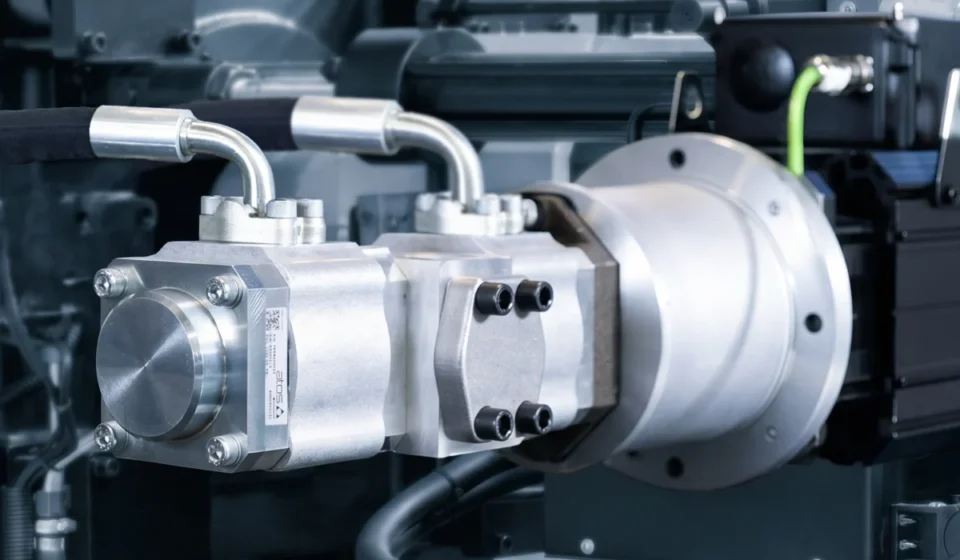
The integration of electronic control with hydraulic mechanics—often termed "Electrohydraulics"—has unlocked unprecedented efficiency. By utilizing digital feedback loops, modern systems can make sub-millisecond adjustments to pressure and flow. Companies like Atos have led this charge, developing servopumps that act as "smart" actuators. These units do not merely react; they anticipate load changes, effectively eliminating the energy-wasting pressure drops associated with traditional mechanical relief valves.
Energy Recovery and Regeneration
One of the most exciting frontiers in fluid power is energy harvesting. In heavy machinery, gravity often does the work—such as the lowering of a massive crane arm or the deceleration of a heavy press. Rather than dissipating this potential energy as heat through a valve, modern circuits use accumulators or regenerative braking circuits to capture that energy and store it, re-injecting it into the next power stroke.
Supporting Data: Quantifying the Gains
While exact efficiency gains depend on the specific application, industry case studies highlight significant potential:
- Idle Energy Reduction: Converting a constant-speed system to a VSD-driven setup can reduce energy consumption during idle periods by up to 70–80%.
- Operational Optimization: Load-sensing systems, when properly tuned, consistently show a 20–30% reduction in overall energy draw compared to conventional fixed-displacement systems.
- Heat Dissipation Savings: By minimizing internal fluid turbulence and bypass flow, operators report a marked reduction in the need for external oil cooling systems, which themselves are major consumers of electricity.
Official Perspectives: The Regulatory and Strategic Landscape
Industrial policy across the EU, North America, and parts of Asia is increasingly moving from voluntary guidelines to mandatory energy efficiency audits. Corporate strategy has shifted in parallel. Energy consumption is no longer viewed as a "fixed cost of doing business" but as a key metric for procurement.
Industry experts note that procurement departments now demand "Total Cost of Ownership" (TCO) models. A system that is cheaper to buy but expensive to power is increasingly rejected in favor of high-efficiency, electrohydraulic solutions that offer a rapid Return on Investment (ROI) through lower utility bills.
Implications for the Future of Manufacturing
The AI and Machine Learning Frontier
The next leap in hydraulic efficiency will not come from metal or oil, but from code. Artificial Intelligence (AI) and Machine Learning (ML) are being integrated into predictive maintenance models. By analyzing vibration, temperature, and pressure data, AI can predict exactly when a seal is beginning to fail or when a filter is becoming clogged. This allows for "precision maintenance," ensuring that the system is always running at peak efficiency rather than waiting for a catastrophic failure.
The Human Element: Training and Skill Sets
As hydraulics become more "digital," the profile of the hydraulic technician is changing. The future belongs to the professional who is equally comfortable with a wrench and a laptop. Organizations must prioritize the cross-training of staff in both fluid power mechanics and digital control systems. Without this expertise, the most advanced energy-efficient systems will never be configured to their full potential.
A Component of a Broader Ecosystem
The final implication of this evolution is the blurring of lines between traditional technologies. Hydraulics are no longer a "standalone" system. They are being integrated into the "Industry 4.0" ecosystem, where they talk to the factory’s central management system. A hydraulic press can now communicate its energy consumption to the plant’s smart grid, helping the facility balance its total power load during peak hours.
Conclusion: The Balanced Approach
The future of hydraulics is not in replacing the technology, but in refining it. By balancing the traditional strengths of high force and reliability with the new requirements for intelligent energy management, hydraulics will remain the undisputed leader in heavy industrial actuation.
As we look toward a future defined by sustainability, the hydraulic systems of tomorrow will be quieter, cooler, and significantly more efficient. The transition may require an upfront investment in advanced components and digital infrastructure, but the long-term payoff—a leaner, greener, and more resilient manufacturing floor—is an objective that the entire industrial sector is now aligned to achieve.
This article is brought to you as part of our commitment to covering the latest in industrial fluid power technology, with specialized insights provided by The Atos Group.