




Cal/OSHA Proposes Landmark Safety Mandate Requiring Comprehensive Weapons Screening Across California Hospitals

By Danielle Naidu
Enriched and Expanded Reporting
Main Facts
In an aggressive push to curb escalating violence in healthcare settings, the California Division of Occupational Safety and Health (Cal/OSHA) has unveiled a sweeping discussion draft that would mandate routine weapons screening at all unrestricted entrances of hospitals throughout the state.
Released on September 14, the landmark regulatory proposal seeks to amend Title 8, Section 3342 of the California Code of Regulations. If formally adopted, the rule would operationalize Assembly Bill 2975, a legislative milestone designed to protect healthcare workers, patients, and visitors from the rising tide of firearm and weapon-related incidents in medical facilities.
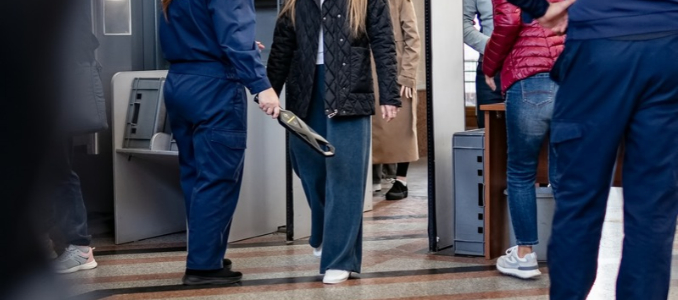
The scope of the proposed mandate is comprehensive, applying to general acute care hospitals, acute psychiatric hospitals, and special hospitals across the state. Under the current draft, these institutions would be legally required to implement physical screening measures—including checking individuals and their personal belongings—at every public-facing, unrestricted entrance whenever those doors are open to the public. This encompasses primary facility entrances, emergency departments, and separately accessible labor and delivery entrances.
To comply with the proposed regulation, hospitals would be permitted to deploy a variety of advanced security technologies. Acceptable screening apparatuses explicitly listed in the draft include:
- Walk-through metal detectors
- X-ray inspection systems for personal belongings and bags
- Millimeter-wave scanners
- Magnetic anomaly detection systems
- AI-assisted weapons detection technologies
However, the proposal draws a firm line regarding manual procedures. Handheld metal detector wands generally cannot serve as the sole primary screening mechanism, though tightly circumscribed exceptions are provisioned for specific operational constraints. Furthermore, the mandate goes beyond hardware deployment. It establishes strict operational requirements, dictating that hospitals must formulate written safety policies, maintain detailed logs and procedures for managing detected weapons, and establish protocols for individuals who refuse the mandatory screening process—all while remaining strictly compliant with federal laws governing emergency medical treatment, such as the Emergency Medical Treatment and Labor Act (EMTALA).

To ensure that security and screening personnel are adequately prepared for high-stress interactions, the Cal/OSHA draft outlines a rigorous training curriculum. Employees assigned to screening duties would be legally required to complete at least eight hours of specialized initial training, followed by mandatory annual refresher courses. The curriculum covers a broad multidisciplinary spectrum, including equipment operation, threat recognition, physical search procedures, verbal de-escalation techniques, implicit bias training, disability awareness, emergency response coordination, and meticulous recordkeeping.
Public commentary on the discussion draft remains open through October 12, serving as a critical window for healthcare executives, labor unions, security experts, and civil rights advocates to shape the final language of the regulation.
Chronology of Events
The journey toward California’s proposed hospital weapons screening mandate is rooted in years of mounting concern over workplace violence in healthcare environments. A chronological review highlights the trajectory from legislative intent to regulatory enforcement:

- Pre-2024 (The Escalation Crisis): Over the preceding decade, healthcare workers nationwide—and particularly in California—experienced a dramatic escalation in verbal harassment, physical assaults, and armed incursions within medical facilities. Emergency rooms and psychiatric wards became frequent hotspots for violence, prompting healthcare unions to aggressively lobby state lawmakers for enhanced security mandates.
- Legislative Action (Assembly Bill 2975): Recognizing the acute vulnerability of medical personnel, California lawmakers introduced and advanced Assembly Bill 2975. The legislation aimed to legally compel healthcare employers to take proactive, physical steps to prevent weapons from entering patient care areas.
- September 14, 2026 (Cal/OSHA Releases Discussion Draft): Moving to implement the statutory intent of AB 2975, Cal/OSHA officially published its comprehensive discussion draft amending Title 8, Section 3342. This release formally initiated the regulatory rulemaking process, setting specific technological, procedural, and training baselines for hospitals.
- September 14 – October 12, 2026 (Public Comment Window): Cal/OSHA opened a public comment period, inviting feedback from hospital administrators, frontline nurses, security professionals, and legal analysts. This phase is designed to identify operational hurdles, cost burdens, and potential unintended consequences before the draft transitions into a formal proposed rulemaking phase.
- Post-Comment Period & Future Implementation: Following the close of the comment period on October 12, Cal/OSHA staff are tasked with reviewing submissions, refining the text, and advancing the proposal through California’s formal Administrative Procedure Act rulemaking steps. Once finalized and adopted, hospitals will face strict deadlines to procure equipment, draft policies, and train staff in compliance with the new standard.
Supporting Data & Workplace Violence Statistics in Healthcare
The urgency behind Cal/OSHA’s regulatory push is validated by a sobering body of data illustrating that healthcare settings have become among the most dangerous workplaces in modern America.
According to data compiled by the U.S. Bureau of Labor Statistics (BLS) and various occupational health research organizations, healthcare and social service workers experience non-fatal workplace violence injuries at rates vastly disproportionate to private industry as a whole. While healthcare workers represent a fraction of the total workforce, they account for a substantial majority of all non-fatal workplace assaults resulting in days away from work.
- The Prevalence of Armed Intruders: Independent safety audits and law enforcement data indicate that thousands of weapons—ranging from concealed handguns and knives to improvised cutting instruments and chemical deterrents—are confiscated or smuggled into U.S. hospitals annually.
- Emergency Department Vulnerability: Emergency departments bear the brunt of this security crisis. Unrestricted 24/7 access, combined with high-stress emotional environments, grief, substance withdrawal, and psychiatric crises, creates an inherently volatile ecosystem. Studies show that up to 25% of emergency nurses experience physical violence on a regular basis, with many reporting that management historically minimized these incidents as "just part of the job."
- Economic and Staffing Toll: Workplace violence is a primary driver of the ongoing healthcare staffing shortage. Nurses and physicians subjected to threats or physical assaults frequently suffer from post-traumatic stress disorder (PTSD), burnout, and chronic anxiety. Many choose to leave bedside nursing entirely, exacerbating hospital staffing crunches and lowering overall patient care quality.
- The Cost of Technological Compliance: While specific fiscal impact estimates vary, implementing walk-through metal detectors, X-ray baggage scanners, and AI-assisted detection at every unrestricted entrance across hundreds of California hospitals represents a massive capital expenditure. Industry analysts note that smaller community hospitals and rural facilities may struggle to fund the necessary equipment and continuous staffing required to keep screening checkpoints continuously operational.
Official Responses and Stakeholder Perspectives
As the public comment window progresses, reactions to the Cal/OSHA discussion draft are pouring in from a diverse coalition of healthcare associations, labor unions, security professionals, and civil liberties advocates.

Healthcare Associations and Hospital Administrators
Hospital executives and administrative bodies have expressed a complex mix of support for worker safety and deep anxiety regarding logistical and financial feasibility. Representatives from major hospital associations acknowledge that violence prevention is a top priority, but they have raised pragmatic concerns over the literal interpretation of "every unrestricted entrance."
Administrators point out that modern hospitals are sprawling campuses with dozens of ingress and egress points, including complex architectural layouts, subterranean parking garages, ambulatory wings, and interconnected medical office buildings. Forcing every single one of these entryways to feature permanent screening infrastructure could cost millions of dollars per facility, create massive patient bottlenecks, and impede rapid clinical response times in emergency scenarios. Furthermore, hospitals have questioned how the mandate will account for patient privacy and the requirement under federal law (such as EMTALA) to stabilize individuals presenting for emergency medical care without delay.
Labor Unions and Frontline Healthcare Workers
Conversely, labor organizations—particularly unions representing nurses, technicians, and service employees—have largely championed the Cal/OSHA initiative. For years, union organizers have picketed and lobbied for stronger workplace safety protections, arguing that voluntary security measures implemented by hospitals have been inconsistent and inadequate.

Union representatives emphasize that physical screening is a common-sense layer of protection that has long been standard practice in airports, courthouses, and government buildings. They argue that healthcare workers deserve the same baseline of security while performing lifesaving work. Labor advocates have pushed back against industry complaints regarding cost, asserting that human lives and employee well-being must take financial precedence.
Security and Technology Experts
Security professionals have focused their commentary on the operational nuances of the draft—specifically the prohibition against relying solely on handheld detector wands and the inclusion of advanced technologies like AI-assisted weapons detection. Industry experts note that while walk-through portals and X-ray systems offer robust protection, they require highly trained personnel to operate effectively without causing excessive friction for patients and visitors. Additionally, security consultants have stressed that technology alone is insufficient; it must be backed by clear protocols for handling aggressive individuals, rapid communication channels with local law enforcement, and comprehensive de-escalation training.
Broader Implications for California Healthcare
The adoption of Cal/OSHA’s weapons screening mandate would fundamentally reshape the operational, cultural, and architectural landscape of California hospitals.

1. Architectural and Operational Redesign
Should the regulation take effect in its current form, hospitals will be forced to undertake massive infrastructural overhauls. Facilities will need to consolidate public entry points to reduce the number of checkpoints they must staff and equip. This architectural constriction will alter traffic flow, requiring patients, visitors, and vendors to queue outside or in centralized vestibules before gaining access to clinical corridors.
2. Shifts in Patient Experience and Hospital Culture
The introduction of airport-style security at hospital doors marks a profound psychological shift. For decades, hospitals have prided themselves on being open, welcoming, healing sanctuaries. Implementing metal detectors and bag inspections risks introducing an atmosphere of institutional securitization and anxiety. Hospitals will need to balance rigorous security with compassionate patient hospitality, ensuring that vulnerable patients—such as those experiencing acute psychiatric distress or severe trauma—are not alienated, frightened, or deterred from seeking necessary care.
3. Legal and Regulatory Precedent
As the most populous state in the nation, California frequently sets regulatory precedents that are later emulated by federal agencies (such as OSHA) and other state governments. If California successfully implements a mandatory hospital weapons screening standard, it could serve as a national model for legislative and regulatory reform across the healthcare sector, pressuring hospital systems nationwide to upgrade their security postures.

4. Staff Retention and Morale
Ultimately, the central promise of the Cal/OSHA proposal is human protection. By taking decisive regulatory action to remove weapons from healing environments, the state hopes to stem the bleeding of the healthcare workforce. Creating a visibly safer working environment is viewed by proponents as an essential step in restoring morale, reducing injury-related absenteeism, and retaining experienced nurses and physicians who might otherwise abandon the profession out of fear for their physical safety.
As the October 12 comment deadline approaches, all eyes remain fixed on Cal/OSHA as it navigates the delicate balance between uncompromising safety standards and the practical realities of modern medical delivery.