


Inside IMTS 2026: Manufacturing’s Biggest Stage Delivers a Masterclass in Scale, Resilience, and Automation

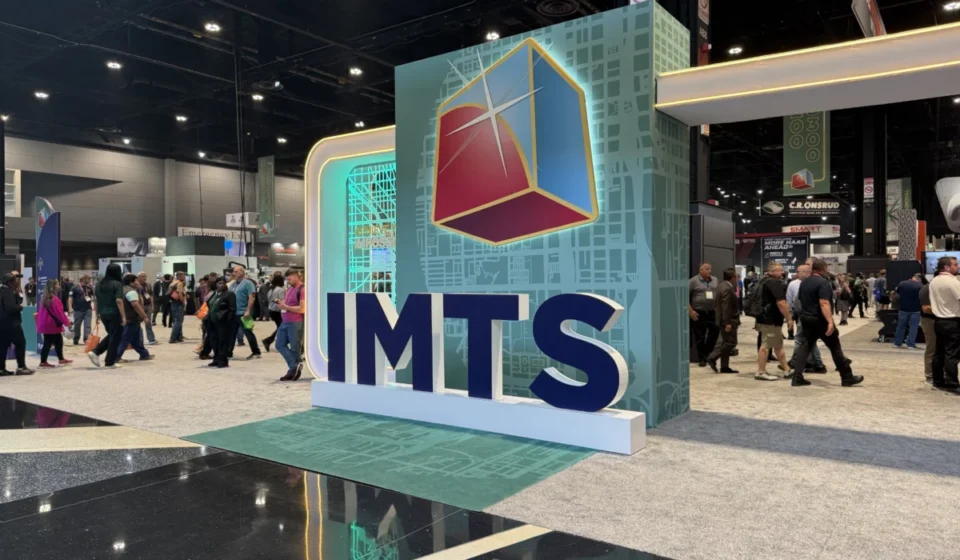
CHICAGO — Last week, after breaking in a brand-new pair of heavily padded shoes and packing an upgraded audio setup, I stepped into the labyrinthine manufacturing extravaganza known as the International Manufacturing Technology Show (IMTS) 2026. Held from September 14 through 19 at McCormick Place, this year’s event served as a powerful reminder of how the scale of this biennial gathering continues to expand and evolve.
Drawing a massive crowd on pace to eclipse 90,000 attendees, IMTS 2026 proved that American and international manufacturing are not just recovering from past disruptions—they are actively scaling up for a high-tech future. With visitors representing all 50 U.S. states and travelers hailing from 113 countries, the energy across the sprawling convention center floor was palpable, signaling a robust era of capital investment, reshoring, and technological transformation.
Main Facts: Record-Breaking Turnout and Exhibitor Footprint
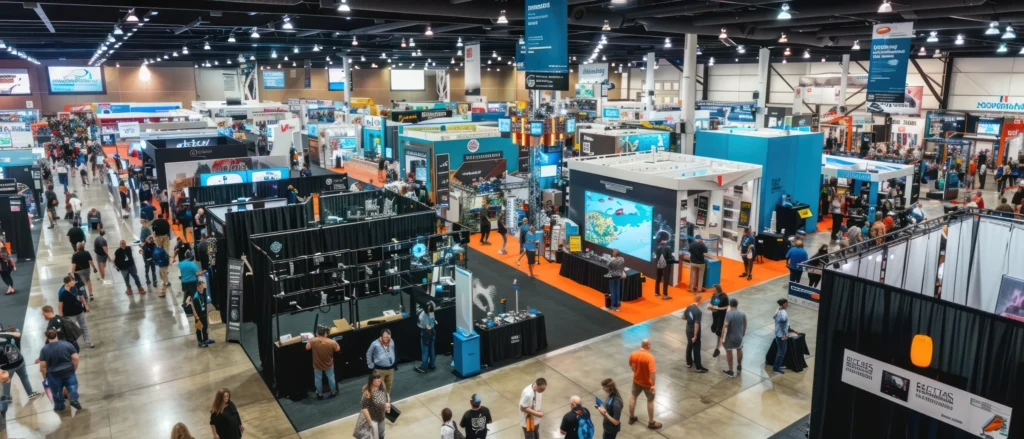
The sheer physical scale of IMTS 2026 was staggering, testing the durability of my new footwear right out of the gate. By the time the turnstiles stopped spinning, registration had already climbed past 80,000 attendees. Among them were roughly 15,000 students—a tremendously encouraging sign for industry stakeholders concerned with cultivating the next generation of manufacturing talent.
The exhibitor metrics matched the heavy foot traffic. Nearly 1,800 companies filled the show floor, occupying close to 1.2 million square feet of exhibition space. Notably, about 400 of those participating companies were IMTS first-timers, highlighting a continuous influx of fresh innovators entering the industrial technology sphere.
According to AMT (The Association for Manufacturing Technology), the organization that owns and produces the show, this year’s visitor-to-exhibitor ratio came in higher than historical averages. This meant a denser, more active crowd relative to the personnel working the booths, underscoring an immense industry appetite to witness advanced machinery, software, and robotics operate in person rather than through a screen.
Chronology: A Week of Breakthroughs, Dialogue, and Discovery
Sunday and Monday: Arrival and Setup
As the massive machinery rolled into McCormick Place and booths received their final polishes, anticipation built across Chicago. The city, which has hosted the manufacturing community for nearly 80 years—including 54 years at the McCormick Place campus—braced for an influx of hundreds of millions of dollars in regional economic impact.
Tuesday through Thursday: The Core Show Floor Experience
With the opening bell on Tuesday morning, the aisles instantly flooded. The first three days were a whirlwind of live demonstrations, rapid-fire press briefings, and deep-dive technical discussions.
- The Interconnected Ecosystem: Walking the floor, it became immediately clear why coordinators refer to IMTS as an ecosystem rather than a single-category expo. Artificial intelligence, automation, robotics, connected manufacturing software, additive manufacturing, precision machining, metrology, tooling, and workholding solutions were not siloed. Instead, they were integrated into unified, live demonstrations.
- Global and Cross-Industry Participation: The attendee demographic was remarkably diverse. Conversations spanned defense, aerospace, automotive, off-highway equipment, energy, semiconductor, and medical device manufacturing. Furthermore, a noticeable contingent from the AI infrastructure and data center space integrated themselves into the manufacturing dialogue, reflecting the hardware-heavy demands of the tech boom.
Friday: Reflection and Future Outlook
As the final day wound down, conversations shifted from immediate equipment acquisitions to long-term macroeconomic trends, workforce retention strategies, and the evolving geographical footprint of the global supply chain.
Supporting Data: Robust Economic Indicators and Capital Investment
To fully grasp the gravity of IMTS 2026, it is necessary to examine the broader economic context. The event is more than a trade show; it acts as a genuine economic engine for Chicago and the state of Illinois, generating an estimated $250 million in regional economic impact this year alone.
This local momentum mirrors national trends. New orders for metalworking machinery hit a formidable $605.8 million in July, according to figures released just prior to the show’s opening. This data point is part of an impressive run that has pushed year-to-date orders past the $4 billion mark—representing a greater than 37% increase compared to the same stretch in 2025.
Crucially, this marks only the second time since tracking began in 1998 that monthly orders have topped half a billion dollars for five consecutive months. Industry analysts note that this sustained high level of activity indicates the capital investment currently sweeping across U.S. manufacturing is far more than a temporary blip.
Official Responses and Expert Perspectives
The bullish sentiment on the floor was backed up by industry leaders who view the current manufacturing renaissance as structurally sound.
Felix Brockmeyer, CEO of Igus
When I caught up with Felix Brockmeyer, CEO of Igus, at the company’s bustling booth, he offered a reassuring and pragmatic assessment of the macroeconomic landscape.
"The U.S. is going to be fine," Brockmeyer told me bluntly. "I would say the next five years are going to be just fine."
Brockmeyer pointed to the unprecedented surge of new U.S. factory announcements over the past 12 to 18 months as definitive proof that the reshoring trend possesses real staying power. However, he noted that the industrial buildout is naturally playing out in measured stages: plants are constructed first, followed subsequently by the equipment orders required to fill them, with each phase typically requiring roughly a year to complete.
Nick Haase, Co-Founder of MaintainX
While optimism ran high regarding factory construction, conversations quickly pivoted to the looming crisis in human capital. Nick Haase, co-founder of MaintainX, did not mince words when discussing the skilled labor shortage. Citing industry estimates projecting between 2.5 and 3 million unfillable skilled positions by 2028 to 2030, Haase categorized the situation in stark terms.
"It’s borderline national crisis," Haase stated, arguing that workforce deficits deserve bipartisan political attention due to their direct impact on national security and domestic supply chain integrity.
Haase highlighted a structural compounding factor: it is not merely that too few young people are entering the trades, but that the veteran workforce holding decades of vital tribal knowledge is retiring faster than organizations can capture that expertise. Industry data suggests that roughly two new workers are entering manufacturing for every five who retire.
To combat this brain drain, MaintainX showcased a tangible solution at the show: a beta tool designed to convert a simple smartphone video of a technician performing a complex repair into a step-by-step written and visual procedure. This innovation allows plants to archive an expert technician’s know-how before they exit the workforce permanently.
Implications: Automation, Reshoring, and the Evolving Factory Floor
The insights gathered from IMTS 2026 point to several profound long-term implications for the industrial sector:
1. Automation is No Longer Optional
With U.S. unemployment hovering at or below 4% and hundreds of thousands of manufacturing jobs sitting vacant—projections suggest unfilled positions could exceed 1.5 million by 2030—automation has transitioned from a competitive advantage to an existential necessity. As Brockmeyer noted, deploying robotics and automated workflows is the only viable path forward for manufacturers attempting to scale output amidst a labor drought.
2. Supply Chain Regionalization is Permanent
Geopolitical tensions and the harsh logistical lessons of the COVID-19 era have permanently altered how executives view global supply chains. Companies are actively rethinking their geographic footprints, favoring regionalized manufacturing ecosystems. This structural shift requires high levels of connectivity, digital software integration, and localized toolmaking—all of which were prominently on display in Chicago.
3. The Curious Case of Humanoid Robotics
Interestingly, despite commanding massive media attention throughout the year, the humanoid robotics category felt comparatively sparse on the IMTS show floor. Industry observers noted that this absence was strategic rather than technological. Many leading humanoid robotics developers lack deep, established roots in traditional manufacturing sales cycles, meaning industrial-focused expos like IMTS are only beginning to find their way onto their primary commercial radar. It served as a healthy reminder that viral tech headlines do not always translate immediately to factory floor deployment.
4. The Value of Face-to-Face Collaboration
Ultimately, the true value of IMTS lies beyond the heavy iron and gleaming software dashboards. It functions as a collaborative crucible where makers, problem-solvers, and innovators converge to tackle specific operational bottlenecks. The conversations sparked on the McCormick Place floor routinely extended past the exhibition hall doors and into ongoing digital strategy sessions.
Looking Ahead
Show leadership from AMT emphasized a foundational truth throughout the week: real, enduring economic value is generated when things are physically made. As the U.S. manufacturing sector continues its massive capital expenditure cycle, events like IMTS serve as both a barometer of current economic health and a roadmap for future capability.
Over the coming weeks, a deeper series of conversations from the IMTS 2026 floor will be rolled out, starting with extended insights from Felix Brockmeyer of Igus and Nick Haase of MaintainX. Additional coverage will feature interviews, product updates, and technical breakdowns from industry leaders including Renishaw, Weissmuller, CGI, Platinum Tooling, Ceratizit, and more.
The stage has been set in Chicago, and the work of building the future of manufacturing is already well underway. Stay tuned—there is much more to come from IMTS 2026.