




SkyDefense Unveils CobraJet: A 3D-Printed Paradigm Shift in Counter-Drone Warfare

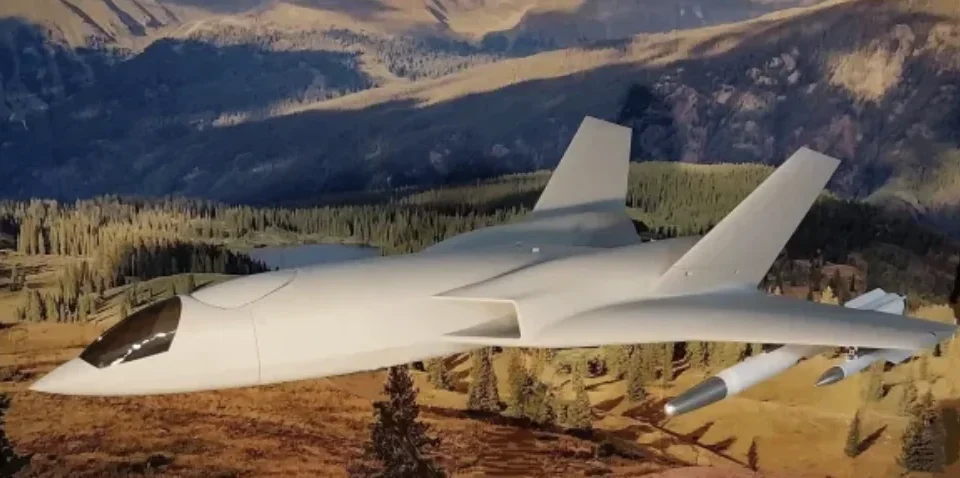
The modern battlefield and the skies over critical infrastructure are undergoing a radical transformation. As the proliferation of low-cost unmanned aerial systems (UAS) turns the skies into contested territory, the traditional defense model—relying on multimillion-dollar missiles to intercept inexpensive drones—has become economically unsustainable. Colorado-based defense innovator SkyDefense has unveiled its solution to this asymmetric crisis: the CobraJet, an AI-controlled, VTOL (Vertical Takeoff and Landing) interceptor aircraft designed to neutralize hostile drone swarms with precision, speed, and, crucially, cost-efficiency.
Main Facts: The Anatomy of the CobraJet
The CobraJet is not merely a single aircraft; it is a modular, multirole platform engineered to address the entire spectrum of modern aerial threats. At the heart of the system is a 3D-printed carbon-fiber core, which SkyDefense refers to as the "nucleus." This modular design allows for rapid manufacturing and customization, supporting five distinct trijet variants: the V4, V6, V8, V10, and the high-endurance VT10.
By leveraging VTOL capability combined with advanced thrust-vectoring nozzles, the CobraJet possesses the agility required to engage fast-moving, evasive targets that would baffle traditional air defense systems. Depending on the mission requirements, the platform offers two primary propulsion configurations:
- Battery-Electric: Utilizing high-energy-density solid-state cells and ducted fan motors, these variants reach top speeds of 360 kph (225 mph), optimized for urban and short-range defense.
- Hybrid-Electric: By integrating gas turbojets, the hybrid configuration pushes performance to 560 kph (350 mph), providing the necessary speed to intercept high-performance, jet-powered enemy drones.
The intelligence driving the CobraJet is equally robust. Equipped with NDAA-compliant electro-optical/infrared (EO/IR) sensors, the aircraft operates autonomously in all weather conditions, day or night. For complex engagements, the platform features a "human-in-the-loop" remote-control mode assisted by AI, ensuring that tactical decisions remain under human supervision while the machine handles the complex flight dynamics.
Chronology of Development and Deployment
The roadmap for the CobraJet reflects the urgency of the current security climate. Following years of clandestine R&D focused on additive manufacturing and flight dynamics, SkyDefense is moving quickly toward active integration.
- Mid-2026: The official unveiling of the CobraJet platform signals a shift from conceptual prototyping to industrial-grade production readiness.
- Q4 2026: SkyDefense has scheduled rigorous counter-UAS field testing at a dedicated UAS proving ground. These tests will evaluate the platform’s efficacy against simulated drone swarms and its ability to communicate with the Visual Realtime Area Monitoring (VRAM) command system in contested electromagnetic environments.
- Q1 2027: Pending successful field validation, SkyDefense plans to initiate full-scale production. The company’s focus is on a "point-of-need" manufacturing model, utilizing 3D printing to minimize supply chain bottlenecks.
Supporting Data: Winning the Cost Exchange
The primary driver behind the CobraJet project is "cost symmetry." In modern warfare, a swarm of drones costing a few thousand dollars can exhaust a battery of interceptors costing millions. SkyDefense aims to flip this equation on its head.
The Munitions Suite
The CobraJet is armed with a proprietary family of munitions designed for mass production:
- COPPERHEAD: 18 mm rounds for localized engagement.
- CUDA: 40 mm guided rounds traveling at Mach 0.5, specifically designed for drone-swarm neutralization.
- VIPER: 45 mm solid-propellant guided missiles reaching Mach 1.0.
- RAPTOR: 55 mm Mach 1.0 solid-propellant missiles for long-range, "last-ditch" intercepts.
These munitions are produced using additive manufacturing, allowing SkyDefense to churn out thousands of units per month without the quality degradation typical of legacy manufacturing. The V10 and VT10 variants act as "drone motherships," carrying these attritable interceptors in internal bays and under-wing hardpoints, allowing a single CobraJet to neutralize multiple targets in a single sortie.
Connectivity in Contested Skies
The system operates via VRAM, a laptop-based command interface. To ensure mission success in environments where GPS and radio-frequency (RF) signals are jammed, the system incorporates advanced anti-jamming measures. It leverages satellite constellations, specifically Starlink and Starshield, to maintain command-and-control (C2) links even when localized electronic warfare is at its peak.
Official Responses and Strategic Vision
Nick Verini, President of SkyDefense, Inc., has been vocal about the necessity of this shift toward additive manufacturing in the defense sector. "Our CobraJet on-board munitions are in fact low-cost attritable air-to-air drone interceptors," Verini stated. "They can be produced at scale in thousands per month using 3D printing and other efficient workflow methods without sacrificing quality. This is how we win the war of attrition."
The industry response suggests that SkyDefense is tapping into a broader realization within the Department of Defense and global military circles: traditional, slow-moving procurement cycles are insufficient for the speed of modern drone technology. By prioritizing "attritable" hardware—systems that are effective enough to win but cheap enough to lose—SkyDefense is aligning itself with the Pentagon’s "Replicator" initiative and similar global efforts to scale drone manufacturing.
Implications: A New Era of Additive Defense
The implications of the CobraJet extend far beyond the specific aircraft. The platform represents a fundamental change in how the aerospace and defense industry approaches logistics and production.
The Rise of the "Point-of-Need" Microfactory
The success of companies like Firestorm Labs, which recently secured a $100 million U.S. Air Force contract to print modular UAVs, highlights the shift toward decentralized manufacturing. By printing airframes and components near the front lines, defense contractors are reducing their reliance on fragile, long-distance supply chains. SkyDefense is applying this same logic to the interceptor itself. If a CobraJet is damaged or runs low on specific munitions, the ability to manufacture replacements locally turns a logistical nightmare into a manageable, rapid-response process.
Shifting the Counter-Drone Landscape
The CobraJet also challenges the dominance of ground-based air defense (GBAD). While ground-based systems are effective for point defense, their range is inherently limited by terrain and curvature of the earth. By putting the interceptor in the air, the CobraJet offers a "distributed coverage" model. It can intercept threats before they reach the high-value target, creating a protective bubble that is far more flexible than a static battery of missiles.
Global Impact and Future Trends
The urgency of the Ukrainian conflict, where groups like Wild Hornets have utilized hobbyist-grade 3D printers to manufacture interceptors in the field, has served as a crucible for these technologies. SkyDefense is essentially taking the "guerilla" innovation of the battlefield and professionalizing it for industrial-scale deployment.
As we look toward 2027 and beyond, the CobraJet serves as a benchmark for the industrialization of additive manufacturing in defense. The trend is clear: the future of security lies in the marriage of AI-driven autonomy and the ability to manufacture, deploy, and replace defense assets at a speed that matches the threat.
For policymakers, the challenge will be integrating these autonomous systems into existing airspace management protocols. For adversaries, the arrival of the CobraJet signals that the era of "cheap, untouchable drone swarms" is rapidly coming to an end. By turning the cost-benefit analysis in favor of the defender, SkyDefense is not just releasing a new aircraft; they are redefining the calculus of the modern battlefield.
As the defense sector navigates these rapid technological shifts, the 3D Printing Industry continues to track the intersection of additive manufacturing, aerospace, and sovereign security. With the CobraJet scheduled for its 2026 trials, all eyes will be on the Colorado skies to see if this promise of cost-effective, AI-driven defense can meet the realities of the modern conflict zone.