



Amazon Pours $100 Million into Greenwood, Indiana, for State-of-the-Art Robotics and Automation Facility

GREENWOOD, Ind. — In a major move to cement its position at the vanguard of global logistics technology, e-commerce titan Amazon has announced plans to invest upwards of $100 million to construct a sprawling advanced manufacturing and assembly plant in Greenwood, Indiana.
The ambitious project, slated for completion by the end of 2028, will span an impressive 585,000 square feet and is projected to inject 300 high-paying manufacturing and engineering jobs into the local economy. The facility is designed to serve as a critical operational hub for building the automated equipment, robotic systems, and advanced machinery that power Amazon’s vast network of fulfillment centers worldwide.
This multi-million-dollar commitment underscores the company’s accelerating pivot toward automation, artificial intelligence, and cutting-edge industrial engineering. By bringing the production of its proprietary warehouse robotics in-house, Amazon aims to streamline its supply chain, reduce equipment deployment timelines, and foster a new era of high-tech manufacturing employment in the American Midwest.
Main Facts
The Greenwood manufacturing project represents one of the most significant industrial investments in central Indiana in recent years. Key elements of the initiative include:
- Financial Investment: Amazon is committing more than $100 million to the development, construction, and outfitting of the facility.
- Physical Footprint: The custom-built factory will encompass 585,000 square feet of advanced industrial and office space.
- Job Creation: The project is expected to create 300 direct manufacturing, technical, and engineering jobs by December 31, 2028.
- Compensation: Positions at the plant will feature competitive wages, with an average annual salary approaching $100,000, significantly higher than the regional manufacturing average.
- Core Operations: The facility will assemble next-generation automated fulfillment equipment, utilizing advanced fabrication machinery, robotic welding, automated powder coating, and sophisticated systems integration.
- Technological Infrastructure: Operations within the plant will be heavily supported by artificial intelligence-powered manufacturing software designed to optimize production flow, quality control, and resource allocation.
Chronology of Amazon’s Expansion in Indiana
Amazon’s decision to build its new robotics and automation assembly plant in Greenwood is the latest chapter in a long-standing, mutually beneficial relationship between the tech giant and the Hoosier State.
2008: Establishing the Footprint
Amazon’s operational history in Indiana began in 2008 when the company established its initial distribution infrastructure in the state. At a time when e-commerce was still scaling toward mainstream dominance, Indiana’s central geographical location—widely known as the "Crossroads of America"—proved to be an ideal logistical nexus for regional shipping and fulfillment.
2008–2020: Rapid Fulfillment Scaling
Over the subsequent twelve years, Amazon poured billions of dollars into Indiana, constructing massive fulfillment and sorting centers in cities such as Plainfield, Whitestown, Greenwood, and Jeffersonville. These facilities transformed the state into a critical node in Amazon’s national delivery network, creating thousands of hourly warehousing and logistics roles. By 2020, Amazon had firmly established itself as one of the largest private-sector employers in Indiana.
2021–2023: The Shift Toward Advanced Automation
As labor markets tightened globally and consumer demand reached unprecedented heights during and after the COVID-19 pandemic, Amazon accelerated its integration of robotics. The company acquired several robotics firms, including Kiva Systems (later rebranded as Amazon Robotics) and Cloostermans, while heavily investing in autonomous mobile robots (AMRs) like Proteus and robotic arms like Sparrow. During this period, the need for localized production of these complex mechanical systems became clear.
December 2022: Signaling Production Capabilities
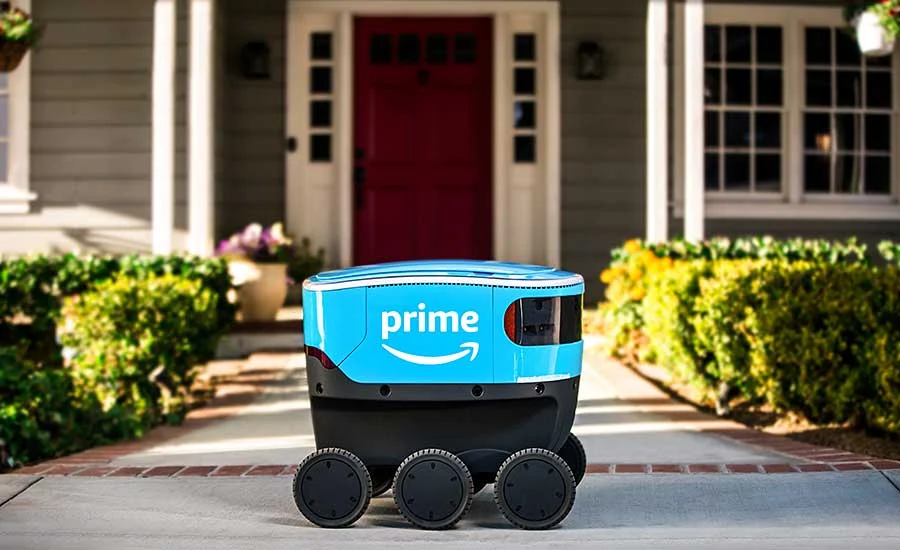
Public visibility into Amazon’s internal manufacturing capabilities increased when the company showcased its production of cooler-sized personal delivery devices and specialized fulfillment hardware built entirely within in-house production facilities. Industry analysts noted that Amazon was no longer merely a consumer of industrial robotics; it was becoming a primary producer of them.
Present Day: The Greenwood Mega-Factory Announcement
The announcement of the $100 million Greenwood assembly plant marks the culmination of this strategic evolution. Rather than relying entirely on third-party original equipment manufacturers (OEMs), Amazon is taking direct control of the assembly lines that build its warehouse automation infrastructure, setting the stage for regional operational launch by 2028.
Supporting Data and Workforce Breakdown
The economic impact of the Greenwood facility extends far beyond its physical dimensions. According to company disclosures and regional economic development projections, the project will introduce a diversified mix of skilled trades, technical specialists, and engineering professionals to Johnson County.
Job Classifications and Specialized Roles
The 300 jobs created by the end of 2028 will span a wide spectrum of advanced manufacturing disciplines. Target hires for the facility include:
- Machine Tool Operators: Skilled technicians responsible for running computer numerical control (CNC) machines and heavy fabrication equipment.
- Certified Welders: Professionals specializing in structural steel, robotic weld cell supervision, and custom fabrication.
- Powder Coating Technicians: Experts managing automated surface treatment and finishing lines to ensure durable, high-quality finishes on robotic housings and structural frames.
- Assembly Technicians: Hands-on mechanics and electricians tasked with putting together complex electromechanical sub-assemblies and final automation units.
- Manufacturing Engineers: Engineers focused on process optimization, lean manufacturing principles, tooling design, and cycle-time reduction.
- Program Managers: Administrative and technical leaders who will oversee production schedules, supply chain logistics, and cross-functional manufacturing initiatives.
Compensation and Economic Impact
With an average salary projected at nearly $100,000 per year—inclusive of benefits and incentive structures—the facility introduces high-wage career pathways that challenge the traditional perception of manufacturing work. This wage level is expected to generate a substantial ripple effect across the local economy, boosting demand for housing, retail, and municipal services in Greenwood and surrounding communities.
Historical State Investment Metrics
To date, Amazon has poured more than $40 billion into capital expenditures, infrastructure development, and operational expenses across Indiana. This capital commitment has directly resulted in the creation of over 27,000 permanent jobs statewide, making Amazon a cornerstone of Indiana’s modern economic landscape.
Official Responses and Stakeholder Perspectives
The announcement has garnered widespread praise from state and local officials, economic development leaders, and Amazon executives alike, all of whom emphasized the alignment between the project and Indiana’s long-term economic strategy.
State and Local Leadership
Indiana’s economic development agencies, including the Indiana Economic Development Corporation (IEDC), worked closely with Amazon representatives to secure the project against competing bids from other Midwestern states. State leaders highlighted the project as validation of Indiana’s ongoing investments in STEM education, workforce training initiatives, and pro-business regulatory frameworks.
Local municipal leaders in Greenwood expressed enthusiasm over the influx of high-tech talent. City planners noted that the 585,000-square-foot facility will be designed to meet modern environmental and architectural standards, ensuring that industrial growth is balanced with community aesthetics and sustainability goals.
Amazon’s Strategic Vision
Amazon executives emphasized that the facility is not just a factory, but an innovation hub. By embedding artificial intelligence software directly into the manufacturing process, the plant will serve as a testing ground for smart-factory concepts that Amazon hopes to scale across its entire global manufacturing footprint.
"We are building the future of logistics technology right here in the heart of the Midwest," an Amazon spokesperson noted. "This facility brings together the best of human ingenuity and advanced robotics, creating high-paying, future-proof careers for the local workforce."
Implications for the Industry and the Future of Work
The construction of Amazon’s Greenwood assembly plant carries profound implications for the broader material handling, industrial automation, and manufacturing sectors.
1. The Rise of the Smart Factory
By utilizing AI-powered manufacturing software, robotic welding, and automated powder coating, Amazon is showcasing what Industry 4.0 looks like in practice. The plant will likely serve as a benchmark for automated assembly, demonstrating how real-time data analytics can minimize downtime, eliminate bottlenecks, and maximize product quality in high-mix, high-volume production environments.
2. Evolution of the Manufacturing Workforce
Critics of automation often argue that robotics destroy jobs. However, projects like the Greenwood plant tell a different story—one of workforce transformation rather than outright displacement. While manual, repetitive material handling tasks inside fulfillment centers are increasingly automated, the creation of 300 high-tech engineering, programming, and specialized technician roles demonstrates that automation generates a demand for higher-skilled, better-compensated labor. The challenge for educators and policymakers will be ensuring that local talent is adequately trained to step into these advanced roles by 2028.
3. Supply Chain Resilience
In an era marked by global supply chain disruptions, geopolitical tensions, and fluctuating shipping costs, multinational corporations are increasingly embracing "reshoring" and regional manufacturing strategies. By building its own automation equipment domestically, Amazon insulates its expansion plans from international supply chain shocks, ensuring that its fulfillment network can continue to scale rapidly and efficiently.
4. Indiana as a Robotics and Logistics Capital
Already recognized as a premier logistics hub, Indiana is rapidly positioning itself as a leader in industrial robotics and advanced manufacturing. The influx of Amazon’s Greenwood plant, combined with existing aerospace, automotive, and advanced manufacturing sectors in the state, creates a synergistic ecosystem. This ecosystem is likely to attract tier-one suppliers, engineering service providers, and tech startups to the region in the years leading up to 2028 and beyond.
As groundbreaking approaches on the Greenwood site, industry observers will be watching closely to see how Amazon integrates its proprietary technology with the local workforce, setting a new benchmark for modern industrial manufacturing in the United States.