


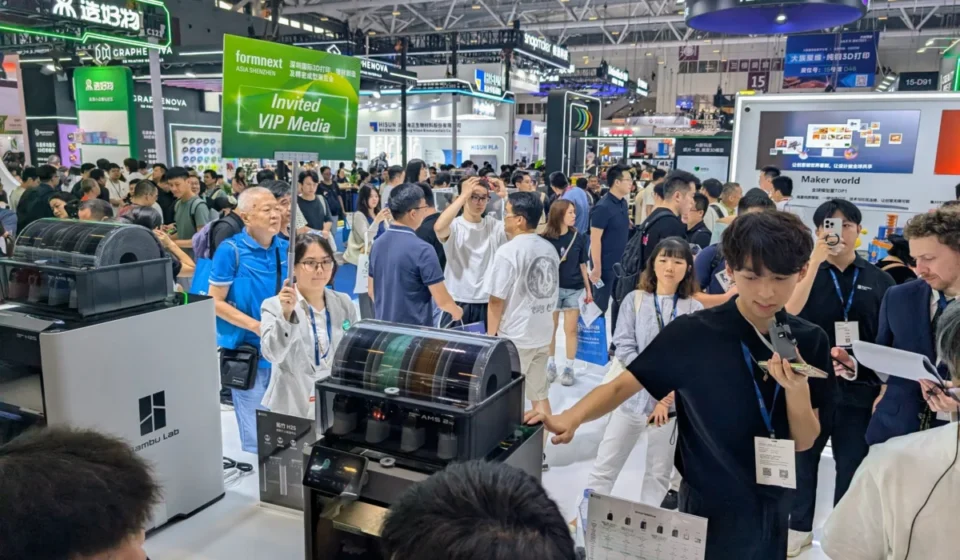
From Niche to Mass Production: Bambu Lab Breaks Ground on Massive Shenzhen 3D Printing Super-Factory

In the rapidly evolving world of additive manufacturing, few companies have disrupted the status quo as aggressively as Bambu Lab. Known for bringing high-speed, consumer-friendly 3D printing to the mainstream, the company is now taking a bold leap toward industrial-scale manufacturing. Site preparation is currently underway at its new, purpose-built headquarters in Shenzhen, a colossal project designed to facilitate the production of more than three million 3D printers annually.
This development marks a significant shift in the 3D printing industry. Once defined by low-volume, boutique production, the sector is witnessing a transformation toward the high-throughput, automated standards of consumer electronics. With this new facility, Bambu Lab is not merely building a factory; it is constructing an ecosystem that aims to redefine the scale of the global desktop 3D printing market.
The Logistics of Growth: Clearing the Way for Progress
While the ultimate goal is a sprawling, high-tech manufacturing hub, the current reality on the ground in the Guangming District is defined by the meticulous, often mundane, pace of municipal infrastructure development.
On September 18, a formal notice published by the Guangming District government provided a crucial update: Shenzhen Zhuhe Technology—the local subsidiary spearheading the development for Bambu Lab—has officially applied for a temporary construction entrance. This permit, while seemingly small, is a vital piece of the project’s logistical puzzle.
The application requests the temporary occupation of 75.25 square meters of urban green space and the relocation of five roadside trees at the intersection of Tongguan Road and Chengde Road in the Yutang Subdistrict. These modifications are essential to accommodate the heavy machinery and material transport required for the site’s vertical construction. The consultation period for this request, which opened on September 19, reflects the transparency and regulatory rigor of the Shenzhen planning authorities.
This latest filing is a clear indicator that the project has moved beyond the "paperwork and promise" stage. It follows extensive land preparation that began in the spring. As early as April, authorities sought approval to clear and level the plot, involving the removal of 24 trees and the relocation of ten others. By July, the lack of public objections during the consultation period signaled strong local support for the project, allowing the ambitious industrial endeavor to move into its next phase.
Chronology of a Mega-Project
The speed at which this project has moved is emblematic of Shenzhen’s reputation for industrial efficiency. In a remarkably short window, Bambu Lab has transitioned from fragmented, rented facilities to a vision of a massive, self-owned industrial campus.
- February 25, 2026: Bambu Lab and the Guangming District government sign a strategic cooperation agreement. Simultaneously, it is revealed that an interim manufacturing facility at the Minghu Zhigu Industrial Park is already operational, signaling that the company is scaling up even before the ink is dry on its permanent plans.
- March 2026: Formal project documentation is released, identifying the need for a consolidated, permanent headquarters to move away from the constraints of decentralized, rented warehouse spaces.
- June 29, 2026: Shenzhen Zhuhe Technology successfully acquires industrial plot A609-0275 for RMB 141.2 million. This 83,590-square-meter site serves as the foundation for the upcoming complex.
- September 2026: The application for site access and construction logistics confirms that physical development is now in full swing, with the focus shifting toward site connectivity and structural preparation.
Scaling to Millions: The Economic and Structural Blueprint
The sheer scale of the proposed facility is unprecedented for a 3D printing company. The project will feature a total building area of approximately 376,158 square meters. According to the planning documents, this space is not just for assembly lines. The vision includes roughly 281,000 square meters of high-standard production space, 36,000 square meters dedicated to R&D and administrative offices, and 56,000 square meters for essential worker support infrastructure, including dormitories and dining facilities.
The Power of Automation
Bambu Lab is designing this facility to function as a "smart factory." The blueprint incorporates:
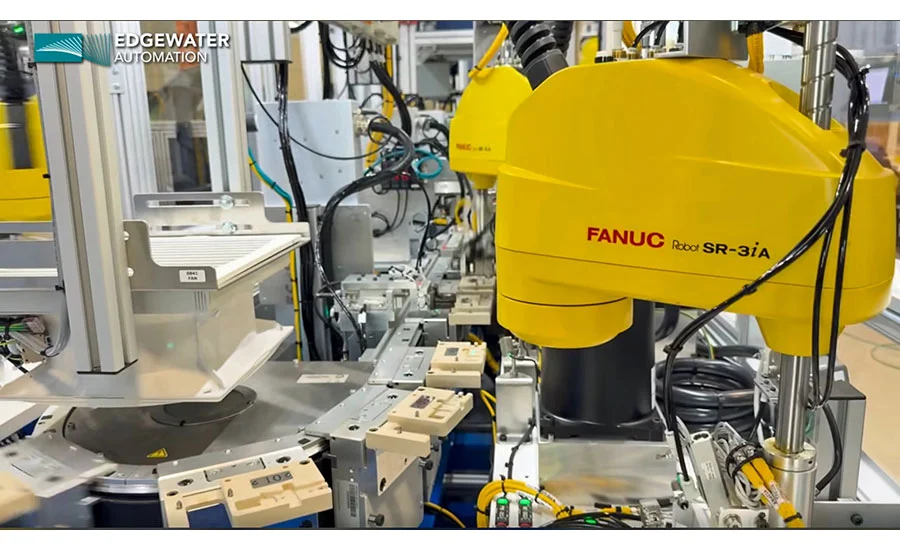
- Advanced Robotics: Fully integrated industrial robotic arms for repetitive assembly tasks.
- Automated Logistics: Intelligent warehouse management systems (WMS) and manufacturing execution systems (MES) to track components from arrival to the finished product.
- Precision Quality Control: The production line will feature high-tech inspection protocols, including X-ray scanning and coordinate measurement, ensuring that the mass-production process does not sacrifice the precision for which the brand is known.
This move toward a "lights-out" or highly automated manufacturing environment is a clear indicator that Bambu Lab is positioning itself to compete with the likes of major consumer hardware manufacturers, rather than traditional boutique 3D printer companies.
Economic Obligations and Market Reality
The investment is not without significant pressure. The land acquisition comes with stringent economic covenants imposed by the Guangming District. The facility is required to generate at least RMB 2 billion (approximately USD 298 million) in industrial output within its first year of operation. Subsequently, the company must maintain an average annual output of at least RMB 4.5 billion (approx. USD 507 million) for the duration of the land-use agreement. Over a five-year cycle, the facility is contractually obligated to produce at least RMB 22.5 billion (USD 3.4 billion) in output.
These figures clarify that while the "three million printers" figure is a target capacity, the company is operating under strict fiscal oversight. Even at maximum capacity, the revenue-per-unit metrics suggest that the company intends to maintain a high-volume, cost-efficient model.
The context for these targets is provided by industry data: China’s 3D printer exports surged from 1.87 million units in 2022 to over 5 million in 2025. By creating a facility capable of churning out three million units annually, Bambu Lab is essentially creating a factory that—on its own—could represent a massive share of the national export volume.
Implications for the Global 3D Printing Industry
The construction of this facility carries profound implications for the global additive manufacturing landscape. For decades, the industry has been characterized by "specialist machine-tool" economics: low-volume production, high-cost components, and fragmented supply chains.
Bambu Lab’s pivot to a vertically integrated, mass-production campus challenges this legacy model. By internalizing everything from component manufacturing and material R&D to final software integration, the company is insulating itself from supply chain volatility while simultaneously driving down the cost of ownership for the end-user.
A New Era of Industrialization
The Guangming project is a testament to the "industrialization" of 3D printing. As desktop printers move from hobbyist curiosities to essential manufacturing tools, the need for reliable, high-volume production becomes paramount.
Furthermore, the proximity of this project to the world’s largest 3D printer farm—an existing, massive installation of 15,600 Bambu Lab machines in the same district—suggests that the company is creating a feedback loop. They are testing their own machines at scale, using that data to improve their hardware, and then mass-producing those improvements in the very same region.
Conclusion: A Monument to Momentum
While the current status of the site—a patch of land being prepped with temporary access—might seem humble, it represents a pivotal moment in technology history. The transition from a series of rented, fragmented workshops to a unified, purpose-built, and highly automated super-factory is the hallmark of a company moving into its next maturity phase.
As the trees are cleared and the foundations for the 376,000-square-meter complex are poured, the 3D printing industry is watching closely. If Bambu Lab succeeds in its ambition to produce three million units annually, the definition of what constitutes a "3D printer company" will change forever. The era of the artisanal printer manufacturer is fading, replaced by the era of the high-speed, automated, and globalized industrial powerhouse. In the heart of Shenzhen, the future of manufacturing is not just being printed—it is being built at an industrial scale that was, until very recently, unimaginable.