




The landscape of global manufacturing is undergoing a profound metamorphosis. For decades, the image of industrial automation was defined by the "fixed-base" paradigm: massive, caged robotic arms bolted to concrete floors, executing the same programmed arc thousands of times a day in automotive plants and appliance assembly lines. However, a new frontier is emerging—one defined by mobility, adaptability, and human-machine collaboration.
At the vanguard of this shift is the textile industry, a sector traditionally reliant on manual labor for the most tedious and physically taxing tasks. A groundbreaking pilot program at the Spanish textile manufacturer CETRIKO, utilizing the TIAGo Pro mobile manipulator from PAL Robotics, represents a pivotal moment in this transition. By integrating advanced perception and mobile dexterity into the factory floor, the industry is moving toward a model where robots are no longer static tools, but fluid teammates capable of operating alongside human workers.
Main Facts: The TIAGo Pro and the CETRIKO Initiative
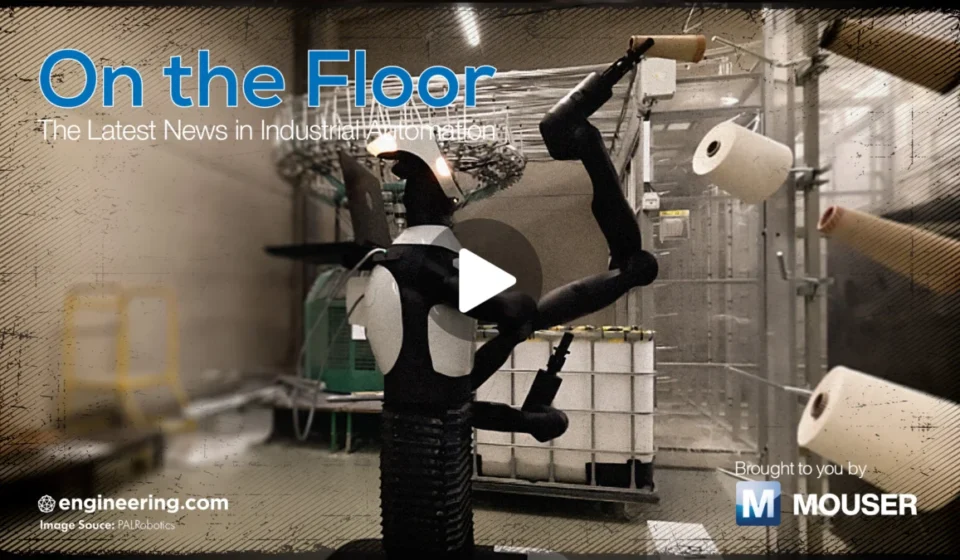
The core of this technological evolution is the TIAGo Pro, a platform engineered by Barcelona-based PAL Robotics. Unlike traditional industrial robots, which require extensive safety fencing and rigid environmental parameters, the TIAGo Pro is designed as a mobile manipulator. It combines a wheeled mobile base with a high-degree-of-freedom torso and a sensitive, dexterous robotic arm.
In the CETRIKO pilot program, the robot is tasked with the material handling of yarn cones. This process, which involves lifting, transporting, and precisely positioning heavy yarn cones, has historically been a significant source of musculoskeletal strain for human workers. The repetition of these movements, combined with the weight of the materials, makes it an ideal candidate for automation.
Key technical advantages of the TIAGo Pro in this setting include:
- Autonomous Navigation: The ability to map, localize, and traverse the factory floor without external guidance systems or floor tracks.
- Human-Centric Design: Built-in safety features that allow for "collaborative" operation, meaning the robot can sense human presence and adjust its trajectory to avoid collisions.
- Precision Manipulation: Advanced sensory feedback that allows the robot to handle delicate textile materials without causing fraying or damage.
Chronology: From Static Automation to Collaborative Mobility
The history of robotics in manufacturing has followed a distinct trajectory, one that mirrors the broader evolution of industrial technology.
The Era of Hard Automation (1960s–1990s)
During this period, the deployment of industrial robots was almost exclusively limited to sectors with high-volume, low-variability requirements, such as the automotive industry. Robots were "blind" and "deaf," acting only on rigid, pre-programmed code. Any deviation in the environment—a slightly misaligned part or a worker stepping into the workspace—would result in an emergency stop or, worse, a safety incident.
The Rise of Perception and Connectivity (2000s–2015)
As sensor technology (LiDAR, 3D vision systems) matured, robots began to "see" their surroundings. This allowed for the early stages of Collaborative Robotics (cobots). In this era, companies began to experiment with robots that could work in closer proximity to humans, provided the robots remained in fixed locations.
The Mobile Revolution (2016–Present)
The current era is defined by the "Mobile Manipulator." By marrying the robotic arm with an Autonomous Mobile Robot (AMR) base, manufacturers like PAL Robotics have unlocked a new level of versatility. The CETRIKO pilot program represents the current "state-of-the-art" in this timeline: the application of these mobile units to non-traditional, soft-goods manufacturing environments where floor space is often cluttered and dynamic.
Supporting Data: Why Textiles Need Robotics
To understand the necessity of this shift, one must look at the data regarding labor and efficiency in the textile industry. According to the International Federation of Robotics (IFR), while textile manufacturing has been slower to adopt robotics than heavy industry, it is now the fastest-growing sector for robotic investment.
The Ergonomic Imperative
Manual material handling in textile mills involves constant lifting, bending, and twisting. Statistics from the Occupational Safety and Health Administration (OSHA) and equivalent European bodies indicate that over 30% of workplace injuries in textile manufacturing are related to repetitive strain or overexertion. By offloading these tasks to a TIAGo Pro, companies like CETRIKO are not just seeking throughput efficiency—they are investing in workplace longevity and reducing the high turnover rates associated with physically grueling labor.
The Economic Case
The cost of downtime in textile manufacturing is substantial. Traditional fixed automation often requires weeks of downtime for installation and integration. Mobile robotics, by contrast, can be deployed with minimal infrastructure changes. The IFR reports that "mobile manipulation" units can potentially increase throughput by up to 25% in environments where human-robot handoffs are frequent, as the robots can handle the "heavy lifting" while humans perform the high-skill inspection and quality control tasks.
Official Responses and Industry Perspectives
The partnership between PAL Robotics and CETRIKO has drawn significant attention from industry analysts. In discussions surrounding the pilot, the focus has shifted from "replacing workers" to "augmenting capabilities."
"The goal of the TIAGo Pro deployment is to empower our workforce," stated a spokesperson for the project management team at CETRIKO. "By removing the repetitive, high-stress tasks associated with yarn cone positioning, we allow our operators to focus on the more nuanced aspects of textile quality, machine maintenance, and supply chain management. The robot is not a replacement for our staff; it is an extension of their capabilities."
Experts at PAL Robotics have also emphasized the "safety-first" design philosophy. "When we designed the TIAGo Pro, we didn’t just think about the mechanical arm," says a lead engineer at the firm. "We thought about the environment. Factories are social spaces. By implementing advanced obstacle avoidance and predictive pathing, we ensure that the robot is a colleague, not a hazard."
Mouser Electronics, which supports these advancements through the distribution of the essential sensors and microprocessors that power these robots, views this as a bellwether for the future. "The synergy between mobile hardware and intelligent software is the next great industrial wave," said a representative from Mouser. "The CETRIKO case study proves that if you can automate in the complex, fabric-heavy environment of a textile mill, you can automate almost anywhere."
Implications: The Future of the Factory Floor
The successful implementation of mobile manipulators in the textile industry has far-reaching implications for the global economy.
1. Reshoring of Textile Manufacturing
One of the primary reasons textile manufacturing migrated to regions with lower labor costs was the reliance on manual labor for material handling. As mobile robotics reduces the "labor penalty" of textile production, developed nations may find it economically viable to "reshore" production. This would shorten supply chains and reduce the carbon footprint associated with global shipping.
2. The Rise of the "General Purpose" Robot
The TIAGo Pro is not a "specialized" robot. It is a general-purpose manipulator. This means that if a textile plant changes its product line, the robot does not need to be scrapped. It can be reprogrammed to pick and place different materials, navigate new routes, or interface with different machinery. This flexibility is the "Holy Grail" of modern manufacturing.
3. Human-Robot Socialization
The most significant long-term implication is the normalization of robots in human workspaces. As workers become accustomed to sharing the floor with mobile manipulators, the "fear" of automation is expected to wane. This cultural shift is necessary for the next generation of industrial automation, where robots and humans will work in a seamless, unified team.
4. Sustainability and Waste Reduction
Precision in material handling reduces damage to raw materials. In the textile industry, where yarn cones can be easily damaged, the consistent, gentle handling provided by a robot leads to less waste. This contributes to the industry’s broader push toward circularity and sustainable production.
Conclusion
The pilot program at CETRIKO, facilitated by the TIAGo Pro from PAL Robotics, is more than just a successful experiment in automation—it is a blueprint for the future. By moving away from the rigid, caged robotic cells of the 20th century and embracing the fluid, collaborative, and mobile systems of the 21st, the textile industry is proving that even the most traditional crafts can benefit from cutting-edge innovation.
As we look toward the next decade, the integration of mobile manipulators will likely become the standard rather than the exception. For manufacturers, the choice is no longer between humans and machines, but rather how to most effectively integrate both to create a safer, more efficient, and more sustainable industrial future. The loom of the future is mobile, intelligent, and working right alongside us.