



California Fortifies Its Electric Vehicle Future: A Legislative Push for Independence Amid Federal Friction

By Stewart Burnett
California is decisively positioning itself to sustain its electric vehicle (EV) adoption trajectory independently of federal incentives, shifting political tides, or shifting Washington administrations. In a sweeping legislative move on September 20, Governor Gavin Newsom signed a package of six targeted bills designed to accelerate EV adoption, slash bureaucratic red tape, expand charging infrastructure, and enhance consumer transparency.
Coming at a time when zero-emission vehicles (ZEVs) have captured 19.1% of all new vehicle sales in the state during the second quarter of 2026, this strategic legislative package builds upon existing consumer incentives like the MyFirstEV rebate program. More importantly, it creates a robust, self-sustaining state-level framework that insulates California’s green transportation goals from ongoing federal gridlock and legal challenges over vehicle emissions standards.
Main Facts
The newly minted legislative package consists of six specific bills—SB 969, SB 1283, AB 1820, SB 1213, SB 1267, and SB 615—each designed to dismantle systemic bottlenecks in California’s clean transportation ecosystem.
- Streamlining Physical Infrastructure: SB 969 modernizes a historically outdated inspection regime that has long delayed public chargers from coming online. It allows original equipment manufacturer (OEM)-tested charging units to activate faster while preserving consumer protection safeguards. Concurrently, SB 1283 expands streamlined permitting rules to cover critical ancillary work, such as electrical upgrades, trenching, solar canopies, and battery storage.
- Addressing Access Inequities: AB 1820 directly targets the persistent accessibility gap for residents of multi-family housing who lack private driveways or garages. By reducing permitting barriers and municipal fees, the bill incentivizes charger installations at apartment complexes and mixed-use developments. SB 1267 complements this by easing charging access restrictions for homeowners’ association (HOA) residents.
- Enhancing Consumer Transparency: SB 1213 introduces rigorous price and incentive transparency specifically tailored for zero-emission commercial trucks. Meanwhile, SB 615 mandates clearer, standardized battery health and performance disclosures, empowering consumers to make informed choices when comparing competing EV models.
- The Broader Financial Backing: These statutory changes are supported by the MyFirstEV rebate initiative, which offers instant point-of-sale rebates of up to $3,500 for new ZEVs and $1,750 for used models. Funded through a $135.5 million state investment matched dollar-for-dollar by participating automakers, the program delivers a combined $271 million in consumer savings. This sits under a wider $600 million clean-vehicle funding umbrella derived from Cap-and-Invest revenues and smog-abatement fees.
Chronology of Events
To understand how California arrived at this legislative milestone, it is essential to trace the historical and recent chronology governing the state’s aggressive climate policies:
- The Nixon Administration Era: The foundation for California’s regulatory autonomy was established through Section 209 of the federal Clean Air Act. This waiver granted California the unique legal authority to set vehicle emissions standards stricter than federal baselines, recognizing the state’s severe and unique smog challenges.
- Section 177 Adoption (Decades Following): Leveraging California’s trailblazing status, roughly a dozen other states—including New York, Washington, and Massachusetts—adopted California’s stricter standards under Section 177 of the Clean Air Act, binding their automotive markets to California’s regulatory trajectory.
- Recent Years (Leading to Q2 2026): California steadily ramped up its clean transportation targets, backed by multi-million-dollar funding rounds from Cap-and-Invest revenues. Programs like Clean Cars 4 All and the Clean Truck and Bus Voucher Incentive Project laid the groundwork for mainstream adoption. By the second quarter of 2026, ZEV market share surged to 19.1% of total new vehicle sales statewide.
- September 20, 2026: Governor Gavin Newsom officially signs the six-bill legislative package into law, marking a deliberate shift from simply offering consumer rebates to structurally reforming the state’s permitting, inspection, and infrastructure deployment processes.
- Present Day: The state finds itself embroiled in high-stakes federal court battles. While the Trump administration moves via the EPA and Department of Justice to revoke or reclassify California’s Section 209 waiver, California Attorney General Rob Bonta leads aggressive counter-lawsuits. Federal courts have responded by issuing injunctions that maintain California’s regulatory authority while appeals process through the judicial system.
Supporting Data and Scale of the Challenge
While California’s legislative ambitions are clear, the empirical data highlights both the remarkable progress made and the monumental logistical challenge ahead.
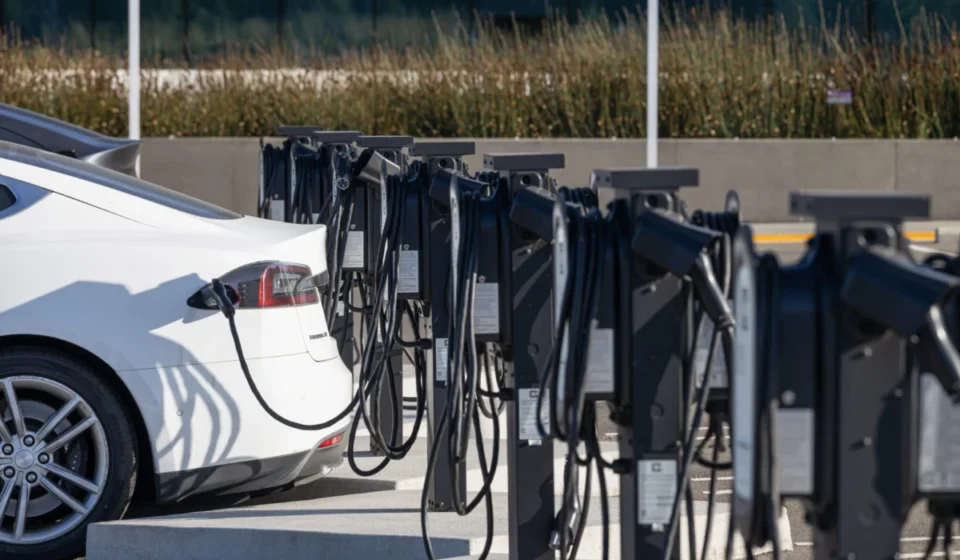
- Current Infrastructure Inventory: California currently operates over 216,445 public and shared charging plugs statewide. This footprint includes more than 20,000 dedicated DC fast-charging ports designed for rapid long-distance travel.
- Fiscal Allocations: Beyond the $271 million MyFirstEV initiative, the California Energy Commission (CEC) has separately allocated $98.5 million in light-duty ZEV infrastructure funding for the current fiscal year. This is integrated into a broader $600 million clean-vehicle investment strategy.
- The Daily Build-Out Deficit: According to Electric Vehicle Charging Association Chair Matthew Chen, the raw scale of the infrastructure deficit is staggering. Meeting California’s long-term clean transportation and climate goals requires the continuous construction of more than 400 new chargers every single day through 2030.
- Market Reach: Because approximately a dozen major states follow California’s emissions framework under Section 177, the practical market reach of these state-level policies influences a massive share of the entire United States automotive manufacturing and retail landscape.
Official Responses and Stakeholder Perspectives
The legislative package has elicited a spectrum of reactions from industry leaders, environmental advocates, and legal defenders of the state’s climate regime.
Proponents of the legislation, including clean energy trade groups and consumer advocates, have praised the bills for targeting the most frustrating friction points in the ownership and installation lifecycle. Electric Vehicle Charging Association Chair Matthew Chen acknowledged the bold scope of the initiative while throwing light on the operational hurdles that remain. "Meeting California’s clean transportation goals means building more than 400 new chargers a day, every day, through 2030," Chen noted, emphasizing that legislative text must now be matched by aggressive execution from private operators and regional utilities.
Automakers participating in the MyFirstEV program have expressed cautious optimism, noting that point-of-sale rebates heavily stimulate consumer demand without relying on federally appropriated funds that may be politically volatile.
On the legal front, California Attorney General Rob Bonta’s office has remained steadfast in its defense of the state’s regulatory sovereignty. In public statements regarding ongoing federal litigation, Bonta’s office has emphasized that California possesses both the legal foundation under the Clean Air Act and the moral imperative to protect public health from vehicular pollution, regardless of shifting political winds in Washington, D.C.
Implications for California and the National Automotive Market
The signing of these six bills carries profound implications that extend far beyond California’s borders, reshaping the future of the American automotive industry.
1. Insulation from Federal Policy Shifts
By shoring up state-level funding mechanisms, streamlining local permitting, and directly addressing multi-family residential charging gaps, California is effectively climate-proofing its EV market. If federal tax credits, rebates, or zero-emission mandates are rolled back, altered, or terminated by future federal administrations, California’s internal market levers—bolstered by Cap-and-Invest revenues and private automaker matching funds—provide a resilient financial and regulatory buffer.
2. The Multi-State Regulatory Ripple Effect
Because Section 177 of the Clean Air Act binds roughly a dozen states to California’s tailpipe standards, any structural improvements in EV accessibility, battery transparency, and heavy-duty truck incentives in Sacramento ripple outward. Automakers cannot easily build separate compliance strategies for individual states; therefore, California’s push to ease infrastructure bottlenecks directly influences vehicle availability, pricing, and technology standards nationwide.
3. Overcoming Practical Implementation Hurdles
Despite the optimism surrounding SB 969, SB 1283, and AB 1820, experts caution that regulatory relief is only one piece of a complex puzzle. Streamlining inspections and permitting addresses bureaucratic friction, but it does not automatically resolve underlying engineering constraints. Utilities, commercial developers, and charging operators must still grapple with local electrical grid capacity limitations, high capital costs, and complex financing structures.
Closing the 400-charger-a-day gap will require unprecedented coordination between municipal governments, investor-owned utilities (such as PG&E, Southern California Edison, and San Diego Gas & Electric), and private-sector capital.
Conclusion
California’s September 20 legislative package represents a defining moment in the state’s green transition. By shifting focus from high-level aspirational targets to granular, operational reforms in permitting, housing access, and truck transparency, the state is building the structural plumbing necessary for a mass-market electric vehicle future. As legal battles over the Clean Air Act waiver play out in federal courts, California is ensuring that, win or lose in Washington, its roads will continue leading the nation toward an electrified horizon.