


NVIDIA Redefines Robotics Development: Isaac ROS 5.0 Ushers in the Era of Agentic Workflows

At the annual ROSCon conference in Toronto, NVIDIA Corporation unveiled Isaac ROS 5.0, a monumental update to its flagship GPU-accelerated robotics framework. As the robotics industry faces mounting pressure to accelerate time-to-market and manage increasingly complex codebases, NVIDIA’s latest iteration promises to bridge the gap between AI research and industrial deployment. By integrating "agentic" workflows—AI systems capable of autonomous reasoning and task execution—into the development lifecycle, NVIDIA is fundamentally changing how robots are built, programmed, and deployed.
This release marks a significant departure from traditional, manual software development, aiming to automate the "plumbing" of robotics—the repetitive, error-prone tasks that have long plagued developers. With support for ROS 2 Lyrical and Ubuntu 24.04, Isaac ROS 5.0 provides a modernized, high-performance toolkit designed for the next generation of physical AI.
The Core Transformation: From Manual Plumbing to AI Agents
For years, robotics development has been characterized by "friction." Developers spend disproportionate amounts of time configuring environments, fine-tuning perception models, and integrating disparate software libraries. Katie Washabaugh, NVIDIA’s product marketing manager for robotics simulation, highlighted the necessity of this shift during her presentation at ROSCon.
"There’s so much friction in piecing the plumbing together," Washabaugh noted. "In practice, there are so many things that can go wrong, and so many frustrating moments where you are just sitting and waiting. We wanted to address these pain points by allowing AI agents to handle the nitty-gritty of setup, environment configuration, and repetitive fine-tuning."
The introduction of AI agents in Isaac ROS 5.0 allows developers to offload manual labor to intelligent software. These agents can navigate complex codebases and automate the deployment of scripts, effectively acting as an intelligent co-pilot for the roboticist. By providing "agent-ready" documentation and specialized skills, NVIDIA enables developers to focus on higher-level architectural decisions rather than getting lost in configuration files.
A Chronology of Innovation: NVIDIA’s Path to ROS 5.0
The journey toward Isaac ROS 5.0 has been a calculated progression of hardware and software integration. NVIDIA’s commitment to the Robot Operating System (ROS) ecosystem has evolved rapidly over the past decade:
- Foundational Years: NVIDIA began by providing basic hardware acceleration for robotics, moving from a niche hardware provider to a key contributor in the ROS community.
- The Rise of Isaac: The launch of the Isaac platform provided a unified simulation and development environment, allowing developers to test robots in high-fidelity virtual worlds before physical deployment.
- May 2024 (The CUDA Pivot): NVIDIA significantly increased its contributions to ROS 2, focusing on low-level CUDA acceleration. This allowed for seamless GPU offloading for robotics nodes, setting the stage for the current release.
- September 2026 (The Current Milestone): With the release of Isaac ROS 5.0, NVIDIA has reached a state of "full-stack" compatibility. This release incorporates the CUDA acceleration features established earlier in the year while introducing native support for ROS 2 Lyrical and Ubuntu 24.04, ensuring long-term stability for developers.
Supporting Data and Technical Enhancements
Isaac ROS 5.0 is not merely a feature update; it is a performance-oriented overhaul. The technical specifications and new "skills" introduced in this version are designed to maximize throughput for high-performance robotics.
FoundationPose and Perception
One of the most notable additions is the upgrade to FoundationPose, a foundation model for object pose estimation. By introducing an agent-ready inference library, NVIDIA has enabled robots to perceive and track the position and orientation of objects up to 5.5x faster than previous iterations. This leap in speed is critical for real-time manipulation tasks, where millisecond-level latency can mean the difference between a successful grasp and a collision.
Standardized Data Handling
NVIDIA has also contributed a new, standard data-handling interface to ROS 2 Lyrical. This interface ensures that robotics software can operate efficiently across diverse computing hardware, regardless of whether the processing is occurring on a CPU or a GPU. By providing a consistent framework, NVIDIA has removed the need for custom reconfiguration when moving from development environments to production hardware.
Ready-to-Use Skills
The release includes a suite of "Isaac Skills," which are reusable, pre-verified workflows:
- Setup Skills: Automates the mundane task of environment configuration.
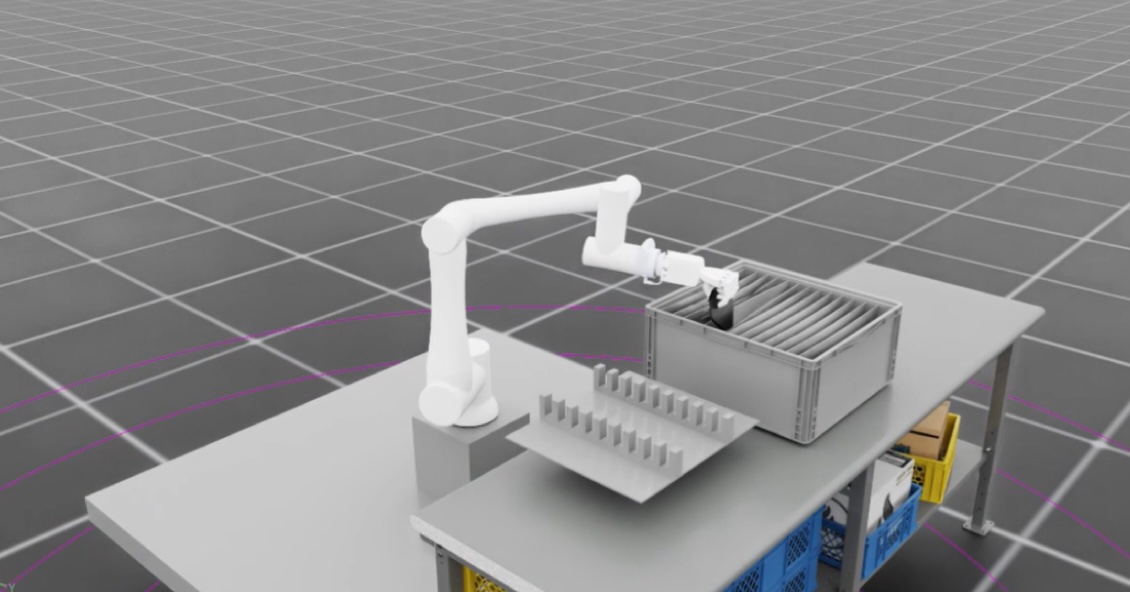
- Manipulation Skills: A "greenfield" area for NVIDIA, providing pre-built modules for complex pick-and-place workflows.
- FoundationStereo Fine-Tuning: A specialized skill that empowers AI agents to adapt stereo perception models to specific camera hardware and lighting environments automatically.
Industry Implications: Why This Matters
The shift toward AI-driven robotics development has profound implications for the manufacturing, logistics, and healthcare sectors.
Bridging the Gap in Manufacturing
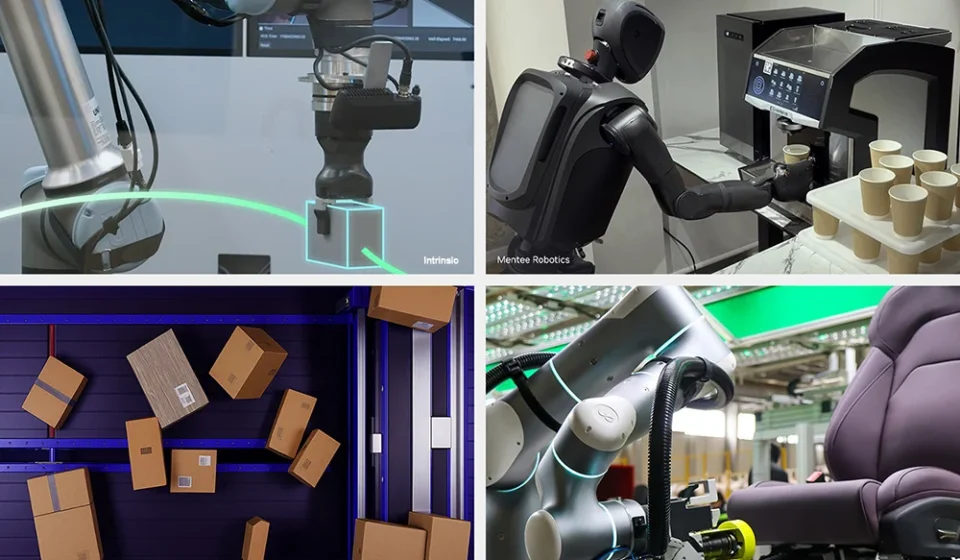
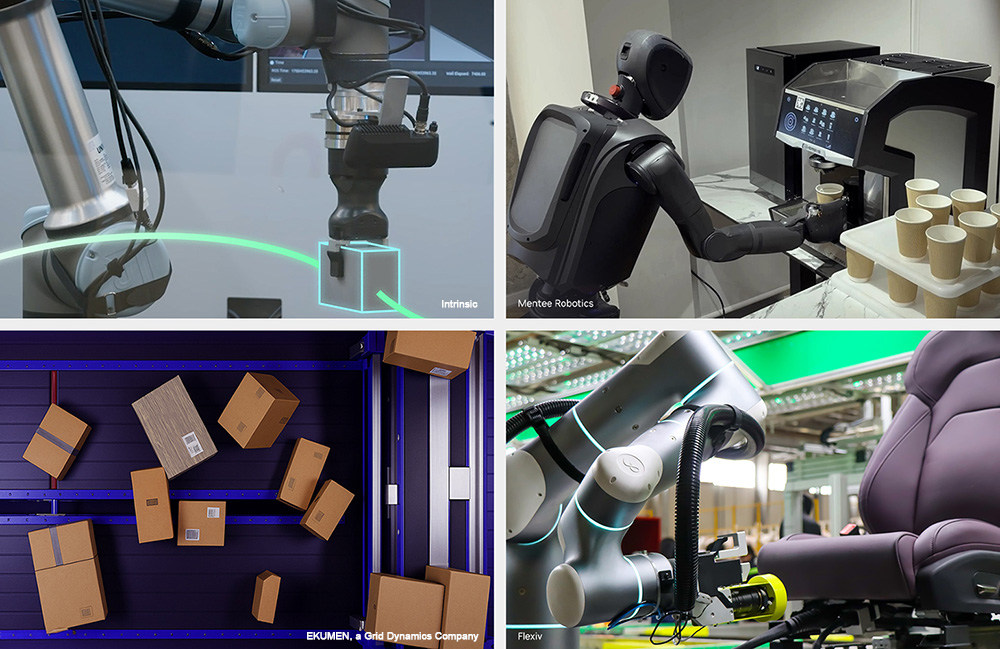
Industry leaders are already leveraging these tools. Companies like Intrinsic, Mentee Robotics, EKUMEN, and Flexiv are among the first to integrate Isaac ROS 5.0 into their workflows. For these organizations, the benefit is twofold: faster deployment and lower overhead. By using NVIDIA’s pick-and-place perception packages, these companies can bypass the development of foundational detection and depth-estimation code, allowing them to focus on the unique value-add of their specific robotics applications.
Hardware-in-the-Loop (HIL) Testing
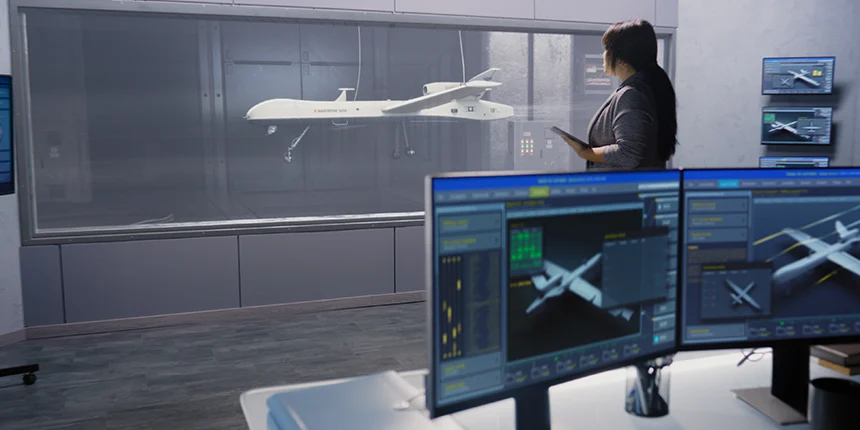
The integration of Isaac ROS with Isaac Sim continues to be a cornerstone of NVIDIA’s strategy. By pairing these tools, companies like Magna are performing hardware-in-the-loop testing, where real-world hardware interacts with a high-fidelity digital twin. This approach minimizes the risk of physical damage during the prototyping phase and provides a safe environment for AI agents to "learn" the physical constraints of their robots.
Official Responses and Strategic Vision
NVIDIA’s strategy remains rooted in the open-source philosophy. Despite the proprietary nature of its hardware, the company views the democratization of AI software as the key to scaling the robotics industry.
"Open source is really the path to bringing this technology to wide-scale deployment," Washabaugh stated. "We can’t imagine everything that can be built with our models and frameworks. We need everyone working on it."
This sentiment reflects a broader industry recognition that robotics is too complex a field to be dominated by siloed, proprietary solutions. By providing a "clean line" from development to deployment, NVIDIA is effectively acting as the backbone of the robotics ecosystem, providing the essential infrastructure upon which the next generation of autonomous machines will be built.
Looking Ahead: The Future of Physical AI
The release of Isaac ROS 5.0 is a testament to the rapid acceleration of the field. As developers adopt these agentic workflows, we can expect to see a surge in the capabilities of autonomous systems. From warehouse robots that can adapt to new environments in minutes to complex collaborative robotic arms that learn new manipulation skills through AI-assisted fine-tuning, the barrier to entry is lowering.
NVIDIA is not targeting a single form factor or industry; rather, it is providing a horizontal platform that allows for modular, scalable innovation. As the ecosystem continues to embrace these tools, the dream of "plug-and-play" robotics is becoming a tangible reality.
For the nearly 1.3 million ROS users worldwide, Isaac ROS 5.0 represents a new frontier. It is an invitation to move beyond the manual constraints of the past and into an era where AI doesn’t just run on robots—it helps design, build, and optimize them. As NVIDIA continues to push the boundaries of what is possible in physical AI, one thing remains clear: the speed of innovation in robotics is no longer just limited by human ingenuity, but by the efficiency of the tools we use to bring that ingenuity to life.