
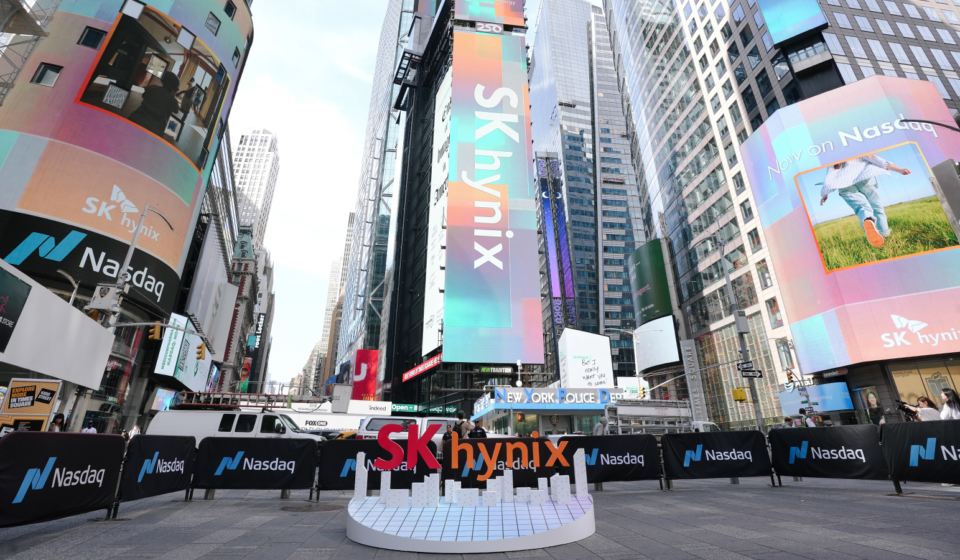

The semiconductor industry is currently navigating a period of unprecedented transformation. At the heart of this shift is a monumental financial event: SK Hynix, the South Korean memory giant, has successfully executed the largest U.S. share sale by a foreign entity in history. By raising $26.5 billion through its American Depositary Receipts (ADR) debut on the Nasdaq, the company has signaled to global markets that the era of artificial intelligence (AI) is not merely a software trend, but a hardware-intensive industrial revolution that requires massive, long-term capital commitment.
The listing, which saw shares surge 13% on their inaugural trading day, pushed the company’s valuation to a staggering $1.2 trillion. This influx of capital is not for dividends or corporate maneuvering; it is earmarked for a gargantuan $733 billion (1,100 trillion KRW) mid-to-long-term domestic investment roadmap. As the world’s leading chipmakers—including Micron and Samsung—race to construct new fabrication plants, the industry is witnessing the birth of a "Silicon Super-Cycle," defined by insatiable demand for high-bandwidth memory (HBM) and advanced NAND storage.
A Chronology of the Capital Surge
The current landscape is the culmination of several years of accelerating demand. Following the post-pandemic correction in the semiconductor market, the emergence of generative AI acted as a catalyst that fundamentally altered the industry’s trajectory.
- Early 2024: Industry analysts began noting a structural shift in memory utilization. While traditional PC and smartphone markets remained sluggish, the "AI server" segment—requiring high-end, power-efficient memory—began to absorb every available unit of HBM3 and HBM3E production.
- Mid-2025: Facing capacity constraints, major players like SK Hynix and Micron began finalizing multi-year, multi-billion-dollar site expansion plans. The focus shifted from incremental process improvements to building massive, state-of-the-art "mega-fabs" designed for the next decade of compute.
- July 2026: SK Hynix officially listed its ADRs on the Nasdaq, marking a historic moment for the semiconductor industry. This move allowed the company to tap into deep U.S. capital pools to finance its massive domestic manufacturing expansion.
- Late 2026 and Beyond: Industry leaders have mapped out a trajectory of continued expansion, with major fabrication plants in Pyeongtaek (Samsung) and Hiroshima (Micron) expected to hit full production capacity by 2028.
The Infrastructure Mandate: Why Memory is the New Oil
The core driver behind this massive injection of capital is the physical limitation of current AI hardware. AI models, which were once confined to the "training phase," are now being deployed at scale in enterprise environments, consumer electronics, and autonomous robotics.

Kwak Noh-Jung, CEO of SK Hynix, has been vocal about the urgency of the situation. During recent investor briefings, he underscored that the "current supply shortage is no longer a temporary fluctuation but a structural reality." According to Kwak, the transition from AI experimentation to AI deployment means that every server rack globally needs to be upgraded with significantly higher memory density and faster throughput.
Supporting Data: The Cost of Competition
The scale of investment required to stay competitive in the memory market has reached historic heights. Micron Technology’s commitment of $250 billion through 2035—spanning facilities in New York and Idaho—is a testament to the "arms race" nature of modern semiconductor manufacturing. Sanjay Mehrotra, CEO of Micron, has framed this not just as a business expansion, but as a pillar of national economic security.
Parallel to this, Samsung Electronics is aggressively advancing the timeline for its P4 and P5 fabrication plants in Pyeongtaek. These facilities are designed to be the backbone of the next generation of DRAM and HBM production. The consensus among market analysts is clear: companies that fail to secure sufficient fabrication capacity today will be effectively locked out of the AI hardware market by 2030.
Analyzing the Demand Drivers
Why is the demand so persistent? Experts point to a diversification of use cases. Dwight Morse, a principal solutions architect at SiliconExpert, explains that the "AI demand has evolved from a concentrated need for training model weights to a distributed need for storage."

"It started with HBM supporting the training of large language models," says Morse. "But now, the demand has spread to high-performance NAND for the storage of tokens and the rapid retrieval required by AI agents."
This sentiment is backed by data from SEMI, the global industry association. Clark Tseng, senior director of industry research, highlights that capital expenditure is a direct response to a "structural market shift." AI-related memory is currently consuming a disproportionate share of total capacity. Furthermore, as legacy hardware is retired in favor of AI-optimized systems, the replacement cycle is creating a permanent floor for demand that did not exist five years ago.
Official Responses and Strategic Pivot
The leadership of these firms is actively working to convince shareholders that the old, cyclical nature of the memory market is a thing of the past. SK Group Chairman Chey Tae-won has been particularly dismissive of "bubble" narratives.
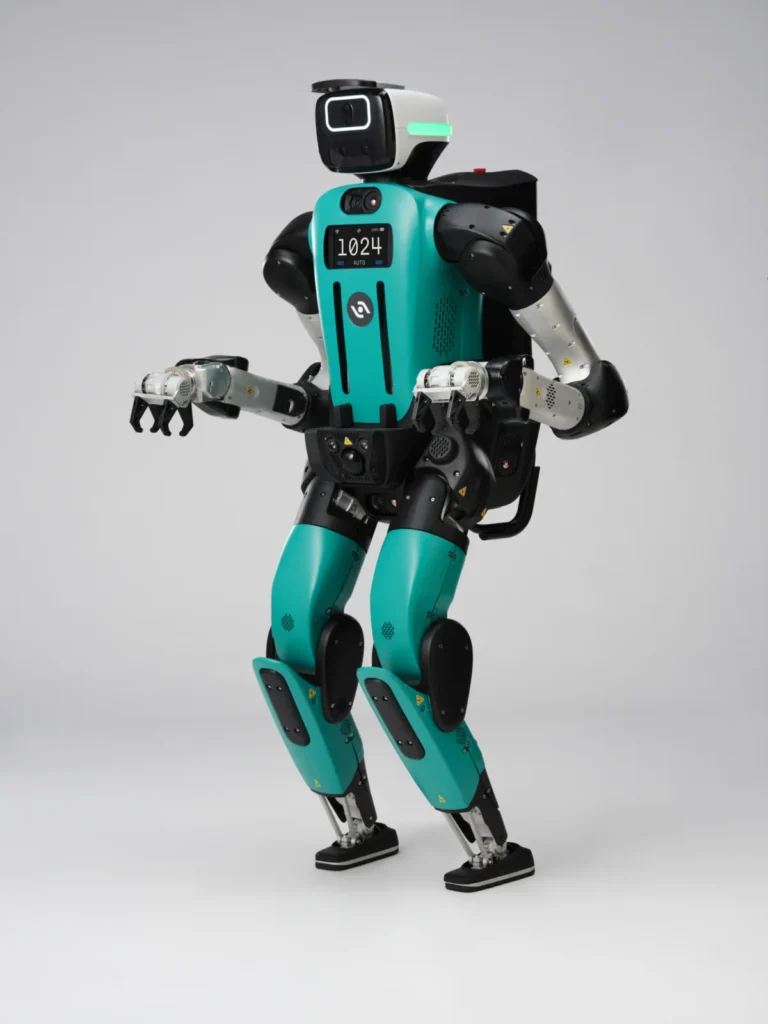
"We’re going to double our capacity within five years, and all my customers say, ‘That’s not enough, man. We need more,’" Chey noted during the Nasdaq debut. He emphasized that the rise of "AI agents" and physical robotics necessitates a level of memory consumption that existing manufacturing bases simply cannot support. According to Chey, the physical AI robot is the next "killer app" for memory, requiring constant, high-speed data processing that will keep fabs running at peak utilization for the foreseeable future.

Macroeconomic Risks and Supply Chain Realities
Despite the optimism, the industry is not without its critics. The Bank for International Settlements (BIS) has warned that the massive capital outlays for AI infrastructure could mirror previous economic bubbles. The risk, according to the BIS, is that if AI software fails to generate sufficient revenue to justify the hardware costs, tech giants might abruptly slash their data center budgets, leaving manufacturers with multi-billion-dollar facilities and no buyers.
Furthermore, the industry is grappling with:
- Consumer Fatigue: TrendForce reports that while AI servers are booming, the PC and smartphone sectors are reaching an affordability limit. Prices for standard memory have been pushed to the ceiling, leading to a "K-shaped" market where high-end AI chips thrive while legacy consumer components stagnate.
- Geopolitical Supply Chain Decoupling: Both SK Hynix and Samsung are actively purging their supply chains of Chinese equipment manufacturers, such as Mattson Technology. This is a defensive move to avoid the fallout of potential U.S. sanctions, but it creates significant operational friction as companies scramble to find alternative sources for critical components like photoresist and thermal processing equipment.
- The Three-Year Lag: A critical vulnerability remains the "lead time" of a fab. A facility broken ground on today will not reach full yield stabilization for at least three years. This leaves the industry exposed to any sudden, unforeseen shifts in demand between now and 2028.
The Path Forward: Resilience or Risk?
As the industry moves toward 2028, the outlook remains cautiously optimistic. Analysts like Tom Hsu at TrendForce believe that the market possesses enough "demand elasticity" to absorb the incoming supply. Furthermore, the ability of firms to modulate their equipment installation pace provides a "safety valve" that can prevent a catastrophic oversupply.
The bottom line is that the memory sector has entered a high-stakes, capital-intensive era where scale is the only metric of survival. The $26.5 billion raised by SK Hynix is not just a financial transaction; it is a declaration of intent. As AI continues to move from the digital realm into the physical world of robotics and automated infrastructure, the companies that control the flow of memory will effectively hold the keys to the next decade of technological progress.

For now, the industry is betting that the demand for memory is no longer just a cyclical trend, but a fundamental prerequisite for the modern, AI-powered global economy. Whether this massive expansion leads to a golden age of silicon or a cautionary tale of over-investment remains to be seen—but for the giants of South Korea and the United States, there is no turning back.