




Hyundai Accelerates Global Supply Chain Localization, Targeting 80% Regional Sourcing and Cutting EV Costs by 2030

Published: September 10, 2026
Author: Phil Neuffer (Adapted by Supply Chain Insights)
Main Facts
In an aggressive push toward long-term resilience, profitability, and market agility, automotive giant Hyundai Motor Company has unveiled a sweeping strategy to localize its global supply chains significantly by the end of the decade. Speaking at the company’s 2026 CEO Investor Day, President and CEO José Muñoz announced that Hyundai plans to source 80% of the parts required for vehicle manufacturing within its operating regions by 2030.
This localization overhaul is central to a broader profit-driven growth roadmap that includes the rollout of more than 100 new products globally over the next four years. To support this expanding product portfolio, Hyundai is heavily investing in regional manufacturing capacity. The automaker is targeting an additional 1.27 million units in global manufacturing capacity by 2030, with a staggering 500,000 of those units slated for the United States alone.
At the same time, the automaker is confronting cost pressures head-on. Hyundai has set a target to slash material costs for its electric vehicles (EVs) by 30% by 2030. Combined with its localized procurement strategy and refined manufacturing and design procedures, the company projects a 3-percentage-point reduction in its cost-to-sales ratio over the next few years.
Hyundai is not alone in this pivot. Across various manufacturing sectors—from automotive to high-tech computing—industry leaders are increasingly dismantling globalized, single-source models in favor of regionalized ecosystems. By shortening supply chains, companies aim to dodge geopolitical risks, navigate shifting tariff landscapes, and insulate themselves against recurring global logistics disruptions.

Chronology of Hyundai’s Strategic Pivot
To understand the scale and velocity of Hyundai’s current localization strategy, it is essential to trace the key milestones that have shaped the company’s operational roadmap over recent years:
- Late 2024 to Early 2025: Facing tightening regulatory standards, fluctuating trade policies, and persistent post-pandemic logistics bottlenecks, Hyundai begins quietly stress-testing its tier-1 and tier-2 supplier networks in North America. Initial assessments highlight heavy reliance on overseas components for flagship models like the Santa Fe and Tucson.
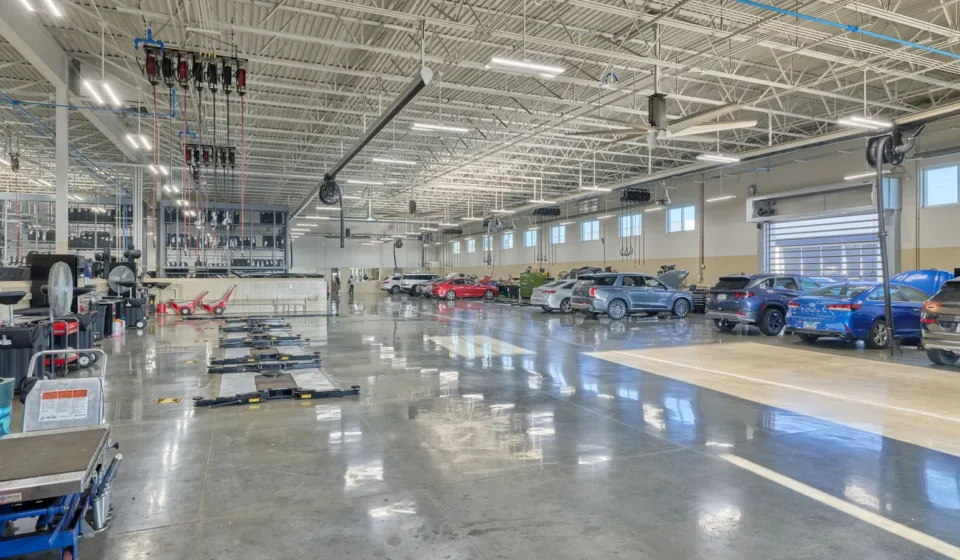
- September 2025: Hyundai showcases its evolving retail and manufacturing footprint during regional facility updates, laying the groundwork for increased localized investment. Industry analysts note a deliberate alignment between the automaker’s product pipeline and domestic assembly capabilities.
- Late 2025 (Approximately One Year Prior to Investor Day): Hyundai announces a monumental $21 billion investment package directed straight into its U.S. operations. This capital injection lays the groundwork for expanded assembly plants, localized battery sourcing, and structural steel partnerships in regions such as Louisiana.
- August 26, 2026: Hyundai formally releases its pre-Investor Day briefings, outlining the macro-target to add 1.27 million units of global manufacturing capacity by 2030, including the crucial half-million-unit boost for the U.S. market.
- September 10, 2026 (CEO Investor Day): President and CEO José Muñoz takes center stage to present the definitive corporate roadmap. He officially declares the 80% regional parts sourcing goal for 2030, details the 90% localization target for the Indian market, and establishes the 30% EV material cost reduction benchmark.
Supporting Data and Financial Metrics
Hyundai’s 2026 Investor Day slidedeck and subsequent financial disclosures paint a clear picture of an automaker optimizing every lever of its balance sheet and supply chain network.
North American Growth and Local Sourcing
The push toward a localized supply chain is already delivering measurable results. According to Hyundai’s internal tracking, the company has successfully increased parts sourcing for its popular Santa Fe and Tucson models sold in the United States by more than 10 percentage points from domestic suppliers over the past two years. This shift minimizes ocean freight exposure, lowers carbon footprints associated with long-haul transit, and aligns the company with evolving regulatory incentives.
The Indian Market as a Global Export Hub
While North America is a primary theater for expansion, Hyundai’s strategy in India serves as a masterclass in cost-efficient scaling. The automaker aims to source a remarkable 90% of the content used for vehicle manufacturing in India locally by 2030.
Highlighting the strategic importance of the subcontinent, CEO José Muñoz noted that Hyundai’s cost position in India is more than 15% better than the company’s global baseline. For Hyundai, India is not merely a localized consumer market; it operates as a vital export engine—a "factory for the world"—capable of feeding surrounding international markets efficiently.

Capacity Expansion Breakdown
- Total Global Capacity Increase by 2030: 1.27 million units.
- U.S.-Specific Capacity Increase: 500,000 units.
- EV Material Cost Reduction Target: 30% reduction by 2030.
- Cost-to-Sales Ratio Reduction: 3 percentage points over the next few years.
Official Responses and Executive Insights
The strategic pivot has been championed aggressively by Hyundai’s executive leadership, who view regionalization not merely as a defensive shield against tariffs, but as an offensive tool for efficiency and market responsiveness.
Reflecting on Hyundai’s 30-year operational history in South Asia, CEO José Muñoz emphasized the deep market knowledge that informs their current strategy:
"We’ve been in India for 30 years learning what customers want and how to deliver in the most efficient way possible," Muñoz stated during the investor presentation. Emphasizing the country’s cost advantages, he added, "India is also a factory for the world. Our cost position there is more than 15% better than our global baseline."
By pairing deep-rooted regional market experience with state-of-the-art manufacturing technology, Hyundai believes it can maintain high product quality while driving down operational expenditures. The company’s ongoing redesign of its vehicle architecture will allow components to be shared more fluidly across localized supplier networks, reducing the complexity traditionally associated with global automotive supply chains.
Broader Industry Implications and Competitor Moves
Hyundai’s aggressive localization blueprint reflects a broader macro-trend sweeping through industrial manufacturing. Across multiple sectors, companies are actively re-architecting their supply chains to guard against geopolitical friction, regulatory swings, and logistics volatility.

Nissan’s U.S. Overhaul
Hyundai is far from the only Japanese or Asian automotive titan recalibrating its North American footprint. Competitor Nissan is currently deep into a comprehensive transformation of its U.S. operations, placing a premium on heightened localization and smart factory deployments. To cement this strategy, Nissan appointed Victor Taylor as the division vice president for U.S. manufacturing, supply chain management, and production engineering. Taylor’s mandate is to streamline Nissan’s domestic network, ensuring tighter alignment between local part suppliers and final vehicle assembly lines.
Lenovo’s Regional Resiliency in Tech
This supply chain philosophy extends well beyond the automotive sector. Technology and computer manufacturers are similarly doubling down on regional production models to mitigate chip shortages and trade policy risks.
For instance, consumer and enterprise electronics giant Lenovo has systematically ramped up its regional manufacturing footprint over the past several years. Benjamin Massie, vice president of global supply chain for servers and storage at Lenovo, highlighted that the company doubled capacity at its North Carolina manufacturing facility over a two-year period. This regional expansion was specifically designed to meet surging domestic server demand while insulating the tech giant from trans-oceanic supply disruptions.
The Road Ahead to 2030
As Hyundai moves closer to its 2030 horizon, the success of its 80% regional sourcing mandate will likely serve as a litmus test for the modern multinational corporation. By binding its manufacturing hubs closer to its consumer bases—whether through a localized U.S. supply chain, a hyper-efficient Indian manufacturing base, or reduced EV material costs—Hyundai is betting that proximity equals profitability.
For supply chain professionals and industry watchers, the message is unmistakable: the era of hyper-globalized, distant sourcing is giving way to localized, agile, and resilient regional ecosystems designed to withstand the unpredictable economic weather of the decades ahead.