

Revolutionizing Automotive Assembly: Visumatic Introduces Advanced Auto-Feed Clip Insertion Systems for Metal and Plastic Fasteners

DETROIT — In the fast-paced world of modern manufacturing, efficiency, precision, and adaptability are the ultimate currencies. As automotive assembly lines and general industrial manufacturing operations face mounting pressure to accelerate throughput while maintaining zero-defect standards, component feeding and fastener installation remain critical bottlenecks. Addressing this ongoing engineering challenge, Visumatic Industrial Products has rolled out its next-generation automated clip insertion technology, designed to handle both metal and plastic fasteners with verifiable, micro-level precision.
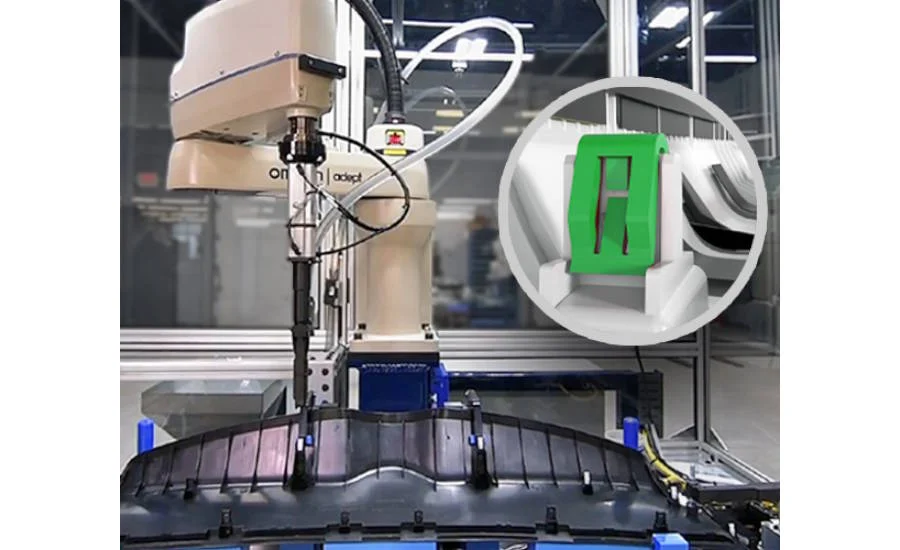
The newly highlighted system introduces sophisticated auto-feed direct-to-insert-point technology engineered to drastically reduce cycle times, minimize operator fatigue, and eliminate the variability inherent in manual fastening. By integrating seamlessly with both collaborative robots (cobots) and traditional heavy-duty industrial robots, Visumatic’s latest machine builder packages represent a significant leap forward in automated assembly systems.
Main Facts: The Technology Driving Visumatic’s Clip Insertion System
At its core, the Visumatic automated clip insertion system is built to solve one of the most tedious and error-prone tasks in industrial assembly: the placement and seating of retaining clips, trim clips, and fastening hardware.
Key technical highlights of the system include:
- Dual Material Capability: The system is fully equipped to automatically feed and install both metallic and polymeric (plastic) clips without requiring major mechanical overhauls.
- Direct-to-Insert-Point Technology: By eliminating intermediate handling steps, the auto-feed mechanism delivers the fastener directly to the point of insertion, ensuring rapid, continuous-cycle operation.
- Robotic Integration: Designed with flexibility in mind, the system is packaged explicitly for deployment on modern collaborative robots (cobots) as well as legacy industrial robotic arms.
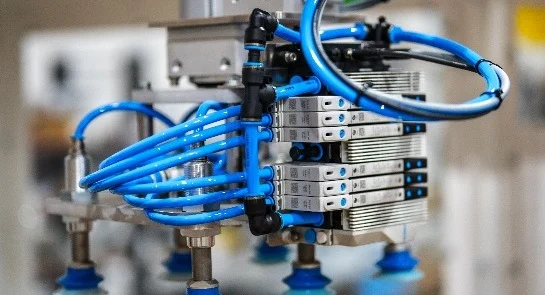
- Engineered Part Interface Tooling: The custom-built tooling is engineered to mirror the exact geometry of the target part tower, ensuring rugged, repeatable insertion even under high-load, high-vibration manufacturing environments.
This technology directly targets automotive assembly plants, tier-one suppliers, and appliance manufacturers where millions of clips are installed annually to secure interior trim, wiring harnesses, exterior body panels, and structural components.
Chronology: The Evolution of Automated Fastening in Manufacturing
To understand the significance of Visumatic’s latest product launch, it is essential to examine the historical trajectory of assembly automation and how fastener handling has evolved over the past several decades.
Pre-Automation Era (Mid-to-Late 20th Century)
For generations, clip and fastener installation was an entirely manual endeavor. Assembly line workers relied on handheld tools or raw finger pressure to snap plastic and metal clips into place. While human dexterity was advantageous for complex geometries, this approach suffered from severe drawbacks: high rates of repetitive strain injuries (RSI) among workers, inconsistent seating depths leading to rattles or loose parts, and notoriously slow cycle times.
The Rise of Semi-Automated Feeding (Late 1990s – 2010s)
As manufacturing plants sought to optimize floor space and labor costs, bowl feeders and vibratory track systems emerged. These systems could orient and feed screws, rivets, and basic clips down a tube to a handheld driver. However, these legacy systems often struggled with delicate plastic clips, which were prone to jamming, deformation, or misfeeding, resulting in costly line stoppages.
The Era of Smart Robotics and Direct-To-Point Integration (Present Day)
The modern manufacturing landscape demands smart, connected, and highly adaptable automation. The integration of artificial intelligence, advanced vision systems, and lightweight collaborative robots has transformed how factories operate. Visumatic’s introduction of its direct-to-insert-point clip insertion technology aligns with this contemporary shift. Rather than forcing integrators to piece together disparate feeding tracks and generic end-effectors, Visumatic provides turnkey machine builder packages tailored for precise, high-speed robotic deployment.
Supporting Data: The Economics and Metrics of Automated Assembly
The business case for adopting automated clip insertion systems like Visumatic’s is underpinned by robust manufacturing metrics regarding labor efficiency, error reduction, and equipment utilization.
1. Cycle Time Reduction and Throughput
In high-volume automotive production, every fraction of a second matters. Manual clip installation typically ranges from 3 to 6 seconds per part, depending on accessibility and component complexity. Automated robotic end-effectors integrated with direct-feed mechanisms can reduce this time to under 1.5 seconds per insertion. Over a standard multi-shift production schedule running thousands of vehicles per day, this reduction translates into thousands of hours of recovered production capacity.
2. First-Pass Yield and Quality Assurance
Quality defects in automotive assembly—such as a poorly seated trim clip leading to cabin rattles or a loose harness clip causing electrical chafing—result in expensive warranty claims, scrap, and rework. Verifiable precision systems incorporate feedback loops, ensuring that every clip is fed under the correct pressure and seated to an exact depth. Data from industrial automation studies indicate that transitioning from manual to automated fastener insertion can decrease assembly defect rates by up to 78%.

3. Ergonomics and Labor Optimization
Labor shortages across the manufacturing sector have forced companies to rethink how they deploy their human workforce. Repetitive manual pushing and snapping motions are prime contributors to carpal tunnel syndrome and shoulder strain. By offloading these ergonomic stressors to collaborative robots equipped with Visumatic tooling, plants can reallocate human operators to higher-value cognitive tasks such as quality inspection, process monitoring, and line optimization.
Industry Responses and Expert Perspectives
Manufacturing engineers and industry analysts have increasingly emphasized the importance of specialized end-of-arm tooling (EOAT) in achieving true lights-out automation. While robotic arms have become commodities, the specialized tooling that interacts with the product remains the differentiator.
Industry experts note that generic grippers often fail when handling complex, asymmetric plastic clips because these components easily flex, twist, or jam within feed tubes. Visumatic’s approach—utilizing engineered part interface tooling that mirrors the exact part tower—addresses this vulnerability directly. By maintaining rigid physical constraints throughout the feed and insertion cycle, the system prevents clip deformation and ensures high repeatability.
Furthermore, the emphasis on collaborative robot (cobot) compatibility opens up new possibilities for smaller manufacturing cells. Unlike heavy industrial robots enclosed behind massive safety cages, cobots can work safely alongside human operators. Packaging Visumatic’s high-speed feed systems for collaborative platforms allows tier-one suppliers to retrofit existing manual assembly stations without undergoing expensive, wall-to-wall factory redesigns.
Broader Implications for the Automotive and Manufacturing Sectors
The deployment of advanced automated assembly technologies carries far-reaching implications for the future of manufacturing design, supply chain resilience, and workforce development.
1. Design for Assembly (DFA) Paradigms
As automated clip insertion systems become more prevalent, product designers and mechanical engineers are altering how they approach Design for Assembly (DFA). Components are increasingly engineered with clear, unobstructed vertical or linear access paths to accommodate robotic insertion tools. This collaborative feedback loop between manufacturing engineers and product designers results in sturdier, more reliably assembled end products.
2. Mitigating Supply Chain Labor Pressures
With persistent labor shortages challenging industrial operations worldwide, automation is no longer viewed merely as a tool for cost-cutting, but as an operational necessity for survival. Technologies that eliminate repetitive, injury-prone tasks help plants maintain consistent production levels regardless of turnover rates or hiring constraints.
3. Future-Proofing Through Modularity
Visumatic’s machine builder packages highlight a broader trend toward modular manufacturing hardware. As consumer preferences shift and vehicle models undergo rapid mid-cycle refreshes, assembly lines must be reconfigured quickly. Modular, robot-agnostic feeding and insertion systems allow manufacturers to swap out interface tooling and reprogram robotic paths with minimal downtime, ensuring maximum asset utilization.
Conclusion
Visumatic Industrial Products’ automated clip insertion technology exemplifies the ongoing transformation of modern manufacturing. By combining rapid auto-feed mechanisms, rugged application-specific tooling, and seamless robotic integration, the system offers a definitive solution to one of automotive assembly’s most persistent mechanical challenges.
As manufacturers continue to pursue higher standards of speed, precision, and worker safety, innovations in specialized automation will remain at the forefront of industrial progress. For engineering teams looking to eliminate bottlenecks, reduce defect rates, and future-proof their production lines, systems that deliver verifiable precision straight to the insert point represent a vital investment in the factories of tomorrow.
For more information on Visumatic’s automated assembly solutions, engineering specifications, and video demonstrations, visit their official website at www.visumatic.com, call 859-255-7907, or email [email protected].