






FDA Retracts Positive Test in Major Cyclospora Outbreak Investigation as Taylor Farms Halts Mexican Imports

By Phil Neuffer | Supply Chain Dive | July 21, 2026
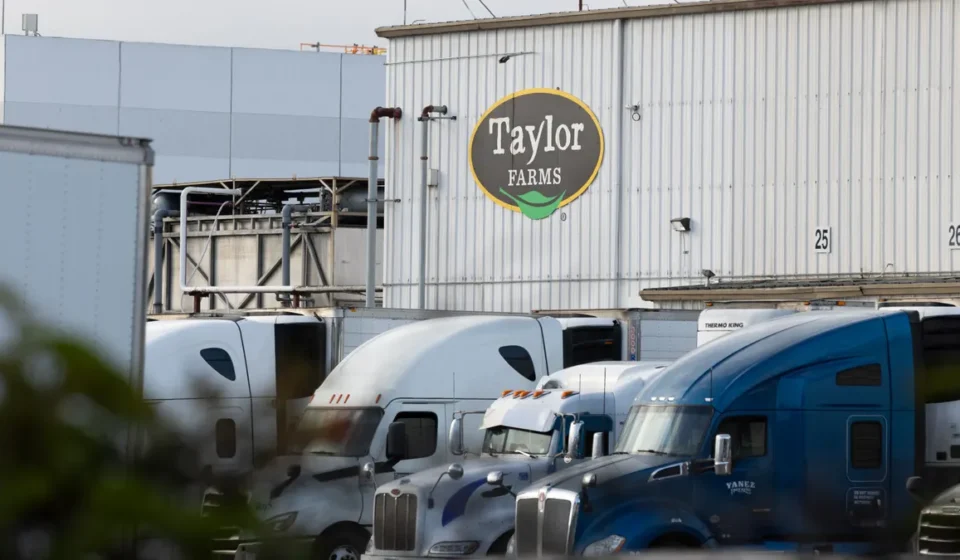
In a significant pivot for a sprawling food safety investigation, the U.S. Food and Drug Administration (FDA) announced on Sunday that it has retracted a previous finding linking a specific sample of lettuce from Taylor Farms de Mexico to the ongoing Cyclospora outbreak. While the agency’s laboratory experts now categorize the initial positive test result as a "false positive," the supplier remains under intense scrutiny as the investigation into more than 1,600 illnesses across five states continues to widen.
The FDA’s Retraction: Understanding the "False Positive"
The FDA’s latest statement marks a rare moment of public correction in the high-stakes world of foodborne illness tracking. Last week, the agency had pointed to a specific sample of iceberg lettuce sourced from Taylor Farms de Mexico as a smoking gun in the outbreak. However, following a rigorous re-review of the data, the agency admitted that the complex detection methods used to identify the Cyclospora parasite—a microscopic organism that causes a debilitating intestinal illness known as cyclosporiasis—had led to an erroneous conclusion.
"Due to the complexity in the detection of Cyclospora, FDA laboratory experts re-reviewed the sample results and have concluded that the finding does not represent true amplification and should be considered a false positive," the agency stated.
The complexity the FDA refers to is well-known among food microbiologists. Cyclospora cayetanensis is notoriously difficult to isolate, particularly from the complex surface of leafy greens. Unlike bacteria such as E. coli or Salmonella, which can often be cultured in a lab, Cyclospora is a protozoan parasite that does not grow in standard laboratory media. Detection typically relies on molecular methods like PCR (polymerase chain reaction), which can sometimes produce "false positives" if the genetic material being detected is degraded or non-viable, or if there is cross-contamination in the laboratory environment.
Chronology of the Outbreak and Response
The crisis began in early July 2026, as public health departments in Indiana, Kentucky, Michigan, Ohio, and West Virginia reported a sudden, sharp spike in gastrointestinal illnesses. By mid-month, the pattern became clear: a significant subset of those who had fallen ill reported consuming meals at Taco Bell locations in the region.
- Early July 2026: Health officials in the Midwest observe a clusters of cyclosporiasis cases.
- July 15, 2026: The FDA identifies a link between the illnesses and iceberg lettuce distributed to various food service establishments, including Taco Bell.
- July 17, 2026: Taco Bell proactively pulls all iceberg lettuce from its U.S. supply chain, citing the FDA’s preliminary investigation.
- July 18, 2026: Public health investigators confirm the number of cases has reached approximately 1,600.
- July 19, 2026: Taylor Farms issues a voluntary recall of all iceberg lettuce sourced from central Mexico.
- July 20, 2026: The FDA issues a formal correction, stating the initial positive sample from Taylor Farms de Mexico was a false positive.
- July 21, 2026: Taylor Farms announces it will cease sourcing from the central Mexico region for the remainder of the 2026 growing season.
Supporting Data and The Scope of the Crisis
The scale of this outbreak is substantial. Cyclosporiasis is characterized by watery diarrhea, abdominal cramping, nausea, and fatigue. Symptoms can persist for weeks or even months if left untreated. The 1,600 cases documented by the CDC and state partners represent a significant burden on regional healthcare systems.
While the FDA has retracted the specific test result, the epidemiological evidence linking the illnesses to the general supply chain remains strong. The investigation continues to focus on the agricultural practices in central Mexico. The decision by Taylor Farms to pull all iceberg lettuce from that region suggests a high degree of confidence by the supplier that the risk—even if not yet pinpointed to a single facility—is concentrated in the local growing environment.
Crucially, the recall does not impact Taylor Farms-branded products sold directly to consumers in grocery stores. Instead, the recall focuses on "private-label" shredded lettuce and food service packs typically used by restaurant chains. This distinction is vital for consumers, as the primary exposure vector appears to be the restaurant-level supply chain rather than retail packaged salads.
Official Responses from Stakeholders
Taylor Farms
Taylor Farms has adopted a strategy of extreme caution. By voluntarily suspending operations in central Mexico, the company is attempting to insulate its brand from the ongoing uncertainty. In a statement released Monday, a spokesperson emphasized that the company is cooperating fully with the FDA and state health officials to identify the potential source of contamination.

"The safety of our products and the health of our customers are our highest priorities," the company stated. "While the FDA has retracted the specific laboratory finding regarding our facility, we recognize the severity of this outbreak and are taking proactive steps to remove all iceberg lettuce sourced from the central Mexico region from our supply chain for the duration of the season."
Taco Bell
Taco Bell’s response has been swift and decisive, reflecting the brand’s desire to maintain consumer trust. The company confirmed on Friday that it had completed the removal of all affected lettuce from its U.S. restaurants. The chain is now sourcing its lettuce from alternative regions, a logistical shift that could impact supply availability in the short term.
FDA’s Stance
The FDA is currently walking a fine line. It must maintain public confidence while ensuring that its investigations are based on irrefutable science. The admission of a "false positive" is intended to maintain transparency, but it also highlights the inherent difficulties in tracing foodborne illness outbreaks in a globalized, just-in-time food supply chain. The agency says it is continuing to conduct environmental assessments in Mexico to determine if other factors, such as water quality or irrigation practices, could have contributed to the outbreak.
Implications for the Food Supply Chain
This incident serves as a stark reminder of the vulnerabilities within the fresh produce industry. Leafy greens are a particularly high-risk commodity because they are consumed raw and are often handled by multiple parties between the field and the plate.
1. Increased Scrutiny on Global Sourcing
The reliance on central Mexico for iceberg lettuce during the summer months is common, but this outbreak may force retailers and food service giants to reconsider their sourcing strategies. Increased diversification of suppliers may become the new standard to prevent a single regional issue from impacting a national or multi-state chain.

2. Technological Advancements in Traceability
Industry experts are increasingly calling for better blockchain-based traceability. If a company can pinpoint the exact field, date of harvest, and irrigation source for every head of lettuce in its inventory, recalls can be surgical rather than broad. This incident, where a broad recall was necessary because of a lack of definitive testing, highlights the financial and operational costs of current, less-granular traceability methods.
3. The Future of Food Safety Testing
The "false positive" incident underscores the need for more reliable, rapid diagnostic tools. The industry is looking toward next-generation sequencing (NGS) and improved on-site testing kits that could provide faster, more accurate results. However, until such technology is widely deployed, the industry remains at the mercy of complex lab analysis that can, as seen here, sometimes fall short.
4. Consumer Confidence
As the investigation unfolds, the greatest challenge for brands like Taylor Farms and Taco Bell will be the restoration of public trust. When public health agencies issue warnings, consumers often associate the risk with the entire category of food. The challenge for the industry is to communicate that the risk is contained and that the supply chain is adapting, while also acknowledging the legitimacy of the consumers’ health concerns.
For now, the investigation continues. While the FDA’s retraction removes one piece of the puzzle, the underlying mystery of the 1,600 illnesses remains. Health officials continue to monitor the situation, urging consumers to be aware of the symptoms of cyclosporiasis and to consult their healthcare providers if they fall ill after dining out. The industry, meanwhile, remains on high alert, waiting for the final findings that will determine the long-term impact on the Mexican agricultural sector and the leafy greens market at large.