
Breaking the "Forever" Bond: How German Researchers Are Revolutionizing PFAS Destruction

In the silent, invisible corners of our global water cycle, a persistent threat has been accumulating for decades. Per- and polyfluoroalkyl substances (PFAS)—a vast family of over 10,000 synthetic industrial chemicals—have earned the grim moniker "forever chemicals" due to their uncanny ability to resist the natural degradation processes that break down most organic matter. Now, a team of researchers at the Helmholtz-Zentrum Dresden-Rossendorf (HZDR) in Germany is mounting a technological offensive against these substances, testing two innovative methods designed to physically shatter the molecular chains that have rendered these chemicals a permanent fixture in our environment.
The Challenge of the "Forever Chemical"
To understand the scale of the HZDR mission, one must first understand the structural resilience of PFAS. These compounds derive their extraordinary stability from carbon-fluorine bonds, which are among the most robust links in the entire field of organic chemistry. Because they are virtually indestructible, PFAS have been utilized since the mid-20th century in everything from non-stick cookware and firefighting foams to water-repellent clothing and food packaging.
However, this industrial utility has come at a staggering environmental cost. PFAS do not remain within the confines of manufacturing facilities; they migrate through wastewater systems, eventually accumulating in rivers, lakes, and oceans. Recent environmental surveys have identified high concentrations of these chemicals in the Elbe River, signaling a significant health risk to local ecosystems and, by extension, human populations. While the biological impacts of many PFAS remain under study, several are already suspected of causing severe health issues, including DNA damage and increased cancer risks.
A Chronology of Innovation at HZDR
The drive to neutralize these substances is a centerpiece of Germany’s "National Water Strategy," a comprehensive government initiative aimed at securing the nation’s drinking water supply and protecting vital water resources. The HZDR’s research program, which represents a shift from merely relocating or filtering PFAS to systematically destroying them at the molecular level, began in earnest in 2022.
Phase 1: Hydrodynamic Cavitation (2022–Present)
Led by postdoctoral researcher Dr. Ysabel Huaccallo-Aguilar, the initial phase of the research focused on the potential of hydrodynamic cavitation. In this process, PFAS-contaminated water is forced through a constriction, creating a localized pressure drop that triggers the formation of tiny vapor bubbles. As the water moves past the restriction, the pressure rises, causing these bubbles to implode with violent intensity.
During these implosions, local temperature spikes reaching several thousand degrees Celsius are generated. Because long-chain PFAS are surfactants, they naturally accumulate on the surface of these bubbles, placing them in the "eye of the storm" when the bubbles collapse. This process also releases highly reactive hydroxyl radicals, which researchers believe act as secondary agents, attacking intermediate breakdown products to further accelerate the degradation of the PFAS molecular structure.
Phase 2: Cold Atmospheric Plasma (2023–Present)
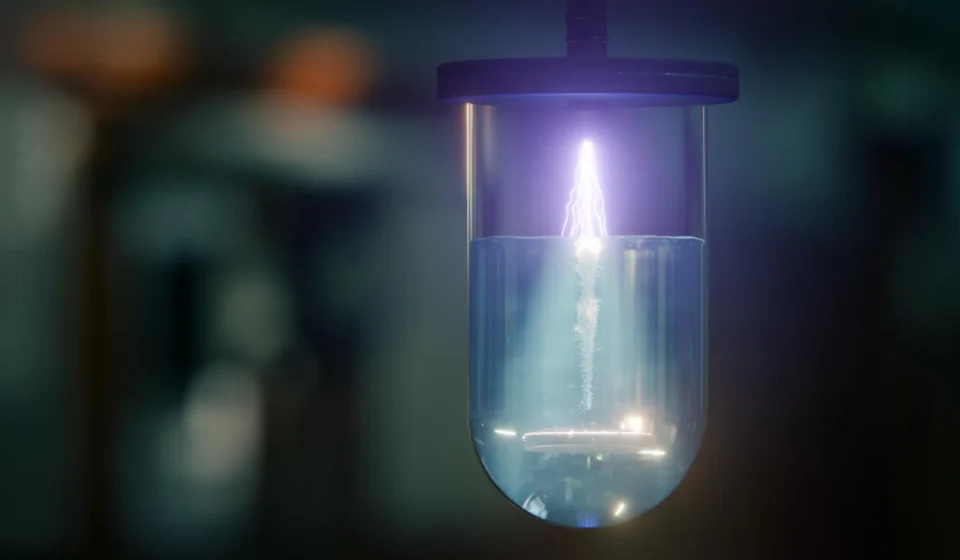
Following the early success of cavitation experiments, the team, led by environmental engineer Dr. Amit Kumar, turned to cold atmospheric plasma combined with gas dispersion. Unlike traditional incineration, which requires massive energy input, this method operates under ambient conditions. Plasma is generated at the water’s surface while gas is simultaneously introduced into the liquid. As bubbles rise, they carry PFAS to the surface, where the plasma environment systematically strips the molecules apart.
Supporting Data and Technical Efficacy
The results of these trials, validated by specialists at the Helmholtz Centre for Environmental Research (UFZ), have provided the first tangible evidence that these technologies can successfully mineralize organically bound fluorine.
Cavitation Performance
In studies focusing on perfluorooctane sulfonate (PFOS)—one of the most persistent and well-studied PFAS—the cavitation method successfully degraded approximately 37 percent of the dissolved molecules. Crucially, the steady increase of fluoride ions in the treated water confirmed that the carbon-fluorine bonds were indeed being broken, rather than just partitioned into a different phase. Dr. Sebastian Reinecke, head of the Department of Water and Environmental Technologies at HZDR, notes that current efforts are focused on optimizing this process to exceed an 80 percent degradation rate for PFAS and a 50 percent mineralization rate for bound fluorine.
Plasma Performance
The cold plasma method demonstrated significantly faster reaction kinetics than cavitation, successfully degrading both long-chain and short-chain PFAS. The process successfully converted roughly 35 percent of the bound fluorine atoms into benign fluoride salts. However, this speed comes with a trade-off: the plasma method requires significantly higher energy consumption per volume unit. Furthermore, researchers are currently working to map the "transformation products"—the secondary gaseous compounds produced during the reaction—to ensure that the treatment process does not inadvertently create new, toxic byproducts.
Official Perspectives and Expert Analysis
Dr. Sebastian Reinecke emphasizes that the ultimate goal is not to choose between these two technologies, but to integrate them. "Our hypothesis is that the combination of the highly reactive species produced by plasma, alongside the thermal and radical effects of cavitation, will create a synergistic effect," Reinecke explains.
The HZDR team is currently scaling up their experimental infrastructure. By transitioning from 50-milliliter laboratory samples to five-liter treatment volumes, the researchers are preparing to test the limits of these combined systems. The long-term vision is a scalable, modular treatment unit that could be installed at industrial wastewater outlets, intercepting "forever chemicals" before they ever reach municipal water supplies or natural waterways.
Implications for Global Water Security
The implications of the HZDR research extend far beyond the borders of Germany. PFAS contamination is a global crisis, and current methods of removal—such as activated carbon filtration or ion exchange—are inherently limited; they effectively "trap" the chemicals on a substrate, creating a hazardous waste product that must then be stored or incinerated.
By demonstrating that PFAS can be destroyed on-site, the HZDR researchers are offering a path toward a circular and truly clean water economy. If successful, the integration of cavitation and plasma could provide industrial manufacturers with a powerful tool to take accountability for their chemical footprints.
Funding and Future Outlook
This critical work is supported by the Helmholtz Association’s Impulse and Networking Fund via the Clean Water Technology Lab (CLEWATEC). Additionally, the specific projects "HyKaPro SAB-EFRE" and "Plasma4PFAS SAB-EFRE" have received co-financing from the European Union and the Saxon state budget.
As the team continues to refine their catalysts, optimize energy consumption, and ensure the safety of transformation products, the prospect of an affordable, scalable technology to "break" the forever chemicals becomes increasingly realistic. In an era where the purity of our water supply is under constant threat from industrial runoff, the HZDR’s work represents a vital shift from reactive management to proactive environmental restoration. The era of the "forever chemical" may finally have a deadline.