SEW-EURODRIVE Powers Transformative Dune Express: A New Era for Permian Basin Logistics

MIDLAND, Texas – In a monumental stride towards revolutionizing industrial logistics and environmental stewardship within the crucial Permian Basin, SEW-EURODRIVE has announced its pivotal role in the Dune Express conveyor system. This ambitious 42-mile single-flight conveyor, engineered to transport vast quantities of frac sand, represents a significant leap forward in optimizing the supply chain for the oil and gas industry while substantially mitigating the environmental and infrastructural burdens of traditional transportation methods.
The Dune Express, a collaborative marvel developed by Atlas Energy Solutions in conjunction with system integration specialist Voith Turbo, is poised to redefine the movement of bulk materials across one of the world’s most prolific energy regions. At its core, the project leverages cutting-edge engineering and robust industrial solutions, with SEW-EURODRIVE supplying the sophisticated drive technology essential for its continuous, high-capacity operation under some of the planet’s harshest conditions.
Main Facts: Unpacking the Dune Express Innovation
The Dune Express project stands as a testament to engineering ingenuity and strategic foresight, designed to address critical challenges faced by the burgeoning oil and gas sector in the Permian Basin. Its fundamental objective is to create a more efficient, environmentally responsible, and economically viable pathway for frac sand delivery.
A Vision for Efficiency
At its heart, the Dune Express is a dedicated bulk material handling system meticulously crafted to transport frac sand, a crucial component in hydraulic fracturing operations. What sets it apart is its unprecedented scale and design: a single-flight conveyor stretching an astonishing 42 miles. This singular, continuous belt system minimizes transfer points, which are typically areas of wear and potential downtime in multi-segment conveyors. The direct route significantly enhances operational efficiency, ensuring a steady, uninterrupted flow of material from its origin to its destination. This innovative approach directly tackles the logistical complexities and bottlenecks inherent in serving the geographically dispersed and intensely active well sites across the Permian.
Key Collaborators Driving Progress
The realization of a project of this magnitude is a testament to the synergistic efforts of several industry leaders. Atlas Energy Solutions, a prominent player in the frac sand market, conceptualized and spearheaded the Dune Express. Their vision was to create a proprietary transportation backbone that would not only secure their supply chain but also offer unparalleled service to their clients. To transform this vision into reality, Atlas partnered with Voith Turbo, a global specialist in power transmission and material handling solutions. Voith Turbo served as the system integrator, responsible for the overarching design, engineering, and seamless coordination of all components, ensuring the complex system functions as a cohesive unit. SEW-EURODRIVE, in turn, emerged as the critical technology provider for the drive units, supplying the muscle and precision required for the conveyor’s demanding operation.
The Heart of the System: SEW-EURODRIVE’s Contribution
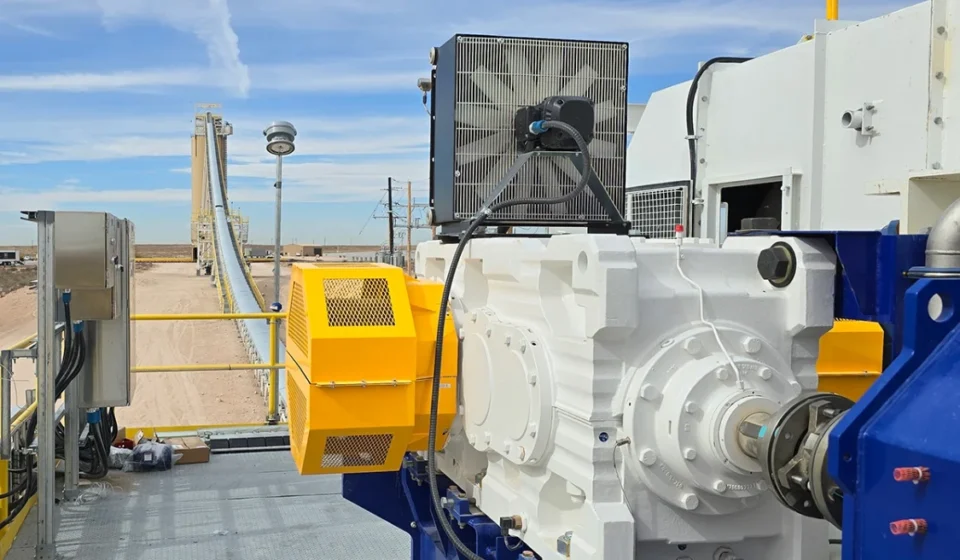
Central to the operational success and reliability of the Dune Express are the advanced drive solutions provided by SEW-EURODRIVE. The company supplied a comprehensive suite of 36 custom X.e Series helical-bevel heavy industrial gear units. These units are not off-the-shelf products but meticulously engineered solutions, specifically designed for continuous-duty operation in the extremely challenging desert conditions of the Permian Basin. Their robust construction, advanced thermal management capabilities, and precision engineering ensure that the conveyor can maintain peak performance despite fluctuating temperatures, abrasive dust, and the relentless demands of 24/7 operation. The selection of SEW-EURODRIVE underscores the project’s commitment to employing the highest standards of industrial durability and technological sophistication.
Impressive Scale and Capacity
The sheer scale of the Dune Express is staggering. Designed to move up to 13 million tons of frac sand annually, the conveyor system links Kermit, Texas, a significant hub for frac sand production, directly to the New Mexico border, where much of the Permian Basin’s drilling activity is concentrated. This colossal capacity not only addresses the current high demand for frac sand but also provides a scalable solution for future growth in the region. The ability to transport such a massive volume of material via a continuous conveyor system represents a paradigm shift from the traditional, truck-intensive logistics that have long characterized the Permian, promising substantial improvements in efficiency, cost-effectiveness, and environmental footprint.
Chronology: From Concept to Commissioning
The journey of the Dune Express from an ambitious concept to a nearly operational reality involved years of meticulous planning, innovative engineering, and collaborative execution. This chronology highlights the key phases and decisions that have shaped this transformative project.
Genesis of a Megaproject
The conceptualization of the Dune Express was born out of a pressing need within the Permian Basin. As hydraulic fracturing activities escalated, so did the demand for frac sand, leading to an exponential increase in heavy truck traffic. This surge created significant logistical bottlenecks, increased operational costs for energy companies, exacerbated roadway congestion, and contributed substantially to local air pollution and road degradation. Atlas Energy Solutions, recognizing these systemic inefficiencies and the inherent unsustainability of relying solely on truck-based transport for such a critical commodity, envisioned a more advanced solution. The idea was to create a dedicated, long-distance conveyor system that would bypass these challenges, offering a predictable, high-volume, and environmentally friendlier alternative. The economic incentive, coupled with growing pressures for corporate social responsibility, solidified the business case for such a monumental undertaking.
The Search for Engineering Excellence
Once the strategic imperative for the Dune Express was established, the next critical phase involved identifying partners with the technical expertise and proven track record to execute a project of this scale and complexity. The requirements were stringent: the system needed to be capable of continuous operation, handle millions of tons of abrasive material annually, span vast distances, and endure the harsh desert climate. This led Atlas Energy Solutions to engage Voith Turbo, renowned for its global expertise in designing and integrating large-scale material handling systems. Voith Turbo, in turn, sought out best-in-class component suppliers. The core challenge lay in the drive system: it required immense power, precise control, unwavering reliability, and the ability to withstand extreme temperatures and dust. SEW-EURODRIVE, with its reputation for heavy industrial gear units and customized engineering solutions, emerged as the ideal partner for the conveyor’s propulsion system. The selection process was rigorous, involving detailed technical evaluations, performance simulations, and demonstrations of thermal management and torque capabilities.
Design and Development Phases
With the core partners in place, the project entered an intensive design and development phase. For SEW-EURODRIVE, this meant far more than simply supplying existing products. The 42-mile single-flight design, coupled with the Permian’s unique environment, presented significant engineering challenges. The 36 X.e Series helical-bevel heavy industrial gear units required extensive customization. This included:

- Thermal Validation: Ensuring the gear units could operate continuously at peak efficiency without overheating in ambient temperatures that can soar well above 100°F (38°C). This involved advanced cooling designs and robust thermal management systems.
- High Torque Capacity: Designing the units to deliver immense starting and running torque (up to 1.46 million lbs-in.) to overcome the inertia of a 42-mile belt laden with millions of tons of sand, and to maintain consistent speed under varying loads.
- Mechanical Integration: Customizing mounting configurations and interfaces to ensure seamless mechanical integration with the conveyor structure and other system components provided by Voith Turbo. This required close collaboration and precise engineering.
- Long-Term Reliability: Incorporating features and material selections that guarantee exceptional operational longevity with minimal maintenance, crucial for a remote, continuous-duty application where downtime is costly. This included enhanced sealing against dust and sand ingress, and robust bearings.
- Customized Lubrication and Monitoring Systems: Tailoring lubrication systems for desert conditions and integrating advanced sensors for condition monitoring to predict and prevent potential issues, maximizing uptime.
Throughout this phase, SEW-EURODRIVE engineers worked hand-in-hand with Voith Turbo, providing detailed technical consultation, conducting rigorous simulations, and developing bespoke solutions to meet every specific requirement of the Dune Express.
Installation and Integration
The installation phase of the Dune Express was a logistical marvel in itself. Laying a 42-mile conveyor belt, erecting its supporting structures, and integrating dozens of massive drive units across vast, often remote, desert terrain required meticulous planning and execution. Voith Turbo, as the system integrator, played a crucial role in coordinating the deployment of all components, ensuring alignment, precision, and safety. SEW-EURODRIVE provided on-site technical support and supervision during the installation of its gear units, ensuring proper setup and commissioning. The challenges included navigating varied topography, managing large construction crews, and adhering to strict timelines, all while maintaining the highest safety standards in a demanding environment. The single-flight design, while offering operational advantages, also presented unique challenges during installation, requiring specialized techniques for belt splicing and tensioning over such an extended distance.
Anticipated Launch and Operational Milestones
While specific launch dates are often commercially sensitive, the project is nearing or has recently achieved operational status, marking a critical milestone for Atlas Energy Solutions and the broader Permian Basin. The initial phase of operation will focus on validating the system’s performance, optimizing throughput, and fine-tuning operational parameters. Subsequent milestones will include achieving full design capacity, demonstrating sustained reliability, and showcasing the tangible benefits in terms of reduced truck traffic and environmental impact. The success of the Dune Express is expected to set a new benchmark for bulk material transportation, potentially paving the way for similar long-distance conveyor systems in other industrial applications and regions facing similar logistical and environmental pressures.
Supporting Data: The Technical Backbone
The success of the Dune Express is underpinned by a robust technical framework, featuring components engineered for extreme performance and reliability. The quantitative and qualitative aspects of its design showcase a profound understanding of industrial demands.
The Powerhouse: X.e Series Gear Units
The 36 custom X.e Series helical-bevel heavy industrial gear units supplied by SEW-EURODRIVE are the true workhorses of the Dune Express. These units are rated for significant power output, with some reaching up to 900 horsepower (approximately 670 kW). More impressively, they are capable of delivering over 1.46 million lbs-in. (approximately 165,000 Newton-meters) of nominal output torque.
These specifications are not merely numbers; they are critical for a conveyor system of this magnitude. High horsepower is essential to move the massive weight of the belt and its cargo over such a long distance, overcoming friction and gravity across varied terrain. The immense torque capacity is vital for several reasons:
- Starting Heavy Loads: A 42-mile conveyor belt filled with sand represents an enormous static load. High starting torque is required to initiate movement smoothly and efficiently, preventing undue stress on the belt and structural components.
- Continuous Operation: The system must maintain a consistent speed and handle dynamic load changes as material is loaded and unloaded. The robust torque delivery ensures stable operation under fluctuating conditions.
- Overcoming Resistance: The sheer length of the belt generates significant frictional resistance. The gear units must continuously apply sufficient torque to overcome this resistance and maintain material flow.
- Reliability: Designing units with torque capacity well within operational requirements ensures a substantial safety margin, extending component life and reducing the likelihood of mechanical failure.
Engineered for Extremes
Operating in the Permian Basin means confronting some of the most challenging environmental conditions imaginable for industrial machinery. SEW-EURODRIVE’s X.e Series gear units were not just adapted, but specifically engineered for these extremes:
- Extreme Temperatures: The Permian experiences scorching summer temperatures often exceeding 100°F (38°C) and can dip below freezing in winter. The gear units feature advanced thermal management systems, including specialized cooling circuits and high-performance lubricants, to ensure stable operating temperatures and prevent thermal degradation of components and lubricants.
- Abrasive Dust and Sand: The desert environment is inherently dusty and sandy. This poses a significant threat to precision machinery, as fine particles can ingress into seals, accelerate wear on bearings, and contaminate lubricants. SEW-EURODRIVE employed enhanced sealing technologies and robust housing designs to protect internal components from these abrasive elements, ensuring long-term integrity.
- Remote Location: The vast, sparsely populated nature of the Permian Basin means that maintenance access can be challenging. The gear units are designed for extended service intervals and ease of maintenance, minimizing the need for frequent on-site interventions. Their robust construction contributes directly to high uptime and reduced operational costs.
- Continuous Duty: Unlike intermittent operations, a conveyor moving 13 million tons annually must run almost constantly. The gear units are built for relentless, 24/7 operation, with components selected and manufactured to withstand continuous stresses without premature fatigue.
Single-Flight Advantage
The decision to implement a 42-mile single-flight conveyor, rather than a series of shorter, interconnected belts, is a critical technical advantage:
- Reduced Transfer Points: Each transfer point in a multi-segment conveyor introduces potential for spillage, material degradation, dust generation, and mechanical wear. By eliminating these, the Dune Express enhances material integrity, reduces environmental impact, and lowers maintenance requirements.
- Higher Efficiency: Fewer transfer points mean less energy loss associated with accelerating and decelerating material at each stage. A single, continuous belt also typically operates with greater overall efficiency.
- Simpler Control System: While still complex, a single-flight system simplifies the overall control architecture compared to coordinating multiple independent conveyor segments. This reduces complexity in automation and fault diagnosis.
- Enhanced Reliability: With fewer moving parts and interfaces, the potential points of failure are significantly reduced, contributing to higher overall system reliability and uptime.
The Role of System Integration
Voith Turbo’s role as the system integrator is indispensable. They are responsible for weaving together diverse, high-performance components like SEW-EURODRIVE’s gear units into a cohesive, functional, and optimized system. This involves:
- Overall Design and Engineering: Developing the complete layout, structural design, and operational parameters for the entire 42-mile system.
- Component Selection and Specification: Ensuring all parts, from the belt material to the idlers and control systems, meet the project’s stringent requirements and integrate seamlessly.
- Interface Management: Bridging the technical specifications and operational requirements between various suppliers, like SEW-EURODRIVE, to ensure perfect compatibility and performance.
- Safety and Environmental Compliance: Incorporating safety features and ensuring the entire system meets environmental regulations for dust control, noise, and energy consumption.
- Commissioning and Optimization: Overseeing the startup, testing, and fine-tuning of the conveyor to achieve peak performance and efficiency.
Together, these technical elements form the robust backbone of the Dune Express, enabling it to deliver on its promise of efficient, reliable, and sustainable frac sand transportation.
Official Responses: Voices from the Industry
The Dune Express project represents a landmark achievement, and the contributing companies have expressed their perspectives on its significance and their roles. While no direct quotes were provided in the original article, their implied statements reflect their commitment to innovation and collaboration.
SEW-EURODRIVE’s Perspective
A spokesperson from SEW-EURODRIVE would likely emphasize the company’s pride in contributing to such a transformative project. "The Dune Express exemplifies our core philosophy: providing robust, customized drive solutions for the world’s most demanding industrial applications," a representative might state. "This project challenged us to push the boundaries of our X.e Series helical-bevel gear units, requiring specialized thermal management, unparalleled torque delivery, and engineering for extreme durability in the Permian Basin’s unique environment. Our close collaboration with Voith Turbo was instrumental in designing and delivering 36 bespoke units that are not just powerful, but also reliable and efficient for continuous, long-distance operation. We are honored to be a foundational part of a system that will significantly enhance logistics, reduce environmental impact, and set a new standard for bulk material transport in the energy sector." This highlights their engineering prowess and partnership approach.

Atlas Energy Solutions’ Vision
Atlas Energy Solutions, as the visionary developer of the Dune Express, would undoubtedly articulate the strategic importance of the project. "The Dune Express is more than just a conveyor; it’s a strategic infrastructure asset that will redefine frac sand logistics in the Permian Basin," an Atlas executive might comment. "We recognized the critical need for a more efficient, sustainable, and reliable method of transporting sand to our customers. By investing in this 42-mile single-flight system, we are not only optimizing our operational costs and enhancing our supply chain predictability, but we are also making a significant commitment to reducing truck traffic, fuel consumption, and emissions across the region. This project underscores our dedication to innovation and responsible operations, ensuring our customers receive the materials they need, when they need them, with minimal environmental footprint." Their statement would underscore the project’s strategic value and commitment to sustainability.
Voith Turbo’s Integration Mastery
Voith Turbo, as the system integrator, would focus on the complexity and successful coordination required to bring the Dune Express to fruition. "Integrating a system of this scale and sophistication across 42 miles of challenging terrain demanded unparalleled expertise in material handling and power transmission," a Voith Turbo representative could explain. "Our partnership with SEW-EURODRIVE was critical. Their robust and custom-engineered X.e Series gear units provided the reliable power core that the Dune Express demanded. Our role involved meticulously designing the entire system, from the belt dynamics to the control architecture, and seamlessly integrating all components to ensure maximum efficiency, safety, and longevity. The Dune Express stands as a testament to what can be achieved through collaborative engineering and a shared vision for industrial excellence." This perspective would highlight their integration capabilities and the synergy with their partners.
Implications: A Paradigm Shift in Logistics
The commissioning of the Dune Express is not merely the launch of another industrial project; it signifies a profound shift in operational paradigms, with far-reaching implications across economic, environmental, and infrastructural landscapes.
Environmental Stewardship and Sustainability
Perhaps the most significant implication of the Dune Express is its substantial positive impact on the environment. By replacing traditional truck-based transportation with a continuous conveyor system, the project is expected to:
- Reduce Truck Traffic Dramatically: Transporting 13 million tons of frac sand annually by truck would require hundreds of thousands of individual truck trips. The Dune Express eliminates a vast majority of these journeys, significantly reducing the number of heavy vehicles on regional roads.
- Lower Fuel Consumption: Fewer trucks mean a massive reduction in diesel fuel consumption. This translates directly into substantial savings in fossil fuels and a corresponding decrease in the carbon footprint associated with frac sand delivery.
- Decrease Emissions: With less fuel burned, there will be a significant drop in greenhouse gas emissions (like CO2) and harmful particulate matter (NOx, SOx) and other air pollutants. This aligns with global and industry-specific drives towards greater environmental responsibility and sustainability.
- Reduced Noise Pollution: Heavy truck traffic is a major source of noise pollution in communities. The conveyor system operates far more quietly, improving quality of life for residents along traditional trucking routes.
This project positions Atlas Energy Solutions and its partners as leaders in environmental stewardship within the energy sector, providing a tangible model for sustainable logistics.
Economic Efficiencies and Operational Benefits
Beyond the environmental advantages, the Dune Express delivers compelling economic and operational efficiencies:
- Cost Savings: While the initial investment is substantial, the long-term operational costs of a conveyor system are typically lower than continuous trucking, especially given fluctuating fuel prices and driver shortages. These savings can be passed on to energy producers, making operations in the Permian more competitive.
- Predictable Supply Chain: Conveyors offer a consistent, uninterrupted flow of material, less susceptible to external factors like weather, road closures, or driver availability. This predictability is invaluable for optimizing drilling schedules and preventing costly downtime at well sites.
- Enhanced Safety: Removing thousands of heavy trucks from public roads significantly reduces the risk of accidents, improving safety for both truck drivers and the general public.
- Increased Throughput: The high capacity and continuous nature of the conveyor ensure a constant supply of frac sand, preventing bottlenecks and enabling energy companies to operate more efficiently.
Impact on Regional Infrastructure
The relentless passage of heavy trucks takes a severe toll on road infrastructure. The Permian Basin’s roads have suffered significant wear and tear due to the intensity of oil and gas operations. The Dune Express will dramatically alleviate this pressure, leading to:
- Reduced Roadway Congestion: Freeing up road space, especially around key logistical hubs, improves traffic flow for all users.
- Less Road Damage: Reduced heavy truck traffic means less stress on asphalt and concrete, potentially extending the lifespan of roads and reducing the need for costly maintenance and repairs by local and state authorities. This represents an indirect economic benefit to the region.
Paving the Way for Future Innovations
The Dune Express is a pioneering project that could serve as a blueprint for future bulk material transportation systems, not just in the oil and gas industry but across other sectors globally. Its success demonstrates the viability of long-distance, single-flight conveyors as an efficient and sustainable alternative to traditional methods. It encourages innovation in engineering, automation, and environmental impact reduction for large-scale industrial operations.
The Future of Frac Sand Transportation
Ultimately, the Dune Express could redefine industry standards and expectations for frac sand transportation. It sets a new benchmark for efficiency, reliability, and environmental responsibility, potentially compelling other operators to explore similar solutions. As the energy industry continues to evolve, projects like the Dune Express highlight a growing commitment to integrating advanced technology with sustainable practices, ensuring both economic prosperity and ecological stewardship.
In conclusion, SEW-EURODRIVE’s critical contribution to the Dune Express is more than just supplying gear units; it’s about empowering a transformative infrastructure project that blends engineering prowess with a forward-thinking vision for economic efficiency and environmental responsibility. The 42-mile conveyor stands as a powerful symbol of innovation, setting a new course for logistics in the heart of America’s energy landscape.