





Ondas Holdings Solidifies Defense Footprint with $875.8 Million Acquisition of DZYNE Technologies

WEST PALM BEACH, Fla. — In a move that significantly reshapes the landscape of autonomous defense technology, Ondas Holdings Inc. has announced the landmark acquisition of DZYNE Technologies LLC. The deal, valued at approximately $875.8 million, represents a pivotal consolidation in the unmanned aerial systems (UAS) and defense intelligence sectors, positioning Ondas as a primary contender in the race to provide "autonomous systems at scale" for the U.S. Department of Defense and its global allies.
The acquisition, finalized through a sophisticated cash-and-stock structure, integrates DZYNE’s Irvine-based engineering powerhouse into Ondas’s expanding portfolio. This strategic merger is designed to address the rapidly evolving requirements of modern theater operations, where long-endurance surveillance, counter-UAS capabilities, and autonomous logistics have moved from "optional" to "mission-critical" requirements.
1. Main Facts: A Strategic Consolidation of Defense Capabilities
The $875.8 million acquisition is more than a simple expansion of assets; it is a fundamental shift in Ondas’s corporate identity. By absorbing DZYNE Technologies, Ondas acquires a mature, operationally proven suite of technologies that span the entire spectrum of modern aerial warfare and reconnaissance.
The Financial Architecture
The deal was financed through a combination of cash reserves and common stock issuance. This follows Ondas’s successful capital-raising efforts in the previous year, including a $217 million underwritten offering of 46 million shares. The market has reacted with keen interest to the valuation, which reflects DZYNE’s projected revenue growth. DZYNE is expected to generate $191 million in revenue for the full year 2026, with forecasts exceeding $300 million by 2027. Consequently, Ondas has revised its total 2026 revenue target to a minimum of $525 million.
The New Entity: Ondas Sentinel
Central to this acquisition is the formation of Ondas Sentinel, a dedicated U.S.-based operating division. Sentinel is designed to serve as a unified front for Ondas’s defense technologies, integrating the newly acquired DZYNE assets with World View’s stratospheric capabilities.
The leadership structure for Ondas Sentinel has been clearly defined to ensure continuity:
- CEO of Ondas Sentinel: Ryan Hartman (formerly CEO of World View).
- Chief Technology Officer (CTO): Matt McCue (Co-founder and CEO of DZYNE).
Core Technological Pillars
Through DZYNE, Ondas now controls four critical technology verticals:
- Long-Endurance ISR: Multi-day persistence for theater-level intelligence.
- Counter-UAS (C-UAS): Kinetic and electronic systems to defeat hostile drones.
- Autonomous Logistics: Aerial resupply in contested environments.
- Precision Strike: Scalable, autonomous interceptors and munitions.
2. Chronology: From Industrial Networking to Defense Dominance
To understand the magnitude of this acquisition, one must look at the parallel trajectories of Ondas and DZYNE over the past two decades.
Ondas Holdings (2006–2024)
Founded in 2006, Ondas originally established its reputation as a leader in private wireless data networks. Its "Ondas Networks" unit became a staple for critical infrastructure, providing secure, high-capacity software-defined radio (SDR) technology for the rail and energy industries.
In the early 2020s, Ondas recognized the burgeoning intersection between secure networking and robotics. This led to the creation of Ondas Autonomous Systems (OAS). By 2023, the company began aggressive expansion, acquiring World View Enterprises to enter the stratospheric remote sensing and communications market.
DZYNE Technologies (2012–2024)
DZYNE was founded in 2012 in Irvine, California, with a focus on "rapid-response" engineering. Unlike traditional defense primes that often operate on decade-long development cycles, DZYNE built its reputation on the ability to design, prototype, and deploy advanced autonomous systems in months.
By 2020, DZYNE had become a key partner for the U.S. defense community, specializing in long-endurance aircraft and AI-driven navigation. Their systems, such as the ULTRA, logged tens of thousands of operational flight hours in active theaters, proving that their "scrappy" engineering approach could meet the rigorous demands of the Pentagon.
The 2026 Merger
The acquisition in July 2026 marks the culmination of Ondas’s transition from a networking specialist to a comprehensive defense and autonomous systems provider. The move creates a "scaled operating platform" capable of competing with both legacy defense contractors and newer, software-centric firms.
3. Supporting Data: The DZYNE Product Portfolio
The value of the acquisition is rooted in DZYNE’s "mission-ready" hardware, which fills significant gaps in the current U.S. defense inventory.
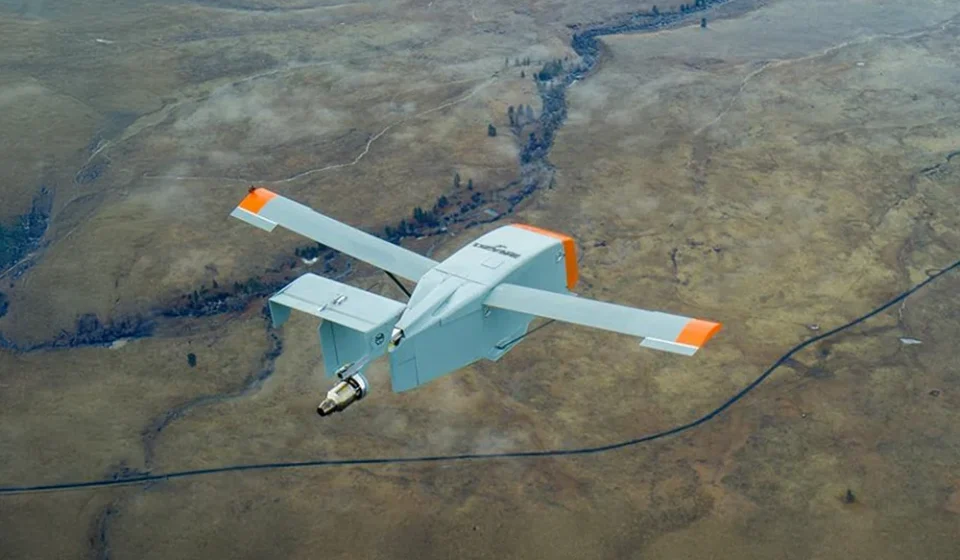
ULTRA: The Marathon Runner of ISR
The ULTRA is a long-endurance autonomous aircraft designed for multi-day intelligence, surveillance, and reconnaissance (ISR) missions.
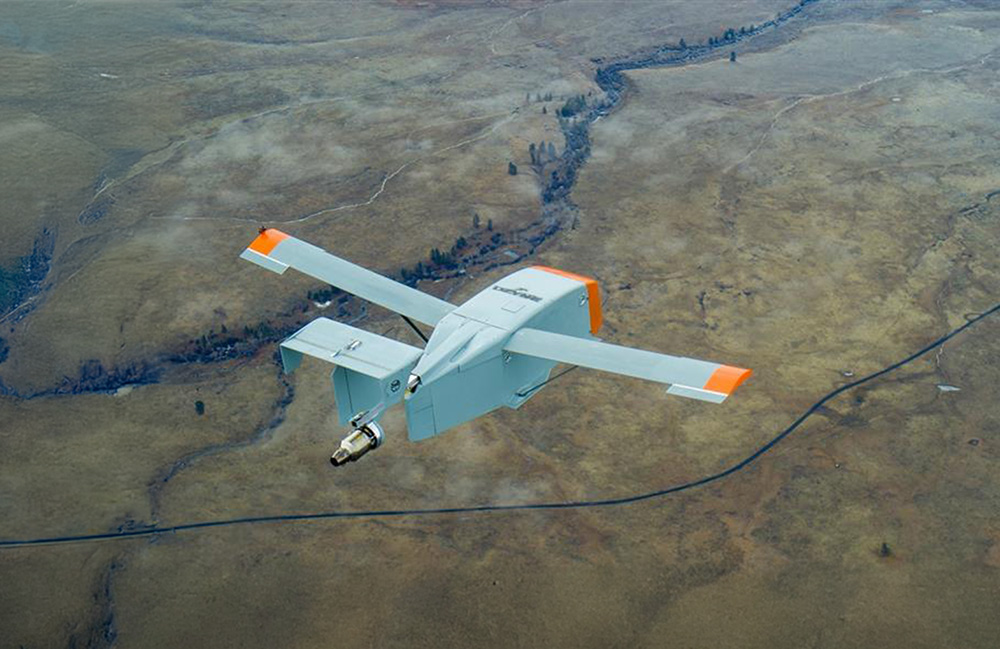
- Performance: Capable of staying airborne for several days at a time.
- Utility: Provides a cost-effective alternative to satellite surveillance or manned reconnaissance flights.
- Track Record: Over 10,000 operational hours logged, demonstrating high reliability in diverse climates.
IonStrike and Dronebuster: The Layered Shield
In response to the proliferation of "one-way attack drones" (such as the Iranian-designed Shahed-136), DZYNE developed a tiered defense system:
- IonStrike: A fully kinetic, autonomous interceptor. Unlike electronic warfare systems that jam signals, IonStrike is designed to physically track and defeat hostile drones in flight, ensuring a "hard kill" of the threat.
- Dronebuster: A handheld, compact C-UAS system. It allows ground troops to detect and disrupt the control links of Group 1 and Group 2 drones, providing tactical security at the squad level.
Grasshopper: Autonomous Resupply
The Grasshopper is an autonomous cargo glider that addresses the "last-mile" logistics challenge in "contested or denied environments."
- Payload: Can deliver up to 500 lbs (226.7 kg) of supplies.
- Stealth: As a glider, it has a low acoustic and thermal signature, making it difficult for enemy sensors to detect during delivery runs.
Blitz: The Scalable Swarm
The Blitz is a Group 1 UAS with a 93.2-mile (150 km) range. It features an open, modular architecture, allowing it to be outfitted for various missions—from reconnaissance to electronic warfare—and is designed for "swarm" operations, where multiple units coordinate to overwhelm enemy defenses.
4. Official Responses: Leadership Perspectives
The leadership at Ondas and DZYNE has framed the acquisition as a necessary evolution to meet the "changing character of warfare."
Eric Brock, Chairman and CEO of Ondas, emphasized the importance of scale and integration:
“The character of warfare is changing rapidly, and military advantage increasingly belongs to organizations capable of deploying autonomous systems at scale. DZYNE brings exceptional technology, world-class engineering talent, and mission-ready systems. The combination accelerates Ondas’s buildout of the next-generation autonomous defense platform—not through a single breakthrough product, but by integrating complementary, mission-proven technologies into a scaled operating platform.”
Matt McCue, Co-founder of DZYNE and new CTO of Ondas Sentinel, highlighted the synergy between the two companies’ technical roadmaps:
“By joining forces with Ondas and World View, we are creating a powerhouse in the autonomous space. Our ability to rapidly prototype and deploy AI-enabled systems is now backed by a robust corporate structure and a broader suite of networking and stratospheric technologies. This allows us to support larger, more integrated defense programs that the modern battlespace demands.”
5. Implications: Redefining the Modern Battlespace
The acquisition of DZYNE by Ondas has profound implications for the defense industry and the future of autonomous warfare.
The Rise of the "Software-First" Defense Prime
Traditionally, the defense industry has been dominated by "Big Five" contractors focused on heavy hardware (tanks, jets, ships). The Ondas-DZYNE merger represents the rise of a new tier of defense contractors—companies that prioritize AI, autonomous navigation, and software-defined networking. This puts Ondas in a similar category to firms like Anduril and Palantir, which focus on rapid iteration and "intelligent" systems.
Addressing the "Replicator" Initiative
The U.S. Department of Defense’s "Replicator" initiative seeks to field thousands of cheap, autonomous systems to counter the mass of near-peer adversaries. DZYNE’s portfolio—specifically the Blitz and Grasshopper—aligns perfectly with this strategy. Ondas is now positioned to provide the "mass" required by the Pentagon, utilizing DZYNE’s rapid manufacturing capabilities and Ondas’s secure communication networks.
Multi-Domain Integration
With the formation of Ondas Sentinel, the company can now offer a "stratosphere-to-ground" solution. A mission could theoretically involve:
- World View sensors in the stratosphere providing wide-area surveillance.
- ULTRA aircraft providing persistent theater-level ISR.
- Blitz swarms performing tactical reconnaissance.
- IonStrike systems protecting the entire network from enemy drone interference.
Economic and Operational Synergy
Beyond the technology, the merger creates significant operational efficiencies. By unifying manufacturing, sustainment, and AI-enabled mission software under the "Sentinel" banner, Ondas can reduce the cost per unit of its autonomous systems. This "common technology roadmap" is essential for the long-term sustainability of autonomous defense programs, which often struggle with fragmented supply chains.
Conclusion
Ondas Holdings’ $875.8 million acquisition of DZYNE Technologies is a clear signal that the future of defense is autonomous, integrated, and rapidly evolving. By combining DZYNE’s innovative hardware with Ondas’s networking expertise and World View’s stratospheric reach, the newly formed Ondas Sentinel is set to become a cornerstone of the modern defense-industrial base. As global tensions drive the demand for smarter, more persistent, and more scalable defense solutions, Ondas appears ready to lead the charge.