
Patent War Escalates: Teradyne Robotics Targets JAKA in High-Stakes European Legal Battle

The global collaborative robot (cobot) industry is currently witnessing a significant legal showdown as Teradyne Robotics—the parent company of industry pioneer Universal Robots (UR)—has formally initiated patent infringement proceedings against JAKA Robotics. The conflict, playing out in the Unified Patent Court (UPC) in Europe, marks a pivotal moment in the maturity of the robotics sector, as legacy market leaders increasingly utilize intellectual property (IP) litigation to protect their market share against a rising tide of global competitors.
The legal action, filed in the UPC’s Copenhagen Local Division under case number UPC-CFI-0003057/2026, underscores the intense competition within the automation landscape. As Teradyne seeks to assert its dominance, the case serves as a stark reminder of the complexities inherent in protecting proprietary hardware and software design in an era of rapid technological convergence.
The Core Allegations: Protecting the UR Legacy
Teradyne Robotics, which has solidified its status as the world’s leading developer of collaborative robot arms with over 100,000 units deployed since 2005, is centering its claims on three specific patents. These patents, all bearing a priority date of March 2006, form the bedrock of the "Universal Robots" user experience and safety architecture.
The three patents at the heart of the dispute are:
- EP1996376 (Programmable Robot and User Interface): This patent protects the highly intuitive user interface that helped Universal Robots revolutionize the industry. It covers the system allowing operators to control robotic movements via a touchscreen displaying a 3D digital twin of the arm.
- EP3045273 (Joint for a Robot): This patent covers critical safety mechanics, specifically a joint-safety brake system utilizing a solenoid, ratchet, and annular friction member. It further extends to encoder arrangements essential for the precise, safe operation of cobots in human-populated environments.
- EP3530420 (Joint for a Robot): This filing focuses on the physical construction of robot joints, specifically the output flanges and the structural engineering required to connect adjacent joints, ensuring durability and performance.
Teradyne has signaled that the infringement allegations encompass both the hardware architecture and the proprietary software driving these systems. While the specific JAKA models named in the suit have not been publicly detailed, the breadth of the patents suggests that Teradyne is targeting the fundamental engineering philosophy that allows JAKA to compete in the European cobot market.
A Timeline of Contention
The friction between the two entities reached a boiling point in late August 2026, characterized by a notable communication gap between the judicial process and public relations.
- August 24, 2026: Teradyne Robotics formally files the patent infringement case against JAKA Robotics GmbH with the Unified Patent Court in Copenhagen.
- August 27, 2026: Teradyne Robotics issues a public press release announcing the lawsuit.
- Late August 2026: JAKA Robotics responds with confusion, stating that they have received no official notification or legal documents from Teradyne, questioning the validity of the public announcement.
- September 2, 2026: A critical date, as legal advisors for JAKA verify that no formal court proceedings have been served or opened against the company, intensifying the discrepancy between Teradyne’s public claims and the actual state of the legal docket.
- September 3, 2026: JAKA issues an official statement asserting that they have conducted thorough "Freedom-to-Operate" (FTO) analyses twice in the past, both of which concluded that their technology does not infringe on Universal Robots’ IP.
This delay between the filing of a case and the formal service of process is a common procedural reality in international patent law, yet it has been weaponized here to create a PR narrative of transparency versus ambiguity.
Supporting Data and Industry Context
The robotics industry is currently experiencing a "gold rush" phase. As more manufacturers adopt collaborative automation, the barrier to entry has lowered, leading to a surge in market participants, particularly from the Asia-Pacific region.
Teradyne’s aggressive stance is not an isolated event. This lawsuit represents the second major IP action initiated by Teradyne Robotics against a Chinese manufacturer in 2026. In February, the company sued the German subsidiary of Elite Robots for alleged copyright infringement. These consecutive actions suggest a broader corporate strategy: a systematic audit of competitors operating in the European theater to ensure that the intellectual capital developed by Universal Robots over two decades is not being commodified by newer entrants.
For Teradyne, the financial stakes are massive. Universal Robots is the crown jewel of their robotics division. With a legacy built on the "cobot" concept—robots designed to work alongside humans without the need for traditional safety cages—the company has a vested interest in preventing "look-alike" technologies from diluting their brand value and market premium.
Official Responses and Strategic Positioning
The tension between the two companies reflects a fundamental disagreement over the "origin" of certain cobot technologies.
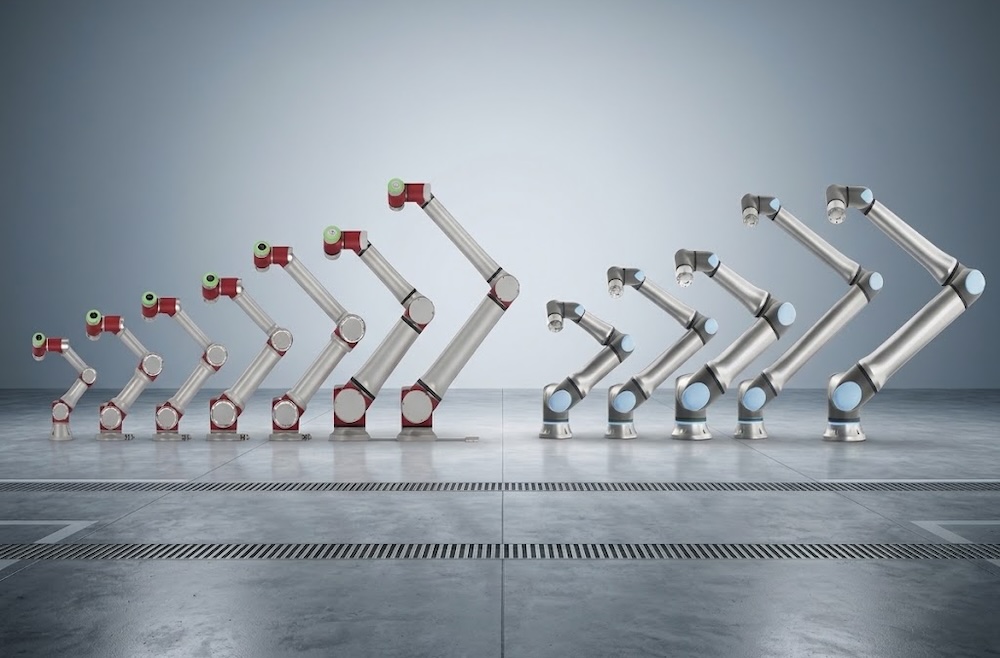
JAKA’s Position:
JAKA maintains a posture of defiance. By citing their previous Freedom-to-Operate studies, they are signaling to investors and partners that their R&D processes were conducted with full due diligence. Their public insistence that no legal documents had been served serves as a tactical move to maintain market confidence while the legal machinery grinds slowly forward. JAKA’s leadership appears intent on framing this not as a case of intellectual property theft, but as a "bully" tactic used by an incumbent to stifle legitimate competition.
Teradyne’s Position:
Teradyne has kept its cards close to its chest, focusing on the legitimacy of its patent portfolio. By choosing the Unified Patent Court, Teradyne is leveraging a powerful, centralized European judicial system that can issue injunctions applicable across multiple EU member states simultaneously. This choice of venue is strategic; it suggests that Teradyne is looking for a decisive, region-wide victory rather than engaging in a drawn-out, country-by-country battle.
Implications for the Robotics Market
The outcome of UPC-CFI-0003057/2026 will likely have far-reaching consequences for the future of the automation industry.
1. The "Patentization" of Robotics
As the industry matures, we should expect a shift away from pure R&D-driven competition toward a hybrid model where litigation is a standard business expense. Smaller manufacturers may find the cost of defending such lawsuits prohibitive, potentially leading to market consolidation.
2. The Future of European Market Access
The UPC’s involvement could lead to significant injunctions. If Teradyne wins, JAKA could face a ban on the sale of specific models within the European Union. Such a ruling would force companies to either design around existing patents—a costly and time-consuming process—or exit the European market entirely.
3. Supply Chain Confidence
For integrators and end-users, this legal uncertainty creates risk. Companies that have invested in JAKA robotics infrastructure may be concerned about long-term service, maintenance, and software updates if the manufacturer is tied up in a protracted legal battle.
4. The Innovation Paradox
Critics of such litigation argue that aggressive patent enforcement can stifle innovation, forcing companies to spend more on legal counsel than on research. However, supporters argue that without strong IP protection, the incentive for companies like Universal Robots to spend billions on developing new, safer, and more efficient robotics vanishes.
Conclusion: A Turning Point
The dispute between Teradyne Robotics and JAKA Robotics is more than a simple courtroom brawl; it is a battle for the soul of the cobot market. As the industry moves from its "pioneer" phase into a "commercial scaling" phase, the rules of engagement are being rewritten.
While the legal filings remain shrouded in the secrecy of the UPC docket, the industry is watching closely. Whether this leads to a settlement, a licensing agreement, or a landmark court ruling, the ripple effects will be felt by every manufacturer in the sector.
As the industry gathers in Santa Clara for RoboBusiness 2026 this October, the conversation will undoubtedly shift from the latest in sensor fusion and AI integration to the looming specter of patent litigation. With industry leaders like James Davidson, chief AI officer at Teradyne Robotics, set to speak at the event, the community will be looking for clues as to how deep this patent war goes—and which company might be in the crosshairs next.
For now, the robots continue to work on the factory floor, but the lawyers are just getting started.