



The Critical Role of Emergency Stop Systems: Engineering, Compliance, and Operational Reality

In the high-stakes environment of industrial manufacturing, the "emergency stop" (e-stop) stands as the final line of defense between a routine operation and a catastrophic accident. While these devices are ubiquitous—found on everything from CNC mills to expansive conveyor lines—they are frequently misunderstood by machine builders and operators alike. Far from being a general-purpose "off" switch, the e-stop is a specialized, last-resort safety component governed by rigorous international standards.
Understanding the nuance between a standard operational stop and an emergency stop is not merely an exercise in compliance; it is a fundamental requirement for protecting human life and maintaining machine integrity.
Main Facts: Defining the Emergency Stop
At its core, an emergency stop is a complementary protective measure intended to avert or minimize existing hazards to persons, machinery, or work in progress. It is not, and should never be, a substitute for primary safety measures like perimeter guarding, light curtains, or interlocked safety gates.
The Misconception of Routine Use
A common failure in machine design occurs when engineers integrate e-stops as a convenient method to power down equipment at the end of a shift. This is dangerous for several reasons:
- Mechanical Wear: E-stops are designed for infrequent, high-stress events. Using them as a daily power-down switch introduces premature mechanical wear, increasing the risk of contact failure when an actual emergency arises.
- Performance Levels: Contrary to popular belief, e-stops often carry lower EN ISO 13849 performance ratings (typically limited to PLd) compared to safety switches designed for frequent cycle use.
- Probability of Failure: The reliability calculations for e-stops are predicated on the assumption of rare usage. If a device is cycled hundreds of times more than intended, its "dangerous-failure probability" rises, effectively nullifying its reliability in a true crisis.
Chronology and Evolution of Safety Standards
The governance of safety systems has evolved from reactive local policies to proactive, harmonized international frameworks.

The Regulatory Landscape
To ensure a standardized approach to safety, machine builders must adhere to three primary pillars of compliance:
- OSHA (Occupational Safety and Health Administration): Provides the U.S.-based legal framework for workplace safety, mandating that machines must be equipped with devices to stop operation in the event of an emergency.
- IEC 60204-1: The international standard for the electrical equipment of machines. It dictates the functional requirements of stop functions, categorizing them based on how they disconnect power.
- NFPA 79: The Electrical Standard for Industrial Machinery, which aligns closely with IEC 60204-1, ensuring that North American machine installations meet stringent safety criteria.
The Categorization of Stop Functions
Modern standards distinguish between three categories of stop functions, each serving a different tactical purpose during a shutdown:
- Category 0: The immediate removal of power to the machine actuators. This is an uncontrolled stop and is mandatory for all machines. It ensures the machine ceases movement instantly by cutting the energy source.
- Category 1: A controlled stop where power is maintained to the actuators to bring the machine to a standstill in a predictable, safe manner before removing power. This is critical for machines with high-inertia components that could become dangerous if stopped abruptly.
- Category 2: A controlled stop where power is maintained to the machine, but movement is prohibited. This is often used when a process must maintain its current state or hold a position to prevent damage to the workpiece or tool.
Supporting Data: Why "Ready Accessibility" Matters
The effectiveness of an e-stop is measured by the time it takes to activate. According to ISO 13850 and NFPA 79, these devices must be "readily accessible" at all machine stations.
The Ergonomics of Safety
The design mandate is clear: an operator should never have to stoop, reach, or navigate around obstacles to activate an e-stop. If a machine has multiple stations, each station must have its own dedicated, easy-to-reach stop mechanism.
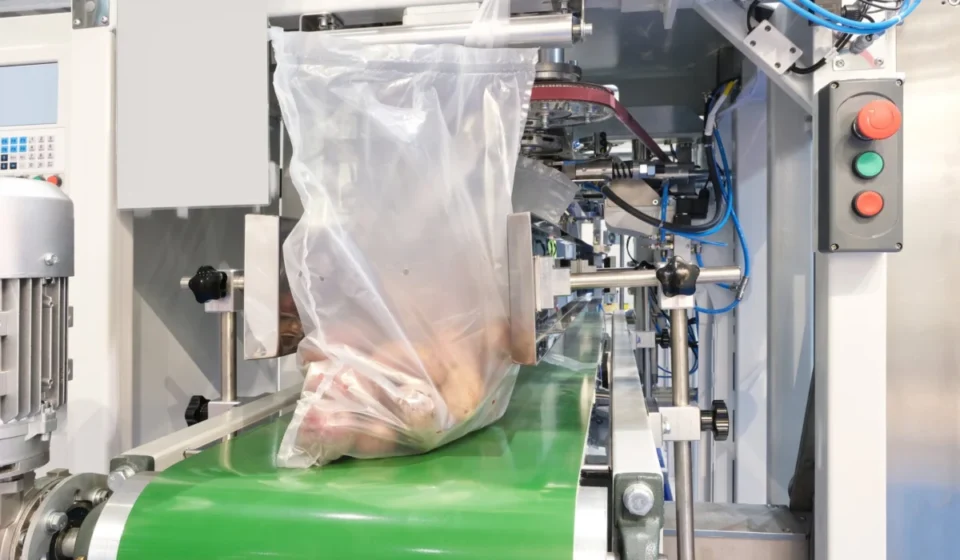
Furthermore, the design of the interface is highly regulated. The classic "mushroom-head" button must be bright red, set against a contrasting yellow background, to ensure instant visual identification. Critically, these buttons are designed to latch. Once pushed, the machine must stay off—even if the button is released—until a manual reset occurs. Notably, the reset button is usually a distinct, separate color (often blue) to ensure that power is only restored intentionally, preventing an automatic "restart" that could catch an operator off guard.

Official Responses and Industry Best Practices
Leading safety organizations and regulatory bodies emphasize that the integration of an e-stop must be separate from the standard machine control circuitry.
Wiring and Control Architecture
Because e-stops are not intended to prevent threats (like a safety light curtain does), they should not be wired into the first-defense safety circuitry. Instead, they should be integrated into a distinct, dedicated safety loop.
Common forms of actuation include:
- Mushroom-Head Buttons: The standard for control panels. These are wired in series to ensure that a single activation breaks the circuit for all associated actuators.
- Foot-Activated Switches: Used in environments where an operator’s hands may be occupied or where proximity to the floor is required. These must include guards to prevent accidental activation by falling debris.
- Pull-Wire/Cable-Pull Systems: Essential for long machinery like conveyors. By running a cable along the length of the machine, the system allows for an e-stop to be triggered from any point along the line, effectively providing a continuous safety zone.
Implications for Future Machine Design
As industry moves toward "Industry 4.0" and higher levels of automation, the role of the human operator is shifting. However, the requirement for human-accessible emergency stops remains non-negotiable.
The Cost of Complacency
The implications of poor e-stop integration are severe. Beyond the obvious risk of injury, non-compliant machines face potential shutdowns during OSHA inspections, hefty fines, and the profound legal liability that follows workplace accidents.

Engineering for Resilience
Machine builders must adopt a "Safety by Design" philosophy. This includes:
- Regular Risk Assessments: Every machine must undergo a formal risk assessment to determine the required stop time and the appropriate stop category.
- Component Integrity: Utilizing high-quality, certified safety components that are rated for their specific environmental conditions (e.g., washdown ratings for food processing, explosion-proof ratings for chemical plants).
- Operator Training: An e-stop is only as effective as the operator’s knowledge of it. Training programs must emphasize that the e-stop is a "last resort" and educate staff on the difference between a controlled cycle stop and an emergency disconnect.
Conclusion
The emergency stop remains a cornerstone of industrial safety. While the technology behind these switches—from simple electromechanical buttons to complex, networked safety systems—continues to evolve, the underlying principles remain constant: they must be accessible, reliable, and reserved for true emergencies. By adhering to the standards set by OSHA, IEC, and the NFPA, manufacturers can build a culture where safety is not just an afterthought, but an integral part of the operational DNA.
As technology progresses, we may see more "smart" e-stops that provide diagnostic feedback, informing the maintenance team exactly which button was pressed and why. Yet, the physical act of hitting that red button will always remain the most visceral and essential safeguard in the factory, a silent sentinel waiting to protect the workforce when everything else fails.
For further reading on the intersection of human-machine interfaces and safety, refer to industry guidelines on tactile control components and their integration into modern front-panel design.