


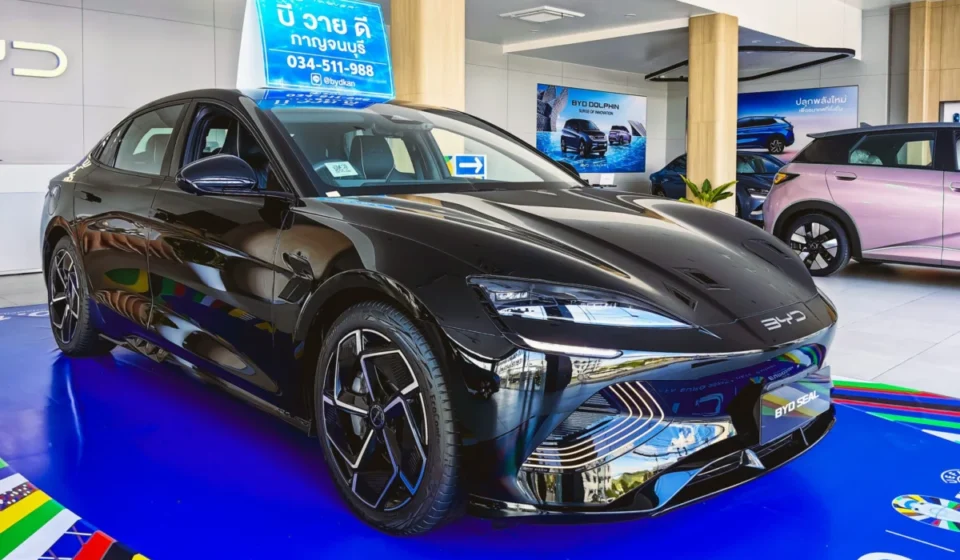
Thailand’s EV Crossroads: How Chinese Automakers Captured 89% of the Market and Forced a Tax Overhaul

By Stewart Burnett
Enriched and Expanded Report
Executive Summary: A Paradigm Shift in Southeast Asia’s Automotive Hub
Thailand, historically known as the "Detroit of Asia" for its dominance in traditional internal combustion engine (ICE) vehicle manufacturing, is undergoing the most radical structural transformation in its modern economic history. In a milestone that underscores the rapid global acceleration of electric mobility, electrified vehicles officially outpaced traditional ICE models for the first time in Thai automotive history. Accounting for a commanding 55% of all new car registrations in the first seven months of 2026, the Thai market has crossed a permanent rubicon.
Yet, this triumph of green mobility presents a complex political and economic dilemma for policymakers in Bangkok. Behind the surge in adoption lies a dramatic market realignment: Chinese automotive giants have captured an astonishing 89% of Thailand’s electric vehicle market.
To curb foreign dominance, protect local supply chains, and address looming fiscal pressures, Thailand’s national electric vehicle policy board has agreed in principle to introduce a transformative three-tier excise tax structure. Designed to favor domestically manufactured EVs over fully imported models, this policy aims to close lucrative loopholes that have allowed foreign automakers to flood the market. However, with eight Chinese manufacturers already establishing local assembly footprints, questions remain over whether the new tax regime will genuinely level the playing field or merely push foreign giants to adapt through localized production.
Chronology of a Market Transformation: From Free Trade to Regulatory Reset
Understanding how Thailand became the epicenter of Chinese EV dominance in Southeast Asia requires examining a carefully orchestrated sequence of policy incentives, trade agreements, and commercial maneuvers.
The Foundation: Bilateral Agreements and Loopholes
The groundwork for China’s market capture was laid decades prior through trade architecture. Thailand’s 2003 Free Trade Agreement (FTA) with China eliminated tariffs on a wide range of goods, including automobiles. While vehicles imported from most Western and Asian nations faced a daunting 80% baseline import tariff—mitigated only partially by a 20% rate granted to Japan under a separate bilateral economic partnership—Chinese-made EVs entered the Thai market completely tariff-free.
The Catalyst: EV 3.0 Incentive Scheme (2022)
In 2022, the Thai government launched its ambitious EV 3.0 incentive scheme. The program was designed to jump-start consumer adoption by pairing generous tax cuts and direct cash subsidies with local-content offset requirements. Crucially, however, the government deferred those local-production offset obligations until 2024.
This policy design inadvertently handed Chinese automakers roughly two years of heavily subsidized, tariff-free access to the Thai consumer base before any local-manufacturing penalties or requirements applied. Chinese original equipment manufacturers (OEMs) seized the window with ruthless efficiency. By the end of 2025, Chinese brands had consolidated their grip, securing an unprecedented 89% share of Thailand’s EV market.
The Price War and Demand Volatility (2023–2026)
The influx of tariff-free Chinese vehicles ignited a relentless price war that upended the domestic automotive landscape. According to data from Thai research institute Krungsi, Chinese EV brands slashed prices by 10.2% between Thailand’s 2023 and 2024 motor show seasons. This was followed by a staggering 13.1% reduction by early 2025, before price adjustments moderated to a 2.7% drop later that year. By May 2026, research firm Rhodium Group reported that price gaps of up to 50% persisted between Chinese and non-Chinese EV models.
This aggressive discounting created artificial volatility in sales volumes. Chinese EV sales in Thailand peaked dramatically in December 2025 as consumers rushed to capture government incentives ahead of a scheduled January expiry. Sales cratered in the immediate aftermath, only to rebound to near-2025 levels within a matter of months—all without Chinese brands surrendering an inch of their overall market dominance.
Supporting Data and Economic Indicators
The structural shifts in Thailand’s automotive sector are mirrored by significant macroeconomic pressures and investment metrics.
Fiscal Realities and the Cost of Transition
Thailand’s fiscal position has added profound urgency to the government’s regulatory overhaul. The nation’s budget deficit exceeded 3% of GDP in 2025 and is tracking toward 3.5% as the country approaches a self-imposed public debt ceiling of 70%. To cushion the broader economy against external shocks—including the economic fallout from the war in Iran—the government sought Constitutional Court approval to borrow an additional 400 billion baht (US$12.2 billion).
By contrast, the financial outlay for the initial EV incentive scheme has been remarkably modest. Over its first three years, the program subsidized approximately 175,000 passenger EVs and 35,000 electric motorcycles at a total cost of roughly 12 billion baht—representing less than half a percent of Thailand’s annual national budget. Yet, the secondary economic impacts on domestic supply chains and trade balances have forced fiscal planners to reconsider long-term revenue models.
Investment Inflows and Localization Realities
In response to early policy nudges and the looming threat of tariff walls, Chinese automakers have aggressively invested in Thai manufacturing capacity. To date, eight major Chinese brands have announced or established local assembly operations in Thailand:

- BYD
- Great Wall Motor (GWM)
- Changan Automobile
- SAIC Motor (MG)
- Chery Automobile
- Hozon Auto (Neta)
- GAC Aion
- Wuling
As of the second quarter of 2026, most of these facilities are operational. This positions Thailand as the third-largest global destination for Chinese EV manufacturing investment by value—trailing only Hungary and Brazil—and the absolute largest by sheer number of active plants.
However, the depth of this localization remains a subject of intense debate. Much of the current activity is concentrated in lower-value final assembly work, with vital, high-value components—particularly battery cells and advanced semiconductor chips—still predominantly imported from mainland China.
Signs of deeper integration are emerging, nevertheless. In 2025, China’s Sunwoda announced a landmark US$1 billion investment to build Thailand’s first full-scale battery cell manufacturing plant, boasting an anticipated annual capacity of around 300,000 EVs.
Official Responses and Strategic Policy Shifts
Facing mounting pressure from local legacy manufacturers, labor unions, and fiscal analysts, the Thai government is recalibrating its industrial policy.
The Three-Tier Excise Tax Structure
According to senior finance ministry officials, Thailand’s national electric vehicle policy board has agreed in principle to overhaul the nation’s automotive taxation framework. The centerpiece of this new policy is a three-tier excise tax structure designed to explicitly favor domestically manufactured EVs over imported alternatives.
- Tier 1 (Locally-Made EVs): Benefiting from the lowest excise tax rates, this tier rewards automakers that commit to true domestic manufacturing and meet strict local-content thresholds.
- Tier 2 (Transitional / Regional Imports): Occupying the middle tier, this category accommodates vehicles imported under specific bilateral frameworks or from regional neighbors subject to ongoing trade negotiations.
- Tier 3 (Fully-Imported Vehicles): Facing the highest punitive rates—sitting significantly above the current 10% baseline—this tier targets completely built-up (CBU) vehicle imports that bypass local industrial participation.
Regional Competition for Capital
Thailand does not operate in a vacuum. Policymakers in Bangkok are acutely aware that neighboring Southeast Asian nations are aggressively courting the exact same pool of Chinese automotive capital. Both Indonesia and Vietnam have rolled out aggressive incentive packages to attract Chinese OEM investments.
This regional competition creates a strategic dilemma for Chinese manufacturers. Rather than treating Thailand as an isolated, standalone export hub, automotive giants are increasingly looking to secure localized manufacturing status across multiple ASEAN markets simultaneously to hedge against regulatory shifts and optimize supply chain logistics.
Market Implications: Can Regulations Curb an 89% Monopoly?
As the Thai government prepares to finalize the specifics of its three-tier excise tax system, industry analysts are sharply divided over its ultimate efficacy.
The Loophole of Local Assembly
The primary paradox of the proposed tax structure lies in its interaction with the already-established footprints of Chinese automakers. Because eight major Chinese brands have already set up—or are in the final stages of completing—local assembly plants in Thailand, many of these exporters may effortlessly qualify for the new tax structure’s lowest, most favorable tiers.
Critics argue that while the policy is ostensibly protectionist in intent, its practical enforcement may simply force Chinese OEMs to accelerate their transition from importers to domestic assemblers without materially eroding their 89% market share. In essence, foreign brands may trade shipping containers for local factory floors while maintaining their near-monopoly on consumer preference and pricing power.
The Future of Traditional Competitors
For Japanese legacy automakers—such as Toyota, Honda, and Isuzu—who anchored Thailand’s automotive dominance for decades but lagged in the initial EV transition, the new tax structure offers a glimmer of hope. By penalizing fully imported CBU models and tightening the screws on low-cost foreign competition, the policy attempts to buy time for traditional players to scale up their own electrified product lines.
However, the window is closing rapidly. With Thai consumers proving remarkably receptive to affordable, technologically advanced Chinese EVs, legacy brands must rapidly pivot from hybrid strategies to competitive, locally produced battery-electric vehicles (BEVs) if they hope to regain lost ground.
Conclusion
Thailand’s upcoming three-tier excise tax structure represents a watershed moment for Southeast Asia’s automotive sector. It highlights the limits of laissez-faire free trade agreements in the face of rapid technological disruption and state-backed industrial strategy.
Ultimately, whether the new policy succeeds in rebalancing the Thai automotive ecosystem will depend on variables the government has yet to officially disclose: the exact percentage rates of the excise tiers and the definitive timeline of the upcoming grace periods. Until those details are codified, Chinese automakers remain firmly in the driver’s seat of Thailand’s electric future.