


Stardust in a Bottle: Sydney Researchers Unveil the Origins of Life’s Cosmic Ingredients

In a groundbreaking achievement that bridges the gap between stellar physics and evolutionary biology, a PhD researcher at the University of Sydney has successfully synthesized "cosmic dust" within a laboratory setting. By recreating the volatile, high-energy environments of deep space inside sealed glass tubes, the team has produced the complex organic building blocks suspected of seeding life on a primordial Earth.
This experiment, published in The Astrophysical Journal of the American Astronomical Society, provides a new window into the chemical evolution of the universe. It suggests that the essential ingredients for life—carbon, hydrogen, oxygen, and nitrogen (CHON)—do not merely happen by chance in the void, but are forged through specific, reproducible physical processes occurring in the wakes of dying stars and the nurseries of new ones.
The Chemistry of Creation: Recreating the Cosmos
The project, led by Linda Losurdo, a PhD candidate in materials and plasma physics at the University of Sydney’s School of Physics, centers on the replication of interstellar conditions. To simulate the harsh environments found near supernova remnants and giant, aging stars, Losurdo utilized a sophisticated vacuum apparatus.
The process begins by evacuating all atmospheric gases from glass tubes to mimic the near-emptiness of space. Into this vacuum, the team introduced a carefully calibrated mixture of nitrogen, carbon dioxide, and acetylene. Once the environment was established, the mixture was subjected to a high-voltage electrical discharge—approximately 10,000 volts—to generate a "glow discharge" plasma.
Under this intense energetic bombardment, the original gas molecules were fractured, their atomic components stripped and forced into new, complex configurations. As the plasma interacted with the environment, the chemical structure began to aggregate, eventually settling onto silicon chips as a fine, carbon-rich dust. The resulting material, when analyzed, revealed the same chemical composition and structural complexity as the dust observed drifting through interstellar clouds and preserved within the rocky matrices of meteorites and comets.
A Chronology of Cosmic Synthesis
The path to this discovery was one of meticulous design, requiring the researchers to bridge the gap between abstract astrophysical theory and concrete material science.
Phase 1: Establishing the Vacuum
The research began with the construction of an experimental setup capable of isolating the chemistry from Earthly contaminants. By creating an artificial vacuum, the team ensured that the reactions occurring within the glass tubes were driven solely by the energy provided, rather than interference from the Earth’s atmosphere.
Phase 2: The Plasma Discharge
Over a sustained period of one hour, the gaseous cocktail was subjected to high-energy plasma. This phase is critical, as it replicates the "ion impacts" that occur in space. In the interstellar medium, molecules are frequently pelted by ions and electrons, triggering chemical reactions that would otherwise remain dormant. The laboratory plasma acts as a catalyst, accelerating these eons-long processes into a timeframe manageable for human observation.
Phase 3: Structural Aggregation and Infrared Analysis
As the dust settled on the silicon substrates, the team employed infrared spectroscopy to examine the samples. In astronomy, infrared light serves as a diagnostic tool; because different chemical bonds vibrate at specific frequencies, they leave unique "fingerprints" on the light they emit. By comparing the lab-made dust to the signals captured by deep-space telescopes, Losurdo confirmed that her samples were an exact chemical match for the materials detected in cosmic star-forming regions.
Supporting Data: The CHON Connection
The significance of this experiment lies in its yield: the creation of CHON molecules. These molecules—comprising carbon, hydrogen, oxygen, and nitrogen—are the foundational architecture of organic matter.
The laboratory samples exhibited a complex, covalently bonded structure that mirrors the organic material found in carbonaceous chondrites—a class of meteorites known to be rich in organic compounds. Historically, scientists have debated whether the organic precursors to life originated on Earth through hydrothermal vents, or if they were "delivered" by the cosmic bombardment that characterized the early solar system.
Losurdo’s data supports the latter theory, providing a chemical pathway that explains how these molecules could survive the trip from a dying star to a fledgling planet. The experiment demonstrates that the dust is not just a byproduct of stellar death, but a sophisticated delivery vehicle for the building blocks of biology.
Official Perspectives: Decoding the Universe
The research has garnered significant attention within the scientific community, not only for the results themselves but for the methodology of "reverse engineering" cosmic history.
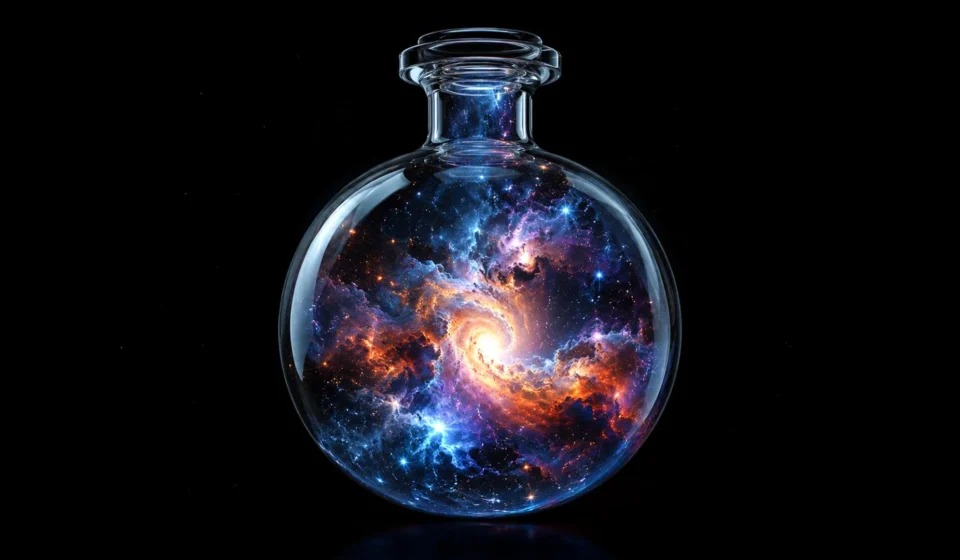
"We no longer have to wait for an asteroid or comet to come to Earth to understand their histories," said Linda Losurdo. "You can build analogue environments in the laboratory and reverse engineer their structure using the infrared fingerprints. It’s like we have recreated a little bit of the Universe in a bottle in our lab."
Professor David McKenzie, who supervised the research, emphasized the practical applications of the study. "By making cosmic dust in the lab, we can explore the intensity of ion impacts and temperatures involved when dust forms in space," McKenzie explained. "This helps us interpret what a meteorite or asteroid fragment has been through over its lifetime. Its chemical signature holds a record of its journey, and experiments like this help us learn how to read that record."
The team’s work has been recognized for its innovation, with Losurdo receiving the "Best Presentation" award at the annual meeting of the Meteoritical Society, highlighting the high regard in which this work is held by planetary scientists and geochemists alike.
Implications: The Roadmap to Life’s Origins
The implications of this study extend far beyond the walls of a Sydney laboratory. By building a comprehensive "fingerprint library" of laboratory-synthesized cosmic dust, the researchers are providing astronomers with a new diagnostic key.
Expanding the Database of Life
Currently, when telescopes observe the infrared signatures of a star-forming nebula, interpreting that data is difficult because the "reference material" is scarce. By systematically varying the gas mixtures and energy inputs in the lab, Losurdo and McKenzie are creating a database that will allow astronomers to match observed signals to specific environmental conditions. If a telescope detects a specific infrared signature, researchers will soon be able to say with certainty: "That dust was formed in a high-radiation environment, likely near a star of X age and Y composition."
Rethinking Early Earth
The research reinforces the hypothesis that the Earth did not need to invent life’s ingredients from scratch. If the processes that create CHON molecules are ubiquitous in the universe, then the "ingredients" for life may be a universal constant rather than a rare terrestrial anomaly. This realization significantly impacts the search for extraterrestrial life; if the building blocks are common in interstellar space, then the likelihood of these molecules landing on other habitable exoplanets increases substantially.
Preserving the Cosmic Record
For decades, meteorites have been analyzed as time capsules of the early solar system. However, decoding their contents has been hampered by our inability to fully understand the "thermal history" of the material. This study provides the control group necessary to analyze those samples. By understanding the chemical changes that occur under specific plasma and temperature conditions in the lab, scientists can look at a piece of space rock and better deduce whether it was forged in the heat of a supernova or the cold, quiet regions of an interstellar cloud.
Conclusion: A New Era of Laboratory Astrophysics
The work conducted by Losurdo and McKenzie represents a shift in how we approach the "Great Questions" of science. Rather than looking solely outward through telescopes or inward at terrestrial biology, they have created a middle ground—a synthetic space where the laws of physics and the foundations of biology collide.
As the team continues to refine their laboratory "cosmic nurseries," the library of infrared signatures will grow, potentially solving mysteries about the chemical enrichment of the early solar system. While we may never be able to travel back to the first billion years of Earth’s existence, we can now recreate the chemistry of that era, one glass tube at a time. The universe, it seems, is far more accessible than we once imagined, hiding its secrets not just in the distant stars, but within the plasma-charged dust being synthesized in laboratories right here on Earth.