Battling the Ceiling: Solving Industrial Temperature Stratification for Operational Efficiency

By Jamie Tuinstra, Modine Manufacturing
Published: May 28, 2026
In the modern industrial landscape, where precision, energy efficiency, and worker safety are the pillars of operational excellence, the invisible enemy of temperature stratification remains one of the most persistent, yet overlooked, challenges for facility managers. Whether navigating the expansive floor of a modern distribution center or the intricate assembly lines of a manufacturing plant, maintenance teams are often fighting a losing battle against physics: heat rises.

When thermal energy collects uselessly at the ceiling while the floor-level workforce experiences chilling drafts, utility costs inflate, equipment suffers, and productivity plateaus. However, the solution—destratification—is a sophisticated, cost-effective intervention that is increasingly becoming a standard component of industrial HVAC strategy.
The Physics of Failure: Understanding Temperature Stratification
Temperature stratification is a phenomenon inherent to high-ceiling environments. In simple terms, it is the layering of air by temperature. Because warm air is less dense than cool air, it naturally migrates upward. In a residential setting, with standard eight-foot ceilings, this effect is negligible. But in industrial facilities with ceiling heights ranging from 20 to 50 feet or more, the results are drastic.
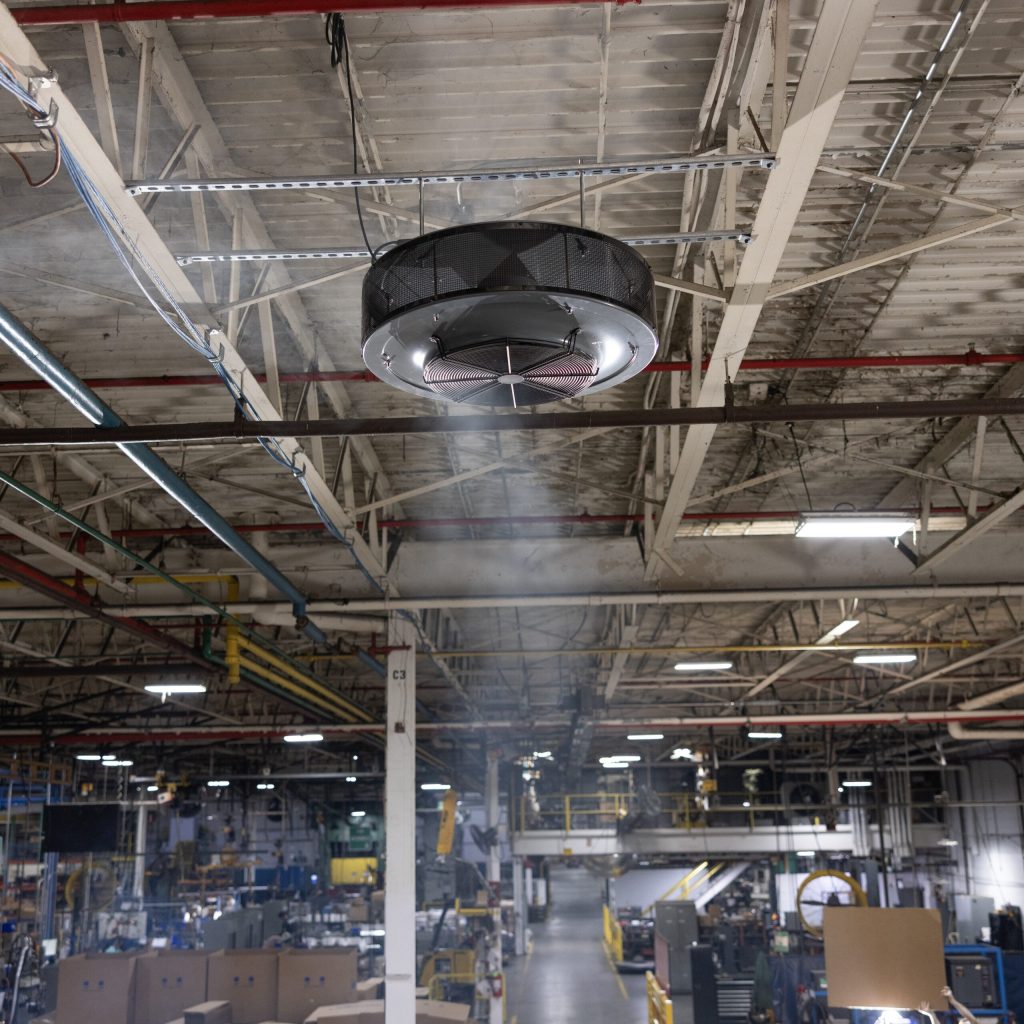
The 20-Degree Gap
It is not uncommon for facility managers to measure a 20-degree Fahrenheit differential between the floor and the roof deck. During the winter months, when heating systems are pushing warm air into the space, that heat immediately escapes toward the roof. The thermostat, usually located at the floor level where employees work, senses the cold air and continues to demand heat. The furnace or boiler works overtime to satisfy the thermostat, while the actual "comfort zone" remains stubbornly cold.
The Economic and Operational Toll
This cycle of over-heating and under-performing leads to several critical issues:

- Exploding Utility Bills: Heating an empty ceiling space is, quite literally, burning money. The energy consumed to maintain a comfortable temperature at the floor is wasted as it migrates to the roof.
- Premature Mechanical Wear: By forcing HVAC systems to cycle constantly to compensate for the heat lost to the ceiling, equipment lifespan is significantly shortened.
- Compromised Product Integrity: Certain inventory items, electronics, and specialized materials are sensitive to temperature fluctuations. A facility with a significant thermal gradient may struggle to meet quality control standards for stored goods.
- Worker Morale and Safety: Personnel working in "cold spots" suffer from discomfort, which impacts morale and potentially slows production speeds. Conversely, stagnant air in warmer zones can lead to a stuffy, unproductive environment.
A Chronology of Climate Control Evolution
The history of industrial climate control has moved from simple, brute-force heating to modern, intelligent environmental management.
- The Early Era (Pre-1980s): Facilities relied primarily on massive, high-output, inefficient forced-air furnaces. These systems were designed to "blast" heat into a space, ignoring the physics of heat rising.
- The Mid-Transition (1980s–2000s): As energy prices fluctuated, the industry began experimenting with large, low-speed fans, though they were often used for summer cooling rather than winter heat redistribution.
- The Modern Era (2010s–Present): With the integration of Building Management Systems (BMS) and the development of specialized, industrial-grade destratification fans, facility managers have shifted toward a "closed-loop" approach. The focus is no longer just on generating heat, but on managing the thermal mass already present within the building envelope.
The Role of Destratification Fans: Turning Physics on Its Head
Destratification fans represent a fundamental shift in HVAC philosophy. Unlike traditional cooling fans, which are designed to create a breeze for human comfort, destratification fans are engineered to redistribute air vertically.

How They Work
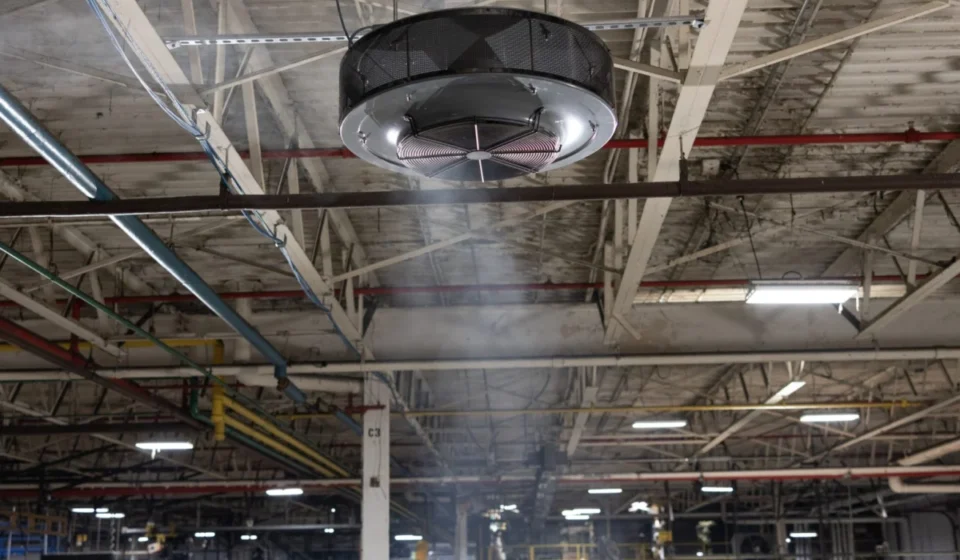
These fans are mounted at the ceiling and pull the trapped warm air from the roof deck, pushing it downward in a gentle, non-turbulent column toward the floor. By creating a continuous circulation loop, the fans equalize the temperature throughout the vertical column of air. The goal is not to create a "wind chill" effect, but to create a uniform temperature profile from floor to ceiling.
The Benefits of Strategic Implementation
- Optimized Heating Performance: By reclaiming the heat trapped at the ceiling, the main heating system needs to cycle less frequently. This leads to immediate reductions in fuel consumption.
- Extended Equipment Life: Less strain on HVAC units translates to lower maintenance costs and fewer emergency repair calls.
- Industrial-Grade Durability: Unlike consumer-grade ceiling fans, industrial destratification systems are built to thrive in harsh environments. They are equipped with robust, sealed motors that resist dust, humidity, and vibrations, ensuring long-term reliability in environments like warehouses and chemical plants.
- Zonal Control: Modern systems allow for granular control. Facility managers can program fans to operate only in specific zones based on occupancy, time of day, or specific equipment heat loads, ensuring that energy is never wasted in unused sections of the facility.
Supporting Data and Efficiency Metrics
For facility managers, the decision to invest in destratification technology is often driven by ROI. Industry data consistently shows that properly implemented destratification systems can reduce heating-related energy consumption by 20% to 50%, depending on the ceiling height and climate zone.
The "Delta-T" Factor
The effectiveness of a destratification system is measured by the reduction of the "Delta-T" (the difference in temperature between the ceiling and floor). In a high-bay facility, reducing the Delta-T from 20 degrees to just 3 degrees can result in a dramatic decrease in the workload of the primary heating units.
Furthermore, these systems contribute to sustainability goals. As corporations face increasing pressure to lower their carbon footprint, reducing the total BTUs required to heat a facility is one of the most effective ways to lower emissions and meet ESG (Environmental, Social, and Governance) targets.

Professional Insights and Best Practices
To achieve these results, a "one-size-fits-all" approach is the enemy of efficiency. Selecting the right fan and, more importantly, the right placement, requires an audit of the facility’s unique architecture.
Site Assessment Considerations
- Ceiling Height: The taller the ceiling, the more powerful the fan’s induction capacity needs to be.
- Structural Obstructions: Cranes, ductwork, conveyor belts, and lighting arrays can obstruct airflow. An effective design must account for these "dead zones" to ensure that the air column reaches the floor without significant turbulence.
- Automated Controls: Modern facilities benefit from integrating fans with BMS. Automated sensors that trigger fans when a specific temperature threshold at the ceiling is met can maximize energy savings while minimizing human intervention.
The Importance of Expert Consultation
Because every facility is unique—with different insulation levels, regional climates, and operational processes—consulting with HVAC engineers who specialize in thermal management is critical. Improperly spaced fans can lead to "short-circuiting," where air is recirculated before it ever reaches the floor, rendering the system ineffective.
Implications for the Future of Facility Management
As we move toward 2030, the demands on industrial facilities are only increasing. Higher expectations for indoor air quality (IAQ), stricter energy regulations, and the need for resilient supply chains mean that "business as usual" in facility management is no longer sufficient.
The integration of destratification technology is a clear indicator of how industrial operations are maturing. It is no longer enough to simply install a furnace; managers must now act as thermal engineers, curating the environment to maximize efficiency and human performance.
By addressing the challenge of temperature stratification, maintenance teams are doing more than just saving money on their utility bills. They are building more resilient, comfortable, and productive environments. In an era where every dollar saved and every kilowatt conserved matters, destratification is not just an optional upgrade—it is a foundational component of modern industrial operations.
About the Author
Jamie Tuinstra is a product manager at Modine Manufacturing. He has been in the heating and cooling industry for 25 years and with Modine for 16. At Modine, the company is engineering a cleaner, healthier world. Building on more than 100 years of excellence in thermal management, Modine provides trusted systems and solutions that improve air quality and conserve natural resources. Headquartered in Racine, Wisconsin, Modine serves customers across North America, South America, Europe, and Asia.