





The Grid Under Pressure: PJM’s Capacity Crisis and the Reshaping of American Power

The North American power landscape is currently defined by a paradox: as the transition to renewable energy accelerates, the very infrastructure intended to support this shift is facing its most rigorous stress test in decades. At the epicenter of this challenge is PJM Interconnection, the largest grid operator in the United States, which serves 13 states and the District of Columbia.
Recent developments in the PJM market, coupled with a flurry of renewable energy project completions and storage deployments across the country, highlight a fundamental tension between surging electricity demand and the complexities of grid reliability.
The PJM Capacity Crisis: A System at the Breaking Point
The recent 2028/2029 Base Residual Auction conducted by PJM has confirmed the worst fears of many energy analysts. For the second consecutive year, the grid operator reached its price cap, signaling an acute supply-demand imbalance. PJM calculated a capacity reserve shortfall of more than 6.8 gigawatts (GW), pushing the reserve margin—a critical buffer for grid stability—down to 14.7%. This is a significant deviation from the preferred 20% margin that regulators typically target to ensure reliability during extreme weather events or unexpected plant outages.
The Anatomy of the Shortfall
The shortfall is not merely a technical glitch; it is the result of a "perfect storm" of factors. First, the region is experiencing unprecedented demand, fueled by the rapid expansion of data centers, the electrification of industrial processes, and the rising energy intensity of modern digital infrastructure. Simultaneously, the retirement of aging fossil fuel plants, often ahead of the deployment of reliable replacement capacity, has tightened supply.
While PJM asserts that the system remains capable of serving the current load under normal conditions, the narrowing reserve margin introduces significant risk during "1-in-10-year" weather events. As summers grow hotter and demand records are broken with regularity, the grid is increasingly susceptible to volatility.
Economic Ripples: The Rising Price of Reliability
The financial impact of these market conditions is substantial. Independent analyses, including recent reports from Synapse Energy, indicate that annual customer costs within the PJM footprint have seen an astronomical increase. Since June 2025, costs have climbed by approximately $12.5 billion, rising from $2.2 billion in 2024 to $14.7 billion in the following year. As the industry often quips, "the price of the brick is going up"—a reality that is now beginning to manifest in utility bills across the Mid-Atlantic and Midwest.

PJM’s Strategic Response: A Multitude of Initiatives
Recognizing the urgency of the situation, PJM is deploying a "whack-a-mole" strategy to address the root causes of the supply crunch. The grid operator has introduced several critical initiatives designed to streamline the connection of new generation and manage reliability:
- Reliability Backstop Procurement: A mechanism intended to secure necessary capacity that might otherwise exit the market prematurely.
- Connect and Manage Frameworks: Efforts to simplify the complex and often lengthy interconnection queue process.
- Expedited Interconnection Track: A temporary measure designed to fast-track projects that can provide immediate, reliable capacity to the grid.
Despite these efforts, the upcoming December auction for the 2029-2030 delivery year remains a focal point of anxiety. It represents the final auction under the current federally approved "collar" (price cap). Industry experts are closely watching to see how the market reacts once these constraints are removed, as the outcome will likely dictate the long-term viability of the PJM market structure.
Chronology of Market Shifts and Project Milestones
While the PJM grid struggles with capacity, the broader energy sector is demonstrating significant momentum through innovative project deployments and regulatory progress.
- July 2026: Aligned Climate Capital acquires the 7.3 MW DC "Armoracia" community solar project in Illinois, signaling a shift toward more financeable, land-efficient infrastructure.
- July 2026: The Minnesota Public Utilities Commission approves a site permit for the 150 MW / 600 MWh Midwater Energy Storage Project, a major milestone for Spearmint Energy in the MISO territory.
- July 2026: The San Diego County Planning Commission unanimously approves the two-phase 100 MWac Starlight Solar project, despite local concerns regarding fire hazards in high-risk zones.
- July 2026: Terra-Gen completes the final phase of the Lockhart Solar and Storage facility in California, bringing the total complex to 365 MW of solar and 173.7 MW of battery capacity.
Supporting Data: The Efficiency of Innovation
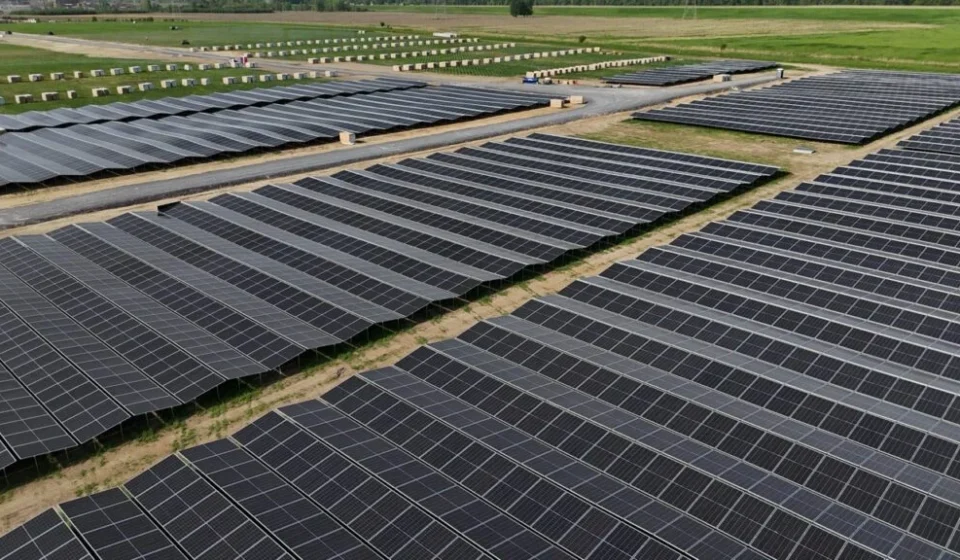
The transition to a more flexible grid is increasingly dependent on high-density, land-efficient technology. A prime example is the Armoracia project, which utilizes Planted Solar’s terrain-following arrays. By eliminating the need for extensive land grading, the project is able to generate 7.3 MW of power on just 16 acres.
This is a critical development for the community solar sector. Historically, developers have struggled to find suitable, low-cost land that doesn’t conflict with agricultural or conservation priorities. By deploying software-driven, field-automated systems, companies are proving that solar can be integrated into existing landscapes without sacrificing productivity. As Peter Davidson, CEO of Aligned Climate Capital, noted, this acquisition creates a "financing precedent" for the industry, allowing institutional investors to back projects that were previously deemed too small or irregular for large-scale capital.
Official Responses and Stakeholder Concerns
The push for new energy projects is rarely without friction. The approval of the Starlight Solar project in San Diego serves as a case study in the tension between national climate goals and local community interests.

Local residents in the Boulevard community raised significant concerns regarding the fire safety of lithium-ion battery energy storage systems (BESS). Given that the region is designated by CAL Fire as a "High Fire Hazard Severity Zone," these fears are rooted in recent regional incidents. In response, developers have committed to a robust fire protection plan and have indicated a willingness to relocate battery phases further from residential areas. This reflects a broader trend where developers must now engage in far more rigorous community outreach and safety planning to secure project approval.
Conversely, the success of the Lockhart Solar and Storage complex—which has now reached full operational status—demonstrates the potential for large-scale, multi-phase projects to contribute to regional grid reliability. With 365 MW of solar and over 170 MW of storage, the facility serves as a vital resource for Southern California Edison, illustrating the "energy of tomorrow" that developers are striving to deliver today.
Implications for the American Electric Future
The events of the last few weeks reveal three critical implications for the future of the U.S. power grid:
- The Demand Reality: The "data center-y" nature of the modern economy is not a temporary trend. Grid operators must accelerate planning cycles to account for demand growth that is consistently outpacing historical forecasts.
- The Storage Imperative: Projects like Midwater (MISO) and Starlight (CAISO) prove that battery energy storage is moving from a niche technology to the backbone of grid reliability. As these projects come online, they provide the "flexible infrastructure" necessary to balance the intermittency of solar and wind.
- The Regulatory Tightrope: As seen in PJM, the regulatory environment is struggling to keep pace. The move toward expedited interconnection and revised capacity market rules is necessary, but regulators must ensure these changes don’t sacrifice long-term grid integrity for short-term fixes.
As we look toward the end of 2026, the energy industry finds itself at a crossroads. The grid is clearly under strain, and the costs of maintaining a reliable system are rising. However, the consistent progress in solar efficiency, storage permitting, and project commissioning provides a blueprint for a more resilient future. The challenge for policymakers and utility leaders remains the same: scaling these successes rapidly enough to meet the demands of a modern, electrified economy before the capacity margins shrink any further.