



The Open-Standard Revolution: RISC-V Summit Europe 2026 Marks a New Era in Silicon Sovereignty

The global semiconductor landscape shifted on its axis last month in Bologna, Italy, as the RISC-V Summit Europe 2026 convened a diverse coalition of industry titans, academic pioneers, and aerospace engineers. Once viewed as an experimental academic exercise, the RISC-V open-standard instruction set architecture (ISA) has matured into a powerhouse capable of challenging the entrenched duopolies of x86 and Arm. With the official ratification of the RISC-V Server Platform Specification 1.0 (RVA23), the architecture is no longer just "coming"—it has arrived.
Main Facts: The Turning Point for Open Hardware
The defining narrative of the 2026 summit was the transition of RISC-V from specialized, low-power embedded controllers into the heavy-duty realms of high-performance computing (HPC), enterprise data centers, and critical space infrastructure.

Andrea Gallo, CEO of RISC-V International, set the tone in his opening keynote with a definitive declaration: "RISC-V is now." This message resonated with a packed audience, underscoring the rapid shift in industry sentiment. The ratification of the RVA23 profile serves as the cornerstone for this evolution. By introducing industry-standard boot systems and runtime services—specifically UEFI and ACPI 6.6—the specification ensures that server-grade RISC-V hardware can achieve the same level of software compatibility as traditional incumbents.
For multinational corporations and sovereign governments, this represents a major victory against vendor lock-in. By adopting an open-standard, interoperable framework, organizations can now build hardware ecosystems that are not beholden to the proprietary roadmaps of a single dominant player. This strategic autonomy was a recurring theme throughout the summit’s technical sessions and developer workshops, which saw record-breaking attendance, with 120 engineers participating in intensive hands-on debugging and architectural design challenges.

Chronology of the Summit: A Multi-Faceted Dialogue
The summit unfolded as a three-day intensive exploration of the RISC-V ecosystem, categorized by distinct operational domains:
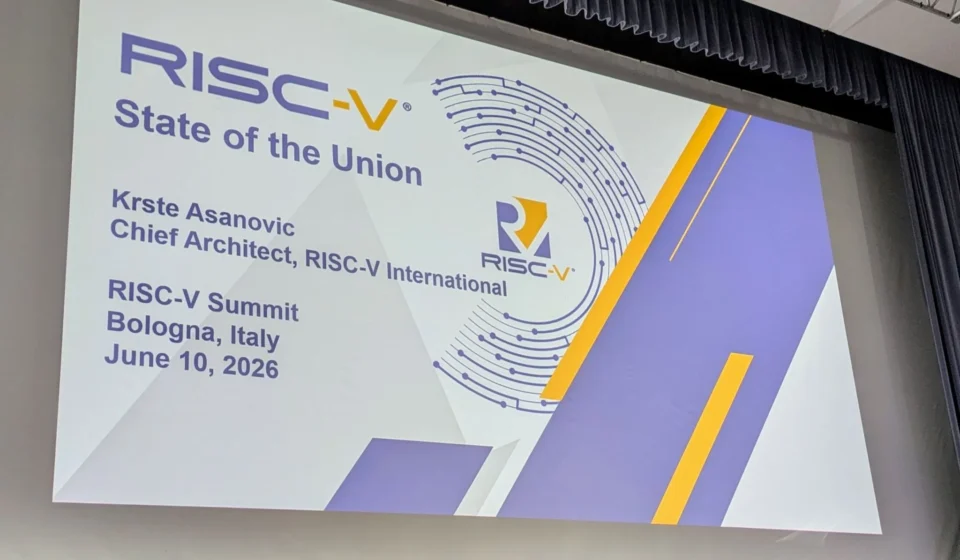
- Day 1: The State of the Union and the Enterprise Pivot. Krste Asanović, chief architect at SiFive and the primary RISC-V project lead at UC Berkeley, opened the proceedings with a "State of the Union" address. He highlighted the aggressive adoption of the architecture by hyperscalers including Meta, Google, Nvidia, Qualcomm, and Alibaba. The day focused on the technical requirements for bringing RISC-V into the server farm, emphasizing that the architectural "fragmentation" fears of the past have been largely addressed by the strict mandates of the new profiles.
- Day 2: Space Exploration and the "Internet of Trees." The second day turned toward the extreme environments of space and the Amazon rainforest. In the "RISC-V in Space" track, agencies like NASA and the ESA detailed how they are moving away from legacy architectures like SPARC to favor the modular, radiation-resistant nature of RISC-V. Simultaneously, the "Internet of Trees" project from the University of São Paulo showcased how microcontrollers can serve as the brain of an autonomous forest-monitoring network, processing data locally to combat illegal logging and environmental degradation.
- Day 3: Physical AI and Future Horizons. The final day centered on the emergence of "Physical AI"—the integration of AI-driven decision-making into robotics and edge devices. By leveraging RISC-V’s vector and matrix extensions, developers are now bypassing the traditional "data transfer" bottlenecks that plague power-hungry, off-chip AI accelerators.
Supporting Data: Why the Industry is Moving
The technical shift toward RISC-V is backed by compelling data regarding performance efficiency and business agility. The RVA23 profile is not merely a theoretical framework; it is a pragmatic set of requirements that allows for the creation of 128-core server processors designed to compete directly with high-end x86 and Arm silicon.

- Standardization Efficiency: The integration of ACPI 6.6 into the RISC-V stack means that enterprise software stacks (Linux distributions, cloud-native kernels) can run on RISC-V silicon with minimal porting effort.
- Power and Latency: Through the use of custom extensions, RISC-V implementations for physical AI demonstrate a significant reduction in total system power. By keeping the neural network processing on the same core as the control logic, designers are seeing lower latency in robotic control loops—a critical factor for the next generation of humanoid robots.
- The "No-Barrier" Advantage: Asanović noted that the ability to experiment without massive licensing fees is fueling a surge in innovation, particularly among startups that previously lacked the capital to license proprietary instruction sets.
Official Responses and Strategic Perspectives
The sentiment from the industry leadership was one of cautious but unshakable optimism. Following the event, Krste Asanović provided further insight into the strategic thinking behind the move to enterprise-grade silicon.
"We are already working closely with several hyperscalers and data center owners," Asanović stated. "They are investing in RISC-V as a strategic alternative to incumbent architectures because it provides superior flexibility in both technical feature sets and business models. There is no longer a barrier to providing dominant performance in the data center."

Asanović also offered a stern warning to the engineering community regarding the temptation to "trim" features for minor space savings. He cautioned that over-customization leads to fragmentation, which undermines the very concept of a standard. "The whole point of the standard is to set a set of mandated features everybody can rely on," he emphasized. "If you have too many options, you don’t have a standard—you have a mess."
In the aerospace sector, the consensus was equally clear. Representatives from the European Space Agency and NASA noted that the "technical debt" associated with maintaining legacy architectures like SPARC has become unsustainable. By shifting to RISC-V, these agencies can leverage an open ecosystem, ensuring that their flight computers remain supportable for the duration of decades-long deep space missions.

Implications: The Year of RVA Silicon
The implications of the 2026 summit for the global semiconductor industry are profound. 2026 is rapidly becoming the "year of RVA silicon," as companies move from prototyping to production-grade deployment of RISC-V processors in the data center.
1. The End of Proprietary Hegemony
The most immediate implication is the erosion of the "Black Box" development model. Previously, chip designers were forced to accept the opaque instruction sets provided by dominant vendors. With RISC-V, the instruction set is public, immutable, and community-driven. This forces a competitive market where value is derived from implementation quality and silicon efficiency, rather than architectural gatekeeping.

2. Democratization of AI at the Edge
The rise of Physical AI is inextricably linked to the modular nature of RISC-V. By enabling specific vector and matrix extensions, designers can tailor their chips to specific AI workloads without bloating the processor with unnecessary circuitry. This creates a "goldilocks" effect: processors that are powerful enough for high-end AI inference but efficient enough to run on batteries in the field or in remote sensor networks like the "Internet of Trees."
3. Geopolitical Silicon Sovereignty
For nations looking to build sovereign digital infrastructure, RISC-V provides a pathway that is entirely independent of export controls and geopolitical tensions that often surround proprietary ISAs. The ability to design, audit, and manufacture silicon domestically, while still benefiting from a global ecosystem of software and tools, makes RISC-V the default choice for the next generation of national computing projects.

4. Sustained Growth in the Aerospace and Defense Sectors
The migration to RISC-V in space exploration is not just a trend; it is a necessity for the next century of space travel. The ability to create highly radiation-resistant, fault-tolerant chips that are also open-source means that the next generation of Mars rovers and lunar habitats will be built on a foundation of verifiable, transparent hardware.
Conclusion
The RISC-V Summit Europe 2026 in Bologna served as a clear signal to the tech world: the open-standard era is no longer a promise of the future—it is the operational reality of the present. As the RVA23 profile begins to permeate the data center and edge AI landscapes, the barriers that once protected legacy architectures are crumbling. For developers, engineers, and policymakers, the message from Bologna is unequivocal: the future of computing is open, modular, and built on RISC-V.