
Banner Engineering Unveils the S100 Multi-Touch Display: A New Paradigm in Point-of-Use Machine Control

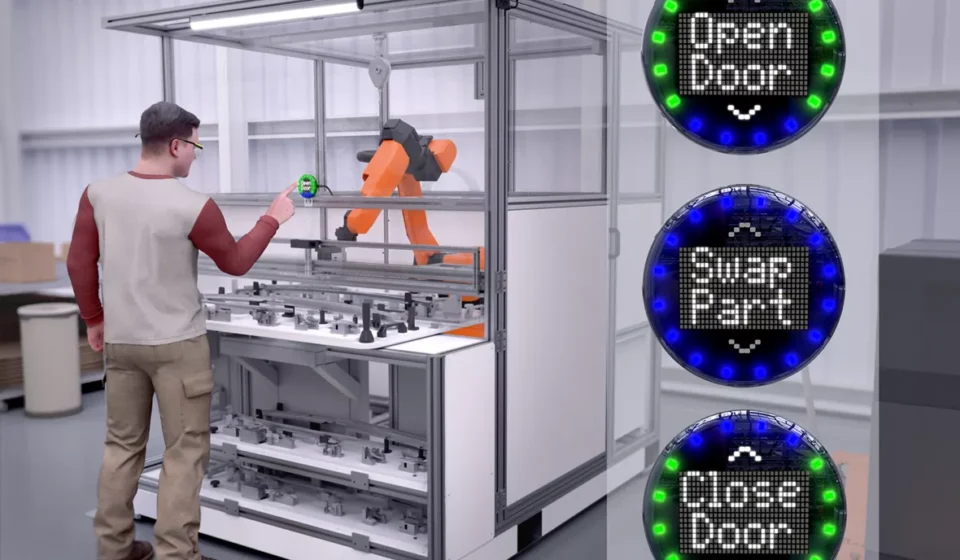
Banner Engineering, a global leader in industrial automation and sensing technology, has officially launched the S100 Multi-Touch Display, a compact yet powerful operator interface designed to bridge the gap between complex machine logic and intuitive human interaction. By consolidating advanced touch-sensing, haptic feedback, and multi-functional LED visual cues into a singular, washdown-ready 100 mm housing, the S100 is positioned to redefine how machine operators interact with their workstations in space-constrained industrial environments.
This release represents a significant step forward for machine builders and system integrators who require robust, local control interfaces that can withstand harsh factory-floor conditions while providing real-time, actionable data to personnel.
The Core Technical Specifications
At the heart of the S100 is an interface designed for versatility. It eliminates the need for cluttered control panels by integrating several key input and output features into a single, cohesive unit:
- Multi-Zone Touch Interface: The display features up to five programmable touch zones, allowing operators to execute multiple commands or navigate through menus directly at the point of use.
- Haptic and Audible Feedback: To ensure error-free operation in noisy manufacturing environments, the S100 provides physical vibration feedback upon each touch, complemented by audible alerts that confirm input registration.
- Dynamic Visual Display: The alphanumeric screen supports up to 13 characters of scrollable, double-height text, making it ideal for displaying machine status, timers, countdowns, and critical measurement values.
- High-Visibility LED Array: With 16 integrated RGB LEDs, the display provides instant visual status updates, which can be color-coded to denote machine readiness, warning states, or task completion.
- Environmental Resilience: Housed in a 100 mm washdown-ready enclosure, the device is engineered to survive the rigors of food and beverage processing, pharmaceutical manufacturing, and other environments requiring frequent cleaning.
Chronology of Development: A Response to Industry Demand
The development of the S100 Multi-Touch Display follows a multi-year trend in industrial automation toward the "decentralization" of control interfaces. Historically, operators were tethered to large, centralized HMI (Human-Machine Interface) panels located at the end of a line. However, as production processes have become more complex, the need for "point-of-use" interaction—where the interface is located exactly where the task is performed—has grown.
In early 2024, Banner Engineering identified a common pain point among system integrators: the difficulty of finding a compact, rugged display that could handle both input and status signaling without requiring multiple discrete devices. The S100 project was initiated to solve this "panel real estate" crisis. By combining the function of a pilot light, a push-button, and an alphanumeric message display into one 100 mm footprint, Banner aimed to reduce both the hardware overhead and the installation complexity for OEMs.
Following an intensive beta testing phase in automotive and packaging assembly lines, the S100 was refined for its wide-release launch in late 2026. The final iteration prioritized ease of integration, leading to the inclusion of both IO-Link and Modbus connectivity models.
Supporting Data: Why Connectivity Matters
The S100 is not merely a display; it is a smart industrial node. The decision to incorporate IO-Link and Modbus protocols was driven by the industry’s shift toward Industry 4.0 and the Industrial Internet of Things (IIoT).
IO-Link and Modbus Capabilities
By utilizing these standard communication protocols, the S100 allows for:
- Dynamic Logic Control: PLCs (Programmable Logic Controllers) can send real-time instructions to the display. If a machine cycle time changes, the PLC updates the S100’s display text and LED status automatically.
- Remote Configuration: System integrators can update the device’s functionality, such as changing the color of an LED or the text displayed, without physically accessing the hardware.
- Data Transparency: The ability to pull diagnostic data from the S100 back into the central control system allows maintenance teams to track operator interaction frequency, which can be used to optimize workstation ergonomics and efficiency.
For applications not requiring advanced fieldbus communication, a discrete I/O model is available. This version utilizes Banner’s proprietary Pro Editor software, allowing users to configure custom logic, color sequences, and touch-sensing parameters, which can then be "cloned" and applied across an entire fleet of machines to ensure operational consistency.
Official Perspective: The Vision Behind the S100
Banner Engineering has long championed the idea that the best machine interface is one that feels invisible to the user. In the context of the S100, "invisibility" means removing the cognitive load from the operator.
Industry experts note that the S100 is specifically designed for:

- Takt Time Monitoring: Keeping pace with production requirements.
- Pick-to-Light Systems: Guiding warehouse or assembly personnel to the correct bin or part.
- Task Guidance: Reducing training time for new employees by displaying step-by-step instructions directly on the machine.
By providing haptic feedback—a feature typically reserved for consumer-grade smartphones—Banner is bringing an intuitive "tactile feel" to the factory floor. This reduces the likelihood of "nuisance touches" and ensures that every interaction is intentional and verified.
Implications for the Manufacturing Sector
The introduction of the S100 has several profound implications for the manufacturing landscape:
1. Space Optimization
In modern factories, floor space is at a premium. As machines become more sophisticated, the control cabinets that house them often grow in size. The S100 allows designers to move the interface off the bulky cabinet and onto the machine frame itself, reclaiming valuable workspace and simplifying the operator’s physical workflow.
2. Standardization of Operator Interfaces
System integrators often struggle with a "hodge-podge" of different displays, push-buttons, and indicator lights from various manufacturers. The S100 serves as a "universal" interface. Because the same hardware can be programmed for a wide variety of tasks—from simple counting to complex machine status signaling—OEMs can stock one single part number for multiple machine designs. This significantly reduces inventory carrying costs and simplifies maintenance.
3. Enhanced Operator Ergonomics
Repetitive stress injuries and operator fatigue are major concerns in high-speed manufacturing. The S100’s low-profile, responsive touch interface requires minimal force to activate. The addition of haptic feedback ensures that operators don’t have to keep their eyes fixed on the display to know if their input was successful. This allows them to maintain their focus on the assembly task, thereby increasing throughput and reducing error rates.
4. Sustainability and Digital Transformation
By enabling granular control over status indicators and process timers, the S100 supports the push for "Lean Manufacturing." Waste reduction is achieved when operators are immediately alerted to machine errors, allowing for faster intervention. Furthermore, the longevity provided by the washdown-ready, ruggedized housing ensures that the device does not need to be replaced frequently, reducing the total cost of ownership and the environmental footprint of the workstation.
Future Outlook: The Evolution of HMI
The S100 is a precursor to the next generation of industrial displays. As we move further into the era of the "Connected Factory," the demand for devices that are not only "smart" but also "adaptive" will continue to grow. Banner Engineering has set a benchmark with this release, proving that advanced functionality—such as color-coded RGB LED arrays and haptic feedback—can be packaged in a way that is accessible to both the machine builder and the end-user.
For system integrators, the path forward is clear: move toward modular, communication-capable hardware that can be updated in software rather than replaced in hardware. The S100 represents a major leap in that direction, offering a scalable solution that can grow with the needs of the factory.
Conclusion
Banner Engineering’s S100 Multi-Touch Display is more than just a peripheral; it is an intelligent extension of the machine’s control system. By merging rugged industrial design with the responsiveness of modern touch technology, it addresses the most critical needs of today’s manufacturers: efficiency, space-saving, and ease of use. As the industry continues to prioritize flexible and responsive production environments, the S100 is poised to become a staple in workstation design across a wide range of sectors.
For those interested in exploring how the S100 can be integrated into existing machine architectures, further documentation, software tools, and technical support can be found at bannerengineering.com.
This article is based on the official product launch materials provided by Banner Engineering. The S100 is currently available for procurement and integration into new and legacy machine systems.