


The Architect of Automation: How Robo Inc. is Building the ‘Picks-and-Shovels’ Infrastructure for the Robotics Era

In the rapidly evolving landscape of industrial automation, the most successful entities are rarely those betting on a single hardware breakthrough. Instead, they are the architects of the ecosystem—the companies providing the foundational tools that allow others to build, deploy, and scale. This "picks-and-shovels" strategy is exactly what Teddy Haggerty, CEO of Plainview, N.Y.-based Robo Inc., is banking on to define the next decade of American robotics.
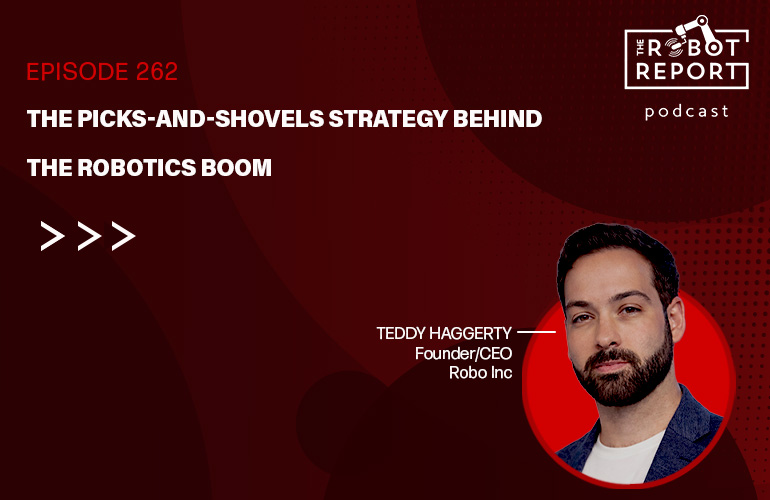
In Episode 262 of The Robot Report Podcast, Haggerty sat down with industry veteran Mike Oitzman to discuss his vision for Robo Inc. and the strategic pivot that has transformed the company from a traditional distributor into a comprehensive education and deployment powerhouse.
The Evolution of an Ecosystem Builder
To understand where Robo Inc. is heading, one must look at the trajectory of its founder. Teddy Haggerty is a serial entrepreneur whose career has consistently placed him at the vanguard of emerging technological shifts. From the early days of high school drone programs and the complexities of crypto infrastructure to the development of specialized safety equipment, Haggerty’s professional DNA is rooted in identifying nascent markets before they hit the mainstream.
"Building at the edge of every major wave" is more than a slogan for Haggerty; it is a tactical approach to business. When he turned his attention to robotics, he recognized a glaring inefficiency in the industry: the gap between hardware manufacturers and the end-users who desperately need these tools but lack the expertise to implement them.
Initially, Robo Inc. operated as a distribution-focused entity—a standard model for moving hardware from point A to point B. However, as the robotics market matured, Haggerty realized that simply selling units was insufficient. The market was suffering from a "deployment deficit." Organizations were buying robots, only to have them collect dust in warehouses due to a lack of skilled labor, inadequate training, and integration challenges. This realization led to the birth of Robostore, an initiative designed to bridge the chasm between hardware procurement and operational success.
Chronology: From Distribution to Deployment
The transition of Robo Inc. serves as a case study in market adaptation.
- Phase 1: The Distribution Foundation. In its early stages, Robo Inc. established itself as a reliable supply chain partner, securing access to diverse robotics hardware. This phase allowed the team to understand the technical nuances of various platforms, from AMRs (Autonomous Mobile Robots) to specialized cobots.
- Phase 2: The Education Pivot. Recognizing that technology is only as good as its operator, Haggerty pivoted toward education. By integrating training modules directly into the purchasing experience, Robo Inc. began treating robotics not as a commodity, but as a long-term professional capability.
- Phase 3: The Localized, Solution-First Model. Today, Robo Inc. is pushing toward a localized service model. By focusing on regional needs in New York and beyond, the company is moving away from a "one-size-fits-all" sales approach. Instead, they act as an implementation partner that stays on-site to ensure the robots are actually performing the tasks they were purchased to handle.
The "Picks-and-Shovels" Strategy: Why It Matters
In the California Gold Rush of the mid-19th century, the miners rarely got rich, but the merchants selling them shovels, picks, and blue jeans built generational wealth. In the modern "Robotics Rush," the analogy holds profound truth.
The robotics industry is currently experiencing a "Digit 5" moment—a reference to the latest generation of humanoid and specialized robots that are increasingly capable of interacting with human environments. However, these machines require sophisticated orchestration. Robo Inc.’s strategy addresses three critical friction points in this sector:
- Technical Literacy: By embedding educational resources into their business model, Robo Inc. reduces the "fear factor" for small-to-medium-sized enterprises (SMEs) that have been historically intimidated by automation.
- Infrastructure Integration: Robots are not "plug-and-play." They require network stability, power management, and software compatibility. By acting as an integration layer, Robo Inc. ensures that the hardware functions within the existing constraints of a client’s facility.
- Risk Mitigation: The biggest barrier to adoption is the fear of failure. By providing a "solution-first" approach, the company assumes a portion of the deployment risk, effectively acting as an insurance policy for the client’s capital expenditure.
Industry Implications and Future Outlook
The implications of the Robo Inc. model are significant for the broader U.S. manufacturing sector. As labor shortages persist and the cost of human labor rises, the pressure to automate is reaching a breaking point.
Industry analysts observe that the shift toward localized, service-heavy robotics companies is a sign of market maturation. In the early 2020s, the focus was on the "cool factor" of new robotics hardware. In the mid-2020s, the conversation has shifted to ROI (Return on Investment) and uptime. Companies like Robo Inc. are the ones making that ROI possible.

Furthermore, by fostering a connection between education and deployment, Haggerty is helping to cultivate a workforce capable of managing these machines. This creates a virtuous cycle: as more workers are trained on Robo Inc. platforms, the local labor market becomes more technologically sophisticated, which in turn encourages more businesses to adopt automation.
Perspectives from the Field
During the podcast, Mike Oitzman—who brings over 25 years of experience in robotics, including leadership roles at Adept Technology—highlighted the importance of the shift Haggerty is facilitating. Oitzman noted that the industry has spent too long focusing on the "what" (the robot) and not enough on the "how" (the integration and maintenance).
"The success of the industry doesn’t depend on the robot being 10% faster," Oitzman noted during the discussion. "It depends on the robot being 100% reliable in a real-world, messy, human-centered environment. That is what the ‘picks-and-shovels’ players are providing."
Haggerty echoed this sentiment, emphasizing that the future of robotics is not about replacing the human workforce, but about augmenting it through intelligent deployment. "We aren’t just selling robots," Haggerty explained. "We are selling the capability for an organization to thrive in an automated economy. The hardware is just the final piece of the puzzle."
Looking Ahead: The 20th Anniversary of RoboBusiness
As the industry prepares for the 20th anniversary of the RoboBusiness conference, the themes discussed by Haggerty and Oitzman are more relevant than ever. The industry is moving past the hype cycle. The next decade will be defined by the quiet, consistent work of companies that provide the backbone of the robotics ecosystem.

For organizations looking to dip their toes into the waters of automation, the advice from the experts is clear: look for the partners who care as much about the deployment and the education as they do about the hardware. The "picks-and-shovels" era is here, and it is reshaping the industrial landscape, one deployment at a time.
Conclusion
Teddy Haggerty’s vision for Robo Inc. is a testament to the fact that in any massive technological shift, the real winners are often those who build the infrastructure to support the revolution. By prioritizing localized service, practical education, and holistic integration, Robo Inc. is positioning itself not just as a participant in the robotics boom, but as a vital component of its continued, sustainable growth.
As the industry continues to evolve, the distinction between "robot companies" and "robot solutions providers" will become increasingly clear. For those following the sector, the trajectory of Robo Inc. serves as a masterclass in how to turn abstract technological potential into tangible, bottom-line results.
For more insights into the evolving world of robotics, listen to the full Episode 262 of The Robot Report Podcast. To stay informed on the latest industry trends, register for the upcoming RoboBusiness event celebrating 20 years of innovation.