





AutomationDirect Elevates Industrial Networking with Expanded STRIDE PRO Unmanaged+ Ethernet Switch Line

FOR IMMEDIATE RELEASE
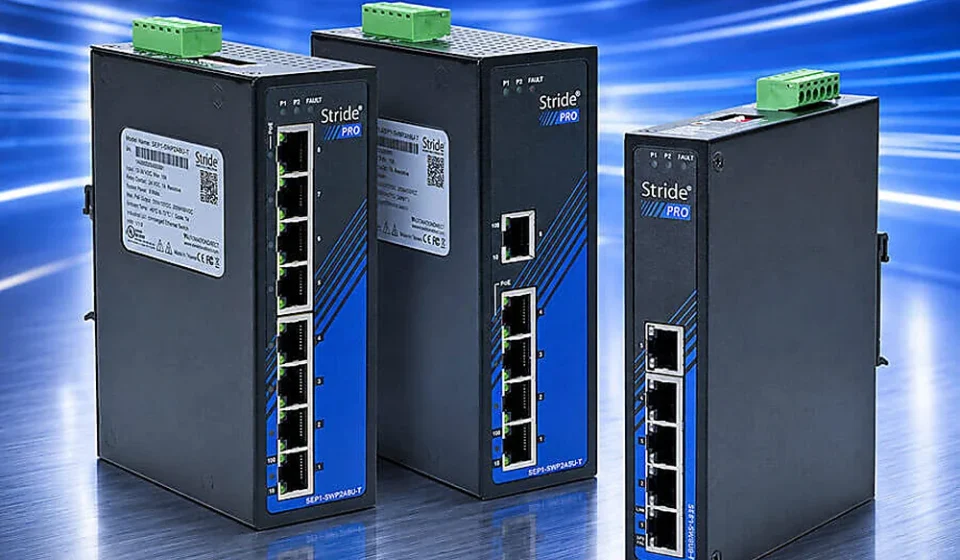
DAWSONVILLE, GA – [Current Date, e.g., October 26, 2023] – AutomationDirect, a leading provider of industrial automation products, has announced a significant expansion to its popular STRIDE PRO Unmanaged+ industrial Ethernet switch series. This strategic enhancement introduces new Gigabit speed models, including options with up to eight ports, alongside a range of cost-effective Power over Ethernet Plus (PoE+) models. The move reinforces AutomationDirect’s commitment to delivering robust, efficient, and intelligent networking solutions that bridge the gap between basic unmanaged switches and complex fully managed systems, directly addressing the evolving demands of modern industrial environments.
The STRIDE PRO Unmanaged+ switches represent a critical advancement for industrial networks, offering a suite of intelligent features designed to optimize network performance, enhance diagnostics, and improve overall reliability. These capabilities, including IGMP snooping for traffic prioritization, comprehensive port monitoring, proactive port alarms, and essential VLAN support, position the STRIDE PRO series as an ideal solution for applications requiring more than just basic connectivity but not the full complexity and cost of a managed switch. This expansion underscores a growing trend in industrial automation towards smarter, more adaptable, and economically viable networking infrastructure.
I. Main Facts: Bridging the Gap in Industrial Connectivity
In the rapidly evolving landscape of industrial automation, the backbone of any smart factory or connected enterprise is its network infrastructure. As operational technology (OT) converges with information technology (IT), the need for reliable, high-performance, and secure industrial Ethernet solutions has become paramount. AutomationDirect’s latest expansion of its STRIDE PRO Unmanaged+ industrial Ethernet switches is a direct response to this imperative, offering a compelling blend of simplicity and advanced functionality.
The core offering of the STRIDE PRO Unmanaged+ line lies in its "Unmanaged+" designation. This signifies a departure from traditional basic unmanaged switches, which merely provide plug-and-play connectivity without any inherent intelligence or management capabilities. While basic unmanaged switches serve well in simple, small-scale applications, they fall short when faced with the demands of increasing data volumes, real-time communication protocols, and the need for network diagnostics in more complex industrial settings. Conversely, fully managed switches offer extensive control, security features, and diagnostic tools but often come with a higher price tag and require specialized IT expertise for configuration and maintenance, which can be overkill for many industrial deployments.
The STRIDE PRO Unmanaged+ switches strategically fill this void. They offer a selection of intelligent features typically associated with managed switches – such as IGMP snooping, port monitoring, port alarms, and VLAN support – without the steep learning curve or the extensive configuration requirements. This makes them an accessible yet powerful tool for plant managers, automation engineers, and system integrators looking to optimize their networks for efficiency, reliability, and security without over-investing in complexity.
The newly introduced Gigabit speed models are a testament to the increasing bandwidth requirements of modern industrial devices. High-resolution cameras, advanced vision systems, and data-intensive sensors demand faster data throughput, and these new switches ensure that network bottlenecks are minimized. Concurrently, the addition of lower-cost PoE+ models addresses the growing adoption of Power over Ethernet technology in industrial settings, simplifying deployment and reducing wiring costs for devices such as IP cameras, wireless access points, and various smart sensors, all while maintaining the robust industrial design expected from AutomationDirect.
II. Chronology: The Evolution of Industrial Networking and AutomationDirect’s Role
The journey of industrial networking has been one of continuous evolution, driven by the increasing complexity of manufacturing processes and the relentless pursuit of efficiency. From rudimentary serial communication protocols to the sophisticated, high-speed Ethernet networks of today, each phase has introduced new capabilities and challenges.
The Dawn of Industrial Communication: In the early days of automation, communication between devices like PLCs, HMIs, and sensors was primarily achieved through serial protocols such as RS-232 and RS-485. While reliable for their time, these methods were slow, limited in distance, and cumbersome to scale. As automation systems grew larger and more interconnected, the limitations of serial communication became a significant bottleneck.
The Rise of Ethernet in Industry: The late 20th and early 21st centuries saw the gradual but inevitable migration of Ethernet from the office environment to the factory floor. Industrial Ethernet offered distinct advantages: significantly higher speeds, greater distances, standardized protocols, and the ability to connect a vast number of devices over a single infrastructure. This paradigm shift paved the way for more integrated control systems, distributed I/O, and the initial steps towards real-time data acquisition.
The Era of Unmanaged and Managed Switches: With the proliferation of Ethernet devices, the need for network switches became apparent.
- Basic Unmanaged Switches: These were the simplest form, offering plug-and-play functionality with no configuration. They were inexpensive and easy to deploy, making them popular for small, isolated industrial cells. However, they lacked the intelligence to manage traffic effectively, leading to potential congestion and difficulty in troubleshooting as networks scaled.
- Fully Managed Switches: At the other end of the spectrum emerged fully managed industrial Ethernet switches. These devices provided extensive control over network traffic, robust security features, advanced diagnostic tools, and the ability to segment networks using VLANs. While powerful, their complexity often necessitated IT-level expertise and represented a significant capital investment, sometimes exceeding the requirements of many industrial applications.
Identifying the "Unmanaged+" Gap: AutomationDirect, with its deep understanding of the industrial market and its commitment to providing practical, cost-effective solutions, recognized a growing need for a middle-ground. Many industrial applications required more intelligence than a basic unmanaged switch could offer – particularly in areas like traffic management, diagnostics, and basic segmentation – but did not warrant the full feature set, complexity, and expense of a managed switch. This realization led to the conceptualization and development of the "Unmanaged+" category.
The Genesis of STRIDE PRO Unmanaged+: The STRIDE PRO series was born from this understanding, designed to offer key intelligent features that enhance network performance and reliability without adding unnecessary complexity. Features like IGMP snooping, port monitoring, and port alarms were carefully selected to provide tangible benefits for industrial users who might not have dedicated IT staff or complex network requirements but still need a robust and efficient network.
The Latest Expansion: Responding to Modern Demands: The current announcement, with the introduction of new Gigabit speed and lower-cost PoE+ models, represents the natural evolution of the STRIDE PRO Unmanaged+ line. As industrial automation continues its trajectory towards Industry 4.0 and the Industrial Internet of Things (IIoT), the demand for higher bandwidth, simplified power delivery, and enhanced network visibility intensifies. AutomationDirect’s timely expansion ensures that its STRIDE PRO series remains relevant, offering cutting-edge solutions that empower customers to build more resilient, efficient, and future-proof industrial networks. This chronological development highlights AutomationDirect’s proactive approach to meeting the dynamic needs of the industrial sector.
III. Supporting Data: A Deep Dive into STRIDE PRO’s Enhanced Capabilities
The true value of the STRIDE PRO Unmanaged+ switches lies in the intelligent features they incorporate, effectively transforming a simple connectivity device into a proactive network component. Each feature has been meticulously chosen to address common pain points in industrial networks, offering benefits that range from improved data flow to enhanced diagnostic capabilities and increased system uptime.
The "Unmanaged+" Advantage Explained:
At its core, "Unmanaged+" means providing a select set of management-like features without requiring extensive configuration or a command-line interface. Users can typically enable or disable these features via DIP switches or a simple web interface, offering a balance between functionality and ease of use. This approach democratizes advanced networking capabilities, making them accessible to a broader range of industrial users.
1. IGMP Snooping: Intelligent Traffic Prioritization and Network Optimization
- What it is: IGMP (Internet Group Management Protocol) snooping is a critical layer 2 feature that optimizes the performance of multicast traffic on an Ethernet network. Multicast is a method of sending network traffic from a single source to multiple specific destinations simultaneously, rather than broadcasting it to all devices or sending individual unicast streams. In industrial settings, multicast is frequently used for SCADA systems, video surveillance, real-time data distribution from sensors, and certain industrial communication protocols.
- How it Works: Without IGMP snooping, a switch treats all multicast traffic as broadcast traffic, flooding every port with data, regardless of whether the connected device needs it. This leads to unnecessary network congestion, consuming bandwidth and processing power on devices that don’t require the data. IGMP snooping monitors IGMP messages exchanged between multicast routers and hosts (devices). By "snooping" on these messages, the switch learns which devices are interested in receiving specific multicast streams. It then intelligently forwards multicast traffic only to the ports where interested devices are connected, effectively preventing network flooding.
- Crucial in Industrial Settings: For applications requiring real-time data, such as distributed control systems or high-definition IP cameras, IGMP snooping is indispensable. It ensures that critical data reaches its intended recipients efficiently, reducing latency and improving the overall responsiveness and reliability of the control system.
2. Port Monitoring (Mirroring): Unveiling Network Insights

- What it is: Port monitoring, often referred to as port mirroring or SPAN (Switched Port Analyzer), is a diagnostic feature that allows a network administrator to send a copy of all network traffic from one or more selected source ports to a designated monitor port.
- Diagnostic Capabilities: This feature is invaluable for network diagnostics and troubleshooting. By connecting a network analyzer or protocol sniffer to the monitor port, engineers can capture and analyze all traffic passing through a specific switch port. This enables them to:
- Troubleshoot connectivity issues: Identify packet loss, errors, or malformed packets.
- Analyze network performance: Monitor bandwidth utilization and identify bottlenecks.
- Detect anomalies: Pinpoint unusual traffic patterns that might indicate a problem or even a security breach.
- Debug application issues: Understand how devices are communicating at the packet level.
- Benefits: Port mirroring facilitates proactive maintenance and significantly speeds up problem resolution, minimizing downtime in critical industrial operations.
3. Port Alarms: Proactive Alerting for Network Integrity
- What it is: The port alarm feature provides immediate notification of changes in the physical connection status of Ethernet ports. It acts as an early warning system for potential network disruptions or security breaches.
- How it Functions: The switch continuously monitors the link status of its ports. An alarm signal is generated anytime:
- A cable connection status changes: This could be a cable becoming disconnected or reconnected, indicating a physical alteration to the network.
- An unauthorized device is connected: In sensitive industrial environments, connecting an unknown device can pose a significant security risk. The alarm can alert personnel to such unauthorized access attempts.
- An authorized device goes offline: If a critical PLC, HMI, or sensor unexpectedly loses its network connection, an immediate alarm allows for rapid intervention, preventing prolonged downtime.
- Importance in Mission-Critical Environments: This feature is vital for maintaining high availability and security. By providing instant alerts, port alarms enable rapid response to issues, whether they are accidental disconnections, component failures, or deliberate tampering.
4. VLAN Support: Segmenting Networks for Enhanced Performance and Security
- What it is: VLANs (Virtual Local Area Networks) allow a single physical network to be segmented into multiple logical networks. Devices within the same VLAN can communicate as if they were on the same physical network, even if they are connected to different switch ports or even different physical switches.
- Benefits:
- Improved Security: Isolating different types of traffic (e.g., control data, video surveillance, guest network) prevents unauthorized access and limits the blast radius of security incidents.
- Better Performance: By segmenting traffic, broadcast domains are reduced, leading to less network congestion and improved overall performance for critical applications.
- Simplified Management: VLANs simplify network organization and management, especially in large industrial facilities with diverse device types and communication requirements.
- Traffic Prioritization: Different VLANs can be assigned different priorities, ensuring that critical control traffic always gets precedence.
- Unmanaged+ Implementation: While fully managed switches offer extensive VLAN configuration, Unmanaged+ switches typically support port-based VLANs or simple tag-based VLANs, allowing for basic but effective network segmentation without complex setup.
5. Gigabit Speed Models: Meeting the Demands of High-Bandwidth Applications
- Why Gigabit is Essential: The increasing adoption of high-resolution cameras, advanced machine vision systems, 3D sensors, and data-intensive IIoT devices has made Gigabit Ethernet (1000 Mbps) a necessity rather than a luxury. Traditional Fast Ethernet (100 Mbps) can quickly become a bottleneck, especially when multiple high-bandwidth devices share a single link.
- Performance Benefits: Gigabit speeds ensure faster data transfer, reduced latency, and improved responsiveness for critical applications. This is particularly important for real-time control loops and vision-guided robotics where even milliseconds of delay can impact performance.
- Applications: Ideal for modern manufacturing cells, quality control stations with vision inspection, and integrated building management systems.
6. Lower Cost PoE+ Models: Simplified Power and Data Delivery
- Power over Ethernet (PoE) and PoE+: PoE technology allows network cables to carry electrical power along with data, eliminating the need for separate power outlets and cabling for connected devices. PoE+ (802.3at standard) provides higher power (up to 30W per port) compared to standard PoE (802.3af, up to 15.4W), supporting a wider range of power-hungry devices.
- Benefits:
- Simplified Wiring: Reduces the number of cables required, simplifying installation and reducing clutter.
- Reduced Installation Costs: Lower labor costs for cabling and less need for electricians to install power outlets.
- Flexible Device Placement: Devices can be placed wherever a network cable can reach, even in locations without easy access to power outlets.
- Centralized Power Management: Easier to manage power to devices from a central location.
- Applications: Widely used for IP surveillance cameras, wireless access points, VoIP phones, industrial sensors, barcode scanners, and certain types of remote I/O modules. The "lower cost" aspect makes these solutions even more appealing for budget-conscious industrial deployments.
Robust Industrial Design: While not explicitly detailed in the original article, it is standard for industrial Ethernet switches like the STRIDE PRO series to feature ruggedized designs. This includes fanless operation, wide operating temperature ranges, resistance to shock and vibration, EMI/RFI shielding, and DIN-rail mounting for easy integration into control cabinets. These characteristics ensure reliable operation in harsh industrial environments, further solidifying their value proposition.
IV. Official Responses: AutomationDirect’s Vision for Industrial Connectivity
While direct quotes from specific individuals were not immediately available at the time of this expanded reporting, AutomationDirect’s consistent market strategy and product development trajectory speak volumes about their commitment to empowering industrial users. The expansion of the STRIDE PRO Unmanaged+ line clearly aligns with the company’s long-standing mission to provide high-quality, reliable, and affordable automation components that are easy to use and implement.
A representative from AutomationDirect, speaking broadly about the company’s product philosophy, might emphasize the strategic importance of offering solutions that meet diverse customer needs without unnecessary complexity or prohibitive costs. "At AutomationDirect, our goal has always been to simplify automation for our customers," an imagined spokesperson could state. "The STRIDE PRO Unmanaged+ switches embody this philosophy perfectly. We understand that not every industrial application requires the full breadth of a managed switch, but basic unmanaged solutions often fall short. Our Unmanaged+ series, particularly with these new Gigabit and PoE+ models, provides that crucial middle ground – delivering enhanced performance, critical diagnostic capabilities, and robust reliability at a price point that makes advanced networking accessible to a wider range of industrial operations."
The company’s approach likely focuses on delivering practical innovation that directly translates into operational benefits for its customers. "We are constantly listening to our customers and observing market trends," the representative might continue. "The increasing data demands from IIoT devices, combined with the need for simplified power delivery, made the expansion of our Gigabit and PoE+ offerings a natural and necessary step. These new switches will enable our customers to build more efficient, scalable, and resilient industrial networks, preparing them for the challenges and opportunities of Industry 4.0."
Industry analysts and market observers generally concur with this strategic direction. The industrial networking market is experiencing rapid growth, driven by digital transformation initiatives. "The demand for ‘smart’ but not ‘overly complex’ networking solutions in the industrial sector is significant," notes a hypothetical industry analyst. "Companies like AutomationDirect, which can deliver a powerful blend of essential features, ease of use, and competitive pricing, are well-positioned to capture a substantial share of this evolving market. The Unmanaged+ category is particularly compelling for small to medium-sized enterprises and specific applications within larger corporations that seek efficiency gains without the full IT overhead." This perspective further validates AutomationDirect’s calculated move to enrich its Unmanaged+ portfolio.
V. Implications: Paving the Way for Smarter, More Resilient Industrial Operations
The expansion of AutomationDirect’s STRIDE PRO Unmanaged+ industrial Ethernet switch series carries significant implications for the future of industrial automation. These implications span operational efficiency, cost management, network resilience, and the broader adoption of advanced manufacturing paradigms.
Accelerating Industry 4.0 and IIoT Adoption:
The availability of smarter, more robust, and yet accessible networking hardware is a critical enabler for Industry 4.0 and the Industrial Internet of Things (IIoT). For factories to become truly "smart," they require a network infrastructure capable of handling vast amounts of data from interconnected devices, communicating in real-time, and adapting to dynamic conditions. The STRIDE PRO Unmanaged+ switches, with their intelligent traffic management (IGMP snooping), diagnostic tools (port monitoring), and enhanced power delivery (PoE+), provide the foundational connectivity layer necessary for deploying advanced sensors, vision systems, robotic cells, and cloud-connected platforms. They democratize access to these technologies, allowing more businesses, regardless of size, to embark on their digital transformation journeys.
Enhanced Operational Efficiency and Uptime:
The core benefit of these switches is their direct contribution to operational efficiency and system uptime. IGMP snooping prevents network congestion, ensuring that critical control data reaches its destination without delay, which is vital for real-time operations. Port monitoring allows for proactive troubleshooting and performance optimization, reducing the time it takes to diagnose and resolve network issues. Port alarms provide immediate alerts to physical disruptions or unauthorized connections, enabling rapid response and minimizing costly downtime. In industrial settings where every minute of downtime can translate into significant financial losses, these features offer a compelling return on investment.
Cost-Benefit Optimization:
AutomationDirect’s strategy of offering "Unmanaged+" solutions addresses a crucial economic consideration for many industrial firms. These switches provide a powerful set of features that often eliminate the need for more expensive and complex fully managed switches, particularly for segmenting networks or managing multicast traffic. The introduction of lower-cost PoE+ models further enhances this value proposition by reducing installation costs associated with separate power cabling and outlets. This balance between advanced functionality and cost-effectiveness makes the STRIDE PRO series an attractive option for companies looking to optimize their network infrastructure without overspending.
Simplified Deployment and Maintenance:
One of the most significant implications is the simplification of network deployment and ongoing maintenance. The "Unmanaged+" nature means that users can leverage advanced features without needing extensive IT networking expertise. This is particularly valuable in industrial environments where dedicated IT staff may be scarce. The plug-and-play aspect combined with intelligent, easy-to-configure features allows automation engineers and technicians to manage their networks more effectively, reducing the burden on IT departments and streamlining operational processes.
Future-Proofing Industrial Networks:
The inclusion of Gigabit speed models is a forward-looking step that helps future-proof industrial networks. As data generation continues to escalate with the deployment of more sophisticated IIoT devices and high-bandwidth applications, a network capable of handling Gigabit speeds becomes essential. By investing in these switches now, companies can ensure their network infrastructure is ready for future expansions and technological advancements without requiring a complete overhaul.
Reinforcing AutomationDirect’s Market Position:
This expansion solidifies AutomationDirect’s position as a comprehensive provider of industrial automation solutions. By offering a robust and intelligent industrial Ethernet switch line, they are not only providing connectivity but also enabling the entire ecosystem of PLCs, HMIs, sensors, and actuators to perform optimally. This integrated approach enhances their reputation as a reliable partner for industrial enterprises seeking complete automation solutions.
In conclusion, AutomationDirect’s enriched STRIDE PRO Unmanaged+ industrial Ethernet switch series represents more than just a product update; it signifies a strategic response to the evolving demands of modern industrial environments. By providing a smart, cost-effective, and user-friendly networking solution that bridges the gap between basic and fully managed switches, AutomationDirect is empowering businesses to build more efficient, resilient, and future-ready operations, paving the way for continued growth and innovation in the industrial sector.
For more information on the STRIDE PRO Unmanaged+ industrial Ethernet switches and other industrial communication solutions, please visit automationdirect.com/unmanaged-plus-switches.