



Navigating the Modern Technical Workplace: Dr. Lois Frankel on Diversity, Office Politics, and the Illusion of Perpetual Progress

By Executive Editorial Staff
Published in partnership with Engineering Diversity & Inclusion
Main Facts: The Current State of Diversity in Technical Industries
Two decades ago, corporate conversations regarding women and underrepresented professionals in the workplace focused primarily on physical presence: how to enter the room, how to speak, what to wear, and how to assimilate into entrenched, male-dominated environments. Today, the landscape of engineering, manufacturing, and other technical sectors looks dramatically different on the surface, yet it retains a familiar, cyclical stagnation.
Society has undeniably made pockets of progress. Yet, the foundational support for Diversity, Equity, and Inclusion (DEI) initiatives has visibly weakened. Prompted by shifting political directives, intensifying cultural backlash, and risk-averse corporate leadership, organizations have largely quieted their public advocacy for DEI.
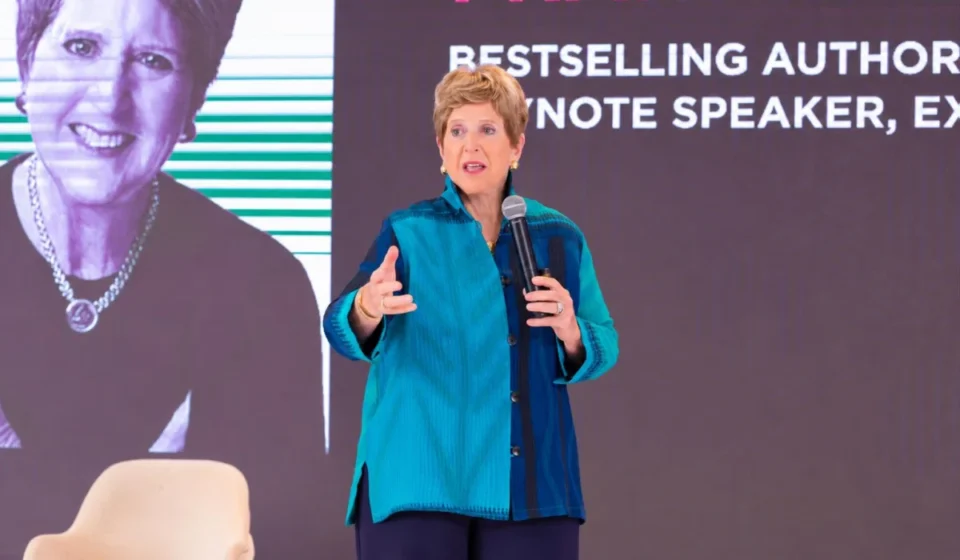
To unpack this tension, Design World sat down for an exclusive, in-depth interview with Dr. Lois Frankel, a renowned leadership coach and New York Times bestselling author of Nice Girls Don’t Get the Corner Office (now in its third edition). Frankel, whose career spans nearly five decades of organizational consulting, offers a piercing look at what has changed, what hasn’t, and why technical workplaces—traditionally anchored in logic and meritocracy—remain vulnerable to hidden biases and systemic friction.
Chronology: Five Decades of Incremental Change
To understand where corporate culture stands today, one must examine the timeline of workplace evolution over the past fifty years.
The 1970s–1980s: The Era of Assimilation
When Dr. Frankel began her career nearly 50 years ago, corporate entry for women and minorities was governed by strict assimilation. Advice given to trailblazing professionals centered on adopting masculine leadership styles, neutralizing feminine traits, and exercising extreme patience. The prevailing institutional narrative was straightforward: "Change takes time; just wait your turn."
The Mid-2000s: The Awakening of Workplace Behavioral Science
In 2006, Dr. Frankel published the first edition of Nice Girls Don’t Get the Corner Office. The book broke new ground by cataloging the socialization habits—often unconscious behaviors learned in childhood—that inadvertently undermine professional advancement. At this stage, corporate America began adopting formal policies against overt discrimination, sexual harassment, and hostile work environments. However, cultural change remained shallow.

The Late 2010s to 2020: The DEI Boom and Public Commitments
Following heightened social justice movements and widespread corporate reckonings, organizations rushed to broadcast their commitments to diversity, equity, and inclusion. Sponsorships for technical diversity panels soared, Employee Resource Groups (ERGs) received executive funding, and public relations campaigns heavily featured diverse engineering teams.
The Post-2023 Shift: The Quiet Retreat
More recently, a confluence of political polarization, legislative challenges to affirmative action policies, and corporate risk aversion has caused a sudden retreat. Companies that once proudly stamped their logos on diversity events have gone radio silent. Rather than engaging in open dialogue, many engineering-adjacent organizations have quietly sunsetted their public DEI programs to avoid becoming targets in the broader culture wars.
Supporting Data & Observations: The Realities of Technical Workplaces
Engineering and technical fields present a unique paradox. These industries pride themselves on rigorous logic, data-driven decision-making, and pure meritocracy. Yet, human behavioral patterns often subvert these stated ideals.
1. The Trap of Over-Relying on IQ
Technical professionals—including software developers, mechanical engineers, and research scientists—frequently possess extraordinary intellectual capability. According to Frankel, this intellectual horsepower often becomes a professional trap.
"There’s a lot of brain power there," Frankel notes regarding technical workers. "People who have that brain power over-rely on it, believing that is what will get them ahead. And to some extent it does. But it’s emotional intelligence (EQ) that is the sine qua non for success, not IQ. IQ will get you to where you belong; EQ will keep you there and move you forward."
Because underrepresented groups are often scrutinized more intensely, technical brilliance alone is rarely enough to secure leadership roles. Navigating office politics—what Frankel metaphorically calls the corporate "Hunger Games"—requires mastering the unwritten rules, boundaries, and interpersonal strategies that govern institutional power.
2. Bias Goes Underground
While overt discriminatory remarks and explicit workplace jokes have largely been scrubbed from modern corporate environments due to strict HR policies and legal liabilities, the underlying prejudice has not vanished. Instead, it has evolved.

- The Invisible Ceiling: Decisions regarding who possesses "leadership potential" or "executive presence" are frequently coded in subjective terms that favor those who mirror the existing leadership demographic.
- Micro-Evaluations: Underrepresented technical specialists frequently find their technical competence questioned more aggressively during design reviews, code walkthroughs, and pitch meetings.
- Attribution Theft: Ideas proposed by women and minorities are frequently overlooked until repeated by a dominant voice in the room.
3. Walking the "Thin Pink Line"
Coined originally by USC management professor Kathleen Kelley Reardon, the phrase "the thin pink line" describes the hyper-narrow band of acceptable behavior for women and minorities in leadership. Cross over to one side by being too accommodating, and you are deemed inconsequential or passive. Cross over to the other by being firm and direct, and you are labeled "abrasive," "aggressive," or "emotional."
Frankel points to high-profile public examples, such as then-Senator Kamala Harris’s composed interjections during political debates, as a masterclass in walking this line: firm without hostility, and clear without combusting. For engineers, managing this dynamic requires calculated self-advocacy. "They’re going to call you something," Frankel advises. "They’re going to call you inconsequential… or they’re going to say, ‘Wow, she’s aggressive.’ You choose your poison."
Official Responses and Shifting Corporate Strategies
As formal, public-facing DEI programs face corporate retrenchment, business leaders are forced to re-evaluate how inclusion functions on a tactical, internal level. The response varies between strategic cowardice and pragmatic grassroots reinvention.
The Backlash of Corporate Silence
Frankel identifies the current corporate silence on DEI as a subtle yet potent form of backsliding. When companies remove references to diversity from their public portfolios out of fear of public relations friction, they signal to internal talent that their identities and systemic challenges no longer matter to the C-suite.
However, organizational psychologists point out that discarding the acronym of DEI does not eliminate the business imperative of talent retention. In sectors suffering from acute labor shortages—such as aerospace, advanced manufacturing, and software engineering—alienating large segments of the talent pool is an economic self-own.
Evolution of Work-Life Balance and the "Trad Wife" Choice
One area where Frankel acknowledges genuine cultural progress is how younger generations approach career longevity. Boomer-era narratives of "having it all" through relentless, uncompensated overtime have lost their luster. Younger workers have watched older generations sacrifice their health for corporations, only to face sudden layoffs or premature death before retirement.
Consequently, modern professionals are prioritizing mental health, boundaries, and self-determined life paths. Frankel views contemporary cultural movements—including the resurgence of traditional domestic roles—through the lens of autonomy:

"You have that whole trad wife movement. I think that’s great if that’s your choice. You have that right to exercise it."
The defining marker of progress is not a single career archetype, but the freedom of choice. Whether an individual chooses an aggressive ascent up the engineering ladder or steps back to focus on family, the decision belongs to them, free from systemic coercion.
Implications: Actionable Strategies for Organizations and Individuals
If traditional, top-down DEI branding is shrinking, what mechanisms remain to ensure equitable technical workplaces? Frankel outlines a dual approach focusing on organizational policy and grassroots individual agency.
What Organizations Must Do
- Institutionalize Flexible Work: Retention of technical talent—particularly women bearing the disproportionate weight of childcare and eldercare—requires robust hybrid and remote work options. Flexibility is no longer a perk; it is a retention strategy.
- Protect Employee Resource Groups (ERGs): Despite political friction, ERGs cost companies virtually nothing while providing marginalized engineers with invaluable mentorship, psychological safety, and peer support networks.
- Transparent Promotion Metrics: Replace subjective evaluations of "culture fit" with transparent, measurable competencies. Clear technical milestones eliminate the "boys’ club" dynamic and build objective meritocracies.
What Individuals Can Do
When formal corporate structures fail to provide adequate support, grassroots action fills the void:
- Form Internal Support Circles: Establish informal monthly gatherings or brown-bag lunches. As Frankel notes, "There’s safety in numbers; nobody’s going to stop you from gathering and talking about our common challenges."
- Amplify Peers in Meetings: Actively support overlooked colleagues by validating their contributions in real-time ("Interesting point. Can you expand on that?").
- Manage Interruptions Gracefully: Take a page from political playbooks when interrupted: "Excuse me, I wasn’t finished yet."
- Use "Contrasting" in Negotiations: To ask for raises or promotions without triggering backlash, pair gratitude with a firm request: "I don’t want you to think that I’m not grateful for everything you’ve done for me… at the same time, I think it’s time that we take a look at…"
Conclusion: The End of Patience
Dr. Lois Frankel’s overarching verdict on twenty years of workplace evolution is clear: patience is no longer a viable strategy. Waiting out systemic bias has proven ineffective.
"Whenever I hear, ‘maybe we haven’t been patient enough,’ I think: It’s been enough time," Frankel asserts.
In technical and engineering fields—where problem-solving complexity is at an all-time high, and market survival depends on out-of-the-box innovation—suppressing human talent and retreating from inclusion is a fatal strategic error. Progress is neither linear nor guaranteed; it requires continuous, conscious friction, active self-advocacy, and a refusal to let the clock turn backward.