


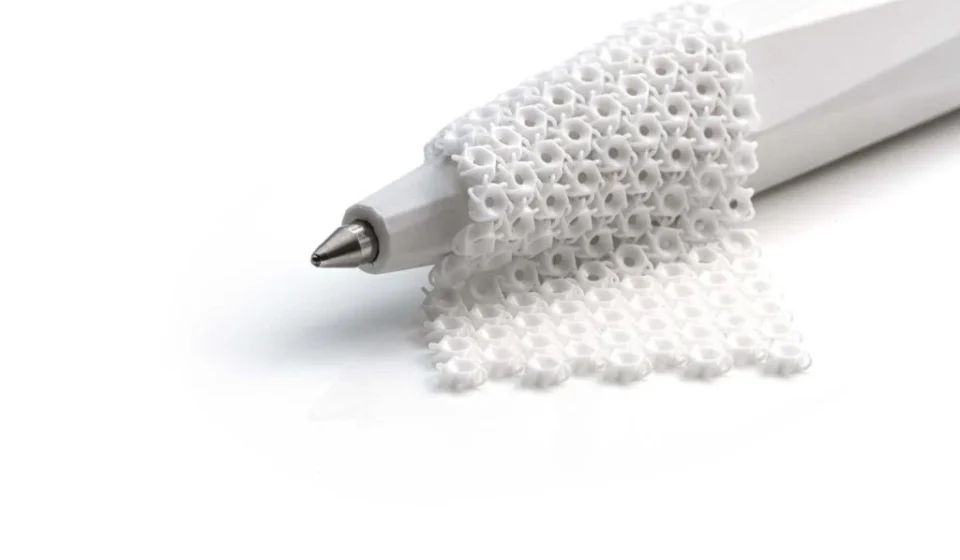

As the industrial sector pivots toward additive manufacturing for high-stakes applications—ranging from aerospace propulsion components to biocompatible bone implants—a fundamental, "deceptively basic" challenge has emerged as the primary bottleneck to mass adoption. Ceramic 3D printing, while technologically mature enough to create intricate geometries, remains plagued by inconsistent material performance.
To bridge this gap, researchers at the U.S. National Institute of Standards and Technology (NIST) are developing a revolutionary reference material: a highly engineered zirconia slurry designed to serve as the industry’s first shared "yardstick" for feedstock quality. This initiative, led by NIST materials scientists Russell Maier, Ran Tao, and Samuel Hales, represents a critical shift from focusing solely on hardware performance to mastering the complex physics of the raw inputs that drive the entire process.
The Main Facts: Why Feedstock Consistency Matters
At the heart of the issue is the unpredictable nature of ceramic slurries. Unlike metallic powders or thermoplastic filaments, ceramic feedstocks are complex, non-Newtonian fluids. They consist of fine ceramic particles—such as alumina or zirconia—suspended in a liquid polymer or water-based binder.
The physical behavior of these slurries is inherently shifty. To illustrate this, Russell Maier often draws a parallel to the common kitchen staple: ketchup. A bottle of ketchup may sit motionless when inverted, but a sharp tap changes its viscosity, allowing it to flow. This "shear-thinning" behavior is essential for 3D printing; the material must be viscous enough to hold its shape once deposited (or solidified), yet fluid enough to be extruded through a nozzle or spread across a vat.
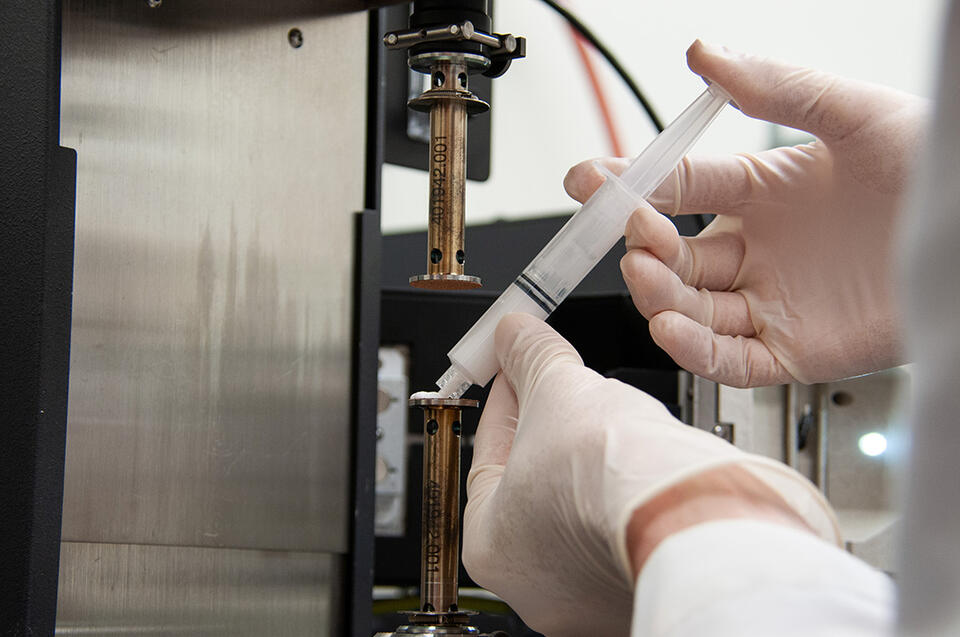
The problem, however, is that current measurement tools—rheometers—struggle to capture these properties reliably. Because ceramic slurries are prone to drying out, exhibit "memory" effects (similar to memory foam), and often lubricate the testing plates of a rheometer rather than shearing against them, laboratories across the globe often produce disparate data for the same material. NIST’s proposed reference material aims to eliminate this guesswork by providing a benchmark with known, verified properties against which all other slurries can be measured.
Chronology: From Niche Curiosity to Industrial Imperative
The trajectory of ceramic 3D printing has moved rapidly from the laboratory bench to the factory floor, necessitating a parallel evolution in metrology.
- Pre-2020: The Experimental Phase. Ceramic 3D printing was largely confined to rapid prototyping. Variations in material consistency were acceptable because the parts produced were rarely intended for safety-critical environments.
- 2021–2024: The Medical & Aerospace Expansion. As the durability, thermal resistance, and electrical insulation properties of technical ceramics (like alumina and zirconia) gained traction in medical implants and rocket components, the tolerance for failure dropped to near zero.
- 2025: The Industrialization Push. Leading companies like 3DCeram Sinto began integrating AI-driven process control systems, such as the C1000 FLEXMATIC, to automate production. However, it became clear that automation could only stabilize a process if the "incoming" raw material data was accurate.
- 2026: The Year of Standardization. At the Ceramitec 2026 conference, industry leaders like Lithoz introduced high-performance, medical-grade materials specifically framed around consistency and a higher Weibull modulus. Simultaneously, NIST accelerated its development of the zirconia reference slurry, marking a definitive shift toward institutionalizing quality control.
Supporting Data: The Physics of Uncertainty
The technical hurdle to standardization lies in the inherent instability of the measurement process. A rheometer measures the force required to move a fluid between two parallel plates. For this measurement to be accurate, the fluid must exhibit predictable behavior.
In the case of ceramic slurries, several variables conspire to compromise accuracy:
- Evaporation: Many water-based slurries lose solvent during the testing process, causing the viscosity to spike. NIST’s solution utilizes polyethylene glycol—an ingredient common in lip balm—to create a non-evaporating baseline.
- Hysteresis (Memory): Just as a mattress foam requires time to recover, these slurries retain structural memory of previous forces. The NIST team has developed a standardized "reset routine": a rapid twisting of the sample to break down its structure into a known, baseline state before testing begins.
- Wall Slip: Often, the ceramic particles act as a lubricant, causing the material to slide against the rheometer plates rather than shearing.
By standardizing these parameters, NIST is attempting to move the industry away from "tribal knowledge"—where operators rely on intuition—toward a rigorous, quantitative framework.
Official Responses: Aligning the Industry
The effort by NIST has been met with enthusiasm from the additive manufacturing community, as it complements parallel efforts from private industry.
"Anytime something new comes along, people are skeptical it will work," says Russell Maier. "Part of my research is to help make ceramic printing more consistent and reliable."
This mission finds common ground with industry pioneers. When Lithoz recently debuted its upgraded zirconia and alumina-toughened zirconia, they highlighted the "Weibull modulus"—a statistical measure of strength variance. Where private companies are refining the chemical consistency of their products, NIST is providing the measurement infrastructure to verify that consistency. This synergy is essential. Without the "metrology play" being performed by NIST, the sophisticated software and hardware now entering the market would be building on a foundation of sand.
Implications: The Future of Ceramic Manufacturing
The implications of this research are profound, particularly for the healthcare sector. The industry is currently moving toward "personalized" ceramic implants—bone scaffolds that mimic the exact microstructure and porosity of a patient’s anatomy. Because these ceramics are chemically similar to natural bone, they integrate with living tissue far more effectively than traditional titanium implants.
However, for a 3D-printed ceramic implant to be cleared by regulatory bodies like the FDA, the entire production process must be validated. If a manufacturer cannot prove that their raw slurry is consistent from batch to batch, the final implant cannot be qualified for clinical use.
A New Era of Reliability
The transition from "craft" to "science" in ceramic additive manufacturing is now fully underway. The NIST reference material is not merely a lab tool; it is a catalyst for industrialization. By defining a universal standard for feedstock flow, NIST is enabling a future where:
- Supply Chains are Interoperable: A ceramic printer in Germany and one in the United States can achieve identical results because they are both calibrating their inputs against the same NIST reference material.
- Regulatory Barriers are Lowered: With standardized metrics for feedstock quality, the path to FDA and aerospace certification for 3D-printed parts becomes significantly shorter and less expensive.
- Innovation Accelerates: When engineers no longer need to spend months "tuning" their printers to compensate for material fluctuations, they can focus on developing more complex, high-performance geometries.
As we look toward the remainder of the decade, the "measurement layer" will likely become the most valuable asset in the additive manufacturing ecosystem. While the 3D printers themselves will continue to evolve in speed and resolution, the true revolution lies in the ability to measure, quantify, and verify the invisible physics that hold the process together.
NIST’s zirconia slurry is the anchor for this next phase. It is a quiet, unassuming advancement, yet it represents the single most significant step toward ensuring that when a surgeon implants a 3D-printed ceramic part, or an engineer installs a ceramic heat shield in a rocket, they do so with the absolute certainty that the material is as strong, durable, and reliable as the math behind it suggests.