


The AI Revolution in Fusion: How PACMAN is Solving the Millisecond Stability Crisis

For decades, the promise of nuclear fusion—the same process that powers the sun—has stood as the "holy grail" of clean energy. By fusing hydrogen isotopes, scientists hope to unlock a virtually inexhaustible supply of electricity with minimal carbon footprint. However, the path to a functional, commercial fusion reactor has been littered with a formidable obstacle: plasma instability.
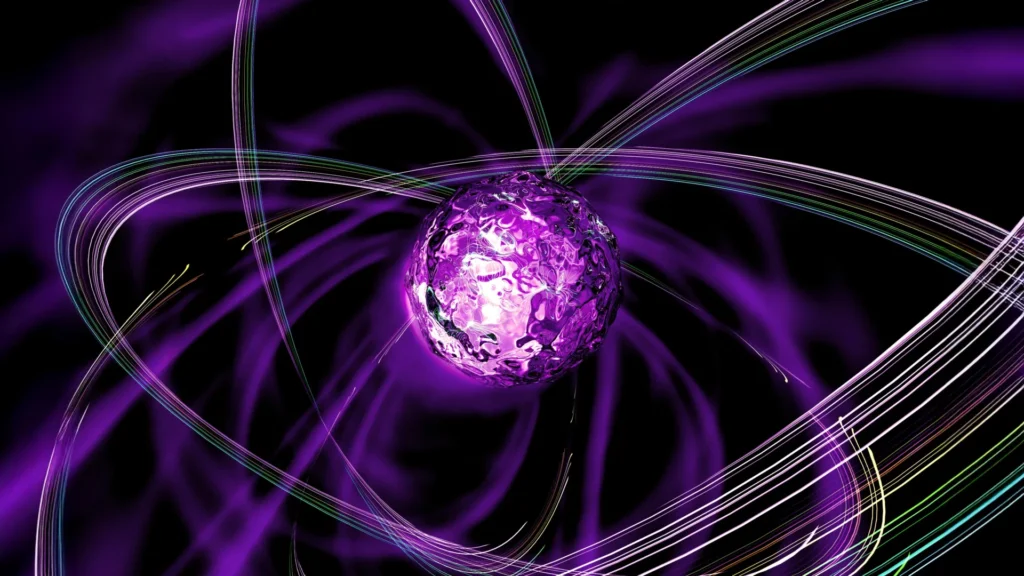
Inside a tokamak—a donut-shaped magnetic containment device—plasma must be heated to temperatures exceeding those at the center of the sun. At these extremes, the plasma becomes volatile, prone to microscopic fluctuations that can spiral into full-scale disruptions within milliseconds. Such speeds defy human reaction times, making traditional manual control an impossibility.
Now, a breakthrough from the U.S. Department of Energy’s (DOE) Princeton Plasma Physics Laboratory (PPPL) and Princeton University has fundamentally changed the equation. Researchers have unveiled PACMAN (Prediction And Control using MAchiNe learning), a sophisticated software framework that leverages artificial intelligence to govern the chaotic internal environment of a fusion reactor in real time.
The Millisecond Challenge: Why Humans Cannot Tame the Sun
To understand the significance of PACMAN, one must first grasp the sheer velocity of the environment within a tokamak. Fusion requires plasma to be simultaneously hot, dense, and perfectly confined by powerful magnetic fields. Even a minor perturbation in the magnetic field or a sudden drop in temperature can cascade into a total loss of confinement, effectively killing the fusion reaction.
Conventional control systems rely on pre-programmed logic or models that, while precise, are computationally expensive. Advanced simulations often take days or even weeks to run. For a fusion experiment that might only last a few minutes, these simulations are useful for post-experiment analysis but useless for active, split-second intervention.
"That’s great for preparing for the next experiment in a year, but for control, we need models that make a decision in the moment," explains Hiro Farre Kaga, a graduate student in the Princeton Program in Plasma Physics and co-lead author of the research. "Machine learning models can describe the plasma behavior very well, and importantly, they are the only way we have to model the plasma in millisecond times. The speed of these models is what’s key for control."
Chronology of the PACMAN Development
The development of PACMAN represents a shift from individual, siloed AI experiments toward a unified, modular ecosystem.
- Conceptualization (The Silo Problem): Researchers observed that while individual AI models had shown promise in managing specific aspects of plasma (such as heating or pressure), they were often developed in isolation. There was no common language or infrastructure for these models to communicate, preventing a holistic approach to reactor management.
- The Architectural Design: The team sought to build a "shared structure." They designed PACMAN to act as a centralized, high-speed nervous system that could host multiple, distinct AI models, allowing them to share data and coordinate actions.
- Implementation and Testing: The framework was tested across five separate, rigorous experiments at the DOE’s DIII-D National Fusion Facility in San Diego.
- Publication: The design, methodology, and successful results of these tests were recently documented in the journal Nuclear Fusion, signaling a major milestone for the international fusion community.
Anatomy of the Framework: How PACMAN Operates
PACMAN functions similarly to a high-speed assembly line, processing vast amounts of sensory data to provide a coherent, safe, and proactive response to plasma instability. The process is broken down into four distinct stations:
- Data Acquisition: The system pulls live, high-frequency measurements from the tokamak’s sensors, including temperature, density, and magnetic signal telemetry.
- Data Harmonization: The raw data is scrubbed for errors, normalized, and packaged into a standardized format that the AI models can digest.
- Predictive Analysis and Control: Multiple AI models run in parallel to estimate the current state of the plasma and forecast future instability. Controllers then use these insights to issue specific commands—such as adjusting the power of a heating beam or shifting magnetic coils.
- Safety Verification: This is perhaps the most critical stage. PACMAN resolves any potential conflicts between AI controllers and applies rigid, hard-coded safety limits. If an AI suggestion violates a safety parameter, the system overrides it before any signal is sent to the physical hardware.
This cycle operates in roughly 20 milliseconds, a pace that repeats continuously throughout the duration of an experiment. By comparison, even the most vigilant human operator is limited by biological reaction times measured in seconds.
Supporting Data: Proof of Concept at DIII-D
The deployment of PACMAN at the DIII-D National Fusion Facility yielded results that exceeded expectations, particularly in the management of "tearing modes"—a type of instability that can degrade plasma performance.
In conventional systems, tearing modes are often detected only after they have manifested, leading to an emergency reaction that often results in reduced output. In the DIII-D tests, PACMAN predicted a tearing mode approximately 200 milliseconds before it occurred. This allowed the system to preemptively adjust the plasma, avoiding the instability entirely.
Furthermore, the team successfully utilized PACMAN to coordinate the operation of all six of DIII-D’s gyrotrons. These devices heat plasma using powerful microwave beams. Previously, there was no standard algorithm capable of optimizing the simultaneous movement of these beams and the adjustment of their mirrors in real time. PACMAN accomplished this task flawlessly, maintaining the target plasma parameters while dynamically adapting to the environment.
The Role of the Human Operator
Despite the advanced nature of the AI, the researchers are careful to clarify that PACMAN is not intended to replace human physicists. Instead, it serves as a force multiplier.
"No matter how sophisticated your controllers, in the end, it’s a human operator that sets the parameters for that control," says Farre Kaga. The humans remain responsible for defining the objectives, setting the safety boundaries, and reviewing the outcomes.
This human-in-the-loop design ensures that the AI remains a tool for discovery rather than an autonomous actor. By offloading the "millisecond drudgery" of stability control to software, human researchers are liberated to focus on higher-level physics, experiment design, and the long-term goal of energy production.
Implications: A Modular Future for Global Fusion
The success of PACMAN suggests a paradigm shift in how fusion infrastructure is built. Because the framework is modular, researchers can plug in new AI models or swap out old ones without needing to rebuild the entire system.
Andy Rothstein, a graduate student in Princeton’s Department of Mechanical and Aerospace Engineering and co-lead author, noted the speed of iteration: "When we went to put in the second model, it took a couple of days. The testing was easier, and there were far fewer bugs. If you can put a model on in a week, you can retrain it and put a new one on the week after. It allows for iteration that wasn’t possible previously."
This flexibility makes PACMAN a highly portable solution. Its developers believe the framework can be adapted to almost any tokamak, regardless of its unique geometry or specific instrumentation. Egemen Kolemen, associate professor at Princeton and a key contributor to the project, believes this is the key to scaling fusion research.
"That modularity is what turns AI plasma control from a series of one-off demonstrations into infrastructure the whole fusion community can build on," Kolemen said.
As the global community races to make fusion energy a reality, innovations like PACMAN provide the necessary software backbone to handle the immense physical complexity of these machines. By marrying human strategic oversight with the lightning-fast reflexes of artificial intelligence, the researchers at Princeton and PPPL have provided a clear, scalable roadmap for the next generation of fusion power plants.
The transition from "fusion as a physics experiment" to "fusion as a power source" requires precisely this kind of technological maturity—a bridge between the chaotic nature of the plasma and the strict requirements of a reliable, grid-ready power station. With PACMAN, that bridge is already being built.