


Breaking the "Build Trap": InOrbit.AI Launches OpenRobOps to Standardize Global Fleet Management

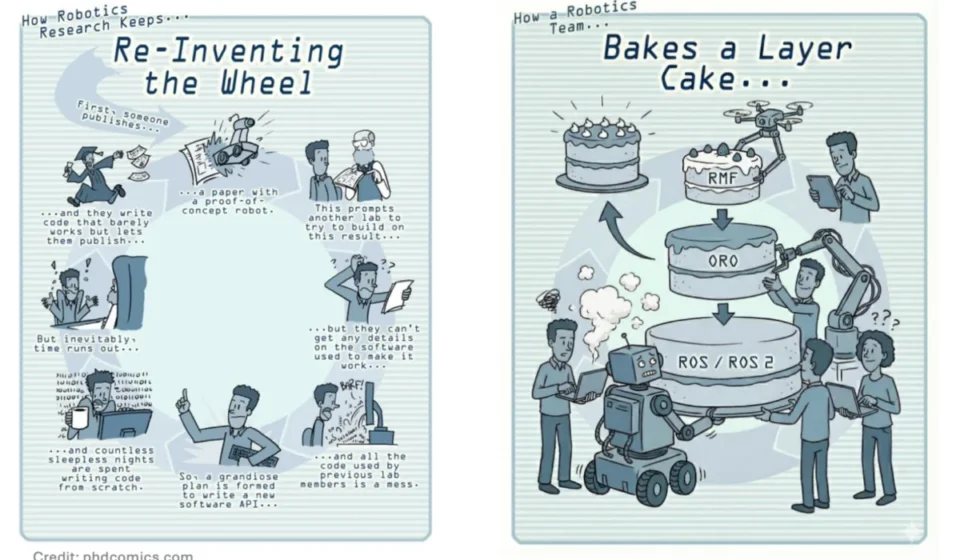
The robotics industry has long grappled with a significant "build trap"—a cycle where original equipment manufacturers (OEMs) spend years of R&D budget and engineering hours reinventing the foundational back-end architecture for their mobile robot fleets. Today, InOrbit.AI, a leader in enterprise robot orchestration and spatial intelligence, is moving to dismantle this barrier. The company has officially released OpenRobOps (ORO), an open-source framework designed to serve as the industry-standard foundation for robot operations and fleet management.
By providing a production-grade, ISO 21423-compliant reference implementation, InOrbit aims to shift the focus of robotics development from infrastructure maintenance to core innovation, potentially accelerating the mass adoption of autonomous mobile robots (AMRs) across global supply chains.
Main Facts: What is OpenRobOps?
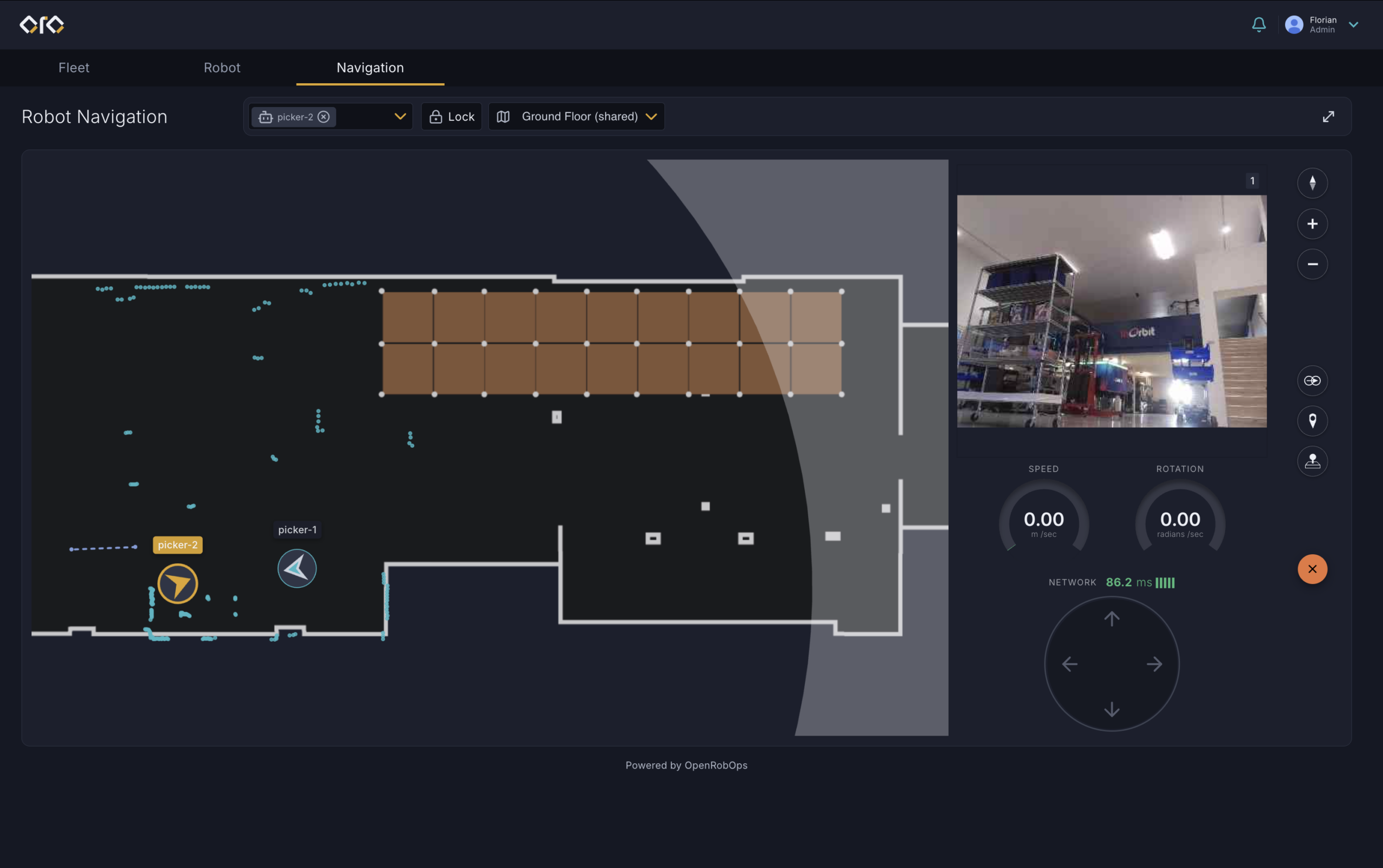
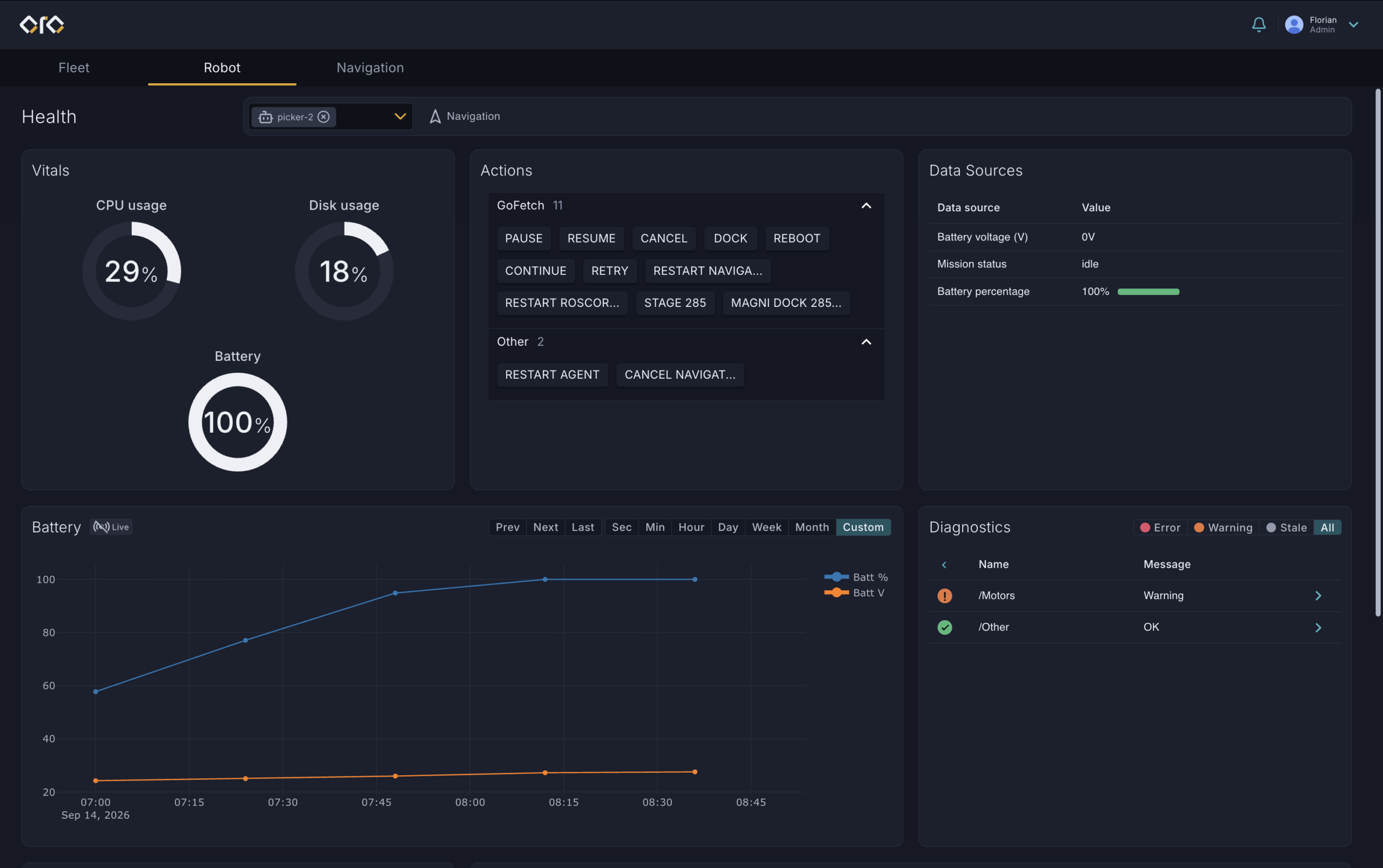
OpenRobOps is an open-source software suite designed to manage the complexities of modern, heterogeneous robot fleets. It provides the essential, "boring" infrastructure—such as fleet monitoring, data logging, incident management, and communication protocols—that every robot manufacturer currently builds from scratch.
Distributed under the Apache 2.0 license, the software is available for free to researchers, startups, and established enterprises. Its architecture is form-factor agnostic, meaning it supports anything from warehouse AGVs to quadrupedal robots and complex service platforms. The core value proposition is simple: rather than spending three to five years building a proprietary fleet management back-end, developers can now deploy a pre-validated, standards-compliant system on day one.
A Chronological Evolution of Fleet Orchestration
To understand the significance of the OpenRobOps release, one must look at the trajectory of the robotics industry over the last decade.
- 2017: InOrbit.AI is founded in Mountain View, California, with a mission to solve the "last mile" of robot operations—ensuring that robots, once deployed, actually deliver business value in the real world.
- 2024–2025: As the deployment of AMR fleets in logistics and manufacturing scales, the industry hits a "fragmentation wall." Different robots from different vendors cannot talk to each other, leading to "robot silos" within warehouses.
- February 2026: InOrbit provides the first public glimpse of its vision for a universal, open-source fleet manager, tentatively announcing the OpenRobOps initiative.
- May 2026 (Automate 2026): A landmark moment occurs at the Automate trade show, where ten different robot manufacturers successfully demonstrate multi-vendor orchestration using InOrbit’s software. This serves as the first public, large-scale demonstration of the ISO 21423 interoperability standard.
- September 2026: InOrbit officially launches the open-source repository for OpenRobOps, inviting the global robotics community to contribute to, audit, and deploy the code.
Supporting Data: Why Interoperability Matters
The demand for OpenRobOps is rooted in the harsh realities of the current robotics market. According to industry data, the primary hurdle for large-scale warehouse automation is not the hardware—it is the integration.
The Cost of Fragmentation
Current market research indicates that when a warehouse operator chooses a single-vendor fleet, they often face "vendor lock-in," preventing them from upgrading to more specialized hardware in the future. Conversely, attempting to manage a multi-vendor fleet requires an immense investment in middleware.
The ISO 21423 Standard
The inclusion of ISO 21423 in the ORO codebase is a critical differentiator. This international standard establishes a universal language for communication between industrial mobile robots and fleet management systems. By baking this standard into the ORO reference implementation, InOrbit is effectively future-proofing the fleets that adopt it. Whether a robot is navigating a loading dock or a hospital corridor, the ORO implementation ensures that it can communicate its status, mission requirements, and health telemetry to a central controller in a standardized format.
Official Responses and Industry Vision
The release of OpenRobOps has drawn immediate support from industry veterans who view this as a "ROS-moment" for the operations layer of the robotics stack.
The Perspective of Florian Pestoni
Florian Pestoni, CEO and founder of InOrbit.AI, frames the release as a necessary evolution of the industry. "OpenRobOps gives robotics developers a production-grade, open-source foundation to escape the build trap," Pestoni explained. "We are bridging the interoperability gap. It doesn’t matter if the robot has wheels, two legs, or four; this release levels the playing field, allowing more companies to provide complete, high-quality offerings based on proven technology."
Pestoni, who actively represents the U.S. national body (ANSI) in the ISO working groups, emphasized that this is not just software—it is the translation of international policy into market reality.
The ROS Comparison: Insights from Steve Cousins
Perhaps the most significant endorsement comes from Steve Cousins, executive director of the Stanford Robotics Center and former CEO of Willow Garage. Willow Garage was the birthplace of ROS (the Robot Operating System), which revolutionized the industry by creating a universal framework for robot software.
"When we created ROS, our mission was to give roboticists an open ecosystem so they could stop re-inventing basic device drivers," Cousins noted. "OpenRobOps creates the same shift for robot operations and fleet management. By providing this foundation, we are allowing engineers to focus on the high-level intelligence and specialized applications that truly define the next generation of robotics."
Implications: The Road Ahead for Robotics
The release of OpenRobOps carries profound implications for three distinct groups: OEMs, end-users, and the broader open-source community.
For Original Equipment Manufacturers (OEMs)
OEMs can now redirect their engineering talent toward the unique "secret sauce" of their robots—such as superior manipulation, proprietary navigation algorithms, or specialized payloads—rather than wasting resources on building a database to track battery life or robot location. This will likely lead to a surge in specialized, niche robot startups that can now compete with larger incumbents by leveraging the same robust back-end infrastructure.

For End-Users and System Integrators
For warehouses and logistics centers, the implications are immediate. The promise of "plug-and-play" interoperability means that a facility manager can mix and match robots from different vendors to create a fleet that is perfectly optimized for the specific task at hand. This is further enabled by premium, enterprise-grade tools like InOrbit Space Intelligence, which can sit on top of the ORO foundation to provide centralized, high-level orchestration across these disparate hardware platforms.
For the Global Robotics Ecosystem
By moving this technology into the open-source domain, InOrbit is effectively building a "network effect." As more developers use, test, and improve the OpenRobOps codebase, the quality of the software will improve, and the ISO 21423 standard will become the de facto baseline for the entire industry.
Conclusion: From Theory to Market Practice
The launch of OpenRobOps represents a transition from an era of proprietary, closed-off robotic systems to an era of collaborative, standardized orchestration. By providing a production-grade reference implementation, InOrbit.AI is effectively lowering the barrier to entry for the next wave of robotic innovation.
As the robotics community looks toward upcoming events like RobOpsCon, the focus will undoubtedly shift from "How do we make this robot move?" to "How do we make this fleet operate efficiently at scale?" With OpenRobOps, the answer to that question is now standardized, accessible, and ready for deployment. Developers interested in exploring the codebase or contributing to the future of robot fleet management are encouraged to visit the official OpenRobOps portal to begin the integration process.