





The Power of Efficiency: Modernizing Hydraulic Systems for a Sustainable Industrial Future

Hydraulic systems have long served as the heavy-duty workhorses of global manufacturing. From the immense pressure required in metal forming and plastics processing to the rugged reliability needed in heavy machinery and automated production lines, fluid power remains unmatched in its ability to deliver high force density and robust operational performance. However, as global industries face mounting pressure to reduce carbon footprints and lower operational expenditures, the traditional "power-at-all-costs" approach is undergoing a radical transformation.
Today, engineers and system designers are reconciling the inherent strength of hydraulics with the modern mandate for energy efficiency. By leveraging smart control architectures, advanced materials, and digital integration, the industry is proving that high-performance actuation and sustainability are not mutually exclusive—they are, in fact, the next frontier of industrial engineering.
The Core Challenge: Understanding Energy Transformation
To understand the push for efficiency, one must first look at the energy lifecycle within a hydraulic circuit. The process begins with the conversion of electrical energy into mechanical energy, then into hydraulic fluid power, and finally back into mechanical work. Each stage of this conversion represents an opportunity for either energy optimization or, conversely, energy dissipation.
Traditional hydraulic systems often prioritize stability and responsiveness, leading to the use of generous design margins. While these margins ensure safety and prevent equipment failure, they can result in systems that operate at sub-optimal levels for much of their duty cycle. The challenge, therefore, lies in shifting from static, "always-on" designs to dynamic systems that intelligently match power delivery to real-time load requirements.
Chronology of Hydraulic Innovation
The evolution of hydraulic efficiency has not happened overnight; it is the result of decades of incremental technical advancement:
- The Era of Fixed Displacement (Pre-1990s): Early industrial hydraulics relied heavily on fixed-displacement pumps and constant-speed motors. Excess energy was primarily managed via pressure-relief valves, which essentially "dumped" unused energy as heat.
- The Rise of Load-Sensing (1990s–2000s): The introduction of load-sensing and pressure-compensated systems marked a significant pivot. By adjusting flow and pressure based on the actual load of the actuator, these systems drastically reduced the energy wasted during idle or low-demand periods.
- The VSD Revolution (2010s): The widespread adoption of Variable Speed Drives (VSDs) allowed hydraulic units to modulate motor speed based on demand, effectively eliminating the need for throttling losses in many applications.
- The Electrohydraulic Age (Present Day): We are currently in an era of high-level digital integration. Modern electrohydraulic systems utilize high-speed sensors, sophisticated digital controllers, and artificial intelligence to create closed-loop systems that operate with surgical precision.
Supporting Data: The Impact of Efficiency Upgrades
While the specific efficiency gains of a hydraulic system depend heavily on the application, industry data consistently highlights the impact of modernizing control strategies:
- Energy Consumption Reductions: Transitioning from a constant-speed pump to a VSD-controlled pump can reduce energy consumption by 30% to 50% in typical cyclic manufacturing applications, such as injection molding or hydraulic presses.
- Thermal Management: Because modern systems generate less heat through reduced throttling, the reliance on large, energy-intensive oil coolers is often minimized, leading to secondary energy savings.
- Predictive Maintenance Savings: By integrating IoT-enabled sensors, companies have reported a 15-20% reduction in downtime. Efficient systems run cooler and with more stable pressures, which significantly extends the lifespan of seals, valves, and hydraulic fluids.
Technological Pillars of Modern Hydraulics
Variable Speed Drives (VSDs)
VSD technology is perhaps the most accessible and impactful upgrade for modern hydraulic power units. By decoupling the motor speed from the grid frequency, operators can command the motor to spin only as fast as the hydraulic demand requires. This effectively turns a rigid, high-consumption machine into a responsive, demand-driven asset.
The Rise of Electrohydraulic Servopumps
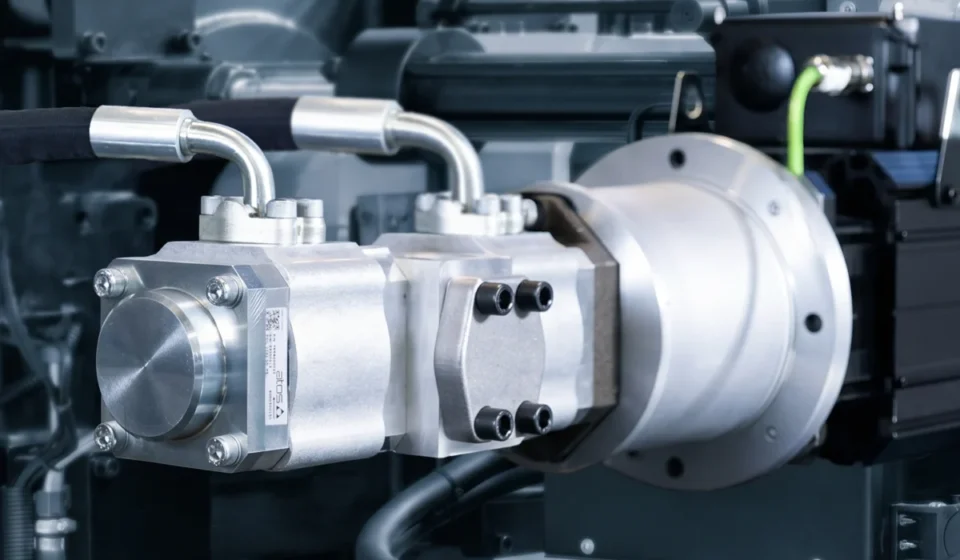
The integration of electronic control with hydraulic components represents the pinnacle of current system design. Companies like Atos have been instrumental in developing advanced servopumps that act as the "brain" of the machine. These systems offer real-time adjustment of pressure and flow, allowing for highly precise motion control that consumes energy only when work is being performed. This is a far cry from legacy systems that keep the entire hydraulic circuit pressurized even when the machine is waiting for the next cycle.
Energy Recovery and Regeneration
In heavy-duty applications, such as large presses or cranes, there is significant potential for energy recovery. During the deceleration phase of a press or the lowering phase of a load, the hydraulic system can act as a generator. Using accumulators or regenerative circuits, this kinetic energy can be captured and stored, then reintroduced into the system during the next power stroke, effectively creating a "hybrid" hydraulic architecture.
The Strategic Perspective: Industry Implications
The push for efficiency is no longer merely a technical preference; it is a corporate and regulatory mandate. Global industrial policies now place a heavy emphasis on ESG (Environmental, Social, and Governance) reporting.
Regulatory Compliance
Across Europe, North America, and parts of Asia, energy efficiency standards are becoming more stringent. Facilities that fail to track and optimize their energy usage face both higher utility costs and potential regulatory penalties. As a result, procurement departments are now looking for "efficiency-first" components, favoring suppliers who provide data-driven insights into how their products contribute to lower kWh consumption.
The Digital Transformation
Hydraulic systems are increasingly viewed as components of a larger digital ecosystem. Through Industry 4.0, hydraulic units are now connected to central plant management systems. This connectivity allows for:
- Condition Monitoring: Identifying leaks or component degradation before they cause a failure.
- AI-Driven Optimization: Machine learning algorithms can now analyze thousands of operational cycles to determine the most energy-efficient pressure setpoints, automatically adjusting the machine for different products or materials.
Maintenance: The Silent Driver of Efficiency
Often overlooked, the condition of the hydraulic fluid itself is a critical factor in energy efficiency. Advances in synthetic lubricants and filtration technology have resulted in fluids that maintain stable viscosity even under extreme temperature fluctuations.
When fluid viscosity is kept within an optimal range, internal leakage—a primary cause of efficiency loss in hydraulic pumps and motors—is significantly reduced. Regular filtration and proactive fluid analysis are, therefore, as important as any hardware upgrade. A well-maintained system requires less power to push fluid through valves and lines, resulting in a cleaner, more efficient operation.
Looking Ahead: The Future of Fluid Power
As we look to the future, the integration of Artificial Intelligence and Machine Learning is set to redefine the role of hydraulics in the factory of the future. We are moving toward "Self-Optimizing" systems—hydraulic units that learn their own operational cycles and tune themselves in real-time to minimize energy usage without human intervention.
Furthermore, the perceived divide between electrical actuation and hydraulic actuation is narrowing. The next generation of industrial systems will likely feature "hybrid" architectures, where the best of both worlds—the force density of hydraulics and the ease of control provided by electric motors—are fused into a single, cohesive unit.
Conclusion
The narrative that hydraulics are an "old" or "inefficient" technology is quickly being dismantled by the pace of innovation. By embracing VSDs, electrohydraulic control, and predictive maintenance, industries are proving that hydraulic power is not only sustainable but essential for a future that demands both high performance and environmental responsibility.
As manufacturers continue to balance the triangle of performance, reliability, and energy efficiency, hydraulic technology remains firmly at the center of industrial progress. Through strategic design and a commitment to innovation, these systems will continue to power the global economy for decades to come, leaner and smarter than ever before.
Sponsored content by The Atos Group


