




In the rapidly evolving landscape of regenerative medicine and food technology, a fundamental barrier has persisted for decades: how to print complex, living biological structures without compromising the delicate viability of the cells or losing control over their developmental trajectory. Conventional 3D bioprinting—often relying on the extrusion of a continuous, undifferentiated "bioink"—frequently subjects cells to mechanical stress and lacks the nuance required to steer cellular differentiation effectively.
A transformative solution has emerged from the EU-funded project PRISM-LT (Platform for Reconfigurable Integrated Systems for Manufacturing of Living Tissues). By shifting the paradigm from continuous extrusion to the assembly of modular, intelligent “living building blocks,” this five-year research initiative is successfully growing functional bone, fat, and muscle tissue in the laboratory. With a project horizon extending to 2027, the team is moving beyond the simple "printing" of cells and into the realm of biological programming.
The Core Innovation: Encapsulated Biological Guidance
The scientific strategy of PRISM-LT, coordinated by Professor Massimo Vassalli of the University of Glasgow, hinges on a radical departure from traditional additive manufacturing. Rather than treating cells as inert ink, the platform utilizes tiny, modular capsules. Each of these microscopic units contains a trio of critical components: living stem cells, a structural gel scaffold, and—most crucially—genetically engineered microorganisms.
These microbes act as internal biological regulators. As the stem cells begin the complex process of differentiation, the embedded microbes monitor the chemical signals in their environment. Upon sensing specific cues, the microbes release precise growth factors that "nudge" the stem cells toward becoming bone, fat, or muscle.
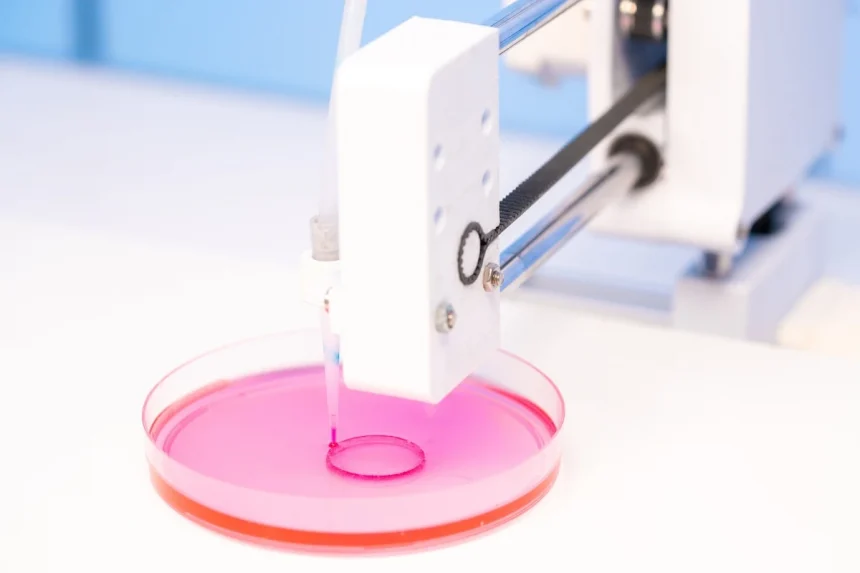
“Rather than printing a continuous stream of bioink, we work with encapsulated living building blocks,” explains Laura Martinelli, CEO of the Udine-based research organization InSociety and the project coordinator. “These capsules can either be precisely positioned by a robotic arm or bioprinted layer by layer to create complex tissue architectures.”
This "building-block" approach solves the industry’s "cohabitation" problem. By isolating the cells within their own micro-environments, the researchers can optimize conditions for both the stem cells and the guiding microbes—a delicate balancing act that ensures the survival and functionality of both systems.
Chronology of Development
The journey of PRISM-LT is defined by a methodical transition from fundamental feasibility to potential industrial scalability.
- 2022-2023 (Phase I: The Proof of Concept): The team focused on the "cohabitation" challenge. The primary hurdle was ensuring that yeast or bacteria could coexist with human stem cells without competing for nutrients or creating toxic environments. Early results confirmed the feasibility of this symbiotic approach.
- 2024-2025 (Phase II: Control and Differentiation): With cohabitation mastered, the research shifted toward the precision of the "guide" mechanism. Researchers refined the genetic programming of the microbes, successfully achieving controlled differentiation of stem cells into specific lineages.
- 2026 (Phase III: Scaling and Applications): The current stage, marked by the achievement of one-square-centimetre tissue samples. The project is now scaling toward one-cubic-centimetre blocks and engaging with international regulatory bodies.
- 2027 (Future Outlook): The final year of the current funding cycle is dedicated to establishing the regulatory framework for Engineered Living Materials (ELMs) and outlining the path toward industrial-scale bioprinting systems.
Supporting Data and Technical Nuance
The technical rigor behind PRISM-LT is evidenced by its dual-path approach to tissue synthesis. The project currently focuses on two distinct objectives, each requiring unique cellular configurations.
Biomedical Modeling: The Bone Marrow Interface
The team is developing 3D models of bone marrow, specifically the bone-and-fat interface. This is not merely a structural achievement; it is a vital tool for oncology. By creating a realistic microenvironment for bone marrow, researchers can test new pharmacological agents against leukemia in a platform that mimics human physiological responses far more accurately than animal models or flat petri dishes.
Cultivated Meat: The Marbling Challenge
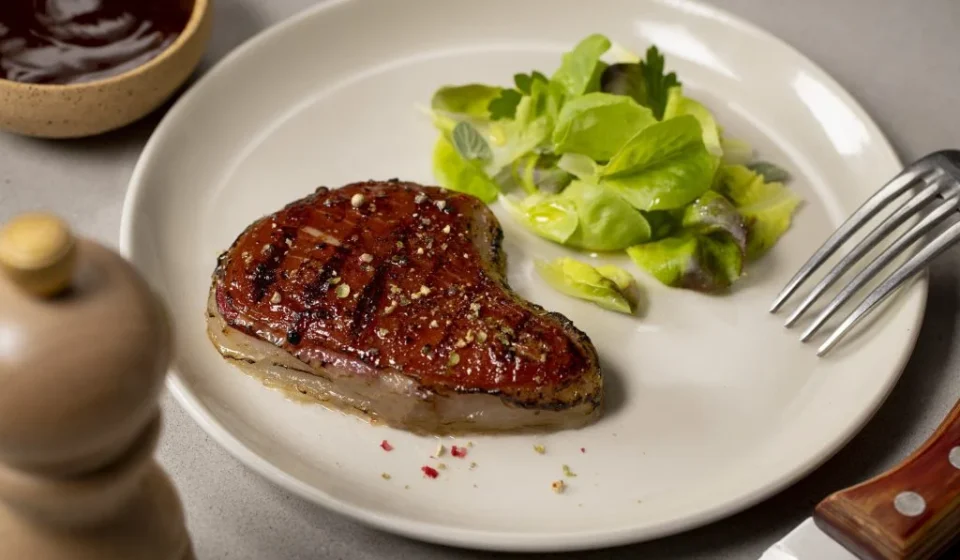
In the realm of food technology, the "marbling" of fat within muscle tissue has long been the "holy grail" for cultivated meat producers. Texture, mouthfeel, and flavor are all dependent on the precise spatial distribution of fat. PRISM-LT’s modular printing allows for the strategic placement of fat-producing capsules within a muscle-cell matrix, potentially solving the structural fidelity issues that have plagued earlier iterations of lab-grown proteins.
Comparative Metrics
While other players, such as MeaTech, have made headlines by printing large-scale protein structures, PRISM-LT distinguishes itself by its "biological steering" mechanism. Where other methods rely on physical cues (such as light or vibration) to guide cell growth, PRISM-LT’s reliance on genetically engineered microorganisms provides an autonomous, self-regulating developmental pathway.
Official Responses and Strategic Vision
The leadership team behind PRISM-LT views the project not just as a technological development, but as a cultural and regulatory shift.
“We need to reach a new attitude toward this technology,” says Martinelli. The team is currently in active consultation with the European Innovation Council and the European Medicines Agency (EMA). Because these Engineered Living Materials (ELMs) involve genetically modified microorganisms, they exist in a "regulatory gray zone" between traditional pharmaceutical products and standard foodstuffs.
Professor Vassalli remains optimistic about the project’s trajectory. “When we started the project, we had two main questions: is this feasible, and is it scalable? We can now say that it is feasible.” The focus now turns to the transition from a laboratory curiosity to an industrial-grade manufacturing process. The team is acutely aware of the "yuck factor" and consumer perception; their strategic decision to use yeast rather than bacteria as the "guide" organism in food applications is a deliberate attempt to align with consumer comfort and safety expectations.
Broader Implications
The success of PRISM-LT has profound implications for the future of several sectors:
- Personalized Medicine: If the team can successfully scale the production of organ-like tissues, the potential for personalized drug screening becomes immense. Patients could provide their own cells to be grown into "tissue models," allowing doctors to test how specific tumors or bone conditions respond to various treatments before ever administering them to the patient.
- Sustainability in Food: Cultivated meat remains one of the most promising avenues for reducing the environmental impact of industrial agriculture. By perfecting the texture of marbled meat, PRISM-LT’s technology could make plant-based or lab-grown alternatives significantly more attractive to the average consumer, accelerating the transition to more sustainable diets.
- The Rise of Engineered Living Materials (ELMs): Perhaps most importantly, PRISM-LT is proving that we can design materials that possess the intelligence to self-assemble and maintain themselves. This is a leap forward in material science, moving away from "dead" materials that degrade over time toward "living" materials that can theoretically repair or grow in response to their environment.
A New Era of Manufacturing
The transition from inert 3D printing to living tissue manufacturing marks the end of the "additive manufacturing as a tool" era and the beginning of the "biotechnology as a production system" era. The challenges remain substantial—primarily regarding the regulatory approval of genetically modified organisms in consumer products and the logistics of mass-producing biological capsules.
However, the modularity of the PRISM-LT platform offers a significant advantage. By decoupling the "printing" process from the "biological development" process, the team has created a flexible system that can be tuned to different outcomes—whether that is a lifesaving bone marrow graft or a steak for the dinner table.
As the project approaches its 2027 conclusion, the focus will undoubtedly shift to partnerships with the private sector. The integration of these living building blocks into industrial supply chains will be the final, and perhaps most difficult, hurdle. If successful, PRISM-LT will be remembered not just as a 3D printing project, but as the foundation for a new, living industrial age.