


The Software Pivot: Volkswagen Deepens Horizon Robotics Alliance in Bid to Reclaim Edge in China

Volkswagen Group is accelerating its strategic realignment in the world’s largest automotive market. Acknowledging that speed and local partnerships must substitute for the proprietary software capabilities it has struggled to build in-house, the German automotive giant has announced a significant expansion of its self-driving partnership with Chinese artificial intelligence chipmaker Horizon Robotics.
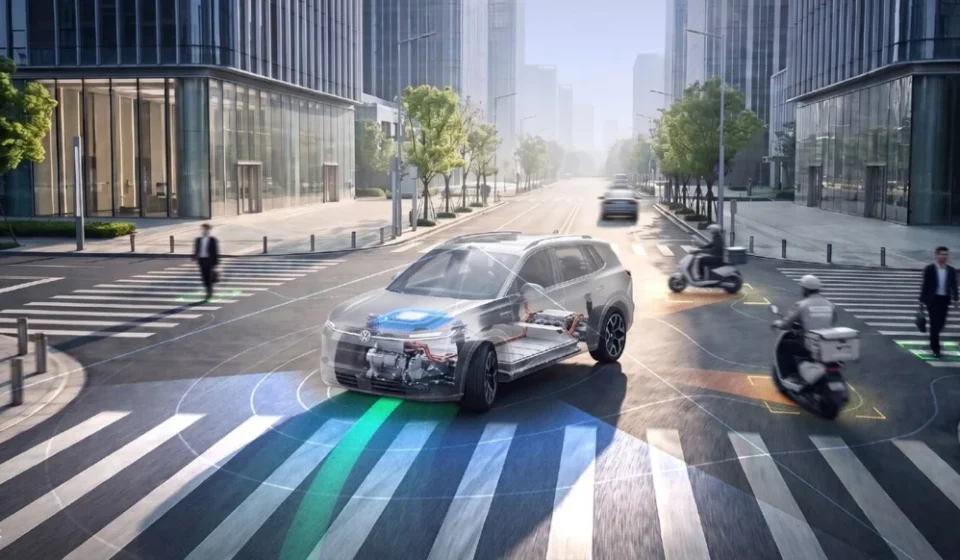
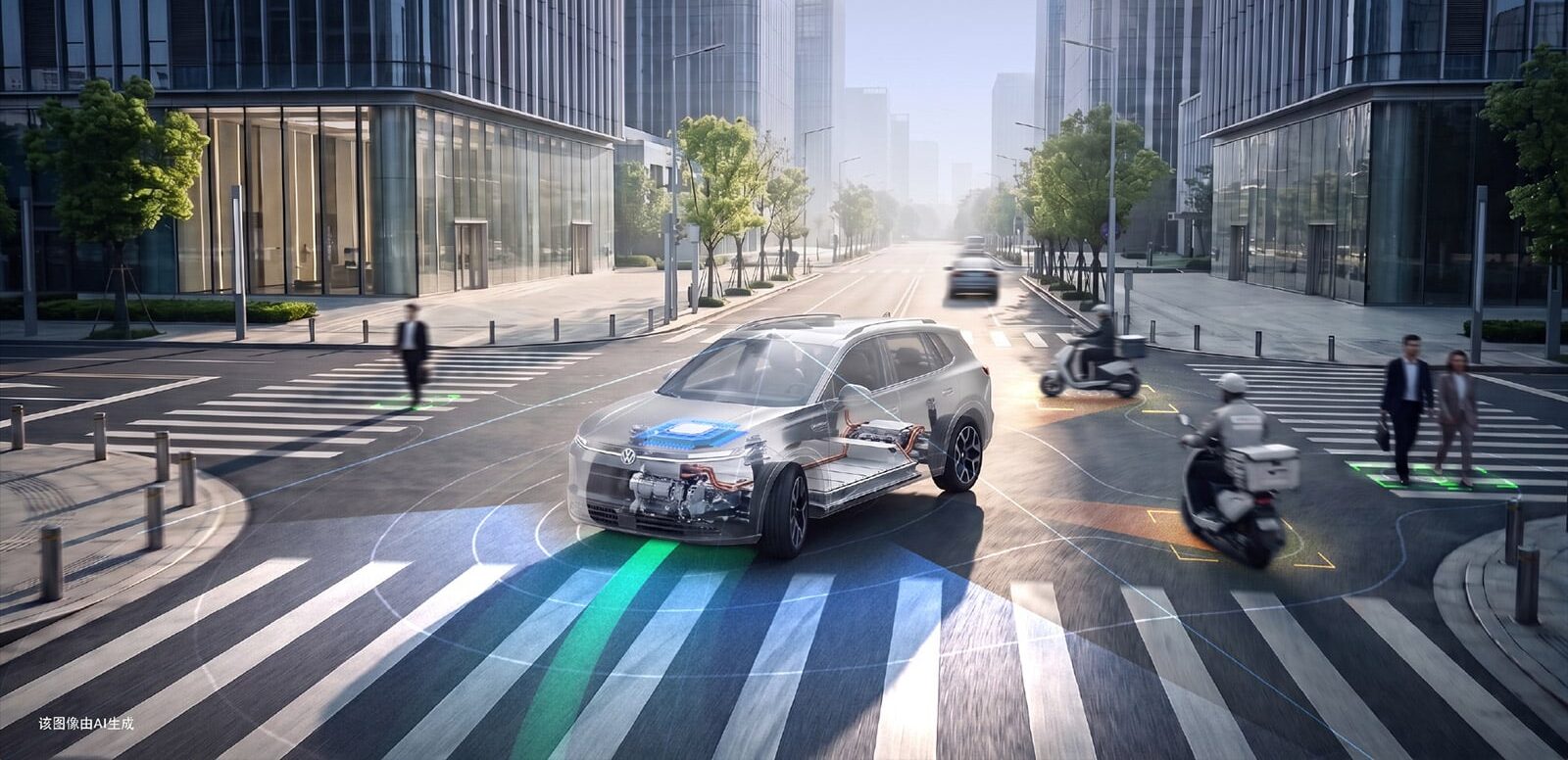
Operating through their Beijing-based joint venture, Carizon, the partners have set a definitive timeline to deliver SAE Level 3 driver-assist systems to the Chinese market starting in the second half of 2027. This deeper integration not only grants Carizon access to Horizon’s advanced AI foundation models but also paves the way for future collaboration on SAE Level 4 commercial robotaxi technologies.
The move highlights a broader structural shift within Volkswagen. Facing intense pressure from highly digitized domestic Chinese competitors and severe structural challenges at home in Germany, the Wolfsburg-based automaker is increasingly tethering its technological future to the Chinese software ecosystem.
Main Facts of the Carizon Expansion
The expanded agreement between Volkswagen and Horizon Robotics introduces several critical technical, commercial, and financial developments aimed at rapidly closing the software gap with Chinese rivals:
1. The Autonomous Driving Roadmap
- SAE Level 2 Rollout (Q3 2026): Carizon’s existing Level 2 advanced driver-assistance system (ADAS) has transitioned into mass production. It is scheduled to debut in the third quarter of 2026 across seven new electrified models produced by Volkswagen’s three Chinese joint ventures (SAIC-Volkswagen, FAW-Volkswagen, and Anhui-Volkswagen).
- China Electronic Architecture Integration (2027): By 2027, this Level 2 ADAS suite will be integrated across a wider array of vehicles utilizing Volkswagen’s newly developed, localized China Electronic Architecture (CEA).
- SAE Level 3 Launch (H2 2027): The joint venture’s primary target is the commercial release of Level 3 conditional automated driving systems starting in the second half of 2027.
- SAE Level 4 Ambitions: The partnership establishes a framework to extend research and development into fully automated Level 4 robotaxis for commercial fleet operations.
2. Technical Infrastructure and Hardware-Software Integration
To achieve these timelines, the partnership combines proprietary hardware with cutting-edge AI models:
- The C7H Chip: Carizon is actively developing its proprietary C7H smart-driving silicon, designed to optimize autonomous driving workloads.
- AI Foundation Model Access: Horizon Robotics will provide Carizon with direct access to its advanced AI foundation models. These models will run on the C7H hardware to handle complex perception and path-planning tasks.
- GAIA World-Model Data Platform: The system will leverage Carizon’s proprietary GAIA world-model data platform. Note: This platform is distinct from the GAIA generative world model introduced by British autonomous vehicle firm Wayve in 2023. The GAIA platform gives Volkswagen real-time scenario simulation capabilities, drastically reducing physical testing cycles and facilitating continuous over-the-air (OTA) updates.
3. Financial and Corporate Structure
The vehicle for this technological push is Carizon, established in Beijing in December 2023. The venture represents one of the largest direct technological investments ever made by a foreign automaker in the Chinese automotive sector:
- Total Investment: Volkswagen has committed approximately €2.4 billion ($2.6 billion USD) to the partnership.
- Equity Breakdown: The capital is split between a direct equity stake in Horizon Robotics and the funding of the joint venture itself. Within Carizon, Cariad (Volkswagen’s software subsidiary) holds a controlling 60% stake, while Horizon Robotics retains the remaining 40%.
Chronology of Volkswagen’s Software and China Strategy
[2020-2022] Cariad struggles with internal delays -> [Dec 2023] Carizon JV established (€2.4bn) -> [Late 2024] Cariad reorganized as external coordinator -> [Q3 2026] Level 2 ADAS mass production rollout -> [2027] China Electronic Architecture integration -> [H2 2027] Target Level 3 commercial launchVolkswagen’s pivot toward Horizon Robotics is the culmination of a multi-year effort to correct severe software development bottlenecks that have plagued the group since the creation of its dedicated software unit, Cariad.
The In-House Bottleneck (2020–2022)
Under former Volkswagen Group CEO Herbert Diess, the automaker pursued an aggressive strategy of centralizing all software development under the Car.Software Organisation, later rebranded as Cariad. The objective was to build a proprietary, unified software stack (E3 1.1, 1.2, and 2.0) for all group brands, including Volkswagen, Audi, and Porsche.
However, deep-seated internal political struggles, bureaucratic friction between brand divisions, and a lack of specialized software engineering expertise led to severe delays. Crucial vehicle launches—including the Porsche Macan EV, the Audi Q6 e-tron, and early ID-series electric vehicles—were pushed back by years due to unfinished code, severely damaging VW’s competitive standing in the rapidly evolving Chinese market.
The Pragmatic Pivot and Carizon’s Birth (2023)
Following Oliver Blume’s appointment as Group CEO in late 2022, Volkswagen abandoned its strictly insular software approach. Blume initiated a pragmatic "In China, for China" localization strategy.
In December 2023, Volkswagen finalized its €2.4 billion investment to establish Carizon alongside Horizon Robotics. This marked a decisive shift: instead of waiting for Wolfsburg-developed software to be localized for China, Volkswagen decided to co-develop smart-driving solutions directly within the Chinese tech ecosystem.
The Reorganization of Cariad and the Road Ahead (2024–2027)
Concurrently, Cariad underwent a major structural reorganization. The unit was stripped of its mandate to build complex software stacks entirely from scratch. Instead, Cariad was repositioned as an integrator and coordinator of externally sourced technology.
By partnering with Horizon Robotics, Xpeng (co-developing the ID. Unyx 08), and international players like Rivian, Volkswagen transitioned to an open ecosystem model. The newly announced timeline—stretching from the Q3 2026 Level 2 rollout to the H2 2027 Level 3 debut—represents the first concrete operational milestones of this restructured, partner-driven strategy.
Supporting Data and Market Context
Volkswagen’s aggressive pivot is driven by the stark realities of the Chinese automotive market, where advanced driver-assistance systems (ADAS) have quickly transitioned from premium novelties to standard consumer expectations.
The Chinese ADAS Surge
According to data from China’s Ministry of Industry and Information Technology (MIIT), more than 30% of new passenger vehicles sold in China in the first half of 2024 were equipped with advanced navigation-assisted driving systems (frequently referred to as Navigate on Autopilot, or NOA).
Chinese Passenger Vehicle Market (H1 2024)
┌───────────────────────────────────────────┐
│ [████████████░░░░░░░░░░░░░░░░░░░░░░░░░░░] │
└───────────────────────────────────────────┘
   ■ 30%+ Equipped with Advanced Navigation-Assisted Driving (NOA)
   ░ 70%- Basic ADAS or Non-Autonomous
Domestic Chinese OEMs have capitalized heavily on this trend:
- BYD, Li Auto, and Xpeng regularly offer highly capable Level 2+ urban and highway pilot systems as standard equipment or low-cost options.
- Huawei’s Intelligent Automotive Solution (IAS) business unit has emerged as a dominant Tier-1 supplier, equipping brands like Seres, Changan, and Chery with competitive smart-driving tech.
- Tesla continues to push for the regulatory approval and deployment of its Full Self-Driving (FSD) Beta suite in China, raising the competitive stakes for legacy foreign brands.
The Hardware Battleground
For Horizon Robotics, locking in Volkswagen as an anchor customer provides a massive, stable volume of silicon demand. Horizon is locked in a fierce market share battle in China against global semiconductor heavyweights:
| Chipmaker | Primary Target Customers in China | Key Strategic Advantage |
|---|---|---|
| Nvidia (Orin/Thor) | Premium EV brands (Nio, Xpeng, Li Auto) | Industry-standard raw computing power (TOPS) |
| Qualcomm (Snapdragon Ride) | Global and domestic joint-venture OEMs | Strong infotainment-ADAS integration |
| Horizon Robotics (Journey/C7H) | Mass-market to premium OEMs (BYD, Geely, VW) | High cost-efficiency and deep local optimization |
Financial Contrast: Chinese Expansion vs. Domestic Retrenchment
The €2.4 billion allocation to Carizon stands in stark contrast to Volkswagen’s fiscal realities in Europe. As the automaker pours capital into Chinese software ventures, it is simultaneously contemplating historic cost-cutting measures at home.
Volkswagen’s management is currently weighing up to 100,000 job cuts and the potential closure of multiple manufacturing plants in Germany—a unprecedented move in the company’s post-war history. This financial divergence underscores a harsh reality: Volkswagen is willing to downsize its traditional manufacturing footprint in Europe to fund the software and AI partnerships required to survive in Asia.
Official Responses and Corporate Perspectives
Executive commentary from both sides of the partnership highlights the strategic weight of the deal, emphasizing localization, speed, and the blending of Western automotive systems engineering with Chinese software agility.
Oliver Blume, CEO of Volkswagen Group
Oliver Blume has consistently framed the deepening of the Horizon partnership as an essential step toward preserving Volkswagen’s relevance in a digital-first market:
"China has become one of Volkswagen Group’s key innovation and technology hubs, particularly in software, artificial intelligence, and automated driving. This deepened partnership with Horizon Robotics will not only reinforce our competitiveness in China but also open up new opportunities in selected international markets."
Blume’s reference to "selected international markets" suggests that Volkswagen does not view its Chinese software investments as purely regional. Instead, technologies refined under the "In China, for China" banner could eventually find their way to other emerging markets where Chinese EV and ADAS standards are beginning to take root.
Peter Bosch, Chairman of Carizon and CEO of Cariad
Peter Bosch emphasized the operational synergy of the joint venture, defending the decision to partner rather than build in-house:
"Carizon is a powerful example of how we combine advanced AI technologies with strong in-house software and systems engineering. By integrating Horizon’s foundation models with our own platform capabilities, we are creating a highly responsive, localized R&D engine that can deliver safety and innovation at market speed."
Implications for the Global Automotive Industry
The expansion of the Carizon joint venture carries profound implications for the global automotive landscape, signaling a structural realignment in how legacy OEMs develop, deploy, and monetize software.
The Death of the "In-House Only" Software Strategy
For nearly a decade, global automakers operated under the assumption that they needed to become software companies to survive the transition to electric and autonomous vehicles. Volkswagen’s retreat from this position—symbolized by the reorganization of Cariad and the heavy reliance on Horizon, Xpeng, and Rivian—suggests that the "in-house only" software dream is dead for legacy OEMs.
Building, maintaining, and continuously updating a modern software stack requires an organizational culture, compensation structure, and development speed that traditional industrial conglomerates are structurally ill-equipped to provide. By shifting to a partner-and-integrate model, VW is acknowledging that its core competency lies in vehicle integration, manufacturing quality, and brand management, rather than writing code.
The Geopolitical Realignment of Automotive IP
Historically, technology transfers in the automotive industry flowed from West to East. Foreign joint ventures in China were established to teach domestic partners how to build engines, transmissions, and vehicle platforms.
The Carizon partnership represents a complete reversal of this flow. Volkswagen is now importing critical intellectual property—specifically AI foundation models, neural network architectures, and advanced silicon design—from Chinese partners to remain competitive. This shift highlights China’s emerging status as the global epicenter for smart-vehicle technology, challenging the traditional engineering dominance of Germany, Japan, and the United States.
Historical IP Flow (1980s - 2010s)
[ Western OEMs ]  ───(Manufacturing & Platform IP)───>  [ Chinese JVs ]

Modern IP Flow (2020s & Beyond)
[ Chinese Tech Firms ]  ───(AI, Chips & Software IP)───>  [ Western OEMs ]
The Export Strategy: Offsetting Domestic Losses
Rather than scaling back its massive, underutilized production capacity in China as market share slips to domestic EV makers, Volkswagen is attempting to pivot its Chinese operations into a global export hub. The company has already established new export routes from China to Central Asian nations such as Kazakhstan and Uzbekistan, with active plans to expand these exports into the Middle East, Southeast Asia, and parts of Central Asia.
By equipping these Chinese-built export models with localized Carizon ADAS technology, Volkswagen hopes to offer highly competitive, software-rich vehicles in emerging markets at price points that European-built vehicles cannot match.
The Differentiation Dilemma
The ultimate test of Volkswagen’s strategy lies in technological differentiation. By utilizing Horizon’s foundation models and silicon, Volkswagen is aiming for technological parity with domestic Chinese rivals.
However, because Horizon Robotics is an open-market supplier that also services Geely, BYD, and Chery, Volkswagen faces the difficult task of transforming a licensed, shared technology platform into a uniquely branded user experience. If VW fails to build a distinct identity on top of Horizon’s foundation, it risks selling commoditized vehicles that offer no functional advantages over cheaper, nimbler domestic Chinese alternatives.