




Navigating the Perfect Storm: Five Strategic Pillars for Automotive Suppliers in a Volatile Era

By Austin Weber, Senior Editor
The automotive supply chain is currently traversing one of the most precarious landscapes in modern industrial history. From the aggressive pivots by Original Equipment Manufacturers (OEMs) regarding powertrain platforms to the sobering reality that a significant majority of U.S. consumers now view new vehicle ownership as financially out of reach, the pressure on Tier 1 and Tier 2 suppliers is mounting.
In this high-stakes environment, the traditional playbook—focused on lean efficiency and just-in-time delivery—is no longer sufficient. Today’s automotive suppliers are forced to navigate a "poly-crisis" characterized by trade policy uncertainty, shifting regulatory landscapes, volatile consumer demand, and the relentless pressure to fund next-generation technology. A landmark report from Deloitte Consulting LLP underscores that the margin for error has vanished, suggesting that suppliers must fundamentally pivot their operational philosophy to balance immediate resilience with long-term viability.
The State of the Industry: A Chronology of Constraint
To understand the current urgency, one must look at the recent evolution of the automotive sector. The industry has moved through several distinct phases of crisis over the last five years:
- The Supply Chain Shock (2020–2021): The global pandemic triggered a cascading collapse of logistics networks, exposing the fragility of single-source procurement strategies and "lean-to-the-bone" inventory levels.
- The Semiconductor Scarcity (2021–2022): As vehicle production stalled due to chip shortages, suppliers realized that their inability to control sub-tier electronic components was a catastrophic vulnerability.
- The EV Transition Hype (2022–2023): OEMs made massive capital commitments toward full electrification, forcing suppliers to divert funds from traditional internal combustion engine (ICE) components to EV-specific systems.
- The "Correction" Period (2024–Present): Facing cooling EV demand and high interest rates, OEMs are abruptly shifting back toward hybrid and multi-powertrain platforms. This "whiplash" has left suppliers with underutilized capacity and stranded capital.
Today, as Jason Coffman, the lead author of the Deloitte report, points out, we are in an era of "sustained constraint." Companies that once thrived on predictable, long-term production cycles must now operate in an environment where flexibility is the only true competitive advantage.
Five Strategic Pillars for Survival
Deloitte’s research identifies five specific, actionable strategies that can help suppliers manage the inherent volatility of the current market. These strategies are not merely operational tweaks; they represent a fundamental restructuring of how suppliers interact with OEMs and the global market.
1. Designing for Supply Chain Resilience
Gone are the days when sourcing was driven solely by the lowest unit cost. Today, resilience is the priority. Diversifying the sourcing footprint is no longer a "nice-to-have" but a strategic necessity. Coffman emphasizes that suppliers must enable cross-plant production capabilities, ensuring that if one facility is hit by a localized disruption—be it a strike, a natural disaster, or a trade barrier—the impact can be mitigated by shifting production elsewhere. Furthermore, integrating scenario-based planning into the core supply chain strategy allows firms to move from a reactive posture to a proactive one.
2. Building Digitally Integrated, Productivity-Driven Operations
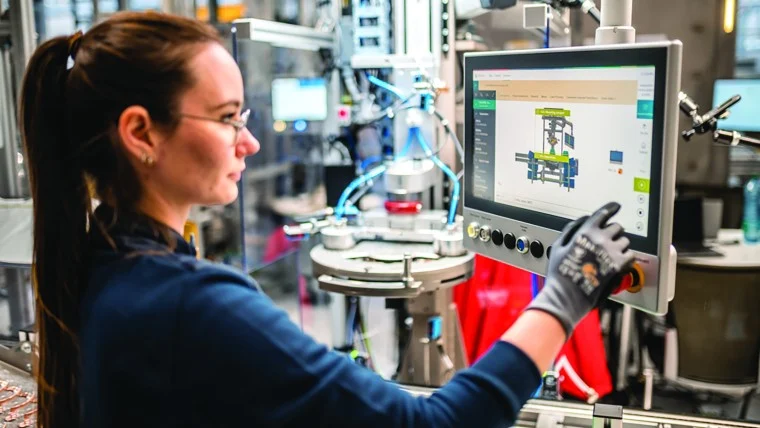
Labor shortages and rising material costs are the twin pillars of current operational pain. To combat this, suppliers must accelerate the digitization of their factory floors. This involves more than just installing robotics; it requires the integration of data across the entire enterprise. When workforce capabilities are aligned with real-time data integration, companies can achieve higher levels of productivity. This allows them to "do more with less," effectively buffering the organization against the uncertainty of labor availability and material costs.
3. Aligning Product and Platform Strategy with Evolving Demand
The recent pivot by major OEMs—away from "EV-only" strategies toward "powertrain agnostic" platforms—is a direct response to consumer hesitation. Suppliers must follow suit. By aligning their R&D and manufacturing toward modular platforms and systems that function regardless of the propulsion type (ICE, hybrid, or EV), suppliers can preserve capital efficiency. This "agnostic" approach allows them to pivot their product output without needing to retool entire production lines, a strategy that is critical when consumer demand signals remain contradictory.
4. Competing Through Differentiated Systems and Intellectual Property
The lines between OEMs and suppliers are blurring. OEMs are increasingly bringing software development and core component design in-house, which threatens to turn traditional suppliers into mere "build-to-print" commodities. To avoid this, suppliers must concentrate their investments on proprietary technologies and system-level integration. By focusing on intellectual property that is difficult for an OEM to replicate or bring in-house, suppliers secure their place as essential partners rather than replaceable vendors.
5. Institutionalizing Capital Discipline as Structural Governance
Finally, the era of "growth at any cost" is over. In a high-interest-rate environment, capital is expensive. Suppliers that hardwire capital rigor into their portfolio decisions—essentially creating a governance structure that forces management to evaluate every investment against the reality of potential volatility—will be the ones that survive. This means prioritizing projects that offer modular, incremental returns over those that require massive, front-loaded capital expenditures.
Supporting Data and Industry Implications
The implications of these strategies are profound. Data suggests that the companies most successful in navigating the current climate are those that have stopped chasing the mirage of "total reshoring." While many politicians and executives talk about bringing all manufacturing back to home shores, the reality is that the cost of such an endeavor is prohibitive for most mid-sized suppliers.
Instead, the trend is toward "Optionality." Suppliers are finding that maintaining the ability to adjust production, rebalance sourcing, and respond to localized disruptions is more valuable than committing to a single, rigid geographic strategy.
"Flexibility itself has become a strategic asset," Coffman notes. "It allows suppliers to absorb shocks without overcommitting capital or capacity."
The Human Element: Managing the Transition
While the Deloitte report focuses on systems, strategy, and capital, the human element remains the most significant variable. The automotive industry is currently grappling with a massive skills gap. As factories become more "digitally integrated," the workforce must evolve from manual laborers to system operators and data analysts.
Suppliers that invest in their workforce—training them to manage the very digital tools that define the "productivity-driven operations" mentioned in the report—will see better results than those that simply buy the technology. The integration of AI tools, such as the newly launched Ask ASM platform for manufacturing professionals, exemplifies the trend toward providing workers with the high-level data needed to make complex decisions on the fly.
Conclusion: A Future of Adaptability
The automotive supply chain is not merely undergoing a cyclical downturn; it is undergoing a structural transformation. The transition to electric and software-defined vehicles, coupled with global economic instability, has created a "new normal."
For the supplier base, the path forward is clear: move away from the rigid, long-term commitments of the past and toward a model of modular, resilient, and highly flexible operations. By institutionalizing capital discipline and doubling down on proprietary intellectual property, suppliers can protect their margins against the ongoing pressure from OEMs.
The survival of the automotive supplier sector will not depend on predicting the exact future of vehicle powertrains or global trade policy. Instead, it will depend on the ability to remain agile, to absorb the inevitable shocks, and to maintain the optionality required to pivot when the market demands it. As the industry continues to shift gears, those who embrace these five strategies will not only survive the current volatility but will likely emerge as the dominant players in the next generation of automotive manufacturing.