


The Mechanics of Separation: Mastering Cyclone and Hydrocyclone Technology in Industrial Applications

By Mike Sondalini, PWW EAM System Consultant
With permission of BIN95 Business Industrial Network
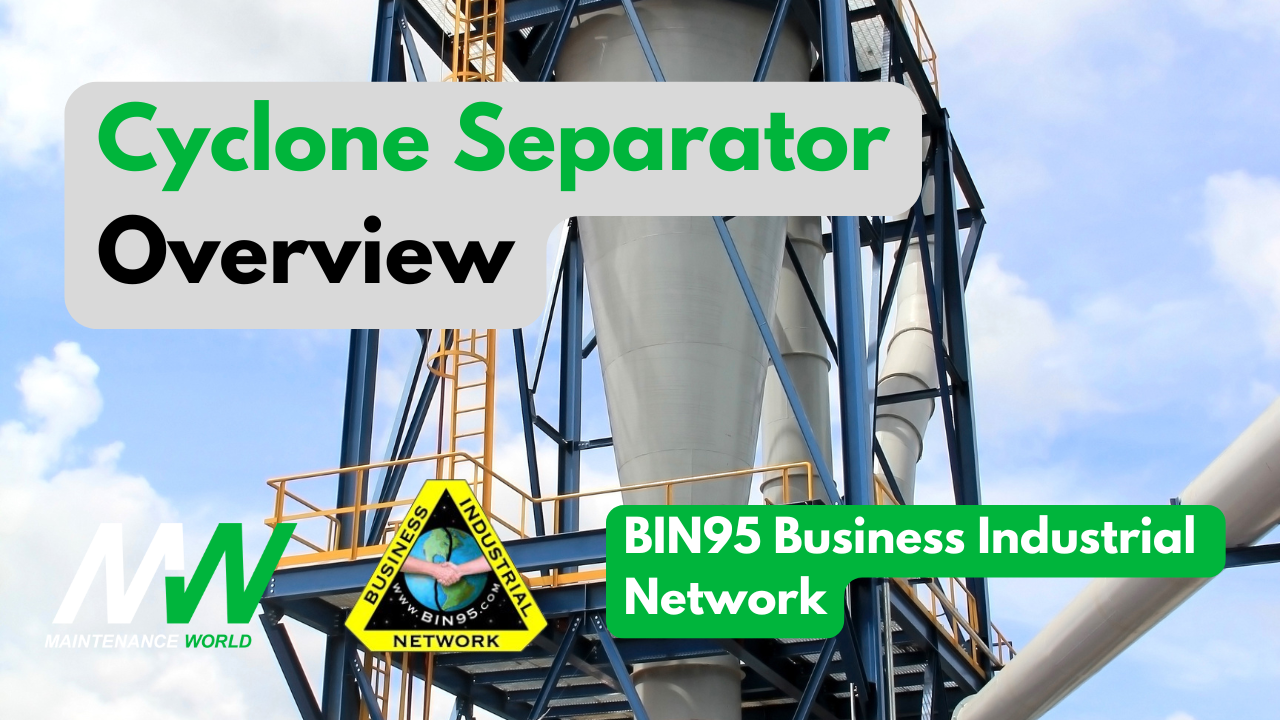
In the complex landscape of industrial processing and environmental management, the ability to efficiently separate substances of varying densities is a fundamental requirement. From extracting abrasive dust from manufacturing air streams to isolating precious minerals from liquid slurries, the cyclone separator stands as a cornerstone of process engineering. By harnessing the raw power of centrifugal force—the same physical phenomenon that gives tornadoes their destructive, yet highly segregating, capabilities—these devices offer a passive, robust solution for particle management.
The Physics of Segregation: From Tornadoes to Industrial Efficiency
At its most fundamental level, a cyclone separator functions by forcing a fluid (gas or liquid) into a high-speed spinning vortex. Within this swirling column, heavier particles are subjected to significantly higher centrifugal forces than the lighter carrier fluid. This causes the heavier materials to migrate toward the outer walls of the chamber, where they lose momentum and eventually descend into a collection hopper.
The comparison to a tornado is not merely metaphorical; it is an accurate reflection of fluid dynamics in action. Just as a tornado’s vortex can lift heavy debris—and occasionally carry lighter objects like livestock or water over vast distances—the cyclone separator utilizes a controlled version of this energy. In nature, the vortex acts as a massive centrifugal sieve, separating heavy objects that drop out of the storm’s rotation from lighter materials that remain suspended in the updraft. By scaling this principle down and containing it within a precisely engineered geometric structure, engineers can manipulate the "cut point"—the specific particle size at which separation occurs.

Anatomy of Design: Tangential vs. Axial Configuration
The efficiency of a separation system is dictated by its geometry. There are two primary design philosophies currently dominating the industry:
1. The Tangential Inlet, Axial Discharge Design
This remains the gold standard for versatility. In this configuration, the inlet stream is introduced tangentially to the cylinder, which immediately initiates the spinning motion. Because of its structural simplicity, this design can handle a broader range of throughputs and particle sizes, making it the most cost-effective solution for most industrial applications.
2. The Axial Inlet, Axial Discharge Design
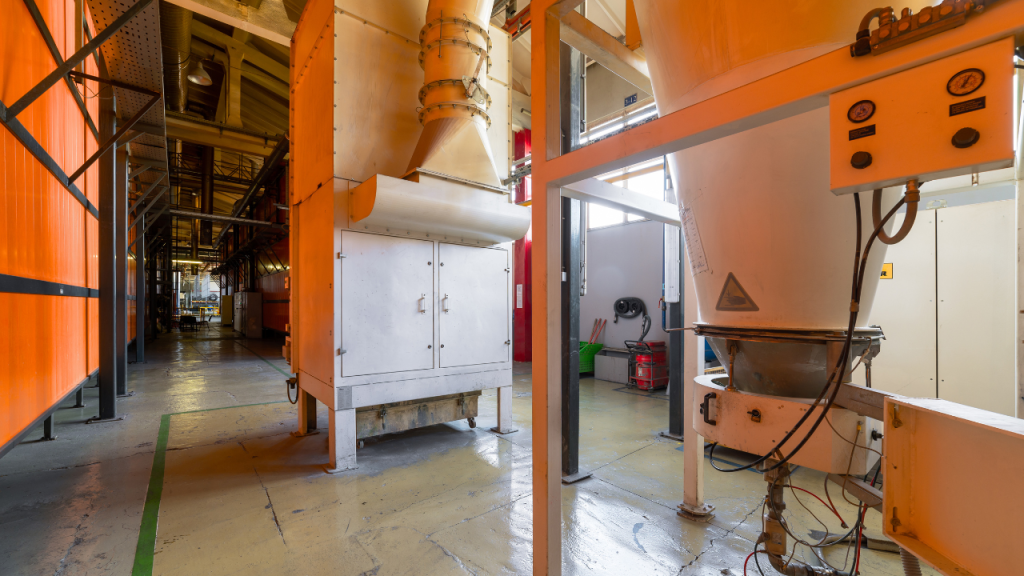
In this setup, the fluid enters axially and is forced into a spin by a series of internal slanting vanes. While these are effective for specific, steady-state flows, they often lack the robustness and flexibility of the tangential variety.
The differentiation extends to the medium itself. While "cyclones" are typically used for gas-solid or gas-liquid separation, "hydrocyclones" are engineered specifically to process liquids, separating solids from liquids or liquids of different densities from one another.

Operational Chronology: The Lifecycle of a Particle
To understand why a cyclone succeeds or fails in an industrial setting, one must track the journey of a particle through the unit.
- Entry and Acceleration: The fluid enters the upper chamber at high velocity. As it hits the chamber wall, the centrifugal effect begins. Any material with a mass greater than what the carrier fluid can support is immediately flung toward the periphery.
- The Conical Descent: As the stream moves downward, it enters a tapering cone. In fluid dynamics, this is a critical stage; as the volume of the chamber decreases, the stream must accelerate to maintain a constant mass flow rate.
- Enhanced Separation: As the velocity increases in the lower section of the cone, the centrifugal force becomes so extreme that even smaller, lighter particles—which were previously suspended—are forced against the wall.
- The Reverse Vortex: A fascinating phenomenon occurs here, rooted in the same physics that draws cigarette smoke out of a moving car window. The spinning stream creates a zone of reduced pressure along the vertical axis of the cyclone. This low-pressure core forces a secondary, inner vortex of clean air to spiral upward and exit through the top outlet nozzle.
Critical Parameters and Performance Variables
The efficacy of a cyclone is not solely dependent on its shape; it relies on the strict maintenance of specific operational parameters.
Particle Agglomeration
One of the most overlooked factors is the "tendency to join." Particles that exhibit high agglomeration characteristics—meaning they stick together upon contact—are significantly easier to remove, as their effective mass increases. Engineers must account for the chemical and physical properties of the dust or slurry being processed.
The Airtight Mandate
A critical failure point in many systems is the bottom outlet. Because the interior of the cyclone is a low-pressure zone, any air leakage at the bottom—often caused by a poorly sealed dustbin or an improperly functioning rotary valve—will destroy the separation efficiency. Leaked air disrupts the internal vortex, causing previously separated particles to be re-entrained into the upward-moving clean stream and carried out the exhaust. For this reason, reliable air-lock systems, such as dual butterfly valves or rotary feeders, are essential.
Velocity and Wear
High velocity is both a benefit and a liability. While it ensures high separation efficiency, it also subjects the interior walls to extreme abrasive wear. In industries processing high-silica dust or aggressive slurries, the internal walls of the cyclone are often lined with specialized materials. Hardened ceramics, urethane plastics, or high-density rubber linings are commonly employed to prevent the cyclone from "self-destructing" from the inside out.
Strategic Implications: Series vs. Parallel Operation
When faced with massive volume requirements or a broad spectrum of particle sizes, engineers often configure cyclones in arrays.
- Series Configuration: This is often used for multi-stage cleaning. The first cyclone removes the "bulk" heavy load, while subsequent, smaller, or higher-velocity units capture the fine particulates. The trade-off is a significant pressure drop across the system, which necessitates more powerful and energy-consuming fan systems.
- Parallel Configuration: This is the preferred method for managing high flow rates without sacrificing separation efficiency. By splitting the stream across multiple, identical units, the plant can process larger volumes while keeping the individual cyclone dimensions within the "sweet spot" of efficiency.
Expert Insight: Achieving Industrial Wellness
As emphasized by Senior Consultant Mike Sondalini of the PWW EAM System, the maintenance of these units is as critical as their design. Reliability is not a static state but an ongoing process of monitoring and adjustment.
"In industrial manufacturing, we often treat equipment as ‘install and forget’ assets," Sondalini notes. "However, a cyclone is a precision instrument. If the dustbin is left to overfill, or if the rotary valve begins to leak, the entire downstream system is compromised. Our goal should always be to apply scientific understanding to ensure that the process is repeatable, measurable, and optimized."
Conclusion: The Future of Passive Separation
Despite the rise of complex electronic filtration systems and advanced electrostatic precipitators, the cyclone separator remains the workhorse of global industry. Its lack of moving parts (excluding external valves) makes it uniquely suited for harsh, high-temperature, or high-pressure environments where electronic sensors would fail.
By adhering to the core principles of geometry, velocity management, and proper sealing, facilities can continue to leverage this age-old physical phenomenon to ensure cleaner air, purer products, and more reliable equipment. Whether it is preventing the catastrophic failure of a pump or ensuring that a production line meets environmental emissions standards, the cyclone remains an essential, elegant solution to the modern challenge of material segregation.
References and Further Reading
- Fayed, M. E., & Otten, L. (1997). Handbook of Powder Science and Technology, Chapter 15.
- Perry, R. H. (1984). Perry’s Chemical Engineer’s Handbook. McGraw-Hill Book Co.
- Sondalini, M. (2026). Industrial Manufacturing Wellness: The Complete Guide to Successful Enterprise Asset Management. PWW EAM System-of-Reliability.