




Sounding Out the Future: Harvard Researchers Unlock New Potential for Quantum Computing with “Dressed” Qubits

In a significant leap forward for the field of quantum information science, researchers at the Harvard John A. Paulson School of Engineering and Applied Sciences (SEAS) have unveiled a groundbreaking method to stabilize delicate quantum information. By utilizing microscopic sound waves—phonons—to "dress" quantum bits (qubits), the team has successfully extended the lifespan of quantum memory, a discovery that could prove instrumental in the race to build scalable, chip-based quantum networks.
The study, published in the prestigious journal Nature Physics, details an innovative approach developed within the laboratory of Marko Lončar, the Tiantsai Lin Professor of Electrical Engineering at Harvard. By proving that mechanical vibrations can protect qubits from environmental noise, the team has effectively solved a persistent paradox in quantum engineering: how to maintain strong interaction with a system without sacrificing its stability.
The Core Innovation: Leveraging Phonons for Quantum Communication
Quantum computing relies on the ability of qubits to exist in a state of superposition, a fragile condition that is easily disrupted by external interference—a phenomenon known as decoherence. While photons (particles of light) are the current industry standard for transmitting quantum data across long distances, they present physical challenges when it comes to miniaturization.
The Harvard team, led by former doctoral student Eliza Cornell—now a postdoctoral researcher at Boston University—and former postdoctoral scholar Zhujing Xu, turned their attention to phonons. Phonons are quantized packets of mechanical vibration that act as the acoustic equivalent of photons.
Why Sound Outperforms Light on the Chip
The primary advantage of phonons over light lies in their wavelength. At equivalent frequencies, sound waves are significantly shorter than light waves. This discrepancy allows engineers to design components that are drastically smaller, enabling a higher density of qubits on a single silicon chip.
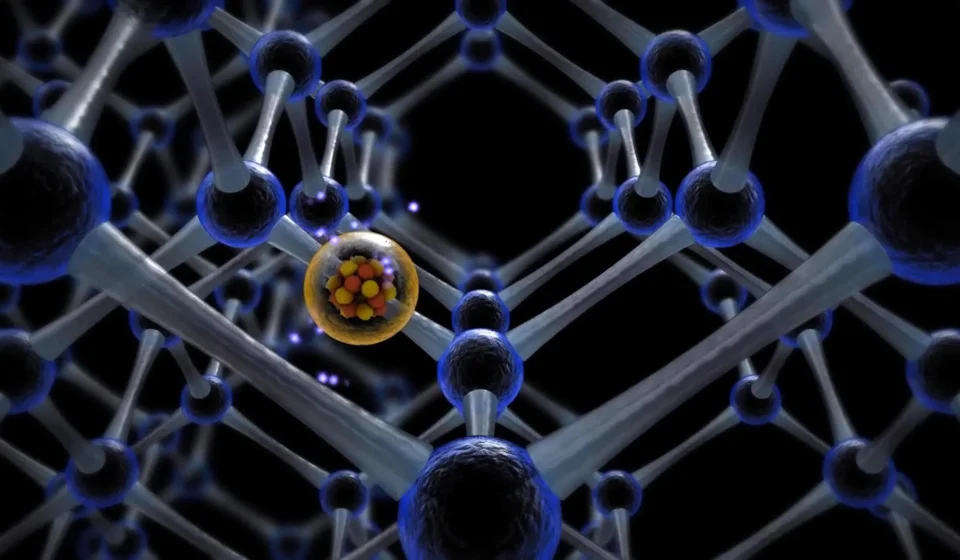
Furthermore, phonons are inherently versatile. Because they interact readily with both solid-state electron spins and electromagnetic fields, they are ideal candidates for "hybrid" quantum systems. Such systems aim to integrate different types of qubits—each optimized for a specific task—into a unified architecture. In the Lončar lab’s design, these phonons are trapped within a "phononic cavity," a specialized structure that forces the vibrations to interact intensely with the electron spin of a silicon-vacancy center in a diamond.
Chronology: A Path to Mechanical Coherence
The development of this technology did not happen overnight; it is the culmination of years of rigorous experimentation at the intersection of nanotechnology and quantum physics.
- Foundation Phase: The Lončar lab spent years exploring the fundamental physics of phononic cavities. Their early work established that these structures could successfully trap mechanical energy, creating a high-density environment where electron spins and phonons could "talk" to one another.
- The Conflict: As the researchers pushed for stronger interactions between phonons and spins, they encountered the classic quantum bottleneck. To maximize interaction, the qubit had to be highly sensitive to its environment; however, this same sensitivity made the qubit vulnerable to decoherence, effectively wiping out the quantum information stored within it.
- The Breakthrough: Conventional methods to combat decoherence—such as using microwave pulses to decouple the qubit from noise—proved ineffective when the qubit was confined within a phononic cavity. The team realized they needed a protection mechanism that was compatible with the cavity itself.
- The Experiment: The researchers shifted the paradigm by applying a continuous mechanical driving field. By "dressing" the silicon-vacancy spin with this field, they created a new, stable quantum state. This continuous-wave mechanical suppression allowed them to isolate the qubit from low-frequency environmental noise without disrupting the phononic coupling.
Supporting Data: Measuring the "Dressed" Qubit
The empirical results of the Harvard study provide a clear metric for the success of this new technique. By applying this continuous acoustic field, the team was able to increase the coherence time of the silicon-vacancy spin by approximately a factor of three.
Technical Specifications and Mechanisms
- Coherence Extension: The "dressing" process effectively creates an energy gap that makes the qubit insensitive to the low-frequency noise that typically causes decoherence in diamond-based systems.
- Compatibility: Unlike microwave decoupling, which often interferes with the delicate optical or mechanical signals used to transport data, the "all-mechanical" approach uses the same medium (phonons) as the network itself.
- Scalability: Because the control mechanism is built directly into the chip architecture, it avoids the bulky external wiring associated with microwave control, paving the way for larger, more integrated quantum arrays.
The research was validated through rigorous testing at the Harvard Center for Nanoscale Systems, utilizing state-of-the-art facilities supported by the National Science Foundation. The study’s broad co-authorship—including experts in quantum control and nanophotonics—underscores the interdisciplinary nature of the achievement.
Official Perspectives and Expert Insight
"We are solving two problems simultaneously," says Eliza Cornell, lead author of the study. "We want the spin to have strong interaction with phonons for data transmission, and we want the spin to have a long coherence time for data storage. Our paper demonstrates a method of extending the coherence time that is fully compatible with the silicon-vacancy center being confined in a cavity."
The research team emphasizes that this is not merely an incremental improvement; it is a fundamental shift in how quantum information can be managed on a solid-state platform. By granting phonons a "dual role"—acting as both the carrier of information and the guardian of that information—the researchers have simplified the requirements for a functional quantum network.
The project received significant backing from federal entities, including the National Science Foundation, the Air Force Office of Scientific Research, and the U.S. Department of Energy’s Q-NEXT National Quantum Information Science Research Center. This level of institutional support highlights the strategic importance of this technology in the broader context of national security and high-performance computing.
Implications for the Future of Quantum Computing
The implications of this research extend far beyond the laboratory bench. As the world transitions toward the era of quantum networking, the ability to pack components onto a chip without losing information to noise is the "holy grail" of the field.
Toward Compact Quantum Networks
If this technology can be scaled, it could lead to the development of quantum chips that are as compact and manufacturable as the silicon transistors found in modern smartphones. This would effectively democratize access to quantum computing, moving the technology out of large, refrigerated basement labs and into the realm of scalable, portable infrastructure.
The Hybrid Quantum Advantage
By demonstrating that different quantum systems can be "stitched" together using phononic channels, the Harvard team has opened the door to hybrid architectures. In such a setup, a processor optimized for logic could communicate seamlessly with a memory module optimized for storage, all connected via mechanical sound waves.
Commercialization and Patents
Recognizing the transformative potential of this discovery, the Harvard Office of Technology Development is currently pursuing patent protection. The university is actively exploring commercialization opportunities, inviting industry partners to collaborate on translating this lab-scale success into industrial-grade quantum hardware.
As the scientific community continues to refine these "dressed" qubits, the vision of a robust, scalable, and noise-resilient quantum internet appears more tangible than ever. By tuning into the microscopic frequency of sound, the Harvard SEAS team has tuned out the noise of the quantum world, potentially silencing the obstacles that have long held quantum computing back from the mainstream.