


For decades, the scientific community has been captivated by a fundamental paradox: while water is perhaps the most scrutinized substance on Earth, its behavior within the extreme, claustrophobic confines of the nanoscale remains shrouded in mystery. When water is squeezed into spaces only a few molecules wide—such as those found in biological cell membranes, advanced battery electrolytes, or nanoporous catalysts—it often exhibits bizarre, unpredictable properties.
For years, researchers have reported conflicting results regarding how this confinement alters water’s chemistry, specifically its ability to undergo "auto-ionization" or "water splitting." Now, a breakthrough study led by a team of researchers from the University of Cambridge, published in Science Advances, has finally untangled this web of contradictions, revealing that the secret lies not in the confinement itself, but in the hidden forces of thermodynamics, extreme pressure, and surface interactions.
The Core of the Conflict: Why Water Splitting Matters
To understand the magnitude of this discovery, one must first appreciate the role of water splitting. At its most basic level, water ($H_2O$) is not merely a static solvent; it exists in a state of dynamic equilibrium where molecules constantly split into hydronium ($H_3O^+$) and hydroxide ($OH^-$) ions. This process—the dissociation of water—is the bedrock of acid-base chemistry. It dictates the pH of solutions, governs the behavior of enzymes in our cells, and serves as a critical bottleneck in electrochemical energy conversion, such as in hydrogen fuel cells.
For years, scientists have sought to determine if "nanoconfinement"—trapping water in channels or pores measuring mere billionths of a meter—artificially accelerates or suppresses this dissociation. The literature, however, has been a battlefield of competing claims. Some studies suggested confinement makes water hyper-reactive, while others found no effect at all. This lack of consensus has hindered the development of next-generation nanofluidic devices, as engineers could not reliably predict how water would behave when pushed to the nanoscale.
A Chronology of Discovery: Moving Beyond Traditional Computation
The breakthrough arrived when the Cambridge team shifted their methodology. Traditional computational methods were often insufficient to capture the quantum mechanical nuances of water while simultaneously simulating large enough systems to reach statistical significance.
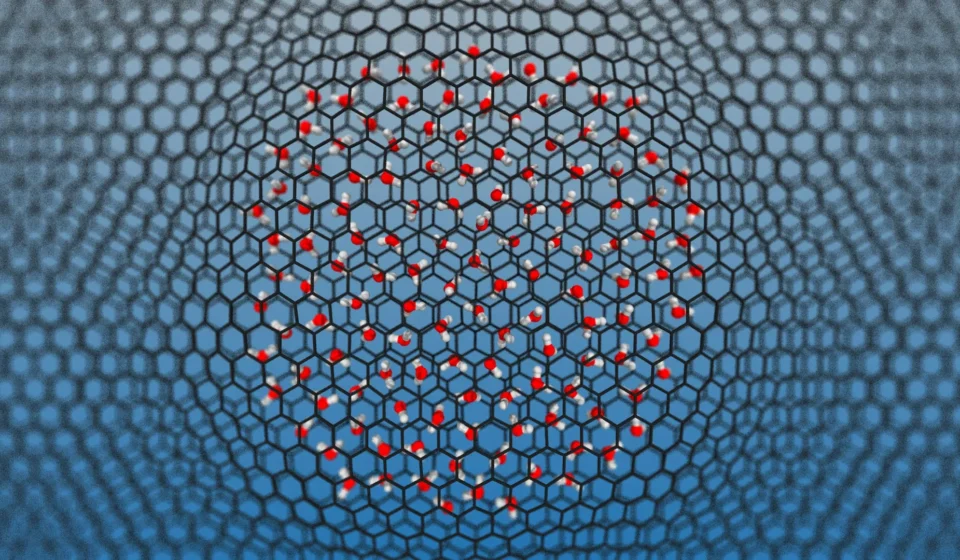
The researchers turned to machine learning-accelerated simulations. By training algorithms to reproduce quantum mechanical accuracy at a fraction of the computational cost, the team was able to model water trapped between sheets of graphene and hexagonal boron nitride (hBN).
The Evolution of the Study
- Phase One: Modeling the Confinement: The team began by isolating water within 2D materials. These sheets, only one atom thick, provided a pristine, controllable environment to observe water behavior.
- Phase Two: The Pressure Revelation: As simulations progressed, the researchers identified a critical variable that had been systematically overlooked: internal pressure. They discovered that the van der Waals forces pulling these 2D sheets together were so potent that they exerted gigapascals of pressure on the trapped water—equivalent to the crushing weight found deep within the Earth’s mantle—even without any external mechanical force.
- Phase Three: Reconciling the Data: Once the team accounted for this "hidden" pressure, the conflicting results of the past decade began to vanish. When compared under equivalent thermodynamic conditions—specifically the same chemical potential—the effect of confinement essentially disappeared.
Supporting Data: The Role of Thermodynamics and Pressure
The crux of the study’s argument is that the previous "conflicting" results were, in fact, artifacts of experimental design. Scientists were comparing systems with different effective pressures or densities without realizing it.
"When we compared systems under equivalent thermodynamic conditions, the effect of confinement largely disappeared," says Xavier R. Advincula, the lead author of the study. "In other words, confinement alone does not intrinsically change water’s reactivity. The contradictions in the literature were largely because scientists were comparing systems at different effective pressures or densities without realizing it."
The team’s simulations showed that water droplets confined between graphene or hBN sheets experience extreme internal pressures. When the researchers compared this confined water with ordinary "bulk" water subjected to the same pressure levels, both samples behaved identically. This suggests that the increased reactivity often observed in previous experiments was a byproduct of the intense pressure generated by the confining materials, not a magical property of the nanoscale geometry itself.
Official Responses and Expert Insight
The findings have been hailed as a transformative framework for nanoscale chemistry. By stripping away the misconceptions surrounding "confinement effects," the researchers have provided a clearer roadmap for future experimentalists.
Prof. Angelos Michaelides of the Yusuf Hamied Department of Chemistry at the University of Cambridge, who oversaw the project, emphasized the elegance of the findings. "What surprised us most was how much of the apparent confinement effect could be explained by thermodynamics," Michaelides noted. "Once pressure and chemical potential are properly accounted for, a great deal of the complexity simply falls into place."
Dr. Christoph Schran, of the Theory of Condensed Matter Group at the Cavendish Laboratory, highlighted the shift in perspective for engineers. "This research provides a new framework for understanding water chemistry at the nanoscale and helps reconcile a decade of apparently conflicting studies," Schran said. "More importantly, the work offers a practical design principle for engineering nanoscale chemical environments."
The Variable of Surface Chemistry
While the study demystified the role of pressure, it did not entirely rule out the influence of the confining material. The researchers discovered that while "confinement" is a physical constraint, "surface chemistry" is a chemical participant.
In the case of hexagonal boron nitride (hBN), the researchers observed that hydroxide ions ($OH^-$) formed around the edges of the water droplet bonded chemically with the hBN surface. This interaction stabilized the ions, effectively lowering the energy barrier for water splitting and increasing dissociation. Conversely, graphene—being chemically inert—exerted no such influence.
This distinction is vital: it implies that the surrounding material is not just a passive container, but an active participant that can be "tuned" to either promote or inhibit chemical reactions.
Implications for Energy and Technology
The implications of these findings extend far beyond theoretical physics; they provide a blueprint for the future of clean energy technology.
Hydrogen Fuel Cells and Batteries
In hydrogen fuel cells, the efficiency of water splitting is a primary limiting factor. By understanding how to select confining materials that favor the stabilization of dissociation products, engineers can design more efficient catalysts that require less energy to initiate the necessary chemical reactions. Similarly, in the development of solid-state batteries, this new understanding of water chemistry at the nanoscale can help prevent the degradation of electrolytes and improve ion transport.
Ion-Selective Membranes
The ability to control water reactivity through surface chemistry and pressure management opens doors for advanced desalination and filtration technologies. By tailoring the material of the membrane, scientists can now predict with greater accuracy how ions will behave as they pass through, leading to more selective and energy-efficient separation processes.
Looking Ahead: The Future of Nanoscale Engineering
The Cambridge team is not stopping at these initial findings. Their research program is already pivoting toward more complex, realistic scenarios. The next phase of their work will involve:
- Defect Analysis: Studying how structural defects and edges in materials—which are unavoidable in industrial manufacturing—impact the water-trapping environment.
- Experimental Validation: The team is collaborating with laboratory groups to compare their computational predictions against real-world observations using high-resolution spectroscopic and nanofluidic techniques.
- Material Screening: The researchers are currently screening large families of two-dimensional materials to identify the optimal "chemical cocktail" that can suppress or enhance water reactivity for specific industrial applications.
As we continue to push the boundaries of what is possible at the nanoscale, this study stands as a testament to the power of combining machine learning with fundamental thermodynamics. By finally resolving the long-standing debate over water splitting, the researchers have turned a confusing field of conflicting data into a rigorous, predictable science. The path forward is no longer defined by the mystery of the "nano-environment," but by the deliberate, precise engineering of the materials that surround it.
In the realm of nanotechnology, where size is everything, this study has proven that sometimes the most important discovery isn’t about the space itself, but how we choose to influence the forces within it.