



Powering the Future of Freight: Toyota and Iveco’s EMPOWER Project Paves the Way for Next-Generation Hydrogen Heavy-Duty Transport

BRUSSELS / TOKYO — In the high-stakes transition toward zero-emission commercial transport, range anxiety, heavy payloads, and long refueling downtimes have long plagued fleet operators. While battery-electric vehicles (BEVs) have made substantial inroads in urban distribution and regional hauling, long-haul heavy-duty freight has demanded a more robust, energy-dense alternative.
Enter the EMPOWER project, a heavily backed, EU-funded Horizon Europe initiative that represents hydrogen technology’s most direct, uncompromising answer yet to the limitations of heavy-duty European road transport.
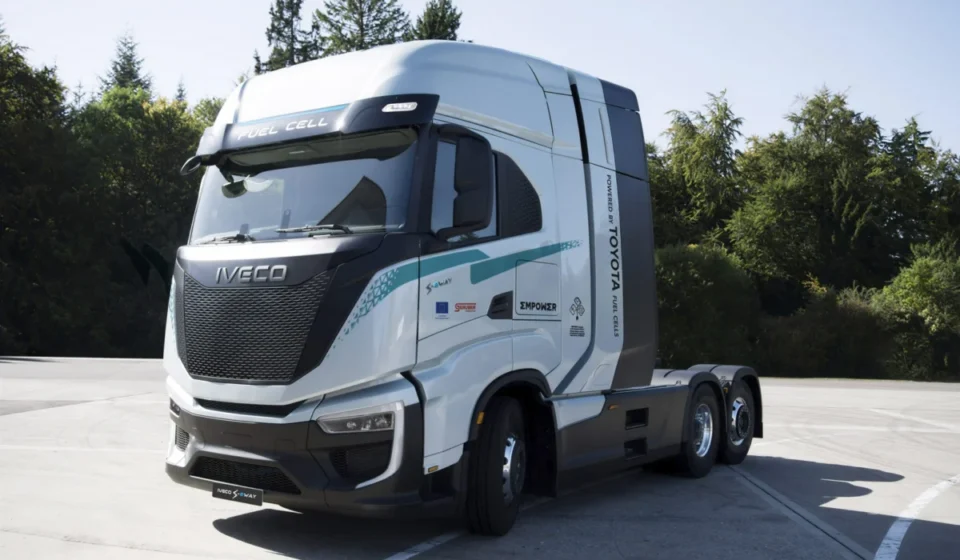
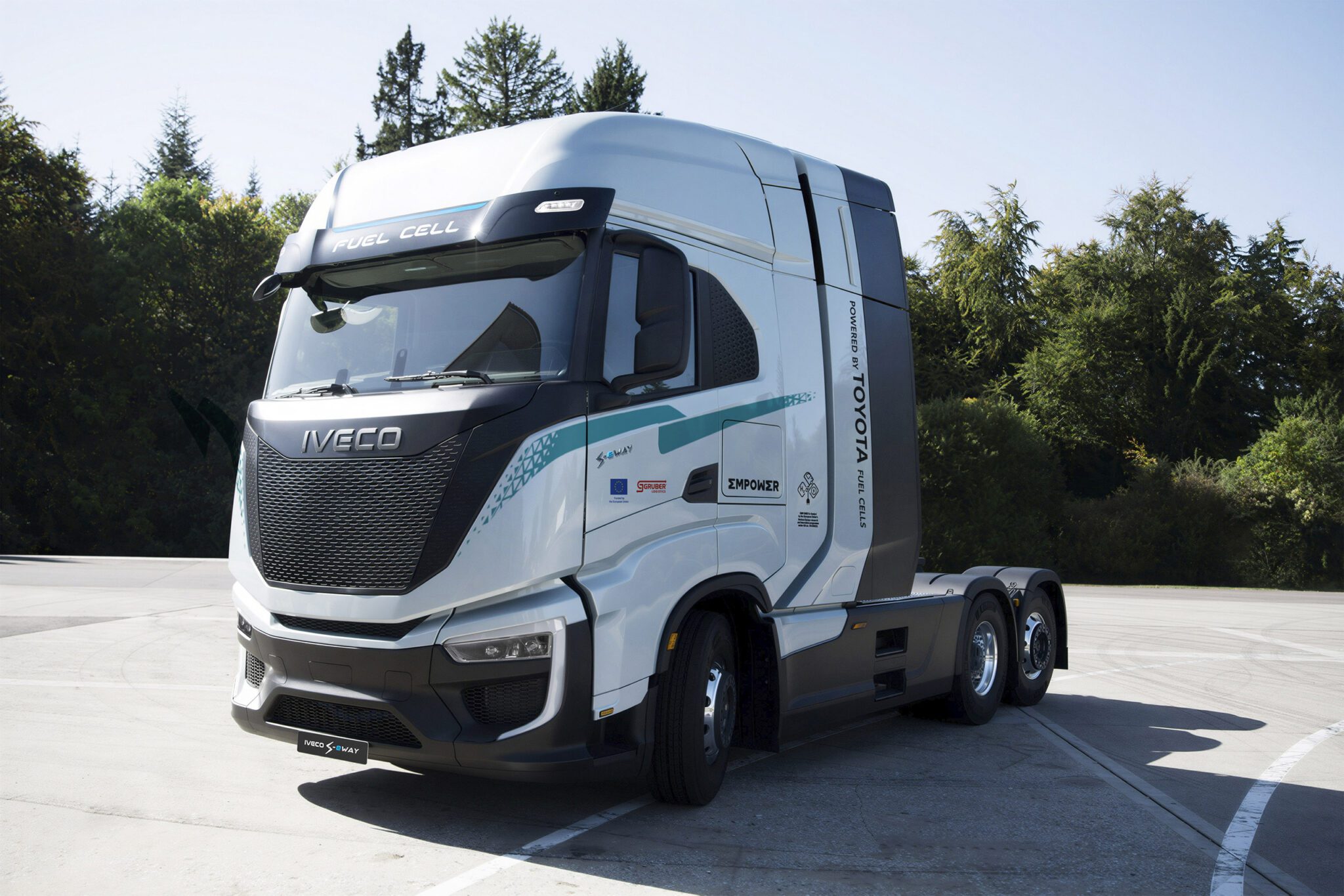
At the heart of this groundbreaking collaboration are two industrial heavyweights: Toyota Motor Europe and Iveco Group. By combining Toyota’s three decades of pioneering hydrogen fuel cell (FCEV) research with Iveco’s deep expertise in commercial vehicle manufacturing and real-world fleet integration, the partnership aims to redefine what is possible for long-haul logistics. The flagship of this initiative is the next-generation Iveco S-eWay Fuel Cell truck—a vehicle designed to shatter conventional performance ceilings with a staggering 900-kilometer range, a robust 300 kW combined fuel cell output, and a lighter, highly optimized architecture.
Main Facts: The Anatomy of the EMPOWER Project
The EMPOWER project is not merely a theoretical research paper; it is an applied engineering initiative designed to fast-track the commercial viability of hydrogen fuel cells in European freight corridors. Funded by the European Union’s flagship research and innovation program, Horizon Europe, the project brings together technological prowess from across the continent and beyond.
Core Specifications of the Iveco S-eWay Fuel Cell:
- Power Output: A combined 300 kW fuel cell system supplied entirely by Toyota.
- Target Operating Range: In excess of 900 kilometers (approx. 560 miles) on a single fueling, effectively covering long-haul cross-border routes without mid-trip recharging halts.
- System Durability: Engineered to achieve more than 25,000 operating hours of heavy-duty commercial durability, aligning with the stringent lifecycle requirements of commercial fleet operators.
- Optimized Architecture: By refining the power delivery and energy management, engineers have successfully reduced the onboard high-voltage battery capacity to half that of the preceding generation design, significantly cutting down vehicle weight, lowering raw material dependency, and increasing payload capacity.
- Timeline to Validation: Initial validation work is officially scheduled to commence in the final quarter of 2026, paving the way for extensive on-road trials in early 2027.
By pooling their respective strengths, Toyota and Iveco are tackling the triad of barriers that have historically slowed hydrogen adoption: cost, durability, and infrastructure dependency. Toyota brings decades of industrial and automotive hydrogen deployment—honed through passenger cars like the Mirai, buses, and stationary generators—while Iveco contributes battle-tested commercial vehicle architecture derived from real-world European logistics operations.
Chronology: The Road to EMPOWER
The genesis of the EMPOWER project did not happen overnight. It is the culmination of years of targeted research, strategic partnerships, and iterative learning from earlier European clean-transport initiatives.
1. The Foundation: Decades of Hydrogen R&D
Toyota’s involvement in hydrogen dates back over thirty years, beginning in the early 1990s when the company initiated its fuel cell passenger car program. Over the decades, Toyota expanded its vision beyond cars, scaling its proprietary modular fuel cell systems for buses, heavy-duty trucks, trains, boats, and stationary industrial generators. This versatility allowed Toyota to refine its stack technology, driving down manufacturing costs while drastically improving power density and reliability.
2. The Stepping Stone: The H2Haul Project
Iveco’s path to EMPOWER was forged through its active participation in the H2Haul (Hydrogen Fuel Cell Heavy-Duty Trucks for European Deployment) project. Co-funded by the Clean Hydrogen Partnership, H2Haul saw the deployment and validation of first-generation hydrogen fuel cell trucks in real-world, demanding operational environments across Europe.
Through H2Haul, Iveco engineers gathered invaluable telemetry data regarding driver behavior, thermal management under heavy loads, refueling station protocols, and component wear-and-tear. These real-world insights revealed clear areas for improvement—specifically, the need to reduce system weight, improve stack durability past the 20,000-hour mark, and minimize secondary battery footprints.
3. The Launch of EMPOWER and the S-eWay Evolution
Capitalizing on the lessons learned from H2Haul, Iveco and Toyota formalized their expanded cooperation under the Horizon Europe-backed EMPOWER framework. The goal was simple yet ambitious: leapfrog first-generation limitations and develop a commercial-ready platform capable of competing directly with diesel trucks on total cost of ownership (TCO) and operational uptime.
- Late 2026: Scheduled kickoff for rigorous factory and track validation work on the S-eWay Fuel Cell.
- First Half of 2027: On-road trials begin across designated European transport corridors.
- Post-2027: The program is intended to serve as the direct pilot and blueprint for full-scale commercial deployment across the continent.
Supporting Data: Why Hydrogen Matters for Heavy-Duty Transport
To understand the significance of the EMPOWER project, one must examine the fundamental physics of heavy-duty road freight. Long-haul trucks (typically exceeding 40 tons Gross Vehicle Weight) operate under grueling conditions. They travel upwards of 1,000 kilometers a day, operate nearly 24/7, and must carry heavy cargo payloads to remain economically viable.
The Battery-Electric Dilemma
While battery-electric trucks excel in regional distribution and urban delivery, scaling BEV technology for long-haul continental transport introduces severe engineering roadblocks:
- Weight Penalties: To achieve a 900-kilometer range solely on lithium-ion batteries, a heavy-duty truck would require a massive battery pack weighing several tons. This directly eats into the vehicle’s legal payload capacity, reducing profitability for hauliers.
- Charging Infrastructure & Grid Strain: Recharging a fleet of heavy-duty electric trucks requires megawatt-level charging stations. Implementing these stations places an unprecedented strain on local electrical grids, requiring multi-million-dollar substation upgrades.
- Downtime Costs: Long-haul logistics operate on tight margins where time is literally money. Spending hours tethered to a high-capacity charger disrupts delivery schedules.
The Hydrogen Advantage
Hydrogen fuel cell electric vehicles (FCEVs) offer a compelling alternative that mirrors the operational characteristics of diesel-powered trucks:
- Rapid Refueling: Filling a hydrogen tank takes roughly 10 to 15 minutes—comparable to pumping diesel, allowing trucks to get back on the road immediately.
- High Energy Density: Hydrogen stores significantly more energy per kilogram than any battery chemistry currently available, allowing heavy trucks to maintain long-range capabilities without sacrificing payload capacity.
- Zero Tailpipe Emissions: The only byproduct of the electrochemical reaction inside a Toyota fuel cell stack is pure water vapor.
The EMPOWER project optimizes these inherent benefits. By shrinking the onboard secondary battery to half the size of previous iterations, Iveco and Toyota have successfully reduced the vehicle’s tare weight, lowered production costs, and maximized the cargo-carrying efficiency of the S-eWay Fuel Cell.
Official Responses and Industry Perspectives
Leadership from both Toyota and Iveco have emphasized that the EMPOWER project represents a watershed moment for European decarbonization targets and industrial competitiveness.
Representatives from Toyota Motor Europe highlighted the maturation of their fuel cell technology, noting that the company’s decades of multi-sector deployment have prepared them for the rigorous demands of heavy freight. "Our collaboration with Iveco under the EMPOWER project demonstrates the scalability and reliability of Toyota’s fuel cell systems. By adapting our technology for heavy-duty commercial vehicles, we are not only addressing environmental imperatives but also delivering practical solutions that fleet operators can rely on day in and day out," a Toyota spokesperson noted.
Similarly, Iveco Group executives have underscored the strategic necessity of hydrogen in achieving Europe’s ambitious Green Deal goals. Drawing on their extensive experience from the H2Haul initiative, Iveco engineers designed the S-eWay Fuel Cell to be a drop-in replacement for traditional internal combustion engine trucks.
"European long-haul hauliers face mounting pressure to decarbonize without compromising on operational efficiency," an Iveco project lead stated. "The S-eWay Fuel Cell developed through EMPOWER directly addresses the core operational objections—range anxiety, durability concerns, and payload compromises—that have historically slowed hydrogen adoption. We are building a truck that drivers will want to drive and operators will find economically indispensable."
Independent analysts in the European commercial vehicle sector have also praised the timing of the project. As the European Union tightens carbon dioxide emission standards for heavy-duty vehicles—mandating significant fleet-wide reductions by 2030 and beyond—manufacturers are under intense pressure to diversify their zero-emission portfolios. The Toyota-Iveco partnership provides a viable technological lifeline for logistics firms operating outside dense metropolitan areas where hydrogen refueling corridors are actively expanding under the Alternative Fuels Infrastructure Regulation (AFIR).
Implications: Transforming European Logistics and Beyond
The implications of the EMPOWER project extend far beyond the technical specifications of a single truck. If successful, the initiative could trigger a transformative domino effect across the entire European transport ecosystem.
1. Overcoming the "Chicken-and-Egg" Infrastructure Dilemma
One of the primary roadblocks to hydrogen adoption has been the classic infrastructure paradox: hauliers refuse to buy hydrogen trucks because of a lack of fueling stations, and energy companies refuse to build stations due to a lack of vehicles on the road.
By creating a highly attractive, commercially viable heavy-duty truck with a 900+ km range, the EMPOWER project gives fuel providers the confidence to invest in hydrogen refueling infrastructure along major Trans-European Transport Network (TEN-T) corridors. Fleets operating fixed-route long-haul logistics can anchor hydrogen demand, making refueling station networks economically sustainable.
2. Strengthening European Energy Autonomy
By accelerating the transition away from imported diesel toward locally produced green hydrogen (generated via renewable-powered electrolysis), the project aligns with the European Union’s broader goals of energy security and industrial resilience. It positions European manufacturing at the forefront of global clean-tech innovation, ensuring that European companies retain their competitive edge in the global commercial vehicle market.
3. Redefining Fleet Economics and TCO
For fleet managers, the ultimate metric of success is Total Cost of Ownership. While the initial purchase price of fuel cell trucks remains higher than diesel equivalents due to low-volume production, initiatives like EMPOWER are designed to bridge that gap. By increasing durability past 25,000 operating hours, reducing battery component costs, and maximizing payload space, the S-eWay Fuel Cell paves the way for cost parity over the vehicle’s operational lifecycle.
4. A Blueprint for Global Scalability
Although initially targeted at the European market, the engineering frameworks, modular fuel cell integration techniques, and durability benchmarks established under the EMPOWER project possess global applicability. North American and Asian markets—which face similar long-haul freight challenges—will undoubtedly monitor the 2026 validation trials and 2027 on-road tests with intense interest.
Conclusion
As the commercial vehicle industry steers toward an electrified horizon, the Toyota and Iveco EMPOWER project stands out as a masterclass in strategic collaboration. By refusing to treat hydrogen and battery-electric technologies as mutually exclusive, and instead applying hydrogen precisely where it is most needed—heavy-duty, long-distance freight—the partners are delivering a pragmatic, high-performance solution.
With validation trials slated for late 2026 and on-road testing kicking off in early 2027, the Iveco S-eWay Fuel Cell is poised to transition from drawing boards to asphalt highways. For European hauliers grappling with the dual pressures of environmental compliance and bottom-line profitability, hydrogen’s most direct answer to range anxiety is no longer a distant vision of the future—it is arriving right on schedule.