




Chery’s British Invasion: How the Chinese Automotive Giant Sights Volkswagen and Redefines the UK Mass Market

By Stewart Burnett
Automotive Industry Analysis
Main Facts
Chinese automotive titan Chery is officially rewriting the playbook for international market expansion, identifying the United Kingdom as its single strongest overseas growth opportunity. Following a blistering commercial ascent that has already seen the company shatter its 2026 sales projections years ahead of schedule, Chery is setting its sights on an even more ambitious target: challenging Volkswagen directly and cementing its place as a dominant provider of accessible "people’s cars" for the British mass market.
The strategic pivot, confirmed by Chery UK Manager Farrell Hsu in an interview with Bloomberg, centers on a rapid product offensive. Over the next twelve months, Chery will launch four new or updated models in the UK, including a dedicated electric SUV and a brand-new flagship family vehicle bearing the Tiggo X badge.
This aggressive push is fueled by a multi-brand ecosystem—including Chery, Jaecoo, Omoda, and Lepas—that collectively commands roughly 8% of the total UK automotive market. This performance dwarfs Chery’s initial 3% market share goal set just a year ago. Notably, Chinese automakers as a collective now capture more than a fifth of all new vehicle sales in Britain.
Rather than relying purely on battery-electric vehicles (BEVs), Chery’s UK charge is being spearheaded by plug-in hybrid electric vehicles (PHEVs). The company’s proprietary "Super Hybrid" powertrain currently accounts for roughly 75% of its total UK sales, striking a chord with motorists seeking a bridge between traditional internal combustion engines and full electrification.
Furthermore, to cement its long-term viability in the region, Chery is establishing a dedicated research and development (R&D) centre at the UTAC Millbrook proving ground in Bedfordshire. Slated to open in late autumn, the facility will act as a critical "translation center," bridging the gap between British consumer feedback and Chinese engineering headquarters.
Chronology of Expansion
The rapid rise of Chery and its sibling brands within the British Isles is a masterclass in swift market penetration. The timeline of their ascent highlights a calculated, step-by-step strategy:
- Late 2024: The Jaecoo brand officially launches in the UK, introducing the Jaecoo 7 flagship SUV. Bolstered by aggressive pricing and a striking, boxy silhouette that earns it the tongue-in-cheek moniker "Temu Range Rover," the vehicle quickly captures the public imagination.
- March: Buoyed by strong early traction, the Jaecoo 7 achieves a historic milestone, emerging as the best-selling car outright in the UK for the month of March, with cumulative sales nearing 53,000 units since launch.
- Mid-2025: Chery officially introduces its eponymous brand to the UK market, building upon the groundwork laid by sister brand Jaecoo. The parent brand quickly captures 2.5% of the total market share.
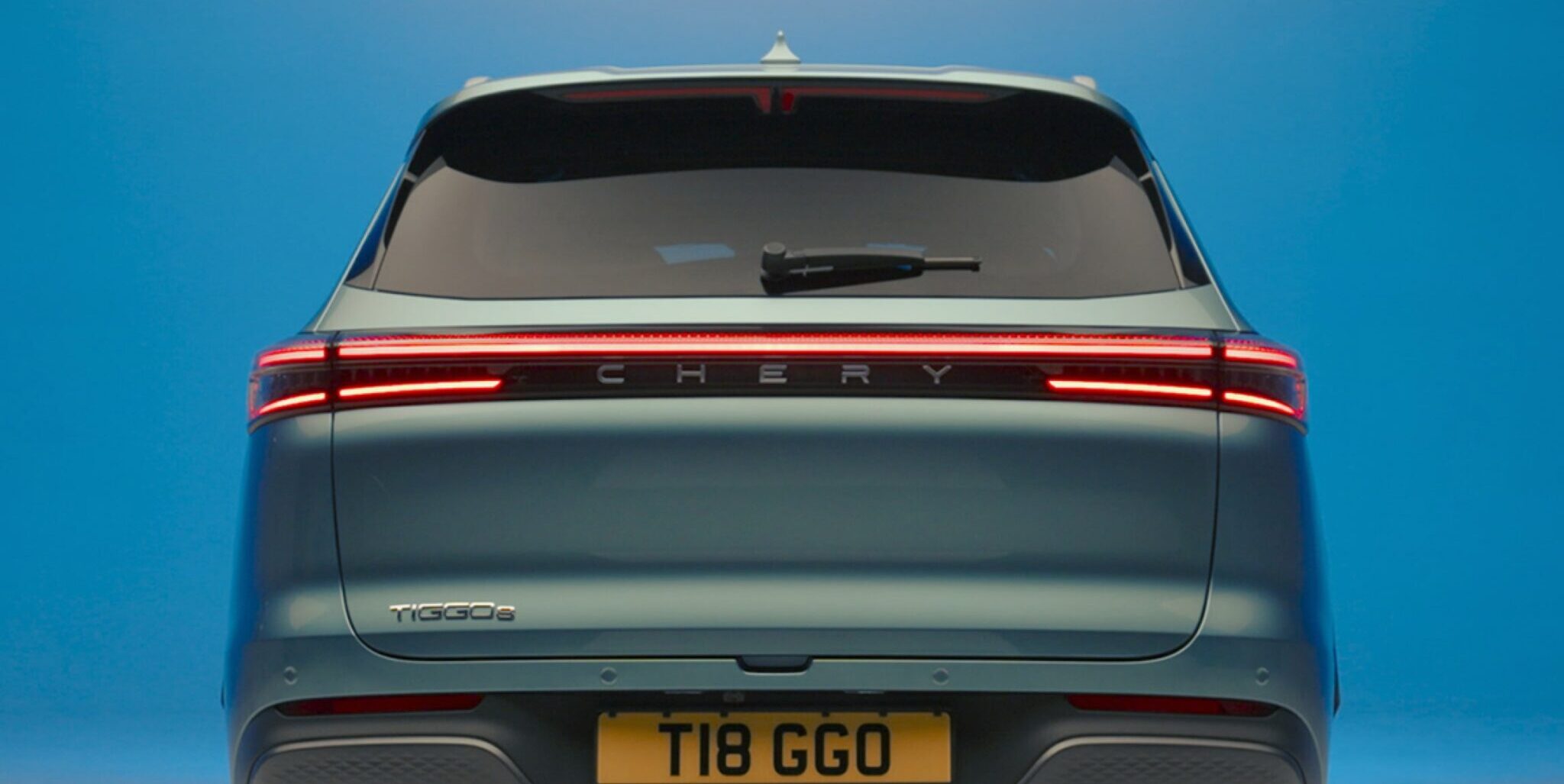
- April (Beijing Motor Show): Chery unveils the Tiggo X, a massive, five-metre, seven-seat flagship SUV boasting a lifestyle-oriented boxy design and an advanced PHEV powertrain, earmarked specifically for Western export markets.
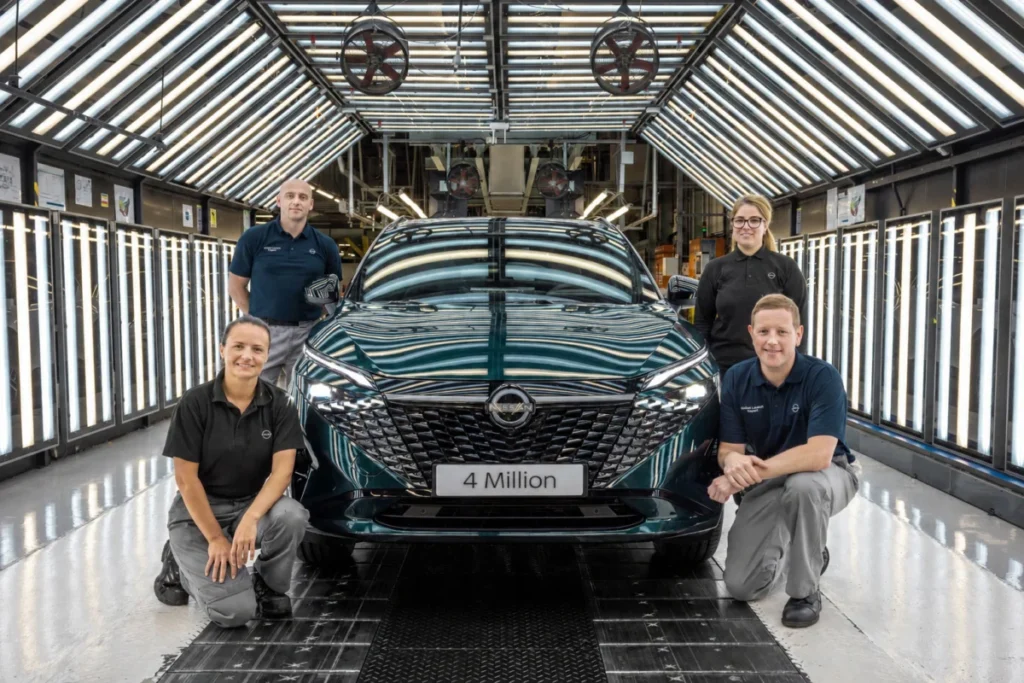
- September 11: Chery confirms a major expansion of its UK footprint, announcing four new or updated model launches over the coming year and revealing that its 2026 sales targets have already been surpassed. Discussions regarding potential manufacturing partnerships—including utilizing spare capacity at Nissan’s Sunderland plant—are also confirmed to be ongoing.
- Late Autumn (Upcoming): Chery prepares to officially open its R&D and testing facility at the UTAC Millbrook proving ground in Bedfordshire to localize vehicle dynamics and tailor future products to British driving preferences.
Supporting Data and Market Dynamics
The extraordinary success of Chery in the UK cannot be viewed in isolation; it is the result of a unique confluence of economic conditions, shifting consumer perceptions, and structural gaps in the British automotive landscape.
Market Share Breakdown
- Jaecoo: ~4.3% market share (launched ~2024)
- Chery: ~2.5% market share (launched mid-2025)
- Omoda & Lepas: Combined contribution pushing total group share to roughly 8%.
- Wider Chinese Brand Presence: Collectively, Chinese-owned automotive brands now claim over 20% of the total UK new car market.
Product Acceptance and the "Temu Range Rover" Phenomenon
A key driver of this success has been the Jaecoo 7. Nicknamed the "Temu Range Rover" due to its superficial aesthetic similarities to vehicles produced by Jaguar Land Rover (JLR), the SUV undercuts domestic and European luxury alternatives by a substantial margin while offering high levels of standard equipment, modern infotainment, and hybrid efficiency.
Farrell Hsu noted a distinct psychological shift among British buyers: "Before, people would think about Chinese products and think we are cheap. But now we are different because we provide better products with a little cheaper price."
The Absence of a Homegrown Mass-Market Champion
According to Chery leadership, the UK market possesses a structural vulnerability—or opportunity—that sets it apart from continental European neighbors like Germany or France.
"Unlike Germany or France, which have Volkswagen and Renault as the de-facto national options, the UK lacks a homegrown mass-market automaker," industry analysts note.
While iconic British brands such as Jaguar, Land Rover, Aston Martin, Rolls-Royce, and Bentley define the nation’s automotive heritage, they all occupy the exclusive luxury segment. MG, historically British, is now owned by China’s state-owned SAIC. Consequently, British consumers carry virtually no brand loyalty to a domestic mass-market badge, lowering the psychological barrier to entry for incoming Chinese brands.
Furthermore, the UK currently maintains a tariff-free environment for vehicles imported from China, granting brands like Chery a distinct pricing advantage that is currently unavailable in heavily protected markets within the European Union.
Official Responses and Strategic Vision
Chery’s leadership has been notably transparent about both the mechanics of their current success and the hurdles they must clear to achieve long-term dominance.
The PHEV Backbone
While many legacy automakers are pivoting aggressively toward pure battery-electric vehicles, Chery views plug-in hybrids as the indispensable engine of its growth. The company’s Super Hybrid powertrain accounts for 75% of its UK sales to date.
To address diverse consumer needs, Chery envisions a future where buyers can customize their vehicle’s electric range in a manner akin to selecting storage capacity on a smartphone. While the smaller Tiggo 4 utilizes a compact 1.8 kWh hybrid battery, larger stablemates like the Tiggo 7, 8, and PHEV-focused models offer high-capacity plug-in options scaling up to 34.4 kWh. The upcoming Tiggo X flagship features an expansive PHEV layout, boasting an impressive 124-mile electric-only range on China’s CLTC test cycle (though expected to adjust downward under stricter European WLTP testing standards).
Bridging the Manufacturing Gap
Demand for Chery and Jaecoo products in the UK has frequently outpaced the company’s shipping logistics from mainland China. To solve this bottleneck, Chery has held persistent discussions regarding utilizing spare production capacity at Nissan’s manufacturing plant in Sunderland. However, Hsu noted that these plans are "still under discussion," complicated by regulatory questions surrounding whether vehicles built in the UK will qualify for future "Made in Europe" content rules.
The Millbrook "Translation Centre"
Rather than imposing rigid, top-down product designs from its headquarters in Wuhu, China, Chery is institutionalizing local feedback. The upcoming R&D center at Bedfordshire’s UTAC Millbrook proving ground will serve as a vital feedback loop.
"We will test everything and then tell HQ what they need to do," Hsu explained, emphasizing that the Bedfordshire site will translate subjective British consumer preferences, media reviews, and road conditions into actionable engineering data.
Acknowledging the Benchmark
In a display of candor rare among disruptive market entrants, Hsu openly admitted that Chinese manufacturers are still playing catch-up in terms of vehicle dynamics and brand heritage:
"So many people like the German feeling; cars that drive like a German car… This is something we need to learn. Maybe in the future we can educate other markets, but currently we need to learn from them."
Implications for the Global and UK Automotive Industry
Chery’s triumphant march through the British market carries profound ramifications for the broader automotive landscape, signaling shifts in manufacturing, competition, and consumer trust.
1. Direct Pressure on Legacy Giants
By explicitly targeting Volkswagen, Chery is signaling that Chinese automakers no longer view themselves as niche alternatives or budget runabouts. By offering high-specification SUVs equipped with flexible PHEV powertrains at highly competitive price points, Chery and its sister brands are directly squeezing European and Japanese legacy volume brands that have struggled with software integration and escalating production costs.
2. The Shift in Global Footprints
Chery’s strategic pivot toward the UK coincides with its official withdrawal from the Russian market. This redirection of export capital, engineering talent, and marketing resources toward Western Europe and the UK highlights a sophisticated corporate strategy focused on securing high-margin, brand-building markets that can validate the automaker’s global ambitions.
3. The PHEV Pragmatism
The overwhelming consumer preference for Chery’s Super Hybrid powertrain—commanding three-quarters of its sales—serves as a cautionary data point for policymakers and manufacturers who assumed an unyielding, accelerated transition straight to pure battery-electric vehicles. By providing substantial real-world electric range paired with the security of a liquid-fuel backup, Chery has tapped into consumer anxiety surrounding public charging infrastructure, proving that PHEVs remain a vital transition tool.
4. Redefining UK Manufacturing and Import Dynamics
Should Chery successfully finalize a production agreement at Nissan’s Sunderland facility, it would fundamentally alter the domestic UK manufacturing ecosystem. It would transform Chinese automotive brands from simple import competitors into localized economic contributors, creating British jobs while leveraging existing plant infrastructure.
Ultimately, Chery’s rise in the UK demonstrates that brand heritage can be rapidly substituted by value, aesthetic confidence, and product execution. As the brand opens its Bedfordshire R&D center and prepares to roll out the Tiggo X, the traditional European automotive establishment faces a formidable, fast-learning competitor firmly entrenched in Britain’s driveway.