


The Silent Revolution: How Autonomous Fleets Are Redefining the Future of American Agriculture

For generations, the American farmer has been the ultimate pragmatist. From the transition of animal-drawn plows to the dawn of the internal combustion engine, and from the introduction of rudimentary GPS to the precision-guided machinery of the early 2000s, agriculture has always been an industry of adaptation. Yet, today’s farmers face a convergence of existential threats that dwarf the challenges of the past: a shrinking rural labor pool, volatile input costs, and an increasingly erratic climate that renders seasonal predictability a thing of the past.
As the industry grapples with these pressures, the central question has shifted from "Should we adopt autonomous technology?" to "Is the technology truly ready for the grueling realities of a modern agricultural operation?"
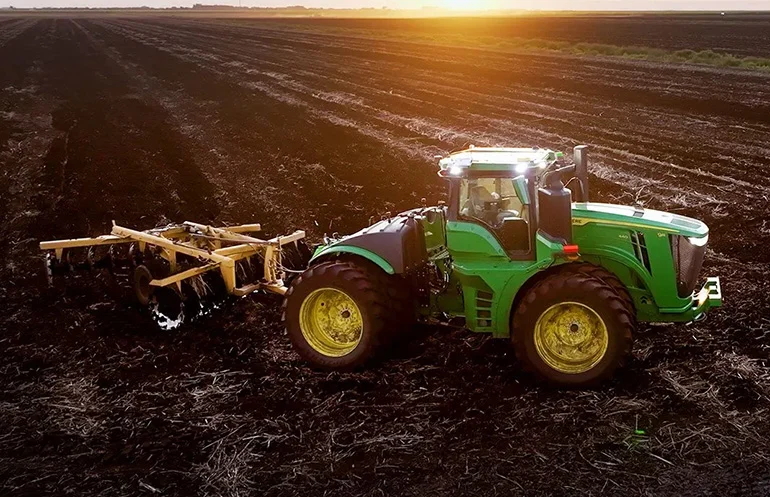
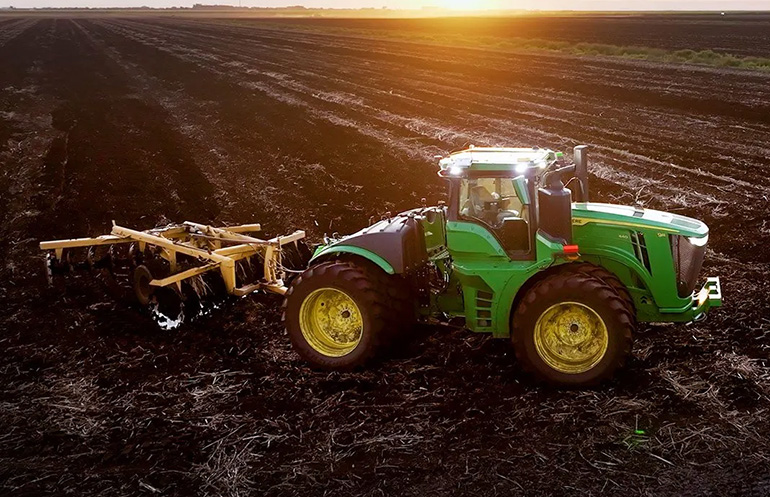
According to Mel Torrie, founder and CEO of Autonomous Solutions Inc. (ASI), the answer is a resounding yes. This isn’t a theoretical promise. This summer, a landmark partnership between ASI, U.S. Sugar Corp., and Everglades Equipment Group marked the deployment of the largest autonomous tractor fleet in the history of American sugarcane farming. Spanning hundreds of thousands of acres across South Florida, this deployment represents a critical pivot point for the global agricultural sector.
The Operational Reality: A Full-Scale Deployment
This project is not a pilot study or a fleeting proof of concept. It is a full-scale operational integration across one of the most logistically complex agricultural footprints in the United States.
U.S. Sugar, a titan in the Florida agricultural landscape since 1931, manages 255,000 acres across five counties. The company is a pillar of its community, sustaining 3,000 local jobs. By integrating ASI’s "Mobius" fleet orchestration platform, U.S. Sugar has effectively transformed its existing John Deere tractor fleet into a synchronized, autonomous workforce.
"I founded ASI with a simple, almost naive question: Why are we still putting people in the most dangerous and tedious seats of machinery?" says Torrie. "That question has driven our development for 25 years. Today, we aren’t theorizing. We are orchestrating millions of tons of work across mining, logistics, and now, agriculture."
Chronology: From Industrial Roots to Agricultural Transformation
The journey to this moment began over two decades ago at Utah State University, where Torrie first began exploring the potential of unmanned systems.
- 2000–2010: ASI establishes itself as a leader in industrial automation, focusing on high-stakes environments like mining and hazardous waste cleanup. The company develops the foundational safety protocols and drive-by-wire technologies that would later become industry standards.
- 2015–2020: The Mobius platform evolves into a manufacturer-agnostic orchestration system. This is a critical development, as it allows operators to integrate autonomous capabilities into existing fleets rather than requiring a total, cost-prohibitive equipment overhaul.
- 2023–2025: ASI engages with Everglades Equipment Group to pilot the integration of Mobius with John Deere hardware specifically for the specialized needs of sugarcane farming.
- Summer 2026: The full-scale deployment commences in South Florida. The fleet begins autonomous land preparation and cultivation, immediately demonstrating improved consistency and efficiency over human-operated counterparts.
Supporting Data: Why Autonomy is a "Force Multiplier"
The economic argument for autonomy in agriculture is anchored in the concept of "labor multipliers." In modern farming, a weather event—such as a deep freeze—is often exacerbated by a lack of available hands. When a crop is at risk, timing is the primary variable in loss mitigation. If a crew is understaffed, or if the necessary operators are miles away, the delay in response can lead to catastrophic losses.
Florida’s agricultural sector recently felt this impact acutely, with unexpected freezes causing over $3.1 billion in estimated losses.
The Efficiency Gap
Autonomous systems remove the human constraints that typically slow down emergency response. With Mobius, one human supervisor can manage multiple vehicles simultaneously.
- Accuracy: Early field data indicates that autonomous tractors are achieving higher precision in land preparation than traditional human operators.
- Operational Continuity: By removing the need for rest breaks and shift changes, these tractors can work around the clock, particularly during critical windows where soil moisture or temperature necessitates rapid field action.
- Scalability: Because the system is manufacturer-agnostic, the model is inherently scalable. ASI has confirmed that the South Florida deployment is designed to expand across U.S. Sugar’s entire 255,000-acre footprint, with plans to include row crops like sweet corn and green beans in the near future.
Official Responses and the "Human-in-the-Loop" Philosophy
Perhaps the most sensitive aspect of the transition to autonomous farming is the impact on the workforce. When asked about the displacement of labor, both ASI and U.S. Sugar have been clear: this is a transition, not an elimination.
U.S. Sugar has committed to a policy of retention and reskilling. The company is actively transitioning current tractor operators into higher-skilled, supervisory roles. This shift reflects a fundamental truth in automation: the individuals who possess deep, generational knowledge of the soil, the specific machinery, and the delicate crop cycles are the best candidates to manage the robotic systems that support them.
"The people who know these fields are exactly who you want managing autonomous fleets," notes Torrie. "What changes is their exposure to risk and the physical toll of 12-hour shifts in a vibrating, dusty cab. We are trading physical strain for cognitive management, which is a significant win for the health and longevity of the agricultural workforce."
Implications for Global Agriculture
The implications of the Florida deployment extend far beyond the sugar cane fields of the South. As the world population grows, the pressure on arable land to produce more with less input—both labor and chemical—will intensify.

1. The Death of the "Pilot Project"
The industry is moving past the era of small-scale robot trials. The success of the U.S. Sugar deployment signals to the market that large-scale, enterprise-level autonomy is now a viable, "ready-to-deploy" technology. This will likely force a consolidation among equipment manufacturers, who must now decide whether to build proprietary autonomous systems or partner with agnostic orchestration platforms like Mobius.
2. Economic Resilience
By decoupling production capacity from labor availability, large-scale farms can better insulate themselves from the shocks of the modern economy. This resiliency is essential for national food security. When farms can maintain operations regardless of crew variability, the volatility of food prices can be dampened, creating a more stable supply chain for the end consumer.
3. Sustainability and Precision
Autonomy enables a new level of precision in chemical application and land management. As robots become the standard for routine tasks, they can be programmed for sub-inch accuracy, reducing the over-application of fertilizers and pesticides. This is not only a cost-saving measure for the farmer but a major win for environmental stewardship and water table protection.
Conclusion: A Legacy of Innovation
The history of agriculture is a history of tools. From the plow to the tractor, each innovation has served to extend the reach of the human hand. Autonomous fleets are simply the next, albeit most significant, leap in this trajectory.
As Mel Torrie prepares to discuss the future of the robotics ecosystem at the upcoming RoboBusiness 2026 conference in Santa Clara, the conversation has moved from "if" to "how." For the next generation of farmers, the challenge will not be how to plow a field, but how to design the architecture that allows their land to be more productive, safe, and resilient than ever before.
The machines are running in South Florida, the crops are being tended with unprecedented precision, and the workforce is evolving. The future of farming is not about replacing the farmer—it is about providing the farmer with the tools to survive and thrive in an increasingly unpredictable world.