



The Evolution of Industrial Safety: From Simple Switches to Intelligent Perimeter Protection

In the modern automated factory, the boundary between human operator efficiency and machine-induced hazard is maintained by a complex ecosystem of safety-rated sensors, switches, and interlocks. While early industrial safety relied on rudimentary mechanical stops, contemporary systems have evolved into sophisticated components capable of edge computing, distributed control, and Industrial Internet of Things (IIoT) connectivity. These advancements provide reliability assurances that far exceed their non-safety counterparts, transforming the factory floor into a safer, more transparent environment.
The Foundation: Defining Industrial Safety Sensors and Switches
To understand modern safety, one must first distinguish between the primary feedback components: sensors and switches.

Sensors in an industrial context are sophisticated feedback mechanisms that detect the presence, absence, or state of workpiece objects and machine segments. They distill environmental conditions into actionable data, which is then transmitted to a controller to dictate subsequent machine responses.
Switches, by contrast, serve the critical function of physically interrupting or establishing power supplies. Often mechanical in nature, these components detect the specific positioning of machine elements. If conditions meet a preset safety criteria, the switch triggers an immediate power disconnect. This differs from standard electromechanical relays, which typically utilize a solenoid to bridge electrical leads; in safety-rated switches, the design prioritizes "positive-opening" operation, ensuring that the circuit is broken regardless of mechanical weld or degradation.

The Shift Toward Stringent Compliance
The industry has seen a move away from standard inductive proximity switches toward safety-rated variations that meet the rigorous IEC 60947 requirements for electromagnetic compatibility. These newer designs often incorporate coded subcomponents to prevent the "defeatability" common in older systems, where operators might use tape or conductive objects to bypass safety protocols.
Chronology of Safety Technology Development
The trajectory of safety components has moved from "passive" to "active" intelligence:

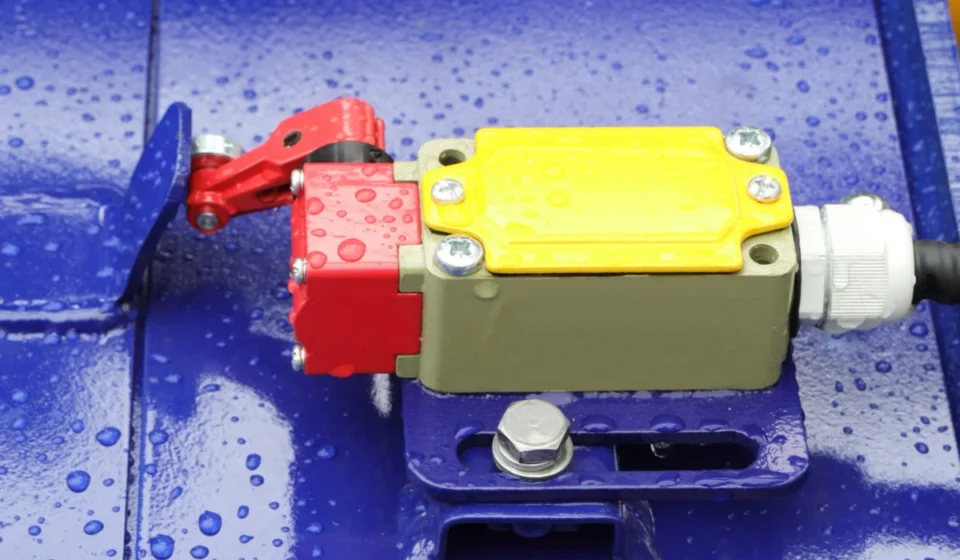
- Era 1: The Mechanical Age: Reliance on basic limit switches and mechanical cams. These were prone to wear and easily bypassed, leading to the development of the ISO 14119 standards to mitigate these risks.
- Era 2: The Electromechanical Integration: The introduction of solenoid-actuated interlocks and redundant relay systems. This allowed for the first true "interdependency" between machine power and guard status.
- Era 3: The Digital and Intelligent Age: The current landscape, characterized by RFID-coded actuators, smart guard locks, and IIoT-enabled diagnostic reporting. Safety components now perform edge processing, identifying internal faults—such as short circuits or contact degradation—before they manifest as downtime or safety incidents.
Supporting Data and Technical Categorization
ISO 14119 provides the definitive classification for interlocking devices, categorizing them based on their actuation method and susceptibility to tampering.
ISO 14119 Interlock Types
- Type 1: Mechanical switches using cams or hinges. While cost-effective, these are highly susceptible to being defeated.
- Type 2: Position switches actuated by coded keys or tongues. These offer higher security, as they require a unique mechanical interface to register a "closed" state.
- Type 3: Non-contact proximity switches with uncoded actuators (e.g., ultrasonic or basic magnetic). These are vulnerable to interference from common factory-floor objects.
- Type 4: Non-contact switches with uniquely coded RFID or optical tags. These are effectively "undefeatable" due to the infinite range of possible coding combinations.
Solenoid Fundamentals in Guard Locking
Solenoids act as the "muscles" of the safety system. By converting electrical input into linear or rotary mechanical force, they operate guard-locking bolts. Modern solenoid-based interlocks, such as the Schmersal AZM40, have miniaturized these capabilities, allowing for integration into compact machine designs while still providing locking forces up to 2,000 N.

To ensure reliability, engineers utilize redundant wiring—often wiring double-pole switches in series—to verify that both the position of the guard and the activation of the solenoid are confirmed by the controller before operation commences.
Official Standards and Regulatory Implications
Regulatory bodies, including the European Union via the Machinery Directive 2006/42/EC, have forced a shift in how machines are guarded. The primary goal is the prevention of "fault masking," a phenomenon where multiple safety sensors wired in series can hide a single component failure, potentially leaving an operator exposed.

Addressing the "Human Element"
Safety systems must balance protection with productivity. If a safety interlock is too cumbersome, operators will inevitably attempt to bypass it. Consequently, standards like ISO 12100 emphasize the need for "automatic start" functions—where closing a guard safely enables operation without requiring a manual reset—provided the risk assessment deems it appropriate.
Moreover, the industry has developed specific escape mechanisms to prevent the most dangerous scenarios:

- Emergency Release: Tool-free release from outside the zone for life-threatening fires.
- Auxiliary Release: Tool-assisted release for maintenance or clearing a faulty lock.
- Escape Release: Large, intuitive handles for operators to exit the perimeter from the inside, preventing entrapment.
Implications for Future Industrial Safety
The move toward "intelligent" safety components has profound implications for plant managers and machine builders alike.
Reduced Downtime Through Diagnostics
Modern interlocks do not just shut down a machine; they report why they were triggered. By leveraging fieldbus and IIoT protocols, maintenance teams can receive real-time alerts regarding an open gate, a misaligned actuator, or a failing solenoid coil. This transition from reactive to predictive maintenance is the cornerstone of Industry 4.0 safety.

The Challenge of Complexity
As safety systems become more complex, the risk of misconfiguration increases. Engineers must be wary of over-engineering the series connection of sensors. While newer connectivity modules allow for hundreds of sensors to be networked without losing diagnostic resolution, traditional hard-wired series circuits have a hard limit. Exceeding this limit can degrade the Performance Level (PLr) of the safety system, effectively rendering the machine less safe than its design intended.
Resilience and Cleanability
The trend in high-performance interlocks, particularly electromagnetic ones, is toward wear-free operation. Without physical latches that grind or break, these components offer significantly longer lifespans and are easier to clean—a critical requirement in food, beverage, and pharmaceutical manufacturing environments.

Conclusion
The evolution of machine-triggered safety components represents a fundamental shift in how we perceive the factory floor. We have moved beyond the days of simple mechanical stops, entering an era where safety devices act as an integrated, intelligent nervous system for machinery. By adhering to international standards like ISO 14119 and embracing technologies that offer both robust security and operational flexibility, manufacturers can create environments that are both highly productive and definitively safe for the human operator. As IIoT and edge computing continue to mature, the next generation of safety components will likely become even more invisible, providing protection that is seamless, diagnostic-heavy, and entirely reliable.