


Beyond the Mold: Concordia University’s Inverse 4D Printing Breakthrough Revolutionizes Composite Manufacturing

In a significant leap for material science and industrial manufacturing, researchers at the Concordia Centre for Composites have unveiled an innovative "inverse 4D printing" method. By leveraging the inherent anisotropic properties of carbon fiber-reinforced epoxy, the team has successfully produced curved vertical-axis wind turbine blades without the need for expensive, complex molds. This development, recently published in the journal Polymer Composites, promises to slash production costs and lead times while significantly enhancing the performance of renewable energy components.
Main Facts: The End of Traditional Tooling?
The manufacturing of composite components has long been tethered to the "tooling bottleneck." Historically, producing complex, curved aerodynamic structures required the creation of precise, dedicated molds—a process that is both time-consuming and capital-intensive.
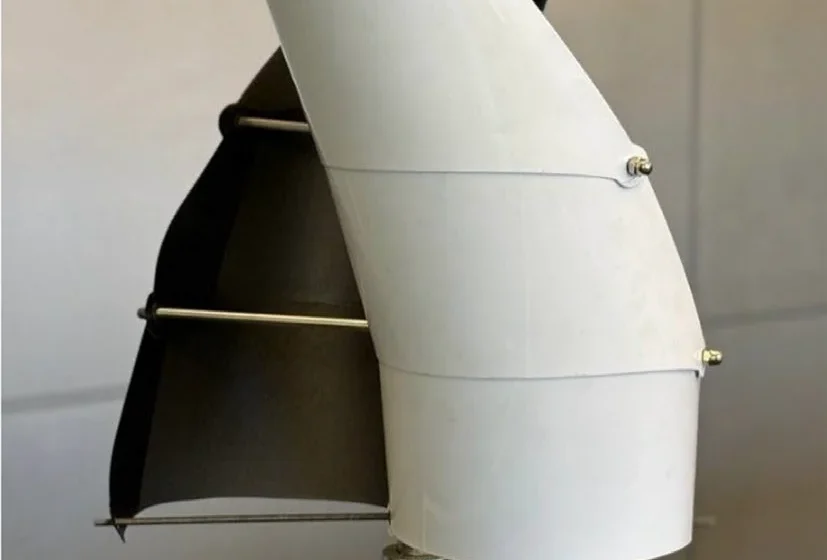
Researchers Emad Fakhimi and Suong Van Hoa have disrupted this paradigm. Rather than forcing a composite into a shape using a rigid mold, their method involves stacking continuous-fiber composite prepreg layers in a calculated, unsymmetrical sequence. As the material undergoes a thermal curing process, the distinct thermal expansion coefficients of the fiber orientations create internal mechanical stresses. Upon cooling, these stresses act as a "programmed" force, causing the flat, manufactured laminate to warp naturally into a predetermined, precise curved geometry.
This process is distinct from conventional 4D printing, which typically relies on stimulus-responsive materials like hydrogels or shape-memory polymers. Instead, Concordia’s method utilizes the foundational physics of fiber-reinforced laminates, making it highly compatible with existing aerospace and automotive manufacturing workflows.
Chronology: From Reverse Engineering to Rotor Success
The path to this breakthrough was defined by a rigorous shift from forward-design—where researchers predict the shape of a given lay-up—to an inverse-design methodology.
The Investigative Phase
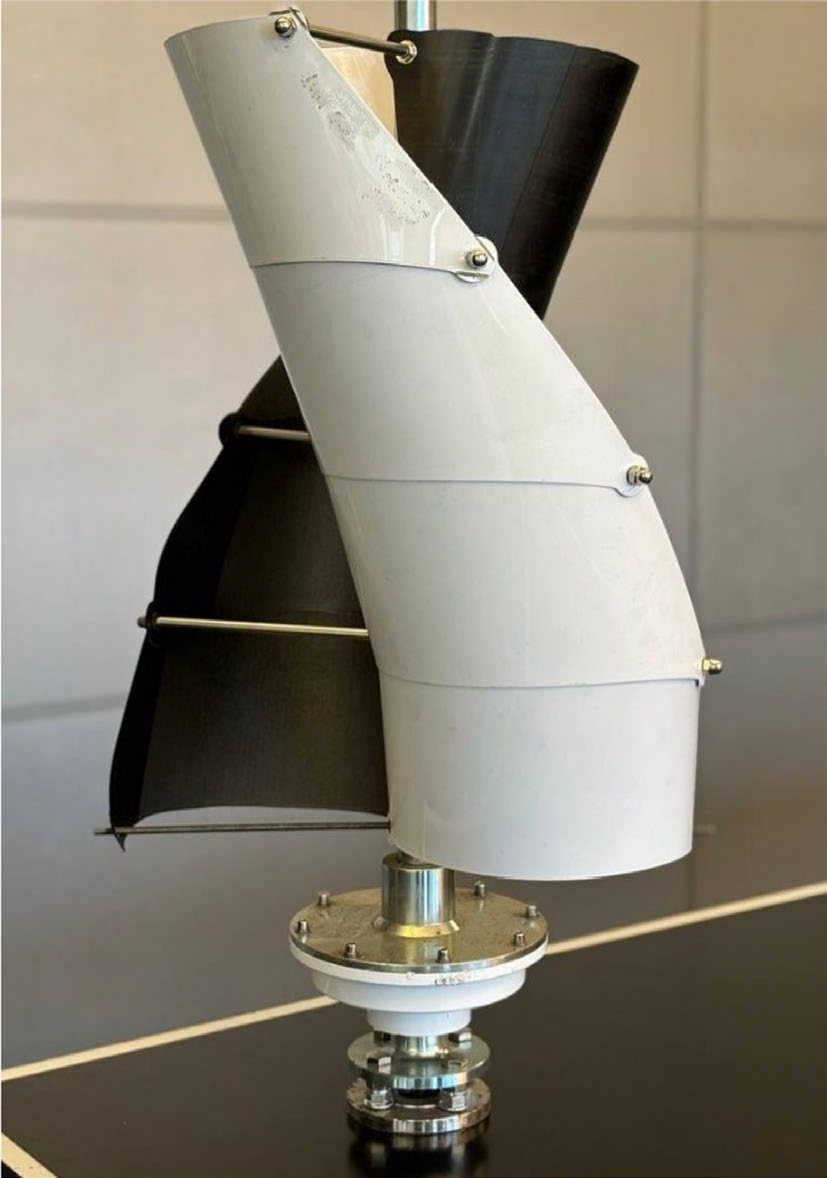
The project began by selecting a commercial baseline: the RX-SV2 vertical-axis wind turbine (VAWT) from R & X Technology. This unit, featuring a 0.48-meter rotor diameter and a nominal 200W output, provided a perfect testbed. The team utilized a high-precision laser projection system to map 200 distinct coordinates across the surface of the turbine’s existing twisted aluminum blade segments.
Computational Modeling
With the geometric data captured, the team employed MATLAB to reconstruct the surface and calculate the principal curvatures required for the blade. By understanding the exact target geometry, Fakhimi and Hoa could work backward to determine the specific fiber orientation sequences needed to force a flat laminate into that exact shape.
Implementation and Curing
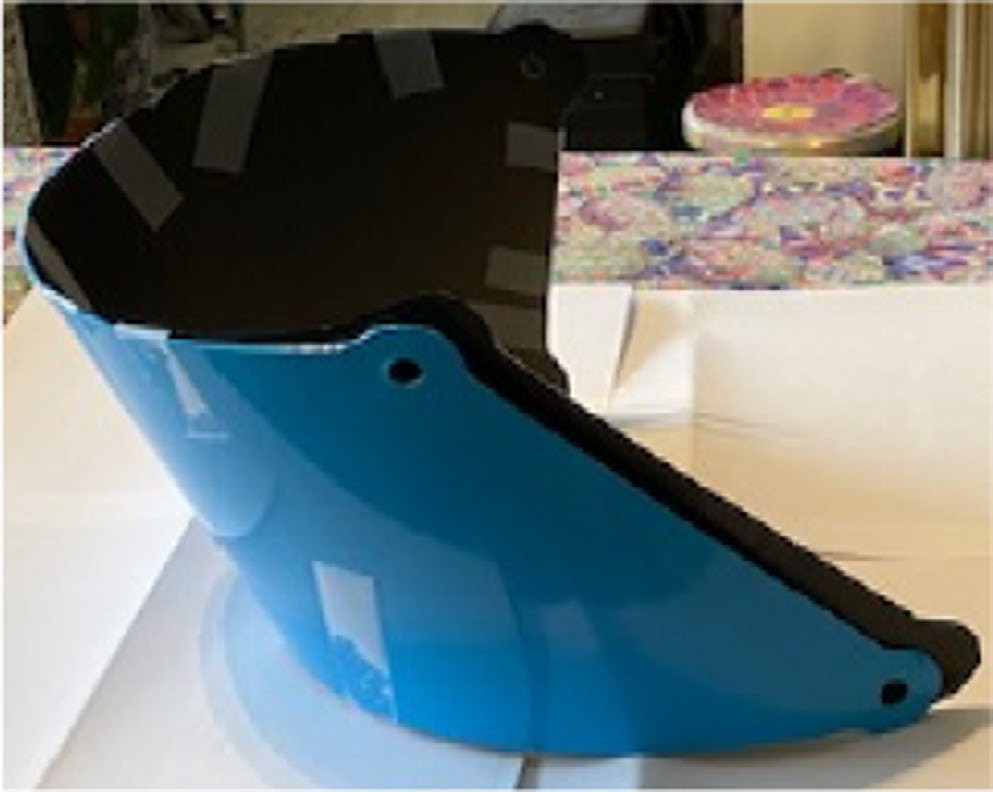
Using Rock West Composites’ 1409-D carbon/epoxy prepreg, the team engineered a three-ply [0/90°] configuration. To achieve the necessary complex twists, the flat blank was subdivided into four distinct regions, with fiber orientations rotated progressively across the panel. The assembly was then cured at 135°C under 273 kPa of pressure. Upon cooling, the panels achieved the target curvature with minimal deviation, demonstrating a consistent and repeatable production cycle.
Supporting Data: Performance Metrics and Weight Reduction
The implications for turbine performance were immediate and measurable. When comparing the traditional aluminum blades to the new carbon/epoxy counterparts, the weight difference was staggering.
- Mass Reduction: Each aluminum segment weighed 256.2 grams. In contrast, the carbon/epoxy segments weighed just 51.3 grams, representing an approximately 80% reduction in mass.
- Rotational Efficiency: In controlled airflow tests, the wind turbine was subjected to three distinct fan settings. Across all trials, the carbon/epoxy blades consistently outperformed the aluminum set:
- Low Setting: Aluminum (27 rpm) vs. Carbon/Epoxy (30 rpm)
- Medium Setting: Aluminum (48 rpm) vs. Carbon/Epoxy (52 rpm)
- High Setting: Aluminum (71 rpm) vs. Carbon/Epoxy (76 rpm)
While these tests were conducted at lower wind speeds (4.6 m/s) than the turbine’s 12 m/s rating, the results provide a compelling proof-of-concept for the aerodynamic benefits of weight reduction in rotating machinery.
Official Responses and Theoretical Implications
The researchers note that while the study validates the manufacturing technique, further testing is required before full commercial implementation.
"The study demonstrates a methodology for mold-free composite fabrication," the authors noted in their findings. "The primary achievement is the ability to produce complex curved segments with high repeatability."

However, the team emphasizes that the next phase of research must move beyond geometry and into structural integrity. Before these blades can be deployed in the field, they must be subjected to rigorous testing regarding:
- Fatigue Performance: Understanding how the internal stresses of the 4D-printed laminate react to millions of rotation cycles.
- Environmental Durability: Assessing how the epoxy matrix holds up under varying moisture and UV exposure.
- Centrifugal Load Resistance: Ensuring that the lightweight material can maintain structural stability under the extreme forces of high-velocity rotation.
Implications for the Future of Manufacturing
The Concordia University study joins a growing body of research aimed at liberating the composites industry from the high costs of traditional molds.
The Industry Context
The "mold-free" movement is gaining traction globally. For instance, Oak Ridge National Laboratory (ORNL) has pioneered an "origami-inspired" fabrication process that involves depositing composite material on flexible substrates that are later folded into 3D shapes. ORNL reported a 90% cost reduction and a 95% reduction in fabrication time, though the technology remains in the laboratory stage.
Similarly, researchers at Colorado State and Arizona State Universities are exploring in-situ curing techniques using laser-induced heating. By curing the material during the deposition process, these teams are creating long, curved, unsupported fiber paths, effectively removing the need for support structures entirely.
Broad Economic Impact
For the renewable energy sector, these breakthroughs represent a fundamental shift. If wind turbine manufacturers can produce blades on demand—without the multi-million dollar investment required for custom molds—the barrier to entry for smaller, more efficient, and locally produced turbines drops significantly. This could accelerate the decentralization of energy production, allowing for custom-tailored blades designed for specific wind conditions at local sites.
Furthermore, the "inverse design" approach is not limited to wind energy. It has profound potential in the automotive sector for lightweight chassis components, in aerospace for custom fuselage panels, and in medical engineering for patient-specific orthopedic braces.
Conclusion: A New Horizon for Composites
The Concordia University project serves as a cornerstone for the "smart manufacturing" era. By transitioning from the brute-force method of using molds to the elegant, physics-based approach of inverse 4D printing, Emad Fakhimi and Suong Van Hoa have provided a roadmap for a leaner, faster, and more efficient production cycle.
While the current research acts as a laboratory-scale validation, the trajectory is clear: the future of high-performance composite manufacturing lies in the material’s own ability to self-shape. As the industry moves toward 2026 and beyond, the integration of these "programmed" materials will likely redefine the cost-benefit analysis of renewable energy, moving us one step closer to a future where high-tech components are as easy to produce as they are efficient to operate.
As practitioners and engineers look toward the industrialization of additive manufacturing, the Concordia method stands as a testament to the power of fundamental research in driving the next wave of industrial evolution. Whether through reduced mass, lowered energy requirements, or the total elimination of tooling, the "inverse 4D" revolution is just beginning.