




Bridging the Gap: Generative Bionics Unveils European "Physical AI Data Factory" to Revolutionize Industrial Robotics

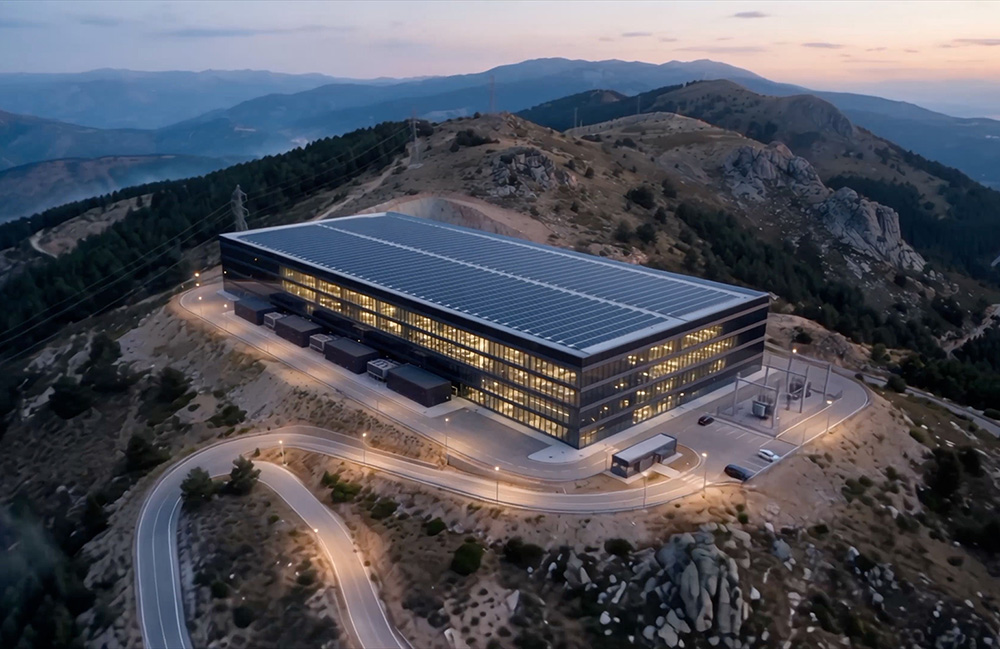
In a move set to redefine the landscape of European robotics, Genoa-based startup Generative Bionics has officially announced the development of a proprietary, multi-site "Physical AI Data Factory." This ambitious 5,000-square-meter (approx. 53,820-square-foot) facility, slated to become one of the continent’s most sophisticated hubs for humanoid robot training, represents a strategic pivot from laboratory experimentation to rigorous industrial deployment. By marrying real-world physical operations with high-fidelity digital twin simulations, the company aims to establish a "real-to-sim-to-real" ecosystem that could finally bring reliable humanoid labor to the factory floor.
A Strategic Hub for European Technological Sovereignty
At the core of this initiative is a push for "European humanoid sovereignty." As global competition in the robotics sector intensifies, Generative Bionics is positioning itself to ensure that the foundational data, AI models, and technical expertise powering the next generation of industrial humanoids remain firmly rooted on the continent.
"The value that Europe has right now is within its industry, and we have to extract physical AI data in order to train our own models," explains Daniele Pucci, CEO of Generative Bionics. "This is a competitive advantage that Europe possesses due to the advanced automation infrastructure we have been building over the last 40 years."
The initiative is not merely a localized project; it is part of a global roadmap. Following the launch of the flagship Italian facility—expected to be fully operational by the fourth quarter of 2027—the company plans to expand with a second site in Europe, followed by a third facility dedicated to serving global markets. Together, these sites will serve as the engine room for the company’s flagship platform, the GENE.01 humanoid robot.
Chronology of Innovation: From IIT Spin-out to Industrial Powerhouse
The journey toward the Data Factory is rooted in over two decades of rigorous academic and scientific inquiry.
- 2004–2024: For twenty years, the core team behind Generative Bionics conducted pioneering research and prototyping of humanoid systems at the prestigious Italian Institute of Technology (IIT). This period served as the incubator for the fundamental robotics research that would eventually form the company’s IP.
- 2024: Generative Bionics officially spins out of the IIT, securing exclusive licenses to critical patents and technologies developed during those two decades of research.
- 2026: The company announces its strategic partnership with Advanced Micro Devices (AMD) to utilize the "AMD Helios" architecture, providing the heavy-duty compute required for large-scale digital twin simulations and model training.
- Q4 2027 (Projected): The first Physical AI Data Factory in Italy is scheduled to come online, marking the transition into full-scale industrial validation.
The Architecture of Intelligence: AMD Helios and Data Synthesis
Training a robot for the real world is significantly more complex than training an LLM for text. While ChatGPT and similar models ingest vast amounts of existing internet data, humanoid robots lack a comparable repository of "physical experience."
To solve this, the Data Factory utilizes the AMD Helios rack-scale architecture. This hardware provides the massive compute power necessary to run thousands of digital-twin scenario variations in parallel. By connecting real-world robot operations with virtual simulations, the facility creates a continuous feedback loop.
When a GENE.01 robot performs a task in the physical facility, it records multi-modal data—not just video, but contact forces, acceleration, temperature, and proximity. This data is fed into the digital twin, where AI models are stress-tested against thousands of edge cases, from minor equipment failures to radical changes in industrial layout. The refined models are then pushed back to the physical robots, creating a "virtuous cycle" of intelligence that is constantly improving.
Official Perspective: The Reality of "Physical AI"
Daniele Pucci is adamant that the future of robotics lies in the nuance of physical interaction. "A robot is not only vision and is not only language," Pucci notes. "It is position, velocity, acceleration, temperature, and contact forces. There is a massive variety of data that you have to take into account."
Addressing the current hype cycle surrounding humanoid robotics, particularly in China, Pucci offers a pragmatic, industry-focused critique. "Many of the Chinese robots that are out there are simply not certified to enter industrial settings," she asserts. "The narrative that [competitors] have solved all the issues is very far from reality. Many of the existing solutions are basically for entertainment—a market segment we respect—but Generative Bionics is taking safety and certification seriously because we want to go B2B first."
The GENE.01 Ecosystem: A Modular Approach
A major differentiator for Generative Bionics is the GENE.01’s design philosophy. Rather than creating a "one-size-fits-all" machine, the company views the robot as a modular, adaptable base platform. This is achieved through three distinct levels of customization:
- AI Specialization: The neural architecture is fine-tuned for specific environments—a robot navigating a sterile hospital ward requires a fundamentally different behavioral logic than a robot welding in a high-heat, high-spark shipyard.
- Exterior Engineering: The robot’s chassis is customized to withstand specific hazards, such as corrosive chemicals, metal dust, or extreme temperatures.
- End-Effector Customization: The hands and feet are swapped or modified to suit the specific physical requirements of the task, mirroring the modular approach used in the automotive manufacturing sector.
By utilizing a common "base" and applying industry-specific modules at the end of the production line, Generative Bionics aims to achieve a level of scalability that has historically eluded the humanoid market.
Broader Implications: Toward the "ChatGPT Moment" for Physical Labor
The establishment of the Data Factory is a bold attempt to accelerate what industry insiders call the "ChatGPT moment" for robotics. By creating the world’s first high-fidelity training ground for physical AI, Generative Bionics is essentially building the "textbook" for robot behavior.
1. Economic Impact
If successful, the facility could revitalize European manufacturing by lowering the barrier to entry for high-end automation. By providing a "validated" robot, the company reduces the liability and technical risk for early adopters, potentially triggering a wave of investment in autonomous factory systems.
2. Standardizing Safety
One of the primary hurdles for humanoids is safety in human-centric spaces. By emphasizing full-body tactile sensing—allowing the robot to "feel" its proximity to workers and objects—GENE.01 addresses a primary regulatory concern. The data generated at the factory will likely form the basis for new industry standards in humanoid safety.
3. Geopolitical Positioning
The focus on "European sovereignty" is a clear signal that the company is aligning itself with regional industrial policy. As the European Union looks to reduce dependency on foreign hardware for critical infrastructure, Generative Bionics is positioning itself as a strategic partner capable of delivering high-tech, domestic solutions.
Conclusion
The launch of the Physical AI Data Factory represents more than just a new facility; it marks a transition in the industry’s maturity. For years, the humanoid robotics sector has been defined by flashy, pre-recorded demos and speculative funding rounds. With the backing of AMD, the legacy of the IIT, and a clear focus on B2B certification, Generative Bionics is shifting the conversation toward the unglamorous but essential work of data-driven, industrial-grade validation.
As the 2027 launch date approaches, the eyes of the global robotics community will be on Genoa. If the company can successfully bridge the gap between simulation and the factory floor, they may well provide the catalyst that turns the humanoid from a laboratory curiosity into a standard component of the global supply chain.