




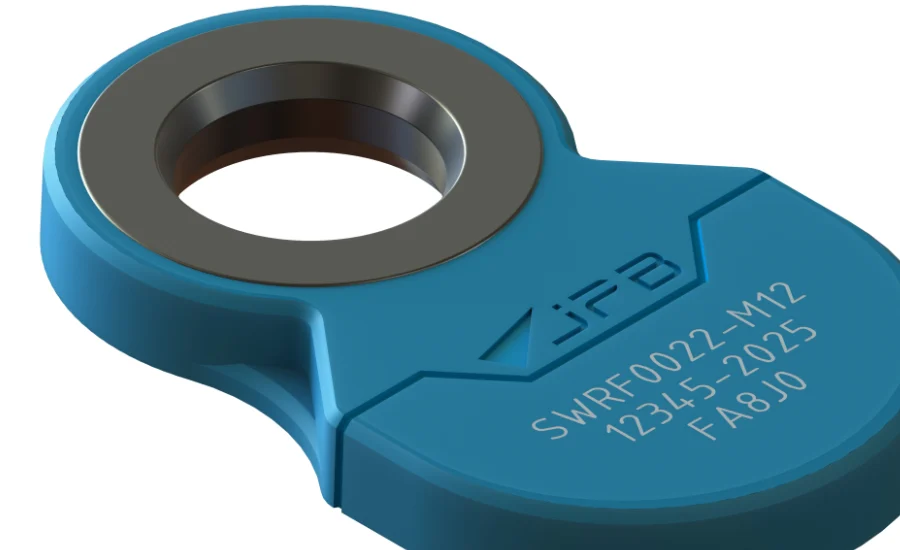
Revolutionizing Structural Integrity: JPB Systeme Unveils BOLTRAKK Smart Sensor Technology for Critical Bolted Joints

PARIS — In high-stakes engineering environments, few mechanical elements are as ubiquitous—or as deceptively simple—as the bolted joint. From the roaring turbofan engines of commercial aircraft to towering wind turbines whipped by ocean gales, millions of fasteners hold modern industrial civilization together. Yet, ensuring that these critical components remain properly tensioned has historically required painstaking, labor-intensive manual inspections. Equipment must often be powered down, stripped of protective cowlings, and subjected to torque wrenches in a costly ritual known as scheduled maintenance.
Enter JPB Systeme. The Paris-based engineering innovator has introduced a paradigm-shifting solution designed to eliminate the guesswork of fastener maintenance. Called BOLTRAKK, the newly developed system enables manufacturers and operators to monitor the tightness of critical bolted joints in real-time or near-instantaneous intervals, all without disassembling the surrounding equipment.
By integrating smart sensors directly into the mechanical joints, JPB Systeme aims to slash equipment downtime, enhance structural safety, and usher predictive maintenance into a new era.
Main Facts: What is BOLTRAKK?
At its core, BOLTRAKK is an advanced structural health monitoring (SHM) ecosystem tailored for high-reliability fasteners. The technology is engineered to detect micro-changes in the tightening condition of bolted assemblies—the precise moment when vibration, thermal expansion, or mechanical stress begins to compromise preload tension.
The system is divided into two distinct configurations to suit various operational needs:
- The Battery-Free RFID Version: Designed for spot-checks, this configuration utilizes passive Radio Frequency Identification technology. Technicians can walk up to hard-to-reach assemblies and check the tightening status of a joint in a matter of seconds using a handheld scanner, entirely free of internal batteries or external power sources.
- The Wired Continuous-Monitoring Version: Tailored for ultra-critical or remote assets, this setup provides round-the-clock remote monitoring. It continuously tracks joint conditions, logs historical data, and triggers automated alerts the moment a fastener deviates from its specified torque parameters.
Both versions are specifically engineered for critical assemblies that are notoriously difficult to access—whether they are located at dizzying heights, buried deep within complex machinery, or deployed in remote, unmanned operational environments.
Chronology: The Evolution Toward Smart Fastening
The development of BOLTRAKK did not happen in a vacuum. It represents the culmination of years of industry-wide pressure to modernize fastener maintenance, coupled with JPB Systeme’s engineering lineage.
The Legacy of Manual Inspection (Pre-2010s)
For decades, mechanical fastening relied on static physics and human intervention. Torque wrenches, safety wire, and visual inspection paint (torque seal) were the primary tools of the trade. While effective for accessible joints, these methods became liabilities as machinery grew more complex and compact.
The Rise of Industrial IoT (2010s–2020)
As the Industrial Internet of Things (IIoT) matured, engineers began embedding sensors into bearings, gears, and structural frames. However, the fastener itself—the primary point of structural stress transfer—remained largely "dumb." Integrating electronics into high-load bolts posed severe engineering hurdles, particularly regarding sensor durability, power supply, and structural weakening caused by modifications to the fastener.
JPB Systeme’s R&D Breakthrough (2020–2025)
Leveraging its deep expertise in self-locking fasteners and aerospace components, JPB Systeme turned its focus toward smart assembly monitoring. Over a multi-year research and development cycle, the engineering team tackled the physics of load distribution, miniaturization of sensing elements, and energy harvesting. The result was the BOLTRAKK architecture—a system capable of surviving extreme mechanical shock, thermal cycling, and high-vibration environments without compromising the integrity of the joint it protects.
Commercial Launch (2026)
With the formal introduction of BOLTRAKK, JPB Systeme has transitioned the technology from prototype validation to full commercial availability, targeting aerospace, energy, and heavy industrial sectors where fastener failure carries catastrophic consequences.
Supporting Data & Technical Specifications
To understand the value proposition of BOLTRAKK, one must examine the metrics surrounding traditional maintenance and fastener failure. Industry analyses consistently show that up to 70% of structural failures in mechanical systems originate from joint failure or loosening fasteners.
| Feature / Metric | Battery-Free RFID Configuration | Wired Continuous Configuration |
|---|---|---|
| Primary Use Case | Manual spot checks in tight spaces | 24/7 remote monitoring of critical assets |
| Power Source | Passive RFID energy harvesting | Direct hardwired power supply |
| Inspection Time | Seconds per joint | Real-time continuous stream |
| Data Logging | Manual scan history | Automated cloud/local data logs |
| Alert Mechanism | On-demand handheld readouts | Automated threshold-based alarms |
| Target Sectors | Aerospace, robotics, general machinery | Wind energy, offshore rigs, aerospace test stands |
Overcoming the "Access Paradox"
In aerospace applications, inspecting internal turbine mounts or structural wing spars can require dozens of man-hours just to gain physical access. Technicians must remove fairings, drain fluids, and dismantle secondary systems—only to find that 99% of the fasteners are perfectly torqued.

BOLTRAKK resolves this "access paradox." By allowing inspectors to sweep an RFID reader near a composite panel or composite housing and instantly read the tension status of underlying bolts, the system cuts inspection times by upwards of 90%.
Furthermore, the data logging capabilities allow engineering teams to build predictive models. Instead of relying on fixed, calendar-based maintenance schedules, operators can track the gradual degradation of joint preload over hundreds of operating hours, intervening precisely when data dictates.
Official Responses and Industry Reception
While industrial technology rollouts often face skepticism regarding reliability and ROI, early reception to BOLTRAKK has been remarkably strong, particularly among tier-one aerospace and renewable energy stakeholders.
Industry analysts note that the dual-configuration approach is a masterstroke in market adaptation. Not every facility is ready or willing to run wiring harnesses across moving machinery or complex assemblies; conversely, remote offshore wind turbines cannot rely entirely on manual walk-up inspections.
"The brilliance of BOLTRAKK lies in its versatility," notes industrial manufacturing consultant Marcus Vance. "JPB Systeme didn’t just build a smart sensor; they built a scalable philosophy of joint integrity. By offering both a zero-power manual option and a fully automated continuous-monitoring version, they’ve addressed two entirely different tiers of the industrial market with a single product family."
Early feedback from beta testers in the aerospace sector highlights the psychological shift among maintenance crews. When technicians no longer have to guess whether a hard-to-reach bolt has backed off under thermal stress, safety margins widen exponentially.
Implications for Aerospace, Manufacturing, and Beyond
The introduction of smart fastening systems like BOLTRAKK portends profound structural shifts across multiple high-consequence industries.
1. Aerospace and Defense
In aviation, weight and safety are locked in an eternal tug-of-war. BOLTRAKK’s lightweight sensors add negligible mass to assemblies while eliminating the need for heavy, redundant physical locking mechanisms in certain non-flight-critical secondary structures—though their primary value remains in continuous health monitoring of primary load paths. Reduced downtime directly translates to higher fleet availability for commercial airlines and military operators alike.
2. Renewable Energy (Wind Turbines)
Offshore and onshore wind turbines are subjected to relentless, cyclical bending moments and vibrations. A single loose bolt in a tower flange or nacelle bedplate can cascade into catastrophic structural failure if left undetected. Continuous wired BOLTRAKK sensors allow operators in central control rooms hundreds of miles away to monitor joint health in real time, shifting from reactive repairs to predictive asset management.
3. Heavy Machinery and Transportation
From high-speed rail networks to mining excavators, heavy equipment operates in punishing environments where dust, vibration, and thermal extremes accelerate fastener loosening. Deploying RFID-enabled smart joints simplifies compliance checks during routine safety turnarounds, drastically reducing human error.
4. The Future of Connected Assembly
As factories embrace the tenets of Industry 4.0 and Smart Manufacturing, the assembly line itself is evolving. Fastening is no longer just about driving a bolt to a specific torque value at the moment of assembly; it is about tracking the lifecycle of that preload from the factory floor through decades of field operation. JPB Systeme’s BOLTRAKK bridges the gap between manufacturing execution systems (MES) and long-term asset lifecycle management.
Conclusion
JPB Systeme has long been recognized for pushing the boundaries of mechanical security. With BOLTRAKK, the company has successfully bridged the physical world of heavy metal fasteners and the digital world of real-time data analytics.
By making the invisible visible—turning a static, silent bolt into an active data point—BOLTRAKK promises to redefine how industries think about structural safety. For manufacturers and operators grappling with the high costs of downtime and the relentless demand for zero-failure reliability, the future of fastening is no longer just tight; it’s smart.