



Delta Motion Elevates Industrial Testing Capabilities with New Trapezoid Waveform Command

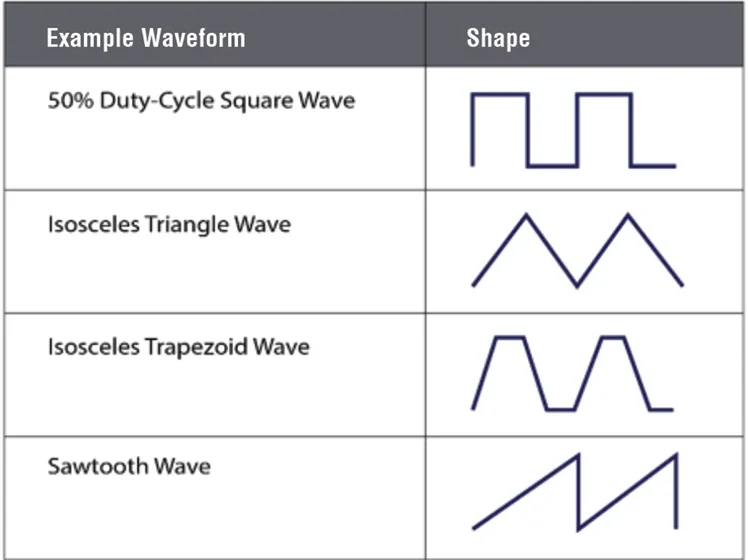
In the high-stakes world of industrial automation and materials testing, precision is not merely an advantage—it is a requirement. Delta Motion, a global leader in motion control solutions, has officially expanded the capabilities of its RMC (Registered Motion Controller) series with the introduction of the Trapezoid Waveform Command. This strategic enhancement offers engineers a powerful, integrated tool for generating a vast array of motion profiles, including trapezoidal, triangular, sawtooth, and square waves.
By embedding these complex waveform generation capabilities directly into the controller’s firmware, Delta Motion is effectively reducing the engineering overhead previously required for sophisticated cyclic testing. Whether applied to position control or high-precision force and pressure applications, this new feature represents a significant leap forward in how machine builders and test engineers execute repetitive motion tasks.
The Evolution of Motion Control: Core Facts
The new Trapezoid Waveform Command is designed to work in concert with the existing sinusoidal and curve-based waveform profiles already supported by Delta’s RMC family. By providing a comprehensive library of motion shapes, the update allows engineers to move beyond simple point-to-point moves and into complex, cyclic motion environments.
Key technical specifications of the new command include:
- Infinite Configurability: Parameters such as amplitude, offset, and frequency can be tuned in real-time.
- Segment Precision: The command allows for granular control over rise time, high time, fall time, and low time, enabling the creation of sharp-edged, high-frequency profiles that were once difficult to synchronize.
- Hardware-Level Execution: Because the waveform generation occurs entirely within the RMC controller, it operates with deterministic performance. This independence from PLC scan times or network jitter ensures that the motion profile remains consistent, regardless of the complexity of the wider automation system.
A Chronology of Innovation: From Customer Need to Implementation
The development of the Trapezoid Waveform Command is a textbook example of market-driven engineering. For years, Delta Motion has maintained a close relationship with its user base—a cohort largely composed of test stand builders, hydraulic engineers, and R&D lab managers.
The Development Cycle
Historically, engineers tasked with performing cyclic testing were forced to choose between two difficult paths: either program complex, segmented motion sequences in a PLC, which often suffered from latency issues and "stair-stepping" motion, or invest in expensive, proprietary third-party waveform generators that added cost and integration complexity.
Delta Motion identified this pain point during a series of user consultations in the last two fiscal years. The goal was to consolidate these disparate functions into a single, cohesive command structure. By mid-2025, the internal engineering team began prototyping the Trapezoid Waveform functionality. Following an intensive beta-testing phase with select partners in the automotive and aerospace testing sectors, the feature was refined to include dynamic, on-the-fly adjustment capabilities. The official rollout to the broader RMC75, RMC150, and RMC200 product lines marks the culmination of this feedback-loop process.
Supporting Data: Why "On-the-Fly" Matters
One of the most significant technical differentiators of the new command is the ability to modify parameters while the motion is actively executing. In traditional motion control, changing a profile often requires stopping the cycle, updating the registers, and restarting the operation—a process that can introduce mechanical stress or compromise the integrity of a test sample.
Dynamic Adjustment and Adaptive Control
The Trapezoid Waveform Command allows for the real-time modification of amplitude, offset, and phase. This is particularly transformative for long-duration fatigue testing.
Furthermore, the command introduces an adaptive amplitude control algorithm specifically for force-controlled applications. In scenarios such as material testing, where the stiffness of a specimen may change as it nears its failure point, the RMC controller automatically adjusts the output to maintain a constant, requested peak force. This eliminates the "drift" that often plagues legacy testing systems, ensuring that the force applied at the start of a 100,000-cycle test remains identical to the force applied at the end.
Seamless Transitions
Delta has also enabled the "morphing" of waveforms. An engineer can now program a transition where a square wave gradually shifts its duty cycle or where a triangular wave evolves into a sawtooth pattern over a pre-defined number of cycles. This capability allows for the simulation of complex, non-linear environmental conditions without requiring the engineer to write thousands of lines of external code.

Official Perspectives: The Vision of Delta Motion
Steve Nylund, CEO of Delta Motion, frames this release not just as a software update, but as a commitment to the democratization of high-end testing capabilities.
"Delta’s controllers are increasingly valued for custom testing applications," Nylund stated during the announcement. "Customers often find the cost to be a fraction of other high-end solutions, and the RMC controllers are much easier to adapt to special requirements. Many of our product enhancements come directly from customer feedback, and the Trapezoid Waveform Command is a perfect example of this—a practical, powerful feature that simplifies application development."
By keeping the controller architecture accessible yet powerful, Delta Motion is positioning its hardware as a mid-market leader that punches well above its weight class. The focus remains on "practicality"—ensuring that the power of the controller does not come at the expense of ease of use.
Implications for Industry: The Shift in Testing Methodologies
The introduction of this command has profound implications for several key industries, most notably in the fields of durability testing and hydraulic component characterization.
Enhanced Fatigue and Durability Testing
Fatigue testing requires millions of cycles, and even minor variations in motion can lead to invalid test data. By moving the generation of these cycles from the PLC to the RMC controller, Delta Motion has removed the bottleneck of network communication. The deterministic nature of the RMC means the motion is as repeatable as the physics of the system allow, significantly increasing the reliability of laboratory results.
Simplified System Integration
Machine builders who previously struggled to integrate third-party waveform generators into their hydraulic or electromechanical test rigs will find significant value in the RMC’s unified environment. Since the Trapezoid Waveform Command uses the same programming logic as other RMC functions, the learning curve is minimal for existing Delta users. All setup and tuning are handled through the company’s established RMCTools software, creating a consistent user experience that minimizes the risk of human error during configuration.
Future-Proofing R&D
As industries move toward "digital twins" and more rigorous simulation-based testing, the ability to rapidly configure and reconfigure motion profiles will become a competitive advantage. The Trapezoid Waveform Command provides a foundation for this, allowing labs to pivot quickly from one test protocol to another without needing to swap out hardware or drastically overhaul their control logic.
Conclusion: A New Standard for Cyclic Motion
Delta Motion’s introduction of the Trapezoid Waveform Command is more than just a software patch; it is a fundamental expansion of what a motion controller can achieve in a testing environment. By prioritizing deterministic, hardware-level execution and providing users with the flexibility to adapt profiles in real-time, Delta has effectively lowered the barrier to entry for advanced material and durability testing.
For the engineer in the field, this means less time spent wrestling with PLC code and more time analyzing data. As the RMC75, RMC150, and RMC200 series continue to evolve, the integration of these sophisticated tools ensures that Delta Motion remains at the forefront of the motion control industry, providing the precision and power required for the next generation of industrial innovation.
For those looking to integrate these features, documentation and software updates are available through the official Delta Motion portal at deltamotion.com, reflecting the company’s ongoing commitment to supporting its global community of developers and test engineers.