PCA Consulting, a TRM Company Published: September 15, 2026
Main Facts
The landscape of industrial maintenance and asset reliability has undergone a monumental paradigm shift over the past forty years. Long before the era of compact wireless sensors, cloud-enabled platforms, and automated real-time dashboards, vibration analysis was a gritty, highly specialized, and deeply manual discipline.
Stan Moore, a Senior Maintenance and Reliability Consultant at PCA Consulting with more than four decades of cross-sector experience spanning petrochemical, aerospace, and pharmaceutical manufacturing, has witnessed this technological evolution firsthand. A Certified Maintenance & Reliability Professional (CMRP) and a long-standing leader within the Society for Maintenance & Reliability Professionals (SMRP), Moore’s career offers a unique lens through which to examine how predictive maintenance has matured from an elite, high-stakes defense luxury into an accessible, plant-wide operational strategy.
Today, modern condition monitoring allows technicians to deploy compact, black-box devices that capture vibration data instantly and feed it directly into advanced diagnostic software. Yet, as industry experts like Moore emphasize, the proliferation of hardware has created a new operational hurdle: organizations are frequently data-rich but information-poor. Moving forward, the true challenge of modern reliability engineering is no longer merely collecting data, but rather building the rigorous work processes and human expertise required to translate automated insights into meaningful business decisions.
Chronology: The Evolution of Predictive Maintenance
To fully appreciate the state of modern vibration analysis, one must look back at the technological landscape of the late 20th century.
The Era of Pioneers and Heavy Machinery (1980s)
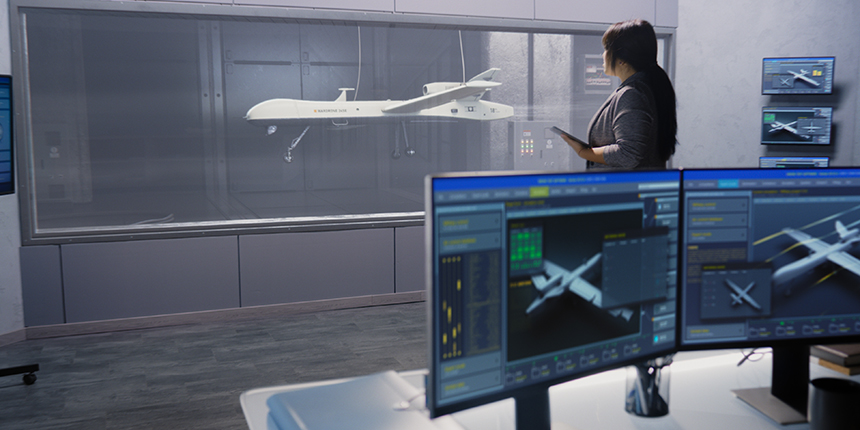
In the early days of industrial predictive maintenance, vibration analysis was reserved exclusively for mission-critical assets. Moore’s career began on machinery of unprecedented scale, including a massive 32-foot-diameter axial flow compressor housed within a wind tunnel at a U.S. Air Force base. The equipment was so colossal that Moore could literally walk through its first three stages.
During this era, monitoring was labor-intensive. Technicians spent roughly 80% of their working hours moving desktop-sized spectrum analyzers and X-Y plotters around facilities just to capture raw signals from permanently mounted proximity probes. Only the remaining 20% of their time was dedicated to actual data analysis. Early practitioners worked alongside academic innovators from institutions like Texas A&M and the Vibration Institute, translating complex mathematical principles into actionable mechanical insights. At the time, vibration analysis was considered a high-tech tool restricted to aerospace and defense projects where failure carried catastrophic financial and safety consequences.
The Shift to Portability and Accessibility (1990s – 2010s)
As computing power advanced, the bulky desktop hardware of the past gave way to portable data collectors. This technological leap dramatically reduced the physical labor required to gather routine machinery health metrics.
Simultaneously, the economic barriers to entry began to shift. While sensors themselves gradually became more affordable, the cost of hardwiring transducers into complex plant architectures remained prohibitive. Consequently, condition monitoring slowly trickled down from aerospace giants to standard industrial manufacturing, focusing primarily on critical pumps, large turbines, and major gearboxes.
The Smart Technology Revolution (Present Day)
The contemporary reliability landscape is defined by miniaturized, wireless smart sensors and cloud-connected platforms. Technicians now carry pocket-sized devices capable of executing real-time data capture and preliminary analytics on the spot.
Crucially, this cost reduction has expanded the scope of predictive maintenance. Balance-of-plant equipment—such as smaller secondary pumps and auxiliary motors that traditionally were allowed to run until catastrophic failure—can now be cost-effectively monitored. This capability closes critical gaps in plant reliability programs and prevents minor component breakdowns from triggering sweeping production halts.
Supporting Data & Industry Dynamics
The transition from reactive firefighting to predictive intelligence is underpinned by several core operational metrics and engineering principles:
The Efficiency Flip: In early vibration analysis workflows, 80% of personnel time was consumed by manual data collection (moving heavy equipment and securing waveforms), leaving only 20% for diagnosis. Modern automated and portable systems have completely inverted this ratio, prioritizing deep analytical insight and proactive planning.
The P-F Curve Impact: Real-time vibration sensors catch developing mechanical anomalies much earlier along the potential-failure (P-F) curve. Early detection extends the runway for maintenance planners, allowing them to schedule repairs during planned outages and drastically reduce collateral equipment damage.
The Balance-of-Plant Blind Spot: Historically, plants monitored only the top 5% to 10% of critical assets. Modern scalable sensors enable coverage of balance-of-plant assets. Although these smaller machines may seem insignificant individually, their unexpected failure can halt entire manufacturing lines.
The Data-to-Insight Gap: Modern plants generate petabytes of operational data. However, industry data consistently highlights that without standardized maintenance workflows and trained personnel, organizations risk falling into a state of "automated confusion"—possessing endless data streams while remaining blind to impending asset failures.
Official Perspectives and Expert Commentary
Reflecting on the historical trajectory of his field, Stan Moore highlights the stark contrast between past operational constraints and present-day capabilities.
"Back then, we only monitored the most critical assets and components," Moore notes. "Vibration analysis was considered a tool for the elite few in aerospace and high-stakes defense projects."
Describing the evolution of asset coverage, Moore emphasizes the strategic importance of monitoring smaller equipment that was once ignored due to prohibitive wiring and installation costs.
"This balance-of-plant equipment can now be cost-effectively monitored, allowing problems to be detected prior to their functional failure," Moore explains. "Even these balance-of-plant assets, when they fail, can negatively impact production."
However, industry experts are quick to warn against technological complacency. Possessing state-of-the-art diagnostic hardware does not automatically equate to a successful reliability program. According to Moore, technology is merely an enabler:
"We need people who can interpret the data. The tech performing the analysis has to understand what a peak at a certain frequency means. That takes training and experience."
Moore also points out that the operational bottlenecks have shifted from hardware limitations to human processes:
"Today, the challenge with vibration technology is more about having the work processes in place to get access to the equipment and make repairs before a breakdown occurs."
Implications for the Future of Industrial Reliability
The maturation of vibration analysis carries profound implications for asset-intensive industries worldwide. As smart manufacturing, the Industrial Internet of Things (IIoT), and artificial intelligence become deeply embedded in factory floors, organizations face a critical crossroads.
1. Bridging the Skills Gap
As advanced tools automate data collection, the industry faces a growing deficit of skilled analysts who understand the foundational physics and mathematics behind vibration signatures. Companies can no longer rely on plug-and-play software to magically solve reliability issues. Investing in continuous workforce training—certifying personnel through recognized bodies like the SMRP and the Vibration Institute—is vital to ensuring that automated alerts translate into correct mechanical interventions.
2. Overcoming Information Overload
The abundance of real-time monitoring devices creates a significant risk of alarm fatigue and data paralysis. Industrial enterprises must implement robust maintenance management frameworks (such as ISO 55010 asset management standards) to filter out noise, prioritize critical alerts, and align maintenance schedules with broader business objectives.
3. Transforming Maintenance Culture
Ultimately, the journey from bulky X-Y plotters to pocket-sized smart sensors proves that hardware is only as effective as the culture supporting it. The ultimate goal of modern condition monitoring is not just to monitor machinery, but to build a proactive culture where data-driven decisions eliminate unplanned downtime, optimize asset lifecycles, and secure long-term operational excellence.