


San José State University Awarded $30,000 Grant to Pioneer AI-Driven Ergonomic Workstations for Computer Workers

By Danielle Naidu
Enriched and Expanded Edition
Main Facts
As office environments and remote setups continue to dominate the modern workforce, a persistent and costly occupational hazard remains largely unaddressed: musculoskeletal disorders (MSDs) linked to prolonged computer use. To combat this hidden crisis, a team of researchers at San José State University has been awarded a $30,000 research grant from the MEMIC Safety Research Center.
The grant will fund a pioneering project aimed at developing a sensor-equipped, artificial intelligence-powered smart workstation. This innovative system is designed to continuously monitor computer-based workers, proactively identify emerging ergonomic risks, and intelligently determine the optimal times to deliver physical and cognitive support.
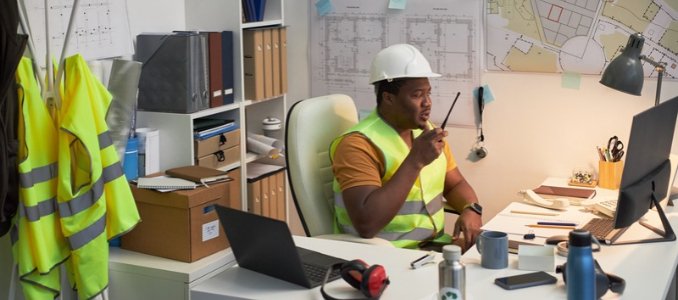
Led by San José State University researchers Gaojian Huang, Yue Luo, and Guannan Liu, the project targets the root causes of repetitive strain injuries, chronic back pain, and mental fatigue that plague millions of desk-bound employees. Rather than relying on static adjustable chairs or periodic manual reminders to stretch—which employees frequently ignore—the proposed smart workstation uses machine learning and advanced sensor technology to evaluate real-time physical posture and cognitive workload. By gauging these metrics dynamically, the system aims to intervene precisely when a worker is at the highest risk of strain, promoting healthier habits before minor discomfort morphs into a debilitating chronic injury.
The funding was officially announced by the MEMIC Safety Research Center during a specialized webinar held on September 11. This initiative marks the fifth major safety research grant awarded by the center since its inception in 2021, underscoring a growing industry commitment to merging cutting-edge data science with occupational health and safety (OHS).
Chronology
To understand the trajectory of this groundbreaking study, it is helpful to trace the timeline of events leading up to the grant announcement and the anticipated milestones for the research team:

- 2021: The MEMIC Safety Research Center is officially established, setting aside dedicated funding streams to support academic research that addresses critical, emerging workplace safety challenges across industries.
- Late 2025 / Early 2026: Faculty members Gaojian Huang, Yue Luo, and Guannan Liu conceptualize the smart workstation framework, recognizing a critical gap in how office ergonomics address both physical posture and cognitive stress simultaneously. They formulate a proposal for a sensor-and-AI-integrated adaptive workstation.
- Mid-2026: The San José State University research team submits their proposal to the MEMIC Safety Research Center for peer review and competitive evaluation.
- September 11, 2026: MEMIC formally presents the $30,000 Safety Research Grant to the San José State University team during an interactive virtual webinar, officially launching the project cycle.
- Late 2026 – 2027 (Anticipated): The research team embarks on developing the prototype workstation, integrating various environmental sensors, cameras, and machine learning algorithms designed to assess user posture, keystroke patterns, mouse usage, and physiological indicators of fatigue.
- 2027 – 2028 (Anticipated): Feasibility studies and user-experience (UX) trials are conducted. Researchers monitor preliminary outcomes concerning physical posture adjustments, break-taking behaviors, and self-reported user discomfort among study participants.
- Post-2028 (Anticipated): The project concludes with the formulation of practical design guidelines for future commercial office furniture and the publication of at least one major peer-reviewed research paper detailing the findings.
Supporting Data
The urgency behind San José State University’s research is underscored by decades of occupational health data highlighting the massive toll of computer-related musculoskeletal disorders.
According to the U.S. Bureau of Labor Statistics (BLS), musculoskeletal disorders account for approximately 30% of all occupational injury and illness cases reported by employers annually. Within office and administrative settings, prolonged sitting, awkward wrist angles, and forward-head postures are primary contributors to conditions such as carpal tunnel syndrome, tendonitis, lower back pain, and tension neck syndrome. These disorders are not only painful for employees but also financially crippling for businesses. The direct and indirect costs of workplace ergonomic injuries—including workers’ compensation claims, medical expenses, lost productivity, and employee turnover—cost U.S. businesses billions of dollars every year.
Furthermore, traditional ergonomic interventions have faced high failure rates due to human behavioral patterns. Studies on standing desks and ergonomic assessments show that while workers may initially utilize new equipment, adherence to healthy posture and break schedules declines sharply after a few weeks as workers become absorbed in their tasks.

The MEMIC Safety Research Center was founded specifically to bridge this gap between static safety equipment and dynamic human behavior. By dedicating financial resources to academic innovators, the center aims to leverage technology that adapts to human habits rather than expecting humans to consistently alter deeply ingrained workflow behaviors. The $30,000 awarded to San José State University represents a targeted investment in high-impact, scalable solutions that can eventually be commercialized to protect millions of office and remote workers globally.
Official Responses
The announcement of the 2026 Safety Research Grant has drawn praise from academic leaders, safety advocates, and insurance industry experts alike, highlighting the collaborative nature of modern occupational health research.
Representatives from the MEMIC Safety Research Center emphasized the alignment between their institutional mission and the innovative approach proposed by the San José State team. In statements released following the September 11 webinar, safety officials noted that the intersection of artificial intelligence and physical ergonomics represents the next frontier in injury prevention. By moving beyond traditional, one-size-fits-all office assessments, the project promises to introduce a personalized, responsive safety ecosystem right to the desktop.

For their part, the San José State University research trio—Gaojian Huang, Yue Luo, and Guannan Liu—expressed enthusiasm and gratitude for the backing of the MEMIC Safety Research Center. In collaborative statements, the researchers highlighted that the grant provides essential resources to transition their theoretical framework into a functional, testable prototype.
The research team noted that designing a system capable of accurately estimating both physical strain and cognitive state is a complex multidisciplinary challenge. It requires synthesizing computer science, human-computer interaction (HCI), biomechanics, and industrial engineering. The funding will allow them to acquire specialized sensor hardware, build testing environments, and recruit diverse cohorts of computer-based workers for iterative user-experience trials.
Implications
While the immediate deliverables of the San José State University project are bounded by the scope of a single research grant, the long-term implications for the future of work, office design, and occupational safety are profound.

Shifting from Reactive to Proactive Ergonomics
Historically, office ergonomics has been largely reactive. Employers typically conduct ergonomic evaluations only after an employee complains of pain or files a workers’ compensation claim. Even proactive programs usually rely on annual training seminars or static adjustments made during onboarding.
The development of a smart, AI-driven workstation flips this paradigm on its head. By continuously monitoring the user in real-time, the workstation acts as an active safety partner. It can detect micro-slumps in posture, identify repetitive strain patterns before they cause tissue damage, and notice when cognitive fatigue is impairing a worker’s focus—prompting a timely, intelligent intervention such as a guided stretch break or a change in desk height.
Balancing Physical and Cognitive Health
One of the most innovative aspects of the San José State project is its dual focus on physical and cognitive states. Modern computer work is mentally demanding, and mental fatigue often manifests physically (e.g., slouching, tensing shoulders, gripping the mouse too tightly). By attempting to estimate both states simultaneously, the smart workstation acknowledges the holistic nature of modern desk jobs. Supporting a worker’s cognitive well-being alongside their physical health could lead to breakthroughs in sustained productivity and reduced burnout.

Setting Realistic Expectations: Research vs. Medical Claims
The researchers and funding bodies have been careful to clarify the boundaries of the study. The project is explicitly designed to produce practical design guidelines and publish at least one peer-reviewed research paper. It is not intended to definitively prove that the system single-handedly prevents all musculoskeletal injuries.
Instead, the findings will serve as foundational data for future research, development, and commercial product iteration. By evaluating user experience, feasibility, posture metrics, break behaviors, and reported discomfort, the project will establish whether AI-assisted ergonomics is acceptable to everyday workers and technically viable for broad deployment.
Broader Industry Impacts
As remote and hybrid work models remain permanent fixtures of the global economy, employers have less direct control over home office setups. An affordable, intelligent software-and-sensor package that integrates into existing computer setups could eventually provide remote workers with enterprise-grade ergonomic oversight.

Ultimately, the $30,000 MEMIC Safety Research Center grant to San José State University is more than just a localized academic award; it is a stepping stone toward a safer, smarter future of work. As Huang, Luo, and Guannan begin developing their sensor-equipped workstation, they carry the potential to redefine how humanity interacts with the digital environments we inhabit for eight hours a day, five days a week.