


Oracle Unveils AI-Driven "Agentic" Applications to Revolutionize Global Supply Chain Management

BIRMINGHAM, Mich. — In an era defined by volatile market fluctuations, geopolitical tensions, and the relentless demand for operational speed, Oracle has launched a bold initiative to transform the industrial floor. The company has officially introduced a suite of new AI-powered applications within the Oracle Fusion Cloud Supply Chain & Manufacturing (SCM) portfolio. These tools, categorized as "Fusion Agentic Applications," represent a significant shift from passive data analysis to proactive, autonomous problem-solving for manufacturers worldwide.
As supply chain leaders struggle to balance the "trilemma" of service levels, cost containment, and rapid response to disruptions, Oracle’s latest software integration aims to bridge the gap between digital planning and physical execution.
The Core Innovation: Agentic Intelligence in SCM
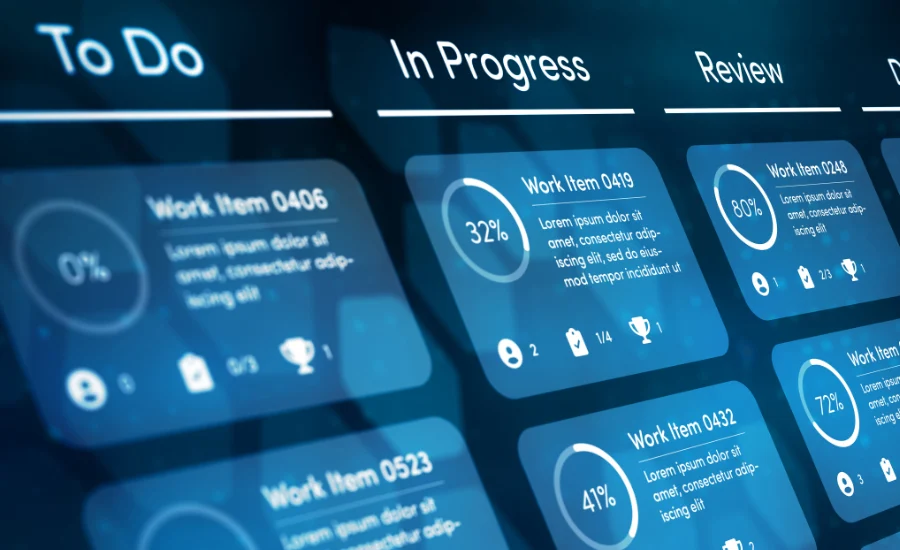
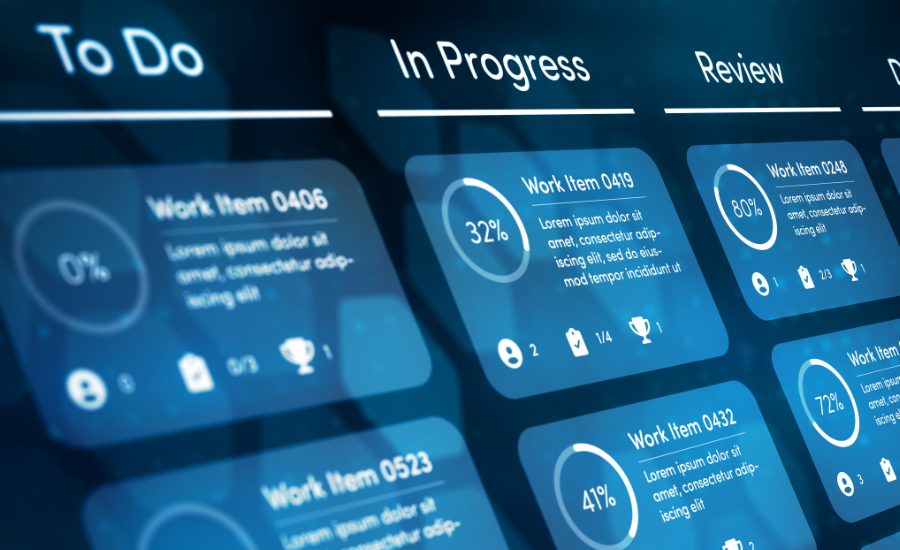
At the heart of this announcement are four new applications, with the Production Readiness Workspace and the Kanban Administrative Workspace serving as the cornerstones. Unlike traditional software that merely alerts users to a problem, "agentic" AI is designed to act autonomously, suggesting—or in some cases executing—corrective measures to maintain production flow.
Production Readiness Workspace
The Production Readiness Workspace is engineered to tackle one of the most persistent issues in modern manufacturing: setup errors. By leveraging historical data and real-time sensor feedback, this application identifies potential misalignments in the production line before they result in downtime. It serves as a digital gatekeeper, ensuring that personnel, tools, and materials are perfectly synchronized before a shift begins.
Kanban Administrative Workspace
The Kanban system, a hallmark of lean manufacturing, relies on the precise replenishment of parts to keep production lines moving without the burden of excess inventory. Oracle’s new Kanban Administrative Workspace uses predictive AI to calculate replenishment cycles with granular accuracy. By analyzing consumption patterns, the system automatically adjusts bin sizes and triggers, significantly reducing the risk of shortages while preventing the "bloat" of surplus inventory that ties up working capital.
A Chronology of Supply Chain Digital Transformation
To understand the significance of Oracle’s latest move, one must look at the evolution of manufacturing software over the last two decades.
- 2005–2012: The Era of Visibility. The primary focus was on basic ERP (Enterprise Resource Planning) integration. Companies aimed to digitize paper-based ledgers to see where their inventory was located across global warehouses.
- 2013–2019: The Data Analytics Boom. As cloud computing became standard, the focus shifted to "Big Data." Manufacturers began collecting massive amounts of telemetry from the factory floor, though much of this data remained siloed, requiring manual interpretation.
- 2020–2023: The Resilience Pivot. The global pandemic and subsequent supply chain crises shifted the priority from "Lean" to "Resilient." Companies began over-ordering stock, leading to inefficiencies.
- 2024–2026: The Agentic Revolution. We have now entered the age of autonomous systems. Oracle’s recent announcement marks the industry’s pivot toward software that doesn’t just show the user the data but provides the "agent" to solve the workflow gaps in real-time.
Supporting Data: The Case for AI Integration
The necessity for such tools is backed by sobering industry data. According to recent manufacturing indices, unplanned downtime costs the average mid-to-large-scale manufacturer upwards of $260,000 per hour. Furthermore, inventory carrying costs have surged by nearly 18% over the past three years due to the "just-in-case" inventory strategies adopted during the pandemic recovery.
Oracle’s new inventory optimization capabilities address this directly. By balancing service levels against inventory costs, the system utilizes high-dimensional machine learning to simulate thousands of "what-if" scenarios. This allows production managers to determine the exact safety stock levels required to satisfy customer demand without the massive overhead associated with redundant parts.
Official Responses and Strategic Vision
The announcement reflects a broader strategic realignment for Oracle, which is aggressively positioning its Fusion Cloud SCM as the "operating system" for the modern factory.
S.Y. Shenoy, senior vice president of Fusion SCM development at Oracle, emphasized the human-centric nature of these tools during the press briefing. "Supply chain leaders are under increasing pressure to improve service levels, control costs, and respond faster to disruption amid ongoing economic and operational uncertainty," Shenoy stated. "Our goal is not to replace the supply chain manager but to empower them. By automating the routine administrative tasks associated with Kanban management and production readiness, we allow the human experts to focus on strategic growth and long-term innovation."
Industry analysts have responded positively to the announcement, noting that the "agentic" approach—where AI is given the authority to handle low-level administrative adjustments—is the natural progression of Industry 4.0.
Implications for the Global Manufacturing Landscape
The integration of these AI applications has several profound implications for the future of manufacturing:
1. The Democratization of Lean Methodology
Historically, sophisticated Kanban management and production optimization required a dedicated team of Black Belt Six Sigma experts. By embedding this intelligence into the software, Oracle is effectively democratizing lean principles, allowing smaller and mid-sized manufacturers to achieve the efficiency levels previously reserved for massive automotive or aerospace conglomerates.
2. A Shift in Workforce Dynamics
With AI handling the administrative heavy lifting, the role of the production manager is changing. The requirement for manual data entry and spreadsheet management is diminishing, replaced by a need for "AI Orchestrators"—professionals who can interpret AI-generated recommendations, validate the logic, and oversee the execution. This shift will likely necessitate a significant upskilling of the manufacturing workforce over the next five years.
3. Sustainability through Precision
One of the overlooked benefits of AI-driven inventory management is the environmental impact. By reducing the production of unnecessary parts and optimizing the logistics of raw materials, companies can significantly shrink their carbon footprint. "Less waste" is no longer just a financial goal; it is a critical component of corporate sustainability mandates.
4. The End of "Firefighting"
Manufacturing has long been plagued by a "firefighting" culture—where the day is spent reacting to emergencies, such as a missing component or a broken tool. By transitioning to a proactive model where the Production Readiness Workspace prevents errors before they occur, the factory floor becomes a more stable, predictable environment. This predictability is the ultimate competitive advantage in a volatile global market.
Conclusion: Looking Ahead
As Oracle continues to iterate on its Fusion Cloud SCM platform, the focus will undoubtedly remain on increasing the "autonomy" of the software. The introduction of these four new agentic applications is likely only the beginning. As the system consumes more data, its predictive accuracy will increase, creating a virtuous cycle of efficiency.
For manufacturers currently struggling with the complexity of modern supply chains, the message from Birmingham is clear: the future of production is not found in harder work, but in smarter, more autonomous systems. As the industry moves toward 2027 and beyond, those who embrace these AI-driven workflows will likely define the next decade of industrial excellence.
For those seeking to implement these solutions or understand how they integrate with existing legacy systems, Oracle has provided a series of technical white papers and case studies available through their official Fusion SCM portal. As the manufacturing sector continues to navigate the complexities of the digital age, tools like these will remain essential in the quest for operational resilience.
About the Author
JJ Moore joined ASSEMBLY Magazine in 2026. With over a decade of experience in technical writing and journalistic analysis, JJ specializes in the intersection of emerging technologies and industrial manufacturing. A lifelong learner, he is dedicated to demystifying complex digital shifts for the modern assembly professional.