


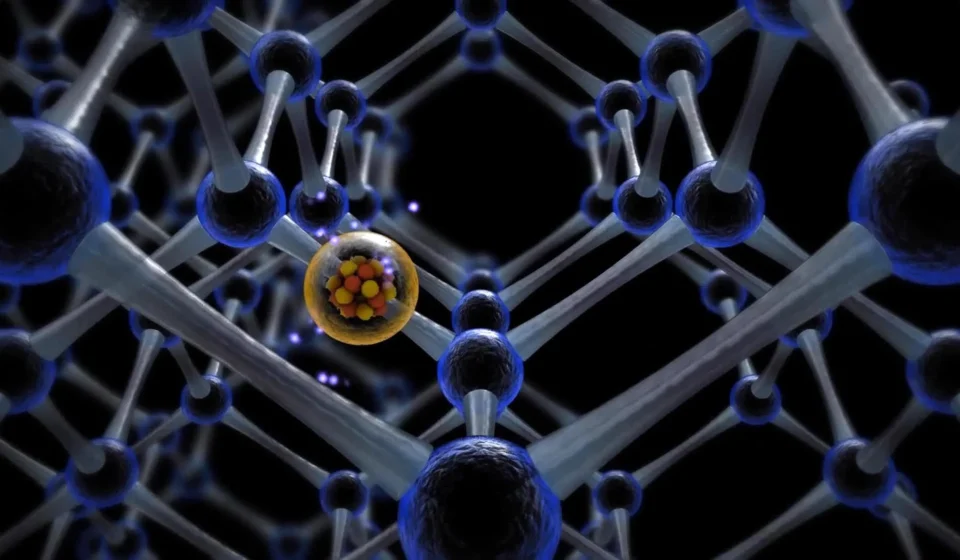

In a breakthrough that could fundamentally alter the architecture of future quantum computers, researchers at the Harvard John A. Paulson School of Engineering and Applied Sciences (SEAS) have successfully demonstrated a novel method for protecting fragile quantum information using nothing more than microscopic sound waves. By utilizing mechanical vibrations—known as phonons—to "dress" quantum bits, the team has solved a persistent paradox in quantum engineering: how to enable strong communication between qubits without sacrificing their stability.
The findings, published in the journal Nature Physics, describe a milestone in the quest to build compact, chip-scale quantum networks. Led by the laboratory of Marko Lončar, the Tiantsai Lin Professor of Electrical Engineering at Harvard, the research offers a blueprint for creating robust, hybrid quantum systems that could one day form the backbone of a quantum internet.
The Core Innovation: Engineering with Phonons
Quantum computing promises to revolutionize fields ranging from cryptography to drug discovery by harnessing the unique properties of subatomic particles. However, the practical application of this technology has been stifled by the extreme sensitivity of quantum bits, or "qubits." Qubits are prone to "decoherence," a state where environmental noise—such as electromagnetic interference or thermal fluctuations—corrupts the delicate information they hold.
Traditionally, researchers have looked to photons (light) to move quantum information across networks. While effective, light presents physical limitations when scaling down to the size of a microchip. Because light has a relatively long wavelength, the components required to manipulate it must be physically larger, making it difficult to pack thousands of qubits onto a single semiconductor substrate.
Enter the phonon. Phonons are discrete packets of mechanical vibrational energy. At the same frequency as light, phonons possess significantly shorter wavelengths, allowing for the design of much smaller, more densely integrated quantum components. Furthermore, phonons interact naturally with both solid-state electronic spins and electromagnetic fields, making them the ideal "bridge" for hybrid systems that combine different types of quantum hardware.
Chronology of a Breakthrough
The path to this discovery was built upon years of foundational research within the Lončar lab. The journey toward "all-mechanical coherence protection" followed a distinct trajectory of experimental refinement:
- Foundational Infrastructure (2018–2020): The team spent years perfecting the creation of "phononic cavities"—specialized structures designed to trap mechanical vibrations. By confining these vibrations, researchers could force a stronger interaction between the phonons and the electron spin of a qubit, typically an impurity center within a diamond crystal.
- Identifying the "Coherence Barrier": As the lab successfully increased the interaction strength, they hit a wall. Conventional techniques used to protect quantum memories—such as microwave pulse sequences—were incompatible with the architecture of phononic cavities. The very tools meant to stabilize the system were interfering with the ability of the phonons to do their job.
- The "Dressed State" Hypothesis (2022): Led by former postdoctoral scholar Zhujing Xu and Ph.D. graduate Eliza Cornell, the team theorized that if they could not shield the qubit using external microwaves, they would have to shield it using the phonons themselves.
- Experimental Validation (2023–2024): The team implemented a continuous-wave mechanical driving field. Instead of pulsing, they "bathed" the silicon-vacancy spin in a constant acoustic field. The experiment yielded a three-fold increase in coherence time, effectively validating the "dressed qubit" theory.
Technical Analysis: How "Dressed" Qubits Work
To understand the innovation, one must visualize the vulnerability of a qubit. A silicon-vacancy center in diamond acts as a quantum memory, but it is constantly "listening" to the noise of its environment.
In standard quantum operations, scientists use microwave pulses to decouple the qubit from this noise, essentially telling the system to ignore the background static. However, when these qubits are integrated into phononic cavities—which are themselves vibrating—the microwave pulses become problematic, leading to signal crosstalk and decoherence.
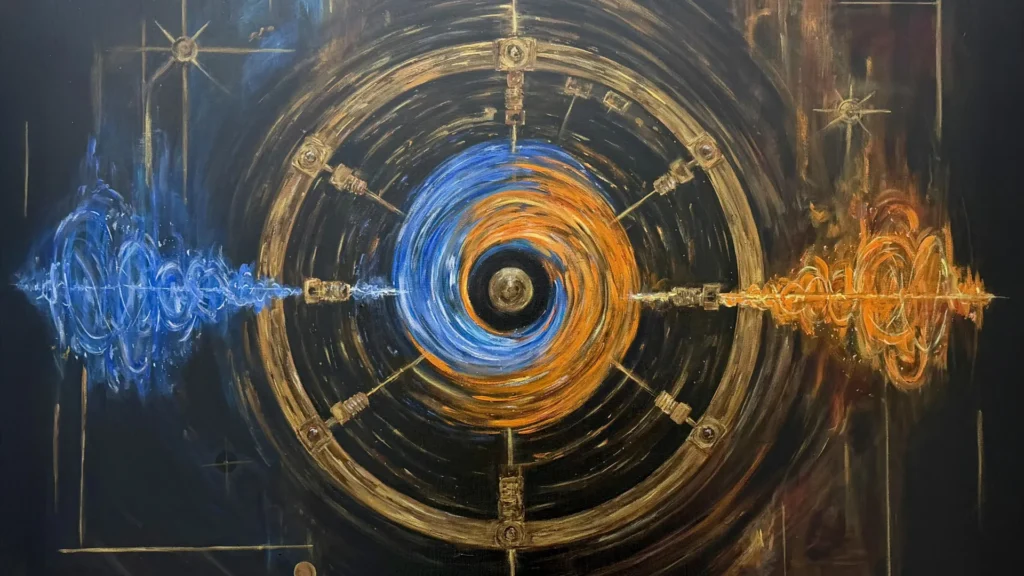
The Harvard team’s approach is fundamentally different. By applying a continuous mechanical driving field, they create a state where the qubit is "dressed" in phonons. In this state, the qubit’s energy levels are shifted and reconfigured. This "acoustic armor" makes the qubit inherently resistant to low-frequency environmental noise.
Crucially, because this protection is derived from the same phonons that the chip uses for information transport, the system is self-consistent. The mechanism used to carry data is now the same mechanism used to preserve that data, eliminating the need for bulky, incompatible microwave control hardware.
Supporting Data and Collaborative Effort
The study, titled "All-mechanical coherence protection and fast control of a spin qubit," represents a significant collaborative effort across multiple disciplines and institutions. The research team included Zhaoyou Wang, Hana K. Warner, Eliana Mann, Michael Haas, Smarak Maity, Graham Joe, Liang Jiang, Peter Rabl, and Benjamin Pingault.
The experimental data provided clear metrics of success:
- Coherence Extension: The team observed an approximate 3x increase in the coherence time of silicon-vacancy spins within the cavity.
- Operational Fidelity: The "dressed" state did not just preserve memory; it allowed for continued fast control of the spin, ensuring that the system remained computationally viable.
- Scalability: The architecture proved compatible with current nanolithography techniques used at the Harvard Center for Nanoscale Systems, suggesting that these devices could be mass-produced using existing fabrication pipelines.
The project received significant financial backing from the National Science Foundation (grant EEC-1941583), the Air Force Office of Scientific Research, and the U.S. Department of Energy’s Q-NEXT National Quantum Information Science Research Center.
Official Perspectives: The Road Ahead
Reflecting on the achievement, lead researcher Eliza Cornell highlighted the dual-function nature of the discovery. "We are solving two problems simultaneously," Cornell noted. "We want the spin to have a strong interaction with phonons for communication, and we want the spin to have a long coherence time for memory. Our paper demonstrates a method of extending the coherence time that is compatible with the silicon-vacancy center being in a cavity."
The implications for the industry are profound. Current quantum systems are often "one-trick ponies," specialized for either storage or transport. By unifying these functions through phononics, the Harvard team has provided a blueprint for modular quantum architectures.
"What we are seeing is the maturation of phononic engineering," said an expert familiar with the research. "By using the environment—in this case, mechanical vibrations—to protect the qubit rather than fighting against it, the team has bypassed a major roadblock in solid-state quantum computing."
Future Implications: Toward a Quantum Internet
The ability to build stable, chip-scale quantum networks has long been considered the "Holy Grail" of quantum engineering. The Harvard team’s work brings this vision closer to reality in several key ways:
- Hybridization: Because phonons can bridge the gap between different qubit modalities, this technology could allow for the integration of superconducting qubits, trapped ions, and nitrogen-vacancy centers on a single "quantum motherboard."
- Miniaturization: As the global race for quantum supremacy intensifies, the advantage of footprint reduction cannot be overstated. Phononic circuits allow for a level of density that photonic systems currently struggle to match.
- Commercialization: Recognizing the commercial potential, the Harvard Office of Technology Development is already pursuing patent protection and exploring commercialization avenues. This suggests that the technology is not merely a laboratory curiosity, but a scalable solution intended for real-world integration.
As researchers look toward the next generation of quantum processors, the "dressed qubit" method offers a compelling path forward. By turning the challenge of mechanical vibration into a tool for protection, the SEAS team has turned the "noise" of the quantum world into the "music" of a more stable, compact, and efficient quantum future.
While significant engineering hurdles remain—such as maintaining this coherence at higher temperatures and across larger network arrays—the proof-of-concept established in Nature Physics marks a definitive step away from the fragile, room-sized quantum prototypes of the past and toward the integrated, chip-based quantum computers of the future.